Tag: State in Malaysia

  • Negeri Sembilan: Culture, Nature and Adventure

    Negeri Sembilan: Culture, Nature and Adventure

    Negeri Sembilan

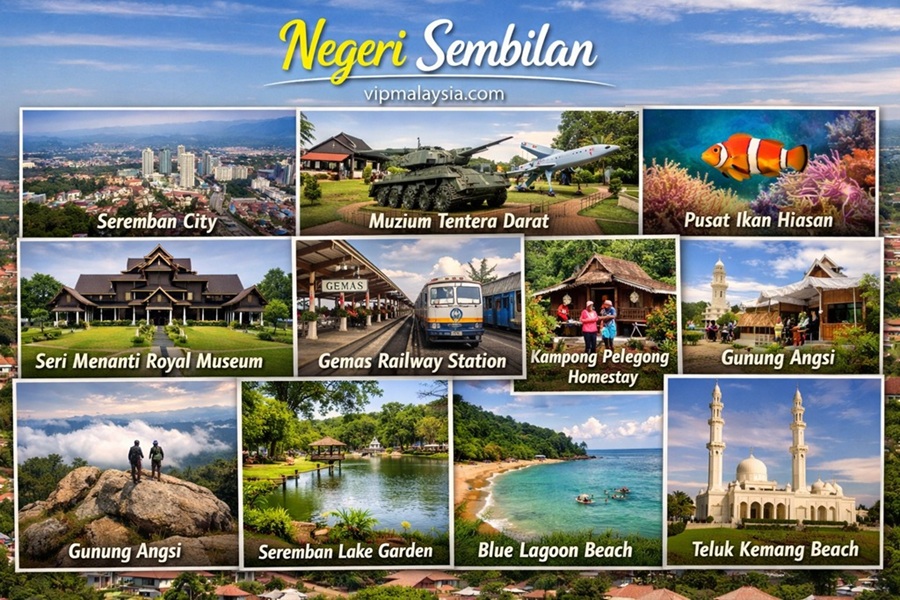
    Negeri Sembilan, a state in southwest Peninsular Malaysia, is a destination where heritage meets natural beauty. Known for its Minangkabau traditions, lush rainforests, and coastal charm, it offers travelers a blend of cultural depth and outdoor adventure.

    Introduction

    Negeri Sembilan is often described as Malaysia’s cultural heartland. Its name, meaning “Nine States,” reflects the historical confederation of districts under the Minangkabau people who migrated from Sumatra. Today, the state is celebrated for its unique architecture with sweeping buffalo-horn roofs, its preserved Adat Perpatih customs, and its diverse landscapes ranging from serene beaches to rugged mountains. Whether you are a history enthusiast, a nature lover, or an adventure seeker, Negeri Sembilan promises a rich travel experience.

    Adat Perpatih is a traditional Minangkabau system of customs and governance practiced in Negeri Sembilan, Malaysia, that is unique for its matrilineal inheritance structure, where property and lineage are passed through women rather than men. Rooted in communal values, it emphasizes collective decision-making, with leadership chosen by consensus rather than hereditary succession. This system organizes society into clans (suku) and districts (luak), with women as custodians of family wealth and men serving as protectors and administrators. It continues to shape cultural identity and social practices in Negeri Sembilan today, distinguishing the state from other Malay regions that follow patrilineal traditions.

    History

    Negeri Sembilan’s history is deeply tied to the Minangkabau migration from West Sumatra in the 15th century. These settlers brought with them the Adat Perpatih, a matrilineal system of governance and inheritance that remains influential today. The state was originally a loose federation of districts, each led by its own chieftain, known as an Undang.

    During the colonial era, Negeri Sembilan became a focal point for British administration, with Seremban emerging as a key town. The Gemas Railway Station, built in 1922, stands as a testament to this period, connecting the state to broader trade and travel networks. The royal town of Seri Menanti, with its wooden palace built without nails, symbolizes the resilience and artistry of Minangkabau craftsmanship.

    Minangkabau Migration and Adat Perpatih

    The roots of Negeri Sembilan trace back to the migration of Minangkabau people from West Sumatra between the 15th and 16th centuries. They brought with them the Adat Perpatih, a matrilineal system of inheritance and governance. This unique tradition shaped the social fabric of the state, emphasizing family harmony and community leadership.

    Historical Formation

    In 1773, Raja Melewar was appointed as the first Yam Tuan ruler, unifying the state under a structured governance system. This marked the beginning of Negeri Sembilan’s identity as a distinct political and cultural entity. The legacy of Adat Perpatih continues to influence social customs today, making it a living tradition rather than a relic of the past.

    Raja Melewar originally a prince from Pagaruyung, Minangkabau (in present-day West Sumatra, Indonesia), invited by the local chiefs of Negeri Sembilan to establish leadership under the Adat Perpatih system. Established the foundation of Negeri Sembilan’s monarchy, which continues today. His leadership brought together various clans and districts under one ruler.

    British Intervention and Modern Development

    By the late 1800s, British involvement in Negeri Sembilan helped mediate conflicts and establish structured governance. This period marked the transition from an agrarian society to one embracing industrial and economic growth. Urban expansion in Seremban and other regions transformed the state into a thriving hub of trade and manufacturing.

    Industrial Growth

    Factories, plantations, and trade networks flourished under British influence. The modernization of infrastructure, including railways and administrative buildings, laid the foundation for Negeri Sembilan’s current industrial strength. Today, the state balances its historical heritage with modern progress.

    Minangkabau-Inspired Architecture

    One of the most striking features of Negeri Sembilan is its architecture. Traditional houses, known as Rumah Gadang, feature upswept roofs resembling buffalo horns. These designs symbolize strength and resilience, deeply rooted in Minangkabau culture.

    Rumah Gadang is the traditional house of the Minangkabau people of West Sumatra, Indonesia, distinguished by its dramatic buffalo-horn-shaped roof and ornate carvings. It serves not only as a residence but also as a cultural symbol of Minangkabau identity and matrilineal society. Rumah Gadang belongs to the women of the family, symbolizing inheritance through the maternal line.

    Architectural Landmarks

    The Seri Menanti Royal Palace stands as a prime example of Minangkabau architecture. Built without nails, it showcases the craftsmanship and ingenuity of traditional builders. Government buildings and cultural centers across the state also adopt this style, preserving the architectural identity of Negeri Sembilan.

    The Seri Menanti Royal Palace, also known as Istana Seri Menanti, is the former royal residence of the Yang di-Pertuan Besar (ruler) of Negeri Sembilan, Malaysia. Built in 1902 and completed in 1908, it is celebrated as one of the finest examples of Minangkabau-inspired Malay architecture. Constructed entirely of timber without nails, using interlocking techniques. Served as the royal residence until 1992; now a museum showcasing royal regalia and heritage.

    Must Visit Cities

    Seremban City

    Seremban, the capital, is a bustling hub where modernity meets tradition. The State Museum, housed in the former Istana Ampang Tinggi, showcases artifacts of Minangkabau heritage. Visitors can explore local markets, taste Negeri Sembilan’s famous spicy cuisine, and witness cultural festivals that celebrate traditional dance and music.

    Port Dickson

    Port Dickson is the state’s coastal jewel, offering sandy beaches like Blue Lagoon and Tanjung Tuan. It is a popular weekend getaway for locals and international tourists alike. The Muzium Tentera Darat (Army Museum) provides insight into Malaysia’s military history, while water sports and sunset cruises make Port Dickson a lively destination.

    Nilai

    Nilai is a growing urban centre known for its shopping malls, universities, and proximity to Kuala Lumpur International Airport. It serves as a strategic stopover for travelers and offers modern amenities alongside traditional food markets.

    Kuala Pilah

    Kuala Pilah is a heritage-rich town with traditional Minangkabau houses and bustling local markets. It is also the gateway to Seri Menanti, making it a cultural stop for those interested in royal history and architecture.

    Rembau

    Rembau is steeped in history, with landmarks like Astana Raja Melewar and cultural museums. The town is also famous for its local delicacies and traditional crafts, offering visitors a taste of authentic Negeri Sembilan culture.

    Jelebu

    Jelebu is known for eco-tourism and natural attractions such as Jeram Toi Waterfall. The district offers homestay experiences, jungle treks, and cultural storytelling, making it a destination for nature lovers and cultural explorers.

    Tampin

    Tampin lies on the border of Negeri Sembilan and Melaka, offering a mix of historical and natural attractions. It is a quieter town with access to waterfalls and forest reserves, ideal for those seeking off-the-beaten-path experiences.

    Bahau

    Bahau is a small town known for its agricultural activities and local markets. It serves as a base for exploring nearby rural landscapes and offers a glimpse into traditional Malaysian town life.

    Seri Menanti

    Seri Menanti is the royal town of Negeri Sembilan, home to the iconic Seri Menanti Palace built entirely of timber without nails. It is a cultural highlight, showcasing Minangkabau aristocratic traditions and heritage.

    Kuala Klawang

    Kuala Klawang is notable for the Kuala Klawang Memorial and its tranquil rural setting. It offers cultural depth and natural beauty, making it a destination for history enthusiasts and those seeking peaceful retreats.

    Must Visit Attractions

    Muzium Tentera Darat

    The Army Museum in Port Dickson is one of Negeri Sembilan’s most visited attractions, showcasing Malaysia’s military history through interactive exhibits, tanks, and aircraft displays. Entry is free, making it a family-friendly destination that combines education with entertainment.

    Pusat Ikan Hiasan

    Located in Port Dickson, Pusat Ikan Hiasan is a small but fascinating aquarium featuring marine life such as clownfish, corals, and seahorses. Admission is free, making it an ideal stop for families with children.

    Cape Rachado Lighthouse

    Cape Rachado Lighthouse, situated in Tanjung Tuan Forest Reserve, is Malaysia’s oldest lighthouse. Visitors can trek through the forest reserve to reach the lighthouse, which offers panoramic views of the Straits of Malacca.

    Seri Menanti Royal Museum

    The Seri Menanti Royal Museum, housed in a palace built entirely of timber without nails, is a cultural landmark showcasing Minangkabau royal heritage. It offers insights into Negeri Sembilan’s aristocratic traditions.

    Astana Raja Melewar (Muzium Rembau)

    Astana Raja Melewar in Rembau was once the residence of the Undang (chieftain) of Rembau and today serves as a museum. The two-storey building showcases regalia, historical records, and artifacts tied to Negeri Sembilan’s Minangkabau heritage. Its traditional architecture, with distinctive buffalo-horn rooflines, makes it a cultural landmark worth visiting.

    Gemas Railway Station

    Built in 1922, Gemas Railway Station remains one of Malaysia’s oldest functioning stations. It is a nostalgic stop for railway enthusiasts, offering a glimpse into colonial-era infrastructure that connected Negeri Sembilan to wider trade and travel networks. The station continues to operate, blending history with modern rail services.

    Museum & Crafts and Culture Complex

    Opened in 1986, the Museum & Crafts and Culture Complex in Seremban spans 2.4 hectares and includes the State Museum (formerly Istana Ampang Tinggi), Teratak Perpatih, and a Minangkabau House. It is a hub for arts, crafts, and cultural exhibitions, preserving Negeri Sembilan’s heritage for future generations.

    Handicraft Centre

    The Handicraft Centre in Seremban, operated by the Malaysian Handicraft Development Corporation, specializes in bamboo, rattan, and glass crafts. Visitors can watch artisans at work, purchase souvenirs, and even participate in workshops to learn traditional techniques.

    Kampong Pelegong Homestay

    Kampong Pelegong Homestay offers cultural immersion where visitors live with host families, participate in cooking, farming, and storytelling. It is also home to the legendary Virgin Well (Perigi Dara), built in 1866, which is tied to local folklore and believed to bring good fortune.

    The Dusun

    The Dusun is a tropical rainforest retreat near Seremban that emphasizes eco-tourism. Visitors can enjoy jungle trekking, birdwatching, and farm-to-table dining experiences. Its serene environment makes it a popular choice for those seeking relaxation and nature immersion.

    Ladang Anggur Sendayan (Siliau)

    Ladang Anggur Sendayan in Siliau is a vineyard with over 6,000 grapevines, offering agricultural tourism experiences. Visitors can tour the vineyard, learn about grape cultivation, and sample fresh produce. It is a unique attraction highlighting Negeri Sembilan’s diversification into agro-tourism.

    Must Visit Natures

    Jeram Toi Waterfall

    Jeram Toi Waterfall in Jelebu is a popular nature spot surrounded by lush rainforest. It offers picnic areas, trekking trails, and refreshing pools where visitors can swim. The waterfall is easily accessible and is a favorite among families and hikers looking for a quick escape into nature.

    Tanjung Tuan Forest Reserve

    Tanjung Tuan, near Port Dickson, is a coastal forest reserve famous for its Cape Rachado Lighthouse and migratory bird-watching. The reserve combines historical significance with natural beauty, offering jungle trails that lead to secluded beaches.

    Gunung Angsi

    Gunung Angsi is one of Negeri Sembilan’s most trekked mountains, located near Seremban. The trail takes about 3–4 hours and rewards hikers with panoramic views of valleys and forests. It is a moderately challenging climb, suitable for both beginners and seasoned trekkers.

    Seremban Lake Garden

    Seremban Lake Garden is a scenic urban park offering jogging paths, cycling routes, and boating activities. It is a tranquil retreat within the city, surrounded by diverse flora and fauna, making it ideal for relaxation and family outings.

    Jeram Gading Waterfall

    Jeram Gading Waterfall in Jelebu is a hidden gem surrounded by dense jungle. It is less crowded compared to Jeram Toi, offering a peaceful environment for picnics and nature walks. The cool waters and shaded areas make it a refreshing retreat.

    Kenaboi State Park

    Kenaboi State Park is a biodiversity hotspot in Jelebu, home to rare orchids, hornbills, and Malayan tapirs. It offers jungle trekking, camping, and eco-tourism activities. The park is a conservation area, making it ideal for nature enthusiasts and researchers.

    Ulu Bendul Recreational Forest

    Ulu Bendul Recreational Forest, located at the foot of Gunung Angsi, is a popular spot for camping and jungle trekking. It features rivers, picnic areas, and trails leading up the mountain. The forest is well-maintained, making it suitable for families and groups.

    Jeram Berungut Gorge

    Jeram Berungut Gorge in Kenaboi is a natural wonder with towering rock walls and a river running through it. The gorge is accessible via jungle trekking and is considered one of Negeri Sembilan’s most unique geological formations.

    Bukit Taisho

    Bukit Taisho in Bahau is a hilltop destination offering panoramic sunrise views. The trek is relatively short but steep, attracting hikers who enjoy early morning climbs. The summit provides sweeping vistas of surrounding towns and countryside.

    Must Visit Beaches

    Blue Lagoon Beach

    Blue Lagoon Beach in Port Dickson is one of the most famous coastal attractions, known for its calm waters and golden sands. Families and tourists enjoy swimming, kayaking, and banana boat rides here. The beach is also close to Tanjung Tuan Forest Reserve, making it a perfect blend of seaside relaxation and nature trekking.

    Teluk Kemang Beach

    Teluk Kemang Beach is the largest and most popular beach in Port Dickson, offering fine sand, vibrant crowds, and a variety of water sports such as jet skiing and banana boat rides. It is well-equipped with facilities like food stalls, parking, and shaded areas, making it ideal for weekend getaways.

    Pantai Cahaya Negeri

    Pantai Cahaya Negeri is a scenic beach connected to Pulau Burung by a bridge, offering visitors a chance to explore mangroves and bird habitats. It is popular for camping, fishing, and photography, especially during sunrise and sunset.

    Pantai Saujana

    Pantai Saujana is a relaxing beach surrounded by greenery and a clean coastline. It is perfect for fishing, strolling, or simply enjoying the sea breeze. The beach is also known for its stunning sunrise and sunset views.

    Pantai Purnama

    Pantai Purnama is renowned for its peaceful atmosphere and clean surroundings. Families often visit for picnics, sand play, and leisurely walks along the shore. Its tranquil environment makes it a favorite for those seeking a quiet retreat.

    Pantai Tanjung Biru

    Pantai Tanjung Biru, also known as Blue Sand Beach, is famous for its turquoise waters and white sand. It is a romantic spot for couples and a family-friendly destination with breathtaking sunset views.

    Pantai Tanjung Gemok

    Pantai Tanjung Gemok is a wide and calm beach lined with coconut trees. It is suitable for picnics, light water sports, and photography, especially during sunrise and sunset. Its serene landscape attracts visitors looking for relaxation.

    Bagan Pinang Beach

    Bagan Pinang Beach is popular among campers and weekend travelers. It offers campsites, basic facilities, and opportunities for water activities. The beach is lively yet retains a natural charm.

    Dickson Beach

    Dickson Beach is one of the main beaches in Port Dickson, well-known for its fine sand and complete facilities. Visitors enjoy family activities, light water sports, and seaside relaxation with amenities such as food stalls and prayer rooms.

    Pantai Cermin

    Pantai Cermin is a quieter beach offering a calm atmosphere and clean seawater. It is ideal for landscape photography, leisurely walks, and family relaxation. Its less crowded environment makes it a hidden gem for those seeking peace.

    Must Visit Mosques

    Masjid Jamek Seri Menanti

    Masjid Jamek Seri Menanti is one of the most iconic mosques in Negeri Sembilan, located in the royal town of Seri Menanti. Built with traditional Malay architecture, it reflects Minangkabau heritage and serves as a spiritual and cultural centre for the community. Its historical significance and unique design make it a must-visit for travelers interested in religious and cultural landmarks.

    Masjid Kariah Dato’ Klana Petra Ma’amor

    This mosque in Seremban is renowned for its grandeur and community role. It is a central place of worship and also hosts religious events and gatherings. The mosque’s architecture blends traditional and modern elements, making it a striking landmark in the capital city.

    Masjid Kariah Tanjung Ipoh

    Located in Kuala Pilah, Masjid Kariah Tanjung Ipoh is a serene mosque surrounded by rural landscapes. It is known for its peaceful environment and serves as a hub for local religious activities. The mosque’s design reflects the simplicity and harmony of traditional Malay architecture.

    Masjid Kariah Rantau

    Masjid Kariah Rantau is a prominent mosque in the town of Rantau. It is well-regarded for its spacious prayer halls and active community involvement. The mosque is a focal point for religious education and cultural gatherings in the district.

    Masjid Kariah Kuala Pilah

    This mosque is one of the central religious landmarks in Kuala Pilah. It plays a significant role in the town’s spiritual life and is often visited by travelers exploring the cultural heritage of Negeri Sembilan. Its architecture and community presence make it a notable destination.

    Masjid Kariah Tampin

    Masjid Kariah Tampin is located near the border with Melaka, serving both locals and travelers. It is known for its welcoming atmosphere and beautiful design. The mosque is a key religious site in Tampin, reflecting the town’s cultural and spiritual identity.

    Masjid Kariah Teluk Kemang

    Situated near Port Dickson, Masjid Kariah Teluk Kemang is a coastal mosque that attracts both worshippers and tourists. Its proximity to beaches makes it a unique spiritual stop for visitors enjoying the seaside. The mosque is also active in community outreach and religious education.

    Masjid Kariah Rembau

    Masjid Kariah Rembau is a historic mosque in the district of Rembau. It is closely tied to the town’s cultural heritage and traditions. The mosque’s architecture and role in preserving local customs make it a significant religious site.

    Masjid Kariah Port Dickson

    Masjid Kariah Port Dickson is a central mosque in the coastal town, serving both residents and tourists. It is known for its accessibility and active role in community life. Visitors often stop here while exploring Port Dickson’s beaches and attractions.

    Masjid Sri Sendayan

    Masjid Sri Sendayan is one of the most modern and grand mosques in Negeri Sembilan, officially opened in 2019. Inspired by Abbasid, Mamluk, Umayyad, and Ottoman architectural styles, it is a masterpiece of Islamic design. Beyond worship, it functions as a community centre, hosting educational programmes and solemnisation ceremonies, making it a landmark of both faith and culture.

    Trekking and Adventure

    Gunung Angsi

    Gunung Angsi, near Seremban, is a popular trekking destination. The trail takes about 3–4 hours and rewards hikers with panoramic views of the surrounding valleys. Facilities include rest huts and guided tours for beginners.

    Trekking Experience

    The trek up Gunung Angsi is moderately challenging, making it suitable for both novice and experienced hikers. Along the way, trekkers encounter streams, dense forest, and occasional wildlife. The summit offers a breathtaking sunrise view, making early morning hikes especially rewarding.

    Eco-Tourism in Jelebu

    Jelebu district is known for eco-tourism, with homestays that allow visitors to experience rural life. Activities include rubber tapping, traditional cooking, and folklore storytelling. The Virgin Well (Perigi Dara) in Kampong Pelegong is a site of local legend, believed to bring good fortune.

    Nearby Attractions

    Kuala Pilah

    Kuala Pilah is a town rich in heritage, with traditional Minangkabau houses and bustling markets. It is also a gateway to Seri Menanti.

    Nilai

    Nilai is a growing urban centre with shopping malls and universities. Its proximity to Kuala Lumpur International Airport makes it a convenient stop for travelers.

    Rembau

    Rembau offers cultural depth with its historical sites and museums. It is also known for local delicacies and traditional crafts.

    Conclusion

    Negeri Sembilan is a destination where history, culture, and nature converge. From the royal palaces of Seri Menanti to the beaches of Port Dickson, the state offers diverse experiences. Its Minangkabau heritage, eco-tourism initiatives, and adventure trails make it a compelling choice for travelers seeking authenticity. Whether you are exploring museums, trekking mountains, or enjoying coastal sunsets, Negeri Sembilan promises a journey that is both enriching and memorable.

    Summary

    • Attraction: Negeri Sembilan
    • Location: #NegeriSembilan 
    • Attraction Type: #Heritage 
    • Source: tourismnegerisembilan.com
    • Why Explore:
      • Rich Minangkabau traditions – Unique social customs & heritage
      • Historical significance – Shaped by Malay Sultanate and British rule
      • Architectural beauty – Home to the iconic upswept Minangkabau-style roofs
      • Diverse culinary delights – Enjoy fiery ‘masak lemak cili api’ dishes

    Quick Info

    AttributeDetails
    NameNegeri Sembilan
    LocationCentral Region, Peninsular Malaysia
    GPS Position2.7258° N, 101.9373° E
    StateNegeri Sembilan
    Historical SignificanceMinangkabau Influence, Adat Perpatih, British Intervention
    Special AttractionsSeri Menanti Royal Palace, Port Dickson Beach, Seremban Lake Garden
    Nearby StatesSelangor, Pahang, Melaka, Johor
    Main Economic ActivitiesAgriculture, Manufacturing, Trade
    Best Time to VisitYear-round, avoid monsoon season (September–November)
    ClimateWarm & humid, temperature: 23°C–33°C
    Accessibility50 km from Kuala Lumpur, easily reachable via highways

    Visitor Reviews

    ★★★★★ Lorenzo C., Rome, Italy

    “I hiked Gunung Angsi via the Bukit Putus trail. The incline was steep but manageable, and reaching the summit in about 1.5 hours felt rewarding. The entry permit was only RM5, and there was free parking near the trailhead. The tropical forest atmosphere was refreshing, though it gets crowded on weekends. Overall, a solid workout with beautiful scenery.”

    ★★★★☆ Mohamad Khan, Singapore

    “I brought my two kids, aged 8, for the Gunung Angsi trek. It took us nearly six hours because of muddy terrain after rain. The rope climbs and river crossings were challenging but memorable. It was tough guiding children through the trail, yet the sense of being back in nature was worth it. The scenery at the peak was calming, though facilities could be improved.”

    ★★★★★ Zulkarnain Bin Mat Isa, Kuala Lumpur

    “Gunung Angsi is not about the summit view—it’s about the trail itself. Rope climbs, slippery roots, and river crossings make it a proper workout. Parking is roadside, so weekends can be hectic. The Bukit Putus trail is the best maintained, while the alternative trail is muddy and poorly supported. For a hike just an hour from KL, it’s a fantastic option for fitness hikers.”
  • Melaka Travel Guide: Heritage, Food & Adventure

    Melaka Travel Guide: Heritage, Food & Adventure

    Melaka 

    Melaka, rich in history, culture, and stunning charm, is a must-visit destination. From UNESCO-recognized heritage sites to a vibrant city life, Melaka promises a one-of-a-kind experience. Savor delicious cuisines, explore historical landmarks, and uncover attractions that make Melaka an unbeatable travel destination. Dive deeper to discover all the exciting attractions this state has to offer!

    Melaka, Malaysia’s UNESCO World Heritage city, is a destination where centuries of history meet vibrant modern life. From colonial forts and Peranakan culture to river cruises and trekking adventures, this guide explores everything you need to know for an unforgettable journey.

    Introduction

    Melaka, also known as Malacca, is located on the west coast of Peninsular Malaysia, about 150 km south of Kuala Lumpur. Recognized as a UNESCO World Heritage Site, it is celebrated for its multicultural heritage, colonial architecture, and thriving street life. Visitors are drawn to its historical landmarks, bustling Jonker Street, and the serene Melaka River, making it one of Malaysia’s most captivating destinations.

    History

    Founded in the early 15th century by Parameswara, a Sumatran prince, Melaka quickly rose as a powerful trading port due to its strategic location along the Straits of Malacca. The city became a melting pot of cultures, attracting traders from China, India, Arabia, and later Europe.

    In 1511, the Portuguese conquered Melaka, followed by the Dutch in 1641, and eventually the British in 1824. Each colonial power left behind architectural and cultural imprints, visible today in landmarks like A Famosa Fort, the Stadthuys, and Dutch Square. The blending of Malay, Chinese, Indian, and European influences created a unique cultural identity, particularly evident in the Peranakan (Baba-Nyonya) heritage.

    Towns

    Bandaraya Melaka

    Bandaraya Melaka, the capital, is a UNESCO World Heritage Site known for its colonial landmarks like the Stadthuys, Christ Church, and A Famosa Fort. It is the cultural and historical hub of the state, blending Portuguese, Dutch, British, and Peranakan influences.

    Alor Gajah

    Alor Gajah is famous for the A Famosa Resort, which includes a water theme park, safari, and golf course. The town also offers traditional Malay markets and is a gateway to rural Melaka.

    Jasin

    Jasin is known for its agricultural heritage and peaceful countryside. Visitors can explore fruit orchards, rubber plantations, and enjoy authentic kampung (village) experiences.

    Masjid Tanah

    Masjid Tanah is one of the largest towns in Melaka, located near the coast. It is popular for beaches like Tanjung Bidara and cultural festivals that highlight Malay traditions.

    Batu Berendam

    Batu Berendam is home to Melaka International Airport and is a growing industrial hub. It offers convenient access to both the city and surrounding towns.

    Ayer Keroh

    Ayer Keroh is a green escape with attractions like the Melaka Zoo, Botanical Garden, and recreational forests. It is ideal for trekking, wildlife spotting, and family-friendly activities.

    Tanjung Kling

    Tanjung Kling is a coastal town known for its fishing villages and seafood. It offers a quieter alternative to Melaka City, with scenic views of the Straits of Malacca.

    Durian Tunggal

    Durian Tunggal is a small town with reservoirs and lakes, popular for picnics and outdoor recreation. It provides a glimpse into Melaka’s rural lifestyle.

    Sungai Udang

    Sungai Udang is an industrial town but also has cultural significance, with traditional Malay houses and local markets. It is close to coastal areas and fishing communities.

    Kuala Sungai Baru

    Kuala Sungai Baru is a fishing town offering fresh seafood and coastal scenery. It is less touristy, making it a great spot for travelers seeking authentic local experiences.

    Attractions

    Jonker Street

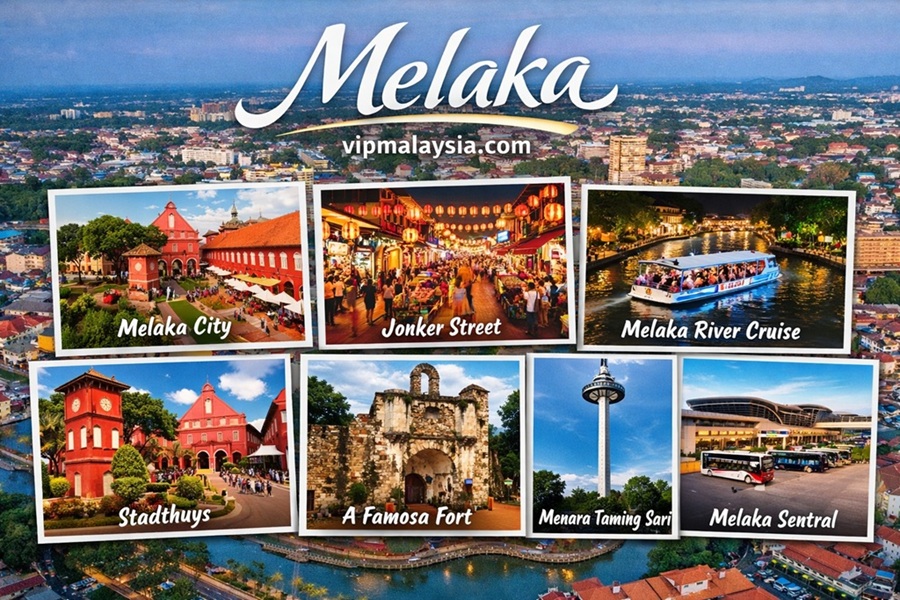
    Jonker Street is the heart of Melaka’s Chinatown, famous for its vibrant night market. Visitors can enjoy local street food, antiques, and handicrafts. The weekend market transforms the street into a lively hub of culture and commerce.

    Melaka River Cruise

    The Melaka River Cruise offers a 45-minute journey past heritage buildings, murals, and bridges. At night, the river is illuminated with colorful lights, creating a magical atmosphere.

    Stadthuys

    The Stadthuys, built in 1650, is one of the oldest Dutch colonial buildings in Asia. Its iconic red façade dominates Dutch Square and houses the Museum of History and Ethnography, offering visitors a glimpse into Melaka’s colonial past.

    A Famosa Fort

    Constructed by the Portuguese in 1511, A Famosa Fort is among the oldest surviving European architectural remains in Southeast Asia. Today, only Porta de Santiago remains, symbolizing Melaka’s strategic importance in maritime trade.

    Christ Church

    Christ Church, built in 1753, is a striking red brick Anglican church located in Dutch Square. Known for its handmade pews and historic tombstones, it remains an active place of worship and a symbol of Dutch influence in Melaka.

    Baba Nyonya Heritage Museum

    The Baba Nyonya Heritage Museum showcases the opulent lifestyle of the Peranakan community. Preserved furniture, porcelain, and traditional attire highlight the unique blend of Chinese and Malay cultures that shaped Melaka’s identity.

    Explore Melaka’s cultural heritage through museums, traditional villages, and vibrant festivals. Discover Baba Nyonya history, Malay traditions, and living culture in the heart of a UNESCO city.

    Menara Taming Sari

    Standing 110 meters tall, Menara Taming Sari is a revolving tower that provides panoramic views of Melaka’s skyline. It is a favorite among photographers and sightseers seeking a bird’s-eye view of the city.

    Bukit China

    Bukit China is the largest Chinese cemetery outside China, with over 12,000 graves dating back centuries. It also serves as a trekking site, offering panoramic views of Melaka and a peaceful retreat from the bustling city.

    Cheng Hoon Teng Temple

    Built in 1646, Cheng Hoon Teng Temple is Malaysia’s oldest functioning Chinese temple. Dedicated to Guan Yin, the Goddess of Mercy, it reflects traditional southern Chinese architecture and remains a spiritual landmark.

    Maritime Museum (Flor de la Mar)

    The Maritime Museum is housed in a replica of the Portuguese ship Flor de la Mar. It highlights Melaka’s maritime history, showcasing artifacts and exhibits that emphasize the city’s role as a major trading port.

    Melaka Sultanate Palace Museum

    The Melaka Sultanate Palace Museum is a wooden replica of the 15th-century palace of Sultan Mansur Shah. It showcases exhibits on Malay culture, weaponry, and royal regalia, offering visitors a deep insight into Melaka’s pre-colonial history.

    St. Paul’s Hill and Church

    St. Paul’s Hill is crowned by the ruins of St. Paul’s Church, built in 1521 by the Portuguese. The site offers panoramic views of Melaka and contains historic tombstones, making it a significant colonial landmark.

    Melaka Zoo

    Located in Ayer Keroh, Melaka Zoo is Malaysia’s second-largest zoo, home to over 1,200 animals from 200 species. It emphasizes conservation and education, with highlights including Malayan tigers, tapirs, and hornbills.

    Melaka Butterfly and Reptile Sanctuary

    This sanctuary houses hundreds of butterfly species alongside reptiles such as crocodiles, snakes, and lizards. It is a family-friendly attraction that combines education with interactive exhibits.

    Melaka Wonderland Theme Park

    Melaka Wonderland is a water theme park featuring wave pools, slides, and family attractions. It is a popular destination for locals and tourists seeking fun and relaxation.

    Mini Malaysia & ASEAN Cultural Park

    This cultural park showcases traditional houses from all Malaysian states and ASEAN countries. Visitors can explore architecture, crafts, and performances that highlight Southeast Asia’s cultural diversity.

    Melaka Planetarium

    The Melaka Planetarium offers interactive exhibits on astronomy and space exploration. It is an educational attraction for families and students, featuring a dome theater and science displays.

    Hang Tuah Centre

    Dedicated to the legendary Malay warrior Hang Tuah, this center in Kampung Duyong explores his life and contributions. Exhibits include artifacts, manuscripts, and cultural performances.

    Melaka Botanical Garden

    The Melaka Botanical Garden in Ayer Keroh spans over 92 hectares and features jogging tracks, cycling paths, and tropical flora. It is a peaceful retreat for nature lovers.

    Submarine Museum

    Located in Klebang, the Submarine Museum features a decommissioned French submarine, Agosta 70. Visitors can explore its interior and learn about naval history, making it a unique attraction in Malaysia.

    Portuguese Settlement

    The Portuguese Settlement in Ujong Pasir is a vibrant community established in the 1930s by descendants of Portuguese colonists. It is famous for its seafood restaurants and annual Festa San Pedro, celebrating the patron saint of fishermen.

    Klebang Beach

    Klebang Beach is a popular coastal destination known for its sandy dunes and seaside activities. Visitors enjoy kite flying, horse riding, and sampling the famous Klebang coconut shake.

    Villa Sentosa

    Villa Sentosa, located in Kampung Morten, is a traditional Malay house turned museum. It offers a glimpse into Malay village life, with preserved furniture, artifacts, and guided tours by the homeowner’s family.

    Cheng Ho Cultural Museum

    Dedicated to the famous Chinese admiral Zheng He, the Cheng Ho Cultural Museum showcases artifacts, maps, and exhibits about his voyages and Melaka’s role in maritime trade.

    Melaka Wonderland Lake

    This recreational lake is part of the Wonderland Theme Park complex, offering boating and water activities. It is a family-friendly destination combining leisure and adventure.

    Melaka Bird Park

    The Melaka Bird Park is one of the largest covered bird parks in Malaysia, featuring hundreds of bird species in a free-flight environment. It emphasizes conservation and education.

    Hang Jebat Mausoleum

    The mausoleum of Hang Jebat, one of Melaka’s legendary warriors, is a historical site that reflects Malay folklore and heritage. It is a place of cultural reverence and storytelling.

    Melaka Sentral

    Melaka Sentral is the state’s main bus terminal, but it also serves as a shopping and cultural hub. Its design reflects traditional Malay architecture, making it more than just a transit point.

    Encore Melaka Theatre

    Encore Melaka is a modern theatre showcasing a 70-minute performance that blends dance, music, and multimedia to narrate Melaka’s history. Its rotating auditorium and cutting-edge technology make it a unique attraction.

    Melaka River Walk

    A pedestrian promenade along the Melaka River, lined with cafes, murals, and boutique hotels. It’s especially popular in the evenings when the riverfront is illuminated, offering a lively atmosphere.

    Kampung Morten (Villa Sentosa)

    Villa Sentosa is a traditional Malay house turned museum in Kampung Morten. Visitors can explore preserved furniture, artifacts, and hear stories from the homeowner’s family about Malay village life.

    Melaka International Bowling Centre

    One of the largest bowling centers in Malaysia, it hosts tournaments and recreational games. While primarily a sports venue, it’s also a modern entertainment spot for visitors.

    Melaka Cultural Museum (Muzium Budaya)

    Near A Famosa, the Cultural Museum highlights Malay traditions, costumes, and artifacts. It provides context on how local customs evolved alongside colonial influences.

    Melaka Tropical Fruit Farm

    Located in Sungai Udang, this agro-tourism site spans 65 acres with orchards of durian, rambutan, mangosteen, and more. Visitors can enjoy guided tours, fruit tasting, kayaking, fishing, and even a mini zoo, making it both educational and recreational.

    Melaka International Trade Centre (MITC)

    MITC is a modern convention and exhibition center in Ayer Keroh. It regularly hosts trade fairs, cultural expos, and international events, positioning Melaka as a hub for business tourism.

    Baba Nyonya Heritage Museum

    This museum showcases the rich Peranakan culture, with preserved furniture, art, and traditional attire. Visitors can even try on the elegant Nyonya Kebaya.

    Menara Taming Sari

    A revolving tower offering panoramic views of Melaka’s skyline, perfect for photography enthusiasts.

    Malaysia Heritage Studios

    Located in Ayer Keroh, this cultural theme park highlights Malaysia’s diverse traditions through architecture, performances, and exhibits.

    Tanjung Bidara Beach

    A serene beach perfect for relaxation, swimming, and picnics, located just outside Melaka city.

    Mosques

    Masjid Kampung Hulu

    Built in 1728, Masjid Kampung Hulu is the oldest mosque in Malaysia. Its architecture reflects Sumatran and Chinese influences, with a tiered roof and intricate carvings. The mosque’s antique woodwork and Islamic calligraphy make it a living testament to early Islamic architecture in the region.

    Masjid Selat Melaka (Malacca Straits Mosque)

    Located on Pulau Melaka, this “Floating Mosque” appears to hover above the sea during high tide. Completed in 2006, it combines Middle Eastern and Malay design elements and is especially popular for sunrise and sunset photography.

    Masjid Kampung Kling

    Dating back to 1748, Masjid Kampung Kling showcases eclectic influences from Javanese, Chinese, and Hindu architecture. Its pagoda-like minaret and ornate interiors highlight Melaka’s multicultural heritage.

    Masjid Tengkera

    Masjid Tengkera, built in 1728, is one of the oldest mosques in Melaka. It features traditional Malay architecture with a tiered roof and wooden carvings, serving as a spiritual hub for the local community.

    Masjid Al-Azim

    Masjid Al-Azim is Melaka’s state mosque, completed in 1990. It is a grand modern structure with a capacity of 15,000 worshippers, blending traditional Malay motifs with contemporary design.

    Masjid Tranquerah (Masjid Tengkera)

    This mosque is another historic gem, built in the 18th century with a distinctive tiered roof and wooden architecture. It is known for its serene atmosphere and cultural significance.

    Masjid Kampung Duyong

    Located in Kampung Duyong, this mosque is closely associated with the legendary Malay warrior Hang Tuah. It is a traditional mosque that reflects the village’s cultural heritage.

    Masjid Ujong Pasir

    Masjid Ujong Pasir serves the Portuguese Settlement area. It is a modern mosque that caters to the local community, blending contemporary design with traditional Islamic elements.

    Masjid Batu Hampar

    Masjid Batu Hampar is a historic mosque located in Jasin district. It is known for its traditional Malay architecture and its role in local religious life.

    Masjid Bukit Cina

    Situated near Bukit Cina, this mosque reflects the multicultural heritage of Melaka. It serves as a spiritual center for the local Muslim community and is surrounded by historical landmarks.

    Foods

    Discover Melaka’s culinary heritage with must-try dishes like Asam Pedas, Satay Celup, and Chicken Rice Balls — a flavorful journey through history and culture.

    Asam Pedas

    Asam Pedas is a tangy and spicy fish stew simmered with tamarind, chili, and aromatic herbs. It is one of Melaka’s signature dishes, often served with stingray or mackerel. Popular spots include Asam Pedas Pak Man and Hajjah Mona, both renowned for authentic flavors.

    Ikan Bakar (Grilled Fish)

    Ikan Bakar is marinated fish grilled over charcoal, often wrapped in banana leaves for added aroma. Served with sambal and lime, it’s a coastal favorite. Ikan Bakar Parameswara is a well-known place to enjoy this dish by the seaside.

    Nyonya Laksa

    Nyonya Laksa is a creamy coconut milk-based noodle soup with a spicy kick, garnished with prawns, fish cakes, and boiled eggs. Baba Low’s @ Tranquerah is a popular spot to savor this Peranakan specialty.

    Satay Celup

    Satay Celup is a communal dining experience where skewers of meat, seafood, and vegetables are dipped into boiling satay peanut sauce. Ban Lee Siang and Capitol Satay are iconic restaurants serving this interactive dish.

    Chicken Rice Balls

    A twist on Hainanese chicken rice, Melaka’s version features rice shaped into small balls served with tender poached chicken. Ee Ji Ban Chicken Rice Ball is one of the most famous eateries for this dish.

    Nyonya Kuih

    Nyonya Kuih are colorful bite-sized cakes made from rice flour, coconut milk, and palm sugar. These traditional sweets are both visually appealing and delicious, with Nyonya Delight offering a wide selection.

    Peranakan Popiah

    Peranakan Popiah is a fresh spring roll filled with jicama, bean sprouts, and eggs, wrapped in a delicate skin. Nancy’s Kitchen is highly recommended for its authentic version of this dish.

    Kuih Keria

    Kuih Keria is a sweet potato doughnut coated in caramelized palm sugar, giving it a unique flavor. The famous Kuih Keria Antarabangsa in Limbongan is a must-visit for this indulgent snack.

    Wan Tan Mee

    Melaka’s Wan Tan Mee is served with a soy-based sauce, dumplings, and char siew (roast pork). It’s a comforting noodle dish enjoyed by locals and visitors alike.

    Mango Float Royale

    Mango Float Royale is a viral dessert made with layers of mango, cream, and biscuits. It has become a popular treat in Melaka, especially among younger crowds seeking something refreshing.

    Conclusion

    Melaka is a destination that seamlessly blends history, culture, and adventure. From colonial landmarks and Peranakan heritage to trekking trails and nearby resorts, it offers something for every traveler. Whether you’re exploring Jonker Street’s vibrant night market or cruising along the Melaka River, the city promises an enriching experience that connects the past with the present.

    Quick Info

    ItemDetails
    Main ParksGunung Ledang National Park, Melaka Botanical Garden, Ayer Keroh Recreational Forest
    LocationMelaka, Malaysia
    GPS PositionMelaka City approx. 2.1896° N, 102.2501° E
    StateMelaka
    Facility TypeNational Parks, Heritage Sites, Beaches, Eco-tourism
    Main AttractionsJonker Street, Stadthuys, A Famosa Fort, Christ Church, Baba Nyonya Heritage Museum, Melaka River Cruise, Menara Taming Sari
    Nearby LandmarksPortuguese Settlement, Bukit China, Cheng Hoon Teng Temple, Klebang Beach
    AccessibilityConnected via North-South Expressway, Melaka International Airport, bus services at Melaka Sentral, ferry services to Pulau Besar
    Melaka TownsMelaka City (capital), Alor Gajah, Jasin, Masjid Tanah, Ayer Keroh, Durian Tunggal, Sungai Udang
    Food HighlightsAsam Pedas, Satay Celup, Chicken Rice Balls, Nyonya Laksa, Kuih Keria, Peranakan Popiah, Mango Float Royale
    Nature AttractionsPulau Besar, Melaka River Walk, Bukit Batu Lebah Recreational Forest, Tanjung Bidara Beach
    Royal TownNone officially designated (Melaka is a historical sultanate but no current royal town)
    CityMelaka City (state capital and UNESCO World Heritage Site)
    Other Official InfoMelaka was founded in 1400 by Parameswara, later ruled by Portuguese (1511), Dutch (1641), and British (1824). UNESCO World Heritage status granted in 2008. Motto: “Melaka Maju Fasa II” (Melaka Progress Phase II).
    Recommended ActivitiesHeritage Walks, River Cruises, Food Tours, Trekking, Museum Visits, Cultural Festivals
    ContactTourism Malaysia Office (Melaka)
    Phone: +606-2881549
    Address: Lot 02, Ground Floor, Bangunan Lembaga Tabung Haji, Jalan Banda Kaba, 75000 Melaka
    Website: malaysia.travel
    Email: mtpbjhb@tourism.gov.my

    Melaka State Tourism Promotion Division (Visit Melaka)
    Website: visitmelaka.com.my
    Provides official tourism updates, events, and guides.

    Visitor Reviews

    Ruben Houston, Travel Blogger from Australia ⭐⭐⭐⭐⭐

    “Walking down Jonker Street felt like stepping into a historical novel. The blend of smells, colors, and sounds is something I’ll never forget. The chicken rice balls were a must-try, and the vibrant night market showcased everything from antiques to Peranakan snacks. The atmosphere was lively yet authentic, making it one of the most memorable parts of my trip.”

    Dahlia Mustapha, Kuala Lumpur ⭐⭐⭐⭐

    “I joined a full-day Malacca City Tour from Kuala Lumpur. The highlights were the Stadthuys, Christ Church, and the Melaka River Cruise. The river used to be neglected, but now it’s lined with colorful murals and restored heritage buildings. Cruising past bridges and historic shophouses gave me a deeper appreciation of the city’s transformation. Lunch at Jonker Street with Baba-Nyonya cuisine was delicious and unique.”

    Sharifah Nurzulaiqa, Penang ⭐⭐⭐⭐⭐

    “The Baba & Nyonya Heritage Museum was fascinating. It’s located in a preserved townhouse and showcases the opulent lifestyle of Straits Chinese families. The furniture, porcelain, and architecture were stunning. The guided tour added rich context about the Peranakan community’s history. It felt like stepping back into the 19th century, and I left with a deeper understanding of Melaka’s multicultural roots.”

    Peter Erling, Singapore ⭐⭐⭐⭐

    “The Stadthuys and Red Square were incredibly photogenic. The red colonial buildings stood out against the tropical sky, and the Christ Church was beautifully maintained. It was crowded with tourists, but the atmosphere was vibrant. I recommend visiting early in the morning to avoid the peak crowds and to enjoy the architecture in peace.”

  • Johor: Malaysia’s Hidden Gem Awaits

    Johor: Malaysia’s Hidden Gem Awaits

    Johor Darul Takzim

    Johor, rich in diverse attractions, offers a unique vacation experience for every type of traveler. From thrilling theme parks to fascinating cultural heritage, Johor caters to all interests. With beautiful beaches, delicious cuisine, and exciting shopping destinations, this state is the perfect getaway for anyone seeking adventure or relaxation. Dive deeper to explore the best attractions and activities Johor has to offer!

    Introduction

    Johor, located at the southern tip of Peninsular Malaysia, is a state of contrasts. It is home to bustling cities like Johor Bahru, serene fishing villages along the coast, and lush rainforests teeming with biodiversity. Its strategic location bordering Singapore has made Johor a hub for trade, culture, and tourism. Today, Johor is celebrated for its modern attractions like Legoland Malaysia, its natural wonders such as Endau-Rompin National Park, and its rich cultural heritage that reflects Malay, Chinese, and Indian influences.

    History

    Johor’s history stretches back to the 16th century when it was established as the Johor Sultanate following the fall of Malacca to the Portuguese. The sultanate became a powerful maritime kingdom, controlling trade routes in the Straits of Malacca. Over centuries, Johor faced challenges from colonial powers, including the Portuguese, Dutch, and British, but maintained its royal lineage. The state’s capital, Johor Bahru, grew rapidly during the 19th century under Sultan Abu Bakar, who modernized Johor and fostered ties with Britain. Today, Johor remains a royal state with deep traditions, blending its historical legacy with modern development.

    Must Visit Cities

    Johor Bahru

    Johor Bahru, the state capital, is a bustling city that serves as the gateway to Malaysia from Singapore. Known for its vibrant shopping districts like City Square and cultural landmarks such as the Sultan Abu Bakar State Mosque, Johor Bahru offers a mix of modern attractions and historical heritage. Visitors can enjoy diverse cuisine, explore museums, and experience the lively nightlife, making it a must-visit urban hub in Johor.

    Kluang

    Kluang is a town celebrated for its coffee culture, particularly the iconic Kluang Rail Coffee, which has been serving traditional charcoal-grilled toast and coffee since 1938. Surrounded by lush hills, Kluang also offers eco-tourism experiences such as organic farms and hiking trails. It is a favorite stop for travelers looking to enjoy both nature and local flavors.

    Nusajaya (Iskandar Puteri)

    Home to Legoland Malaysia Resort, Nusajaya is a family-friendly destination with theme parks, water parks, and SEA LIFE Aquarium. It’s Southeast Asia’s first Legoland, offering over 70 rides and attractions, making it a must for kids and adults alike.

    Kota Tinggi

    Kota Tinggi is famous for the Desaru Coast, a luxury beach destination with resorts like The Westin and Anantara. Visitors can enjoy waterparks, golf courses, and mangrove tours, capped off with breathtaking sunsets at Desaru Beach.

    Kulai

    Kulai is best known for Johor Premium Outlets (JPO), Malaysia’s first luxury outlet mall. With over 130 designer brands offering discounts, it’s a paradise for shoppers seeking high-end fashion at affordable prices.

    Tangkak

    Tangkak is home to Gunung Ledang (Mount Ophir), a legendary mountain standing at 1,276 meters. It offers challenging treks, lush rainforest trails, and waterfalls, making it a hotspot for hikers and nature lovers.

    Kahang

    Kahang hosts Endau-Rompin National Park, one of Malaysia’s oldest rainforests. With waterfalls, rivers, and rare wildlife, it’s a haven for eco-tourism and adventure seekers looking to explore pristine nature.

    Muar

    Muar is celebrated for its food culture and heritage architecture. Known as a “food paradise,” it offers local delicacies like otak-otak and satay, alongside colonial-era buildings and riverside charm.

    Pontian

    Pontian is the gateway to Tanjung Piai National Park, the southernmost tip of mainland Asia. It’s a mangrove-rich area offering eco-tours and stunning coastal views, perfect for nature enthusiasts.

    Batu Pahat

    Batu Pahat is known for its temples, shopping, and local cuisine. It’s a cultural melting pot with attractions like Chong Long Gong Temple and lively night markets, making it a great stop for heritage and food lovers.

    Must Visit Attractions

    Legoland Malaysia Resort

    Legoland Malaysia Resort in Nusajaya is Southeast Asia’s first Legoland, offering a theme park, water park, and SEA LIF4E Aquarium. With over 70 interactive rides, shows, and attractions, it is a family-friendly destination that combines fun and creativity. Visitors especially enjoy Miniland, where iconic Asian landmarks are recreated with Lego bricks.

    Beaches and Islands

    The Mersing district is the gateway to Johor’s islands, including Pulau Rawa and Pulau Sibu, known for their pristine beaches and crystal-clear waters. These islands are perfect for snorkeling, diving, and relaxation.

    Johor Bahru Old Chinese Temple

    Located along Jalan Trus, this historic temple is a symbol of unity among five Chinese clans in Johor. It hosts the annual Chingay Parade, showcasing vibrant cultural traditions.

    Desaru Coast

    Desaru Coast is a luxury beach destination with resorts, golf courses, and adventure parks. Visitors can enjoy pristine beaches, water sports, and mangrove tours, making it a top spot for relaxation and eco-tourism.

    Johor Bahru City Square

    This bustling shopping mall in the city center offers international brands, dining, and entertainment. It’s a convenient stop for travelers looking to shop and relax.

    Danga Bay

    Danga Bay is Johor Bahru’s waterfront destination, featuring night markets, family-friendly activities, and scenic sunset views. It’s a lively spot for leisure and outdoor entertainment.

    Kota Tinggi Firefly Park

    A magical attraction where visitors can take boat rides along the river to witness thousands of fireflies illuminating the mangroves at night. It’s a serene and enchanting natural spectacle.

    Johor Premium Outlets (JPO)

    Located in Kulai, JPO is Malaysia’s first luxury outlet mall, featuring over 130 international brands like Coach, Michael Kors, and Adidas at discounted prices. It’s a shopping paradise for fashion lovers.

    Jalan Wong Ah Fook

    This bustling street in Johor Bahru is famous for its food scene and heritage cafes. Visitors can enjoy local delicacies such as banana cake from Hiap Joo Bakery, baked in a traditional wood-fired oven.

    Puteri Harbour

    A waterfront development in Iskandar Puteri, Puteri Harbour offers dining, shopping, and leisure cruises. It’s also a gateway to family attractions like Legoland and Hello Kitty Town.

    Sultan Ibrahim Building

    This colonial-era landmark in Johor Bahru once housed the state secretariat. Its blend of Malay and colonial architecture makes it a significant historical site.

    Pulau Rawa

    A coral island off Mersing, Pulau Rawa is known for its white sandy beaches and clear waters. It’s ideal for snorkeling, diving, and tropical relaxation.

    Pulau Sibu

    Pulau Sibu offers rustic resorts and diving spots, making it a peaceful island retreat compared to busier destinations.

    Kota Tinggi Waterfalls

    These waterfalls are a popular nature attraction, offering refreshing pools and lush surroundings for picnics and family outings.

    Hutan Bandar Johor Bahru

    An urban forest park with jogging tracks, lakes, and picnic areas, Hutan Bandar provides a green escape within the city.

    Teluk Sengat Crocodile Farm

    Located in Kota Tinggi, this farm houses over 1,000 crocodiles. Visitors can learn about conservation and see these reptiles up close.

    Desaru Coast Adventure Waterpark

    Part of the Desaru Coast resort area, this waterpark features one of the world’s largest wave pools and thrilling rides, making it a family favorite.

    Royal Abu Bakar Museum (Istana Besar)

    Housed in the Grand Palace of Johor Bahru, this museum showcases royal artifacts, costumes, and historical treasures from the Johor Sultanate, offering a glimpse into the state’s regal heritage.

    Chinese Heritage Museum

    Located in Johor Bahru, this museum documents the history of the Chinese community in Johor through photographs, artifacts, and cultural exhibits.

    Hiap Joo Bakery & Biscuit Factory

    A century-old bakery famous for its banana cake baked in traditional wood-fired ovens, making it a must-visit for food lovers.

    Pasar Karat (JB Night Market)

    This lively flea market in Johor Bahru offers antiques, collectibles, and street food, making it a vibrant evening attraction.

    Church of the Immaculate Conception

    One of Johor Bahru’s oldest Catholic churches, built in 1883, it features neo-gothic architecture and remains an important religious landmark.

    Taman Merdeka

    A recreational park in Johor Bahru with jogging tracks, lakes, and monuments commemorating Malaysia’s independence.

    Istana Bukit Serene

    The official residence of the Sultan of Johor, this palace is known for its grand architecture and iconic crown arch, visible from afar.

    Little Paris (Mount Austin)

    A themed street in Johor Bahru styled after Paris, featuring boutique shops, cafes, and Instagram-worthy spots.

    Senibong Cove

    A waterfront development offering dining, marina views, and leisure activities, making it a scenic spot for relaxation.

    Zenxin Organic Park

    Located near Kluang, this agro-tourism destination offers farm tours, organic produce, and educational activities about sustainable farming.

    Taman Laut Tioman

    Part of the Tioman Marine Park, this protected area covers several islands off the east coast of Johor and Pahang. It’s famous for coral reefs, snorkeling, and diving, offering some of Malaysia’s best underwater experiences. The park protects marine biodiversity including turtles, reef fish, and vibrant corals.

    Johor National Parks

    Johor has a rich network of national parks managed by the Johor National Parks Corporation (PTNJ), protecting rainforests, mangroves, wetlands, and islands. These parks are vital for biodiversity and eco-tourism, offering visitors hiking, wildlife spotting, and marine adventures.

    Tanjung Piai National Park

    Located in Pontian, Tanjung Piai is the southernmost tip of mainland Asia. Its mangrove ecosystem offers eco-tours and educational experiences about coastal biodiversity.

    Gunung Ledang (Mount Ophir)

    This legendary mountain near Tangkak is popular among hikers. With challenging trails and waterfalls, it’s steeped in folklore and offers breathtaking views from the summit.

    Endau-Rompin National Park (Peta & Selai)

    The second-largest national park in Peninsular Malaysia, Endau-Rompin is over 248 million years old and home to tigers, tapirs, elephants, and rare flora like the Rafflesia. It offers trekking, waterfall expeditions, and insights into Orang Asli culture.

    Taman Laut Sultan Iskandar

    Located off the coast of Mersing, this marine park encompasses 13 islands including Pulau Aur, Pulau Tinggi, and Pulau Sibu. It’s a conservation zone rich in marine life, making it a paradise for divers and eco-tourists. The park is named after Sultan Iskandar of Johor and is a key site for sustainable tourism.

    Pulau Kukup National Park

    A mangrove island off Pontian’s coast, Pulau Kukup is a Ramsar Wetland of International Importance. Accessible only by boat, it offers boardwalks and lookout towers for scenic views of mudskippers, macaques, and monitor lizards.

    Sungai Sedili Besar Wetlands

    Located in Kota Tinggi, this wetland park protects river estuaries and is a hotspot for birdwatching and eco-tours. It highlights Johor’s commitment to preserving coastal biodiversity.

    Sungai Lebam Wetlands

    Also in Kota Tinggi, Sungai Lebam features mangrove ecosystems with eco-boardwalks. It’s a serene destination for nature walks and educational tours.

    Must Try Foods

    Laksa Johor

    Unlike other Malaysian laksas, Laksa Johor uses spaghetti instead of rice noodles, served in a rich fish-based coconut gravy. This royal-inspired dish was introduced by Sultan Abu Bakar after his travels to Italy.

    Mee Bandung Muar

    Mee Bandung is a signature dish from Muar, featuring yellow noodles in a rich, spicy broth made with prawns, beef, and eggs. The dish is hearty and flavorful, representing Johor’s culinary heritage. It is a must-try for visitors seeking authentic local cuisine.

    Kacang Pool

    A Johor Bahru breakfast staple, Kacang Pool consists of fava bean stew served with thick toasted bread, often topped with a sunny-side-up egg and minced meat.

    Otak-Otak Kempas

    This grilled fish cake wrapped in banana or coconut leaves is spiced with chili and turmeric. Johor’s version is especially fragrant and comes in both Malay and Chinese styles.

    Hainanese Chicken Chop

    A Johor Bahru specialty at Restoran Hua Mui, this dish features deep-fried chicken with Hainanese-style sauce, peas, onions, and potato wedges — a fusion of East and West.

    Banana Cake (Hiap Joo Bakery)

    Baked in a century-old wood-fired oven, Hiap Joo’s banana cake is moist, fluffy, and aromatic, making it one of Johor’s most iconic desserts.

    Sup Tulang

    A rich beef bone soup, Sup Tulang is packed with flavor and often served with bread or rice. It’s a Johor Bahru favorite for late-night suppers.

    Asam Pedas Johor

    Asam Pedas is a spicy and sour fish stew popular across Johor, especially in Batu Pahat and Pontian. Made with tamarind, chili, and spices, it delivers bold flavors that are both tangy and fiery. Visitors often choose fresh fish for a customized experience.

    Lontong Johor

    A festive dish made of compressed rice cakes in coconut-based vegetable curry, often served with sambal and fried tempeh. It’s a staple during Hari Raya celebrations.

    Mee Rebus

    Johor’s Mee Rebus features yellow noodles in a thick, sweet-spicy gravy made from shrimp stock, potatoes, and curry spices, topped with boiled egg and lime.

    Roti Kirai (Net Bread)

    Roti Kirai, also known as net bread, is a lacy crepe made from flour and eggs, often served with chicken curry. It’s a popular dish during festive occasions in Johor.

    Nasi Ambeng

    A traditional Javanese-Malay dish, Nasi Ambeng is a communal platter of rice served with chicken, beef rendang, fried noodles, and sambal. It’s commonly shared during gatherings and celebrations.

    Roti Canai Sarang Burung

    This Johor specialty features crispy roti canai topped with half-boiled eggs and sambal, resembling a “bird’s nest.” It’s a creative twist on Malaysia’s beloved flatbread.

    Kueh Talam

    A traditional Johor dessert, Kueh Talam is a two-layered steamed cake made with pandan and coconut milk. It’s soft, fragrant, and a staple in local markets.

    Nasi Briyani Gam Johor

    Unique to Johor, Briyani Gam is a spiced rice dish cooked with marinated meat sealed in a pot, allowing the flavors to infuse deeply. It’s richer and more aromatic than regular briyani.

    Hainanese Chicken Chop

    Restoran Hua Mui in Johor Bahru has been serving its famous Hainanese Chicken Chop for over 75 years. This dish features crispy deep-fried chicken drizzled with a savory Hainanese sauce, accompanied by peas, onions, roasted tomatoes, and potato wedges. It is a unique fusion of Western and local flavors that has become a culinary landmark in Johor.

    Hiap Joo Banana Cake

    Hiap Joo Bakery & Biscuit Factory, established in 1919, is renowned for its wood-fired banana cake. Moist, fluffy, and rich in banana flavor, this cake is baked in a century-old oven, giving it a distinctive taste. The bakery remains a beloved institution in Johor Bahru, attracting locals and tourists alike.

    Otak-Otak Muar

    Otak-otak is a grilled fish cake wrapped in banana leaves, seasoned with spices and coconut milk. Muar is particularly famous for this delicacy, which is smoky, spicy, and aromatic. It is a popular snack and street food in Johor.

    Kluang Rail Coffee Toast

    Kluang Rail Coffee, established in 1938, is famous for its charcoal-grilled toast served with kaya (coconut jam) and butter. Paired with traditional coffee, it offers a nostalgic kopitiam experience that has stood the test of time.

    Sup Tulang Johor Bahru

    ZZ Sup Tulang in Johor Bahru is renowned for its rich beef bone soup, packed with flavor and spices. The dish is hearty and warming, making it a favorite among locals. It is often paired with Mee Bandung for a satisfying meal.

    Roti Canai Bukit Cagar

    Roti Canai is a staple Malaysian flatbread, and Bukit Cagar in Johor Bahru is known for serving one of the best versions. Crispy on the outside and fluffy inside, it is typically enjoyed with dhal or curry. This simple yet delicious dish is a breakfast favorite.

    Fish Head Curry

    Kam Long Restaurant in Johor Bahru is famous for its fish head curry, a dish that combines tender fish head with a rich, spicy curry sauce. Served with rice, it is a flavorful and satisfying meal that showcases Johor’s culinary diversity.

    Masam Manis Colek Buah

    Colek Buah is a refreshing fruit rojak found at Tebing Bandar Dato Onn in Johor Bahru. It uses Namplawan sauce made from fish sauce, palm sugar, chili, and shrimp paste, paired with sour fruits like green mango or guava. The result is a snack that is sweet, salty, spicy, and umami all at once, making it a unique street food experience.

    Satay Padang Ajo Gindo

    Satay Padang in Masai offers skewers of meat served with a thick, aromatic gravy. Originating from Padang, Indonesia, this Johor version has become popular for its bold flavors and affordability, with sticks priced from RM1.

    Rainbow Donut Susu

    Myrae.co in Kempas serves freshly made rainbow donuts coated with milk powder. These fluffy treats are pre-order only, adding exclusivity to their popularity. The donuts are colorful, sweet, and perfect for dessert lovers.

    Slushie Oh Gabak

    This unique slushie stall in Johor Bahru offers refreshing drinks with genuine sweetness, perfect for Malaysia’s tropical heat. It has become a favorite among locals seeking a cool treat on hot days.

    Cathay Laksa

    Cathay Laksa is a Johor specialty with a broth made from anchovies, soybeans, and coconut milk, flavored with Indian curry spices. Served with rice vermicelli, tofu, and cockles, it is distinct from curry laksa and offers a lighter yet flavorful taste.

    Mee Rebus Tulang

    Johor’s Mee Rebus is famous for its thick, nutty gravy, but the tulang version adds a lamb shank bone. Diners use a straw to sip the marrow, making it a unique and hearty variation of this noodle dish.

    Pontian Wantan Mee

    Pontian Wantan Mee stands out with its sauce blend of chili, oyster sauce, soy sauce, shallot oil, and tomato ketchup. Tossed with egg noodles, it has a distinctive orange hue and is served with wantan soup, making it a local favorite.

    Hill & Heal Cafe

    Located in Kluang amidst the scenic Gunung Lambak, Hill & Heal Cafe offers a tranquil halal dining experience in a glasshouse setting. Visitors often trek up the mountain before enjoying hearty meals and refreshing beverages. The cafe is Muslim-friendly and has become a hidden gem for nature lovers seeking good food with breathtaking views.

    Nimmies Pastry Cafe

    Nimmies Pastry Cafe in Johor Bahru is known for its vibrant pastries, savory treats with local twists, and cozy ambiance. Coffee lovers enjoy its aromatic brews, while the mocktails add a playful touch to the menu. It is a halal-friendly spot perfect for casual gatherings or indulgent dessert sessions.

    Shiro-Yuki Dessert Cafe

    Shiro-Yuki Dessert Cafe is a pastel-themed halal dessert haven in Johor Bahru. It offers indulgent sweets, refreshing drinks, and a relaxing atmosphere that appeals to both locals and tourists. Its charming decor and creative menu make it a must-visit for dessert enthusiasts.

    Mrs Who Cafe

    Mrs Who Cafe in Johor Bahru is a Muslim-owned establishment with a posh ambiance and creative food presentation. Popular dishes include Krabby Bao, Fried Chicken Waffles, and Pancakes. It is a halal-certified cafe that combines modern dining with Instagram-worthy aesthetics.

    Loaf Adam Patisserie

    Loaf Adam Patisserie brings French-inspired elegance to Johor’s halal cafe scene. Known for beautifully crafted pastries and cozy interiors, it is a favorite among dessert lovers. The Muslim-owned patisserie is perfect for coffee dates and casual meetups.

    Kuntum & Brew

    Located in Iskandar Puteri, Kuntum & Brew is a Muslim-owned cafe that blends floristry with dining. Its serene ambiance and floral-inspired decor make it a unique halal cafe experience. Patrons enjoy light meals, coffee, and a tranquil atmosphere ideal for unwinding.

    Ashhryshoshedap Cafe

    Ashhryshoshedap in Johor Bahru is a quirky Muslim-owned cafe known for its humor-infused menu names and vibrant setting. It offers creative dishes and drinks, making it a memorable halal dining spot for locals and visitors alike.

    Banafee Village

    Banafee Village in Johor Bahru is a halal restaurant serving a wide range of Malay, Thai, and Western dishes. Popular among families, it offers spacious seating and live entertainment. It is a go-to spot for halal dining with variety and atmosphere.

    Warung Saga

    Warung Saga is a halal eatery in Johor Bahru famous for its traditional Malay dishes like nasi lemak and mee rebus. The restaurant is decorated with historical photos, giving diners a nostalgic experience. It is a beloved spot for authentic Johor flavors.

    Sedap Corner

    Sedap Corner is a halal restaurant chain in Johor Bahru offering local favorites such as laksa Johor, mee siam, and nasi padang. Known for its consistency and variety, it is a reliable choice for halal dining in the city.

    Must Visit Mosques

    Masjid Negeri Sultan Abu Bakar

    Masjid Negeri Sultan Abu Bakar, built between 1892 and 1900, is one of Johor’s most iconic landmarks. Its architecture blends English Victorian design with Moorish and Malay influences, evident in its minarets that resemble 19th-century British clock towers. Overlooking the Straits of Johor, the mosque can accommodate up to 2,000 worshippers and remains a symbol of Johor’s royal heritage. Even during ongoing renovations, it continues to attract visitors for its historical and architectural significance.

    Masjid An-Nur Kota Raya

    Masjid An-Nur Kota Raya is unique as it is located inside Plaza Kota Raya, a shopping complex in Johor Bahru. Unlike typical mall prayer rooms, this mosque is a full-fledged facility with visible minarets and spacious interiors. It is air-conditioned, making it a comfortable stop for worshippers and shoppers alike. Its accessibility and distinctive setting make it a must-visit for those exploring Johor Bahru’s urban attractions.

    Masjid Jamek Yayasan Bandar Baru UDA

    Situated in the heart of Bandar Baru Uda, Masjid Jamek Yayasan is one of the busiest mosques in Johor Bahru. Known for its large congregations, it serves as a central gathering place for community events and religious talks. Despite the crowds, the mosque is well-maintained and admired for its cleanliness and welcoming atmosphere. It stands as a cultural and spiritual hub for the local community.

    Masjid Negeri Sultan Iskandar

    Masjid Negeri Sultan Iskandar, located along Jalan Skudai, is Johor Bahru’s central mosque. Its modern Islamic architecture and spacious prayer halls make it an impressive site for worshippers and visitors. Facilities include parking, ablution areas, and wheelchair access, ensuring convenience for all. The mosque is a prominent religious landmark and a serene place for reflection.

    Masjid Sultan Iskandar Bandar Dato Onn

    This mosque in Bandar Dato Onn is praised for its grand design and serene environment, making it a popular spot for worshippers and tourists alike.

    Masjid Jamek Taman Pelangi

    Situated in Taman Pelangi, this mosque is admired for its community-centered design and peaceful ambiance, serving as a key religious site in the area.

    Kolam Ayer Mosque

    Located in Taman Kolam Air, this mosque is notable for its beautiful architecture and strong local congregation, making it a must-visit for those exploring Johor Bahru’s neighborhoods.

    Masjid Kampung Melayu Majidee

    This mosque is one of the most historic in Johor Bahru, serving the Malay community of Kampung Melayu Majidee and offering a glimpse into traditional Islamic practices.

    Masjid Jamek Tun Hussein Onn

    Located in Kawasan Perindustrian Dato Onn, this mosque is known for its modern facilities and large prayer capacity, making it a prominent worship center.

    Masjid India Johor Bahru

    Situated along Jalan Duke, this mosque reflects the heritage of Johor’s Indian Muslim community and is a cultural landmark in the city.

    Must Visit Nature

    Gunung Ledang (Mount Ophir)

    Standing at 1,276 meters, Gunung Ledang is Johor’s most famous mountain, offering challenging treks and breathtaking views. Rich in Malay legends, it is said to be the home of a mystical princess. Visitors can explore Puteri Waterfall and enjoy lush rainforest trails, making it a top destination for hikers and nature lovers.

    Endau-Rompin National Park

    Endau-Rompin National Park is one of Malaysia’s oldest rainforests, filled with waterfalls, rivers, and rare wildlife such as the Malayan tiger and tapir. Trekking, camping, and river rafting are popular activities here. Its biodiversity and ancient ecosystem make it a paradise for eco-tourists.

    Desaru Coast

    Desaru Coast in Kota Tinggi is a coastal paradise known for its pristine beaches, luxury resorts, and adventure waterpark. Visitors can enjoy golfing at The Els Club or catch stunning sunsets along Desaru Beach. It is a perfect blend of relaxation and adventure.

    Kota Tinggi Waterfalls

    Located north of Johor Bahru, Kota Tinggi Waterfalls are a popular picnic and swimming spot surrounded by lush forest. The cascading waters and natural pools make it a family-friendly destination, especially during weekends and holidays.

    Gunung Pulai Recreational Forest

    Gunung Pulai offers trekking trails through dense rainforest, leading to waterfalls and panoramic views from the summit. It is a favorite weekend escape for locals, with facilities like picnic areas and camping grounds.

    Tanjung Piai National Park

    Tanjung Piai is recognized as the southernmost tip of mainland Asia. The park features mangrove forests, boardwalks, and diverse bird species. It is a significant ecological site and a unique geographical landmark.

    Pulau Rawa

    Pulau Rawa is a small island off Mersing, known for its white sandy beaches and crystal-clear waters. It is ideal for snorkeling, diving, and relaxing in a serene environment. The island’s exclusivity adds to its charm.

    Pulau Sibu

    Pulau Sibu is another island near Mersing, offering rustic resorts and vibrant marine life. Visitors enjoy snorkeling, kayaking, and exploring coral reefs. Its laid-back atmosphere makes it a peaceful getaway.

    Firefly Park, Kota Tinggi

    The Firefly Park along the Kota Tinggi river offers magical night tours where thousands of fireflies illuminate the mangroves. It is a rare natural spectacle and a highlight for eco-tourism in Johor.

    Gunung Lambak

    Located near Kluang, Gunung Lambak is a smaller mountain popular for day hikes. The trails are accessible, making it suitable for families and casual trekkers. At the summit, visitors are rewarded with scenic views of the surrounding town and countryside.

    Sungai Lebam Wetlands

    Sungai Lebam Wetlands near Kota Tinggi are famous for their mangrove ecosystems and firefly colonies. Visitors can take boat rides to witness glowing fireflies at night and explore the rich biodiversity of the mangroves during the day. It is an important conservation site and eco-tourism attraction.

    Pulau Aur

    Pulau Aur, located off Mersing, is a pristine island known for its crystal-clear waters and coral reefs. It is popular among divers and snorkelers seeking vibrant marine life. The island’s remote location adds to its exclusivity and natural charm.

    Pulau Tinggi

    Pulau Tinggi, also called “General’s Island,” is one of Johor’s tallest islands, covered in lush rainforest. It offers trekking opportunities, waterfalls, and beautiful beaches. Its rich biodiversity makes it a favorite for eco-tourists and adventurers.

    Hutan Lipur Gunung Arong

    Gunung Arong Recreational Forest near Mersing is a small but scenic trekking destination. The trail leads to a summit with panoramic views of the South China Sea. It is suitable for casual hikers and nature enthusiasts.

    Pulau Pemanggil

    Pulau Pemanggil is a fishing island off Mersing, known for its rustic charm and traditional lifestyle. Visitors can enjoy snorkeling, fishing, and cultural experiences with the local community. Its untouched beauty makes it a hidden gem.

    Bukit Indah Wetlands

    Bukit Indah Wetlands in Iskandar Puteri is a conservation area with mangrove forests and boardwalks. It is ideal for birdwatching and educational tours, highlighting Johor’s efforts in preserving coastal ecosystems.

    Pulau Besar

    Pulau Besar is a tropical island near Mersing, offering sandy beaches, snorkeling, and kayaking. Its laid-back resorts provide a peaceful retreat for travelers seeking relaxation amidst nature.

    Gunung Belumut

    Gunung Belumut in Kluang is a challenging mountain trek reaching 1,010 meters. The trail passes through dense rainforest and rocky terrain, rewarding climbers with stunning views at the summit. It is popular among seasoned hikers.

    Pulau Dayang

    Pulau Dayang is part of the Aur Island group, known for its diving spots and marine biodiversity. It attracts divers from around the world seeking untouched coral reefs and clear waters. The island’s remoteness enhances its appeal.

    Hutan Lipur Sungai Bantang

    Located in Bekok, Hutan Lipur Sungai Bantang is a recreational forest with waterfalls, picnic areas, and camping facilities. It is family-friendly and offers a refreshing escape into nature.

    Conclusion

    Johor is a state that seamlessly blends history, culture, adventure, and modern attractions. From trekking in ancient rainforests to enjoying theme parks and seaside promenades, Johor offers something for every traveler. Its proximity to Singapore makes it easily accessible, while its diverse attractions ensure that visitors leave with unforgettable memories.

    Quick Info

    AttributeDetails
    Main ParksEndau-Rompin National Park, Gunung Ledang National Park, Tanjung Piai National Park, Pulau Kukup National Park
    LocationJohor, Malaysia
    GPS PositionJohor Bahru approx. 1.4927° N, 103.7414° E
    StateJohor
    Facility TypeNational Parks, Beaches, Wetlands, Adventure & Eco-tourism
    Main AttractionsLegoland Malaysia, Desaru Coast, Kota Tinggi Waterfalls, Johor Premium Outlets, Sultan Abu Bakar State Mosque
    Nearby LandmarksSingapore border (Tambak Johor Causeway), Pulau Rawa, Muar Riverfront, Batu Pahat Minyak Beku Beach
    AccessibilityConnected via highways, Senai International Airport, Johor-Singapore Causeway, ferry services to islands
    Johor TownsJohor Bahru (capital city), Muar (Royal Town), Batu Pahat, Kluang, Kota Tinggi, Pontian, Segamat, Mersing
    Food HighlightsLaksa Johor, Mee Bandung Muar, Otak-Otak, Hiap Joo Banana Cake, Sup Tulang, Kluang Rail Coffee
    Nature AttractionsGunung Ledang, Endau-Rompin National Park, Pulau Rawa, Pulau Sibu, Kota Tinggi Firefly Park, Tanjung Piai National Park
    Royal TownMuar (officially recognized as Johor’s Royal Town)
    CityJohor Bahru (state capital and largest city, “Southern Gateway to Peninsular Malaysia”)
    Other Official InfoJohor is ruled by the Sultan of Johor; motto “Muafakat Itu Berkat” (Unity is a Blessing); Johor Bahru founded in 1855 by Temenggong Daeng Ibrahim and modernized by Sultan Abu Bakar, known as “Father of Modern Johor”
    Recommended ActivitiesTrekking, Island Hopping, Shopping, Cultural Tours, Birdwatching, Theme Parks
    ContactJohor Tourism Office: +607-2234935
  • Sarawak: Gateway to Borneo Adventure

    Sarawak: Gateway to Borneo Adventure

    Sarawak

    Sarawak, a state brimming with natural beauty, rich cultural heritage, and unique history, is a must-visit for travelers in Malaysia. From enchanting tropical rainforests to intriguing historical sites, Sarawak promises an unforgettable experience for every type of traveler. Discover the main attractions and activities that make this state so special!

    Sarawak, the largest state in Malaysia, is a land of untamed rainforests, vibrant indigenous cultures, and breathtaking natural wonders. From the mystical caves of Mulu to the orangutans of Semenggoh, Sarawak offers travelers an unforgettable journey into the heart of Borneo.

    Introduction

    Sarawak is often described as Malaysia’s hidden gem, a destination where ancient traditions meet modern exploration. Located on the island of Borneo, it is home to diverse ethnic groups, lush national parks, and UNESCO World Heritage Sites. Whether you are drawn by its wildlife, trekking trails, or cultural festivals, Sarawak promises a rich and immersive travel experience.

    History

    Sarawak’s history is as fascinating as its landscapes. Originally inhabited by indigenous Dayak tribes, the region became part of the Bruneian Empire before being ceded to James Brooke in 1841. Brooke, known as the “White Rajah,” established a dynasty that ruled Sarawak for over a century. Under the Brooke family, Sarawak developed trade networks and maintained relative autonomy until World War II, when Japanese forces occupied the territory. After the war, Sarawak briefly became a British Crown Colony before joining Malaysia in 1963.

    This historical journey shaped Sarawak’s identity, blending indigenous traditions with colonial legacies. Today, visitors can explore heritage sites such as Fort Margherita in Kuching, museums showcasing tribal artifacts, and cultural villages that preserve the legacy of the Dayak, Iban, and Bidayuh peoples.

    Major Tribes in Sarawak

    TribeDescription
    IbanThe largest ethnic group in Sarawak, making up about 28–30% of the population. Historically known as “Sea Dayaks,” they were once feared headhunters. Today, they live in communal longhouses, practice farming, and celebrate the Gawai Dayak harvest festival.
    BidayuhOften called “Land Dayaks,” the Bidayuh people inhabit the highlands near Kuching. They are known for their bamboo longhouses, traditional dances, and unique beadwork. Christianity is widely practiced among them today.
    Orang UluA collective term for smaller interior tribes such as the Kenyah, Kayan, Kelabit, and Penan. They are famous for intricate beadwork, sape (traditional lute) music, and longhouse living. Some Penan groups still maintain nomadic lifestyles in the rainforest.
    MelanauTraditionally fishermen and sago producers, the Melanau people live along Sarawak’s coastal areas. They celebrate the Kaul Festival, a ritual of thanksgiving and purification. Many Melanau are Muslim, though Christianity is also practiced.
    MalayMalays in Sarawak are largely coastal dwellers, with roots tracing back to conversions of indigenous groups to Islam from the 15th century onward. They are known for their role in governance during the Brooke era and their strong Islamic traditions.
    ChineseMaking up about 23–24% of Sarawak’s population, the Chinese community is concentrated in towns and cities. They arrived in waves from the 18th century onward, contributing to trade, mining, and commerce. They practice Buddhism, Christianity, Taoism, and Confucianism.

    Must Visit Cities

    Kuching

    Kuching, the capital of Sarawak, is often called the “City of Cats.” It is a vibrant mix of colonial architecture, Chinese temples, and modern attractions. The Kuching Waterfront, Sarawak Museum, and Fort Margherita are highlights, while the city also serves as a gateway to Bako National Park and Semenggoh Wildlife Centre. Visitors enjoy its diverse food scene, including the famous Sarawak Laksa.

    Bau

    Located southwest of Kuching, Bau is known for its limestone mountains and caves, such as the Wind Cave and Fairy Cave. It is also rich in Bidayuh culture, offering visitors a glimpse into traditional longhouse living. Bau’s natural beauty and cultural heritage make it a fascinating stop for travelers seeking both adventure and authenticity.

    Sibu

    Sibu, situated along the Rajang River, is a bustling town known as the gateway to central Sarawak. Its vibrant waterfront, Chinese temples, and food markets highlight its cultural diversity. The town is famous for its Sibu Night Market and serves as a hub for riverine adventures deeper into Sarawak’s interior.

    Bintulu

    Bintulu is a coastal town renowned for Similajau National Park, golden beaches, and sightings of Irrawaddy dolphins. It hosts Malaysia’s longest kite festival and is also famous for its belacan (shrimp paste). Bintulu offers a mix of natural wonders and cultural experiences, making it a unique destination.

    Miri

    Miri is Sarawak’s second-largest city and the birthplace of Malaysia’s petroleum industry. It is the gateway to Gunung Mulu National Park, a UNESCO World Heritage Site. Miri also offers access to Niah Caves and Lambir Hills National Park, making it a hub for both history and adventure.

    Mukah

    Mukah is the heartland of the Melanau people, known for its sago production and the Kaul Festival, a traditional thanksgiving ritual. Visitors can explore Melanau culture through food, crafts, and coastal traditions. Mukah provides a cultural immersion into one of Sarawak’s oldest ethnic groups.

    Kapit

    Kapit lies deep along the Rajang River and is accessible mainly by boat. It is a center of Iban culture, with longhouses dotting the surrounding areas. The town is a gateway to upriver adventures and offers insights into Sarawak’s indigenous heritage.

    Limbang

    Located near Brunei, Limbang is a small town with a unique cultural blend. It is known for its proximity to the highlands and offers access to traditional longhouses and natural landscapes. Limbang’s position makes it a convenient stop for travelers crossing between Sarawak and Brunei.

    Lawas

    Lawas, situated in northern Sarawak, is a gateway to the Kelabit Highlands and Ba’kelalan. It is known for its agricultural produce, including apples and rice grown in highland villages. Lawas is a base for exploring remote communities and experiencing Sarawak’s rural charm.

    Sri Aman

    Sri Aman, formerly known as Simanggang, is famous for the Benak tidal bore phenomenon along the Batang Lupar River. The town also offers cultural experiences with Iban communities and serves as a stopover for travelers heading deeper into Sarawak.

    Must Visit Attractions

    Bako National Park

    Established in 1957, Bako is Sarawak’s oldest national park. It is famous for its proboscis monkeys, mangrove swamps, and rugged coastal cliffs. The park offers multiple trails, ranging from easy walks to challenging treks, each leading to secluded beaches and dramatic viewpoints.

    Semenggoh Wildlife Centre

    Located near Kuching, Semenggoh Wildlife Centre is dedicated to orangutan rehabilitation. Visitors can witness feeding sessions and learn about conservation efforts, making it one of the most popular attractions in Sarawak.

    Gunung Mulu National Park

    A UNESCO World Heritage Site, Gunung Mulu National Park is renowned for its limestone karst formations and vast cave systems. Highlights include the Sarawak Chamber, one of the world’s largest underground chambers, and the nightly bat exodus from Deer Cave.

    Niah National Park

    Niah National Park is home to caves with archaeological significance, including human remains dating back 40,000 years. The Great Cave and Painted Cave offer insights into Sarawak’s prehistoric heritage.

    Sarawak Cultural Village

    Known as the “living museum,” Sarawak Cultural Village showcases the traditions of Sarawak’s ethnic groups. Visitors can explore longhouses, watch cultural performances, and participate in craft-making workshops.

    Kubah National Park

    Kubah National Park is famous for its rich biodiversity, especially frogs and orchids. The park offers night tours where visitors can spot rare amphibians, making it a unique attraction for nature enthusiasts.

    Batang Ai National Park

    Batang Ai National Park is accessible via Malaysia’s largest man-made lake. It is known for its orangutan population and offers opportunities to stay in traditional longhouses, providing cultural immersion alongside wildlife encounters.

    Gunung Gading National Park

    Gunung Gading National Park is best known for the Rafflesia, the world’s largest flower. Visitors can trek through rainforest trails to witness this rare bloom, which can reach up to one meter in diameter.

    Similajau National Park

    Located near Bintulu, Similajau National Park features golden beaches, mangrove forests, and opportunities to spot Irrawaddy dolphins. It is a haven for birdwatchers and marine enthusiasts.

    Santubong Peninsula

    The Santubong Peninsula combines natural beauty with cultural heritage. Visitors can hike Mount Santubong, relax on beaches, and explore the Sarawak Cultural Village located nearby.

    Kuching Waterfront

    A scenic promenade along the Sarawak River, the waterfront is lined with food stalls, souvenir shops, and colonial-era buildings. It is a popular spot for evening strolls and river cruises.

    Sibu Central Market

    Sibu Central Market is Malaysia’s largest indoor market, with over 1,100 stalls offering jungle produce, exotic fruits, live poultry, and Sarawakian delicacies. It is more than a shopping destination — it’s a cultural hub where locals and travelers experience the vibrant daily life of Sarawak.

    Satok Weekend Market

    Located in Kuching, Satok Weekend Market is a colorful bazaar where native Sarawakian vendors, Chinese traders, and Malay communities converge. Visitors can find wild honey, orchids, handcrafted souvenirs, and exotic fruits, making it a must-visit for authentic local experiences.

    Santubong National Park

    Just 35 km from Kuching, Santubong National Park is famous for its legendary summit, jungle trails, and cascading waterfalls. It offers panoramic views of the South China Sea and is tied to local folklore about the mythical princess of Santubong.

    Talang Satang National Park

    Talang Satang National Park is Malaysia’s first marine national park, created to protect endangered sea turtles and coral ecosystems. Visitors can witness turtle hatchlings, dive into reef-rich waters, and participate in conservation programs.

    Piasau Nature Reserve

    Located in Miri, Piasau Nature Reserve was once an oil camp but has been transformed into a thriving sanctuary. It is home to Oriental Pied Hornbills and ancient Tapang trees, offering a unique ecological and cultural experience.

    Fairy Cave

    Fairy Cave near Bau is a limestone cave system filled with stalactites, stalagmites, and lush greenery. It has historical significance as a Japanese fortress during World War II and is popular among hikers and rock climbers.

    Must Visit Mosques

    Sarawak State Mosque (Masjid Jamek Negeri Sarawak)

    Located in Petra Jaya, Kuching, the Sarawak State Mosque is one of the most stunning Islamic landmarks in Borneo. Built in 1990, it features a massive central dome, tall minarets, and interiors adorned with Islamic calligraphy and chandeliers. It can accommodate thousands of worshippers and is a symbol of unity and peace in Sarawak.

    Petra Jaya State Mosque

    Also in Kuching, Petra Jaya State Mosque is considered an architectural masterpiece of modern Islamic design. Completed in 1990, it covers 4.6 acres and accommodates over 3,000 worshippers. Its striking white and blue geometric patterns make it a cultural landmark and a favorite among architecture enthusiasts.

    Masjid Bandaraya Kuching

    Situated near the Kuching Waterfront, Masjid Bandaraya is known for its scenic location by the Sarawak River. Its golden domes and elegant design make it a popular spot for both worshippers and visitors. The mosque offers panoramic views of the city and river, blending spirituality with urban beauty.

    Masjid An-Nur Sibu

    The largest mosque in central Sarawak, Masjid An-Nur Sibu is a striking modern structure with Middle Eastern-inspired architecture. It serves as a spiritual hub for the Muslim community in Sibu and is a prominent landmark in the town’s skyline.

    Masjid Darul Taqwa Bintulu

    Located in Bintulu, this mosque is known for its spacious prayer halls and contemporary design. It plays a central role in the town’s religious life and is often visited by travelers exploring Similajau National Park nearby.

    Masjid Al-Taqwa Miri

    Masjid Al-Taqwa is the largest mosque in Miri, featuring a grand dome and minarets that dominate the city’s skyline. It is a key religious and cultural center, often hosting community events and Islamic celebrations.

    Masjid Jamek Sri Aman

    This mosque in Sri Aman is a local landmark, serving the Muslim community in the town. Its design reflects traditional Islamic architecture, and it is often visited by travelers exploring the tidal bore phenomenon of Batang Lupar River.

    Masjid Al-Muttaqin Mukah

    Located in Mukah, this mosque is closely tied to the Melanau community. It is a hub during the Kaul Festival, reflecting the blend of Islamic faith and local traditions.

    Masjid Darul Syifa Limbang

    In Limbang, Masjid Darul Syifa is a prominent religious site, serving as a gathering place for worshippers and visitors crossing between Sarawak and Brunei. Its architecture blends modern and traditional Islamic elements.

    Masjid Al-Mustaqim Lawas

    Lawas’s main mosque, Masjid Al-Mustaqim, is a spiritual center for the northern Sarawak community. It is often visited by travelers heading to the Kelabit Highlands and Ba’kelalan, offering a peaceful stopover.

    Must Visit Caves

    Deer Cave

    Located in Gunung Mulu National Park, Deer Cave is one of the largest cave passages in the world. It is home to millions of bats that perform a spectacular exodus at dusk, spiraling into the sky in search of food. The cave’s immense size and dramatic formations make it a highlight for adventure seekers.

    Lang Cave

    Smaller than Deer Cave but equally captivating, Lang Cave is famous for its delicate stalactites and stalagmites. Some formations resemble jellyfish, creating a surreal underground landscape. Visitors often explore Lang Cave alongside Deer Cave on guided tours.

    Clearwater Cave

    Clearwater Cave is one of the longest cave systems in Southeast Asia, with a river flowing through its chambers. The crystal-clear water gives the cave its name, and adventure caving opportunities make it a favorite among thrill-seekers.

    Wind Cave (Mulu)

    Wind Cave in Mulu is renowned for its natural rock formations, where stalactites and stalagmites have fused into towering columns. The cave’s architecture showcases the slow artistry of nature, with formations that took thousands of years to develop.

    Fairy Cave

    Located near Bau, Fairy Cave is named after a rock formation resembling a fairy. The cave is filled with lush greenery and dramatic chambers, offering a mystical atmosphere. Visitors climb a series of steps to reach the entrance, rewarded with sweeping views inside.

    Niah Caves

    Niah Caves are historically significant, with archaeological discoveries dating back 40,000 years. The Great Cave and Painted Cave reveal prehistoric human remains and ancient cave paintings, making Niah a vital site for understanding early human history in Southeast Asia.

    Silabur Cave

    Silabur Cave, located in Serian, is known for its impressive stalactites and stalagmites. It requires a guided trek, often combined with a summit hike, offering both natural beauty and adventure. The cave’s remote setting adds to its allure.

    Gua Niah

    Part of the Niah National Park complex, Gua Niah features extensive plankwalks leading through its chambers. Visitors are advised to bring flashlights and sturdy shoes, as the cave’s vast interior requires careful exploration.

    Racer Cave

    Racer Cave in Mulu is popular among adventure cavers. Named after the racer snakes that inhabit it, the cave offers challenging climbs and narrow passages. It is recommended for experienced explorers seeking adrenaline-filled experiences.

    Sarawak Chamber

    Located within Gunung Mulu National Park, the Sarawak Chamber is one of the largest underground chambers in the world. Its sheer size is awe-inspiring, capable of fitting multiple football fields inside. Guided tours highlight its geological significance and grandeur.

    Must Try Foods

    Sarawak Laksa

    Sarawak Laksa is the state’s signature dish, often described as the “Breakfast of the Gods.” It features rice vermicelli in a spicy coconut-based broth made with sambal belacan, tamarind, and aromatic spices. Topped with prawns, shredded chicken, bean sprouts, and a squeeze of lime, it is a must-try for any visitor.

    Kolo Mee

    Kolo Mee is a beloved noodle dish in Sarawak, consisting of springy egg noodles tossed in light soy sauce, garlic oil, and sometimes vinegar. It is usually topped with minced pork or char siu, though halal versions substitute chicken. Served with pickled chilies, it is a staple breakfast or supper option.

    Kampua Mee

    Originating from Sibu, Kampua Mee is a Foochow specialty. The noodles are slightly thicker and flatter than Kolo Mee, dressed with lard oil and soy sauce, and topped with char siu or chicken in halal versions. It is considered the ultimate comfort food for locals.

    Belacan Beehoon

    Belacan Beehoon is a unique Sarawakian dish made with rice vermicelli topped with a pungent fermented shrimp paste sauce. It is usually served with cuttlefish, cucumber, beansprouts, sambal, and lime. Though strong in flavor, it is a local favorite once acquired.

    Ayam Pansuh (Manok Pansoh)

    Ayam Pansuh is a traditional Dayak dish where chicken is marinated and slow-cooked inside bamboo over an open fire. The bamboo imparts a smoky aroma, while herbs like lemongrass and ginger add depth. It is often served during festivals and communal gatherings.

    Umai

    Umai is a Melanau delicacy consisting of raw fish marinated with lime juice, chili, and onions. Similar to ceviche, it is refreshing and tangy, often eaten as an appetizer. Umai reflects the coastal traditions of the Melanau people.

    Midin Ferns

    Midin is a jungle fern stir-fried with garlic, chili, and shrimp paste. It is crunchy, fresh, and widely available in Sarawak’s food courts and restaurants. Midin is considered a quintessential Sarawakian vegetable dish.

    Nasi Aruk

    Nasi Aruk is a unique Sarawak fried rice cooked without oil. Instead, the rice is dry-fried in a wok with anchovies, shallots, and herbs, giving it a smoky flavor. It is a rustic dish often enjoyed in village settings.

    Kek Lapis Sarawak

    Kek Lapis Sarawak is a colorful layered cake served during festive occasions such as Hari Raya, Chinese New Year, and weddings. Each layer is baked separately, creating intricate patterns. It is both a dessert and a cultural symbol of Sarawak.

    Dabai Fruit Dishes

    Dabai, often called the “Sarawak olive,” is a seasonal fruit unique to the region. It is typically eaten with soy sauce and sugar or used in fried rice dishes. Dabai’s creamy texture and rich flavor make it a prized local ingredient.

    Conclusion

    Sarawak is a destination that combines history, culture, and adventure in one remarkable package. From its national parks to its cultural villages, Sarawak invites travelers to immerse themselves in the wonders of Borneo. Whether you seek wildlife encounters, trekking challenges, or cultural insights, Sarawak delivers an unforgettable journey.

    Visitor Reviews

    Adillah Ahmad Sulaiman, Kuala Lumpur – ★★★★★ “I joined a guided trip to Northern Sarawak covering Miri, Niah Caves, and Mulu. The highlight was definitely Deer Cave in Mulu, where millions of bats flew out at dusk — a sight I’ll never forget. The Kelabit culture in Bario was fascinating, especially the food and the warmth of the villagers. Traveling on the small Twin Otter plane into Bario was an adventure in itself.”

    Haider, Penang – ★★★★★ “My first visit to Sarawak included the Sarawak Cultural Village at Santubong. Walking through the longhouses and watching traditional dances gave me a deep appreciation for the diversity of ethnic groups here. I also joined a foodie tour in Kuching — the Sarawak Laksa and Kek Lapis were delicious. The only downside was the humidity, but that’s part of the rainforest charm.”

    Tengku Zanariah, Johor Bahru – ★★★★★ “Bako National Park was a wildlife haven. I saw proboscis monkeys, bearded pigs, and even hornbills. The trek to the sea stacks was challenging but rewarding, with dramatic coastal views. Staying overnight allowed me to catch wildlife at dawn, which was magical. The guides were knowledgeable and ensured we spotted as much as possible.”

    Samson, Singapore – ★★★★★ “Gunung Mulu National Park is a UNESCO marvel. The caves are massive, and the canopy skywalk gave me a bird’s-eye view of the rainforest. The Pinnacles trek was tough, but the limestone spires rising above the jungle were worth every step. The facilities were basic but adequate for such a remote location.”

    Frequently Asked Questions (FAQs)

    Looking for answers to common questions? Our FAQ section provides clear, concise explanations on key topics, helpful troubleshooting tips, and expert insights to guide you. Whether you’re a beginner or an experienced user, you’ll find quick solutions and essential information to streamline your experience.

    What are the 100 best destinations in Sarawak?

    National Parks & Nature Reserves

    1. Bako National Park
    2. Gunung Mulu National Park
    3. Niah National Park
    4. Batang Ai National Park
    5. Kubah National Park
    6. Gunung Gading National Park
    7. Similajau National Park
    8. Lambir Hills National Park
    9. Loagan Bunut National Park
    10. Talang-Satang National Park
    11. Tanjung Datu National Park
    12. Maludam National Park
    13. Usun Apau National Park
    14. Pulong Tau National Park
    15. Bukit Tiban National Park

    Caves & Geological Wonders

    1. Deer Cave (Mulu)
    2. Clearwater Cave (Mulu)
    3. Wind Cave (Bau)
    4. Fairy Cave (Bau)
    5. Painted Cave (Niah)
    6. Silabur Cave (Serian)
    7. Gua Sireh (Padawan)
    8. Gua Long House (Limbang)
    9. Gua Bukit Kana (Bintulu)
    10. Gua Batu Kapal (Lawas)

    Beaches & Islands

    1. Damai Beach
    2. Sematan Beach
    3. Tanjung Batu Beach (Bintulu)
    4. Siar Beach (Lundu)
    5. Pandan Beach
    6. Belawai Beach
    7. Telok Melano
    8. Satang Island
    9. Talang Island
    10. Pulau Lakei

    Cities & Towns

    1. Kuching
    2. Miri
    3. Sibu
    4. Bintulu
    5. Bau
    6. Kapit
    7. Sarikei
    8. Limbang
    9. Lawas
    10. Lundu

    Cultural & Historical Sites

    1. Sarawak Cultural Village
    2. Fort Margherita
    3. Fort Sylvia
    4. Brooke Gallery
    5. Chinese History Museum
    6. Tua Pek Kong Temple (Kuching)
    7. Annah Rais Longhouse
    8. Rumah Nyuka Longhouse (Lubok Antu)
    9. Siniawan Night Market
    10. Main Bazaar (Kuching)

    Wildlife & Conservation

    1. Semenggoh Wildlife Centre
    2. Matang Wildlife Centre
    3. Borneo Orangutan Sanctuary (Batang Ai)
    4. Taman Tumbina Bintulu
    5. Irrawaddy Dolphin Watching (Santubong)
    6. Crocodile Farm (Jong’s Crocodile Farm)
    7. Borneo Happy Farm
    8. Piasau Nature Reserve (Miri)
    9. Borneo Samariang Resort City Zoo
    10. Turtle Conservation at Talang-Satang

    Adventure & Outdoor Activities

    1. Mount Santubong Climb
    2. Pinnacles Trek (Mulu)
    3. Kayaking in Semadang River
    4. Caving in Fairy & Wind Caves
    5. Jungle trekking in Lambir Hills
    6. Diving at Miri-Sibuti Coral Reef
    7. Paragliding in Bintulu
    8. Ziplining at Borneo Highlands
    9. River Safari in Batang Ai
    10. Mountain biking in Bau

    Rivers & Waterways

    1. Sarawak River Cruise
    2. Rajang River (longboat rides)
    3. Baram River
    4. Limbang River
    5. Sungai Sarawak Kiri

    Relaxation & Wellness

    1. Borneo Highlands Resort
    2. Damai Beach Resort
    3. Permai Rainforest Resort
    4. Cove 55
    5. The Culvert

    Festivals & Events (Destinations during events)

    1. Rainforest World Music Festival (Damai)
    2. Borneo Jazz Festival (Miri)
    3. Kuching Waterfront Festival
    4. Pesta Kaul (Mukah)
    5. Gawai Dayak Celebrations (Longhouses)

    Markets & Local Experiences

    1. Satok Weekend Market
    2. Serikin Border Market
    3. Sibu Central Market
    4. Miri Handicraft Centre
    5. Kuching Open Air Market

    Hidden Gems & Offbeat Spots

    1. Ba’kelalan Highlands
    2. Long Semadoh (Limbang Highlands)
    3. Long Banga (remote village)
    4. Tusan Beach (Miri) – famous for “Blue Tears”
    5. Bung Jagoi Heritage Trail (Jagoi area)
  • Kedah Travel Guide: History, Highlights & Adventure

    Kedah Darul Aman

    Discover Kedah, Malaysia’s hidden gem filled with natural beauty, rich history, and vibrant culture. Whether you’re exploring the ancient ruins of the Kedah Sultanate, relaxing on the picturesque beaches of Langkawi, or hiking the peaks of Gunung Muda, Kedah has something for every kind of traveler. Dive into the local cuisine, soak up the charm of its landscapes, and enjoy unforgettable adventures in this enchanting state.

    Introduction

    Kedah is one of Malaysia’s oldest states, with a heritage that stretches back over three millennia. It is celebrated for its fertile rice plains, cultural landmarks, and natural wonders. Whether you are drawn to the bustling capital of Alor Setar, the mystical heights of Gunung Jerai, or the turquoise waters of Langkawi, Kedah promises an unforgettable journey.

    History

    Kedah’s history is deeply intertwined with the origins of Southeast Asia. Archaeological evidence from the Bujang Valley reveals ancient Hindu-Buddhist temple ruins dating back to the 3rd century CE, making Kedah one of the earliest centers of civilization in the region. The state was once a thriving hub of maritime trade, connecting India, China, and the Middle East.

    Over centuries, Kedah evolved under various influences — from Hindu-Buddhist kingdoms to Islamic sultanates. The Sultanate of Kedah, established in the 12th century, remains one of the oldest continuous monarchies in the world. The state’s resilience is seen in its survival through colonial encounters with Siam, the British, and Japanese occupation during World War II.

    Today, Kedah balances its agricultural heritage with modern development, while preserving its historical treasures.

    Bujang Valley

    The Bujang Valley (Lembah Bujang) is Malaysia’s most important archaeological site, located near Merbok in Kedah. It spans over 224 square kilometers and contains more than 50 ancient temple ruins known as candi. Excavations have uncovered artifacts dating from the 5th to 14th century CE, including pottery, beads, inscriptions, and evidence of iron-smelting industries.

    The valley was a thriving center of trade and culture, connecting India, China, and the Middle East through maritime routes. Discoveries at Sungai Batu revealed structures dating back to 110 CE, making it the oldest man-made site in Southeast Asia. This highlights Kedah’s role as one of the earliest civilizations in the region, with Hindu-Buddhist influences shaping its temples and rituals before the rise of Islam.

    Major Cities

    Alor Setar

    Alor Setar is the capital of Kedah and a cultural hub known for landmarks such as the Zahir Mosque, Pekan Rabu Bazaar, and the Alor Setar Tower. It is also historically significant as the birthplace of Malaysia’s first Prime Minister, Tunku Abdul Rahman, and Tun Dr. Mahathir Mohamad. The city blends traditional Malay heritage with modern development, making it a gateway to Kedah’s rich history and culture.

    Sungai Petani

    Sungai Petani is Kedah’s largest city by population, located in Kuala Muda District. It has transformed from an agricultural settlement into a bustling urban center with shopping malls, hospitals, and cultural landmarks. The Sungai Petani Clock Tower, built in 1936, remains an iconic symbol of the city’s colonial past. Its strategic location near Penang makes it a vital commercial and residential hub.

    Kulim

    Kulim, situated in southeastern Kedah, is renowned for the Kulim Hi-Tech Park, Malaysia’s first high-technology industrial hub. Historically, Kulim was a tin-mining town in the 19th century, but today it thrives as a modern city with strong economic ties to Penang. Attractions include the Tree Top Walk Sungai Sedim, one of the longest rainforest canopy walks in the world, and Putra Lake Park for recreation.

    Langkawi

    Langkawi, famously called the “Jewel of Kedah,” is an archipelago of 99 islands known for its pristine beaches, duty-free shopping, and natural wonders. Kuah is its main town, while attractions such as Pantai Cenang, the Langkawi Sky Bridge, and Kilim Karst Geoforest Park draw international visitors. The island’s legends, including the curse of Mahsuri, add cultural depth to its tourism appeal.

    Baling

    Baling is a district town in southeastern Kedah, surrounded by jungle-clad mountains and rich in folklore. It is historically linked to the legend of Raja Bersiong, the fanged king, and was also the site of the 1955 Baling Talks during the Malayan Emergency. Today, Baling offers nature-based attractions such as Weng Valley Recreation Park and Gua Sireh Cave, making it a destination for adventurous travelers.

    Yan

    Yan is a coastal town in Kedah, best known as the gateway to Mount Jerai, Kedah’s tallest peak. It offers a mix of natural beauty and cultural heritage, with attractions like Pulau Songsong, Yan Lake, and traditional fishing villages. The town retains its rustic Malay charm while providing opportunities for hiking, birdwatching, and cultural immersion.

    Kubang Pasu

    Kubang Pasu, located in northern Kedah, has Jitra as its administrative seat and Bukit Kayu Hitam as a key border town with Thailand. Historically, it was once ruled as a separate kingdom under Tunku Anum in the 19th century before being reintegrated into Kedah. Today, Kubang Pasu is known for its agricultural lands, educational institutions, and cross-border trade, making it an important district in Kedah’s economy.

    Highlights

    Gunung Jerai

    Standing at 1,217 meters, Gunung Jerai is Kedah’s mystical mountain. Historically, it served as a navigational landmark for traders. Today, visitors hike its trails for panoramic views of paddy fields and the coastline.

    Langkawi Sky Bridge

    The Langkawi Sky Bridge is a curved suspension bridge 660 meters above sea level, offering panoramic views of the Andaman Sea and surrounding islands. Its unique design makes it one of Malaysia’s most photographed landmarks, accessible via the Langkawi SkyCab.

    Cenang Beach

    Cenang Beach is Langkawi’s most popular beach, known for its lively atmosphere, water sports, and beachfront cafes. It is ideal for both relaxation and adventure, with jet ski rentals, parasailing, and vibrant nightlife.

    Panorama Langkawi SkyCab

    The Panorama Langkawi SkyCab is one of the steepest cable car rides in the world, ascending to 708 meters above sea level. Visitors enjoy breathtaking views of rainforest, waterfalls, and coastline.

    Tanjung Rhu Beach

    Tanjung Rhu Beach is a serene crescent of white sand lined with coconut palms and pine trees. It is quieter than Cenang, offering crystal-clear waters perfect for swimming and sunbathing.

    Kilim Karst Geoforest Park

    A UNESCO-listed site, Kilim Karst Geoforest Park features dramatic limestone formations, mangrove forests, and diverse wildlife. Visitors can explore caves, spot eagles, and enjoy boat tours.

    Telaga Tujuh Waterfalls

    Known as the Seven Wells Waterfalls, Telaga Tujuh features seven connected pools in lush rainforest. It is a popular hiking and swimming spot near Langkawi’s cable car station.

    Crocodile Adventureland Langkawi

    This is Malaysia’s largest crocodile farm, housing thousands of crocodiles including rare species. It offers educational shows and close encounters, making it entertaining for families.

    Underwater World Langkawi

    One of Southeast Asia’s largest aquariums, Underwater World Langkawi features themed sections like the Tropical Rainforest and Temperate World. Visitors can walk through a 15-meter tunnel surrounded by marine life.

    Langkawi Night Market

    The Langkawi Night Market rotates locations across the island, offering affordable street food, local crafts, and souvenirs. It is a cultural experience where visitors can taste Kedahan dishes.

    Tengah Beach

    Tengah Beach is a quieter alternative to Cenang, offering a relaxed atmosphere with fewer crowds. Its long sandy stretch is perfect for evening walks and sunsets.

    Kota Kuala Kedah Fort

    Built in the 18th century, Kota Kuala Kedah Fort defended Kedah against invasions. Visitors can explore old cannons, stone walls, and colonial ruins.

    Ulu Muda Eco Park

    Ulu Muda Eco Park is a rainforest reserve rich in biodiversity, home to elephants, tapirs, hornbills, and rare plants. It offers jungle trekking, river cruises, and wildlife spotting.

    Paddy Museum

    The Paddy Museum in Alor Setar showcases Kedah’s agricultural heritage as Malaysia’s “Rice Bowl.” Exhibits include traditional farming tools and immersive displays.

    Gunung Jerai

    Gunung Jerai, Kedah’s tallest peak at 1,217 meters, offers panoramic views of rice plains and coastline. Historically, it served as a navigational landmark for traders.

    Bujang Valley Archaeological Museum

    The Bujang Valley Museum preserves artifacts from Kedah’s Hindu-Buddhist civilization dating back to the 3rd century CE. It is one of Southeast Asia’s most important archaeological sites.

    Wat Nikrodharam

    Wat Nikrodharam is a Thai Buddhist temple in Alor Setar, blending Thai and Chinese architectural styles. It serves as a spiritual center for Kedah’s Buddhist community.

    Alor Setar Tower

    Standing at 165.5 meters, Alor Setar Tower is Malaysia’s second tallest telecommunications tower. It features an observation deck and a revolving restaurant.

    Dayang Bunting Lake

    Dayang Bunting Lake, also called the Lake of the Pregnant Maiden, is surrounded by limestone hills. Legend says it blesses women with fertility.

    Tree Top Walk Sungai Sedim

    Tree Top Walk Sungai Sedim is the world’s longest rainforest canopy walk, stretching 1.5 kilometers. Elevated 26 meters above ground, it offers breathtaking views of rainforest.

    Ulu Legong Hot Springs

    Located in Baling, Ulu Legong Hot Springs provide natural thermal pools open 24 hours. They are popular for relaxation and therapeutic benefits.

    Attractions

    Lembah Bujang Archaeological Site

    This site is Southeast Asia’s oldest civilization, with temple ruins, artifacts, and museum exhibits. It offers a glimpse into Kedah’s role as a trading hub.

    Tasik Pedu

    A tranquil lake surrounded by forests, Tasik Pedu is ideal for camping, birdwatching, and stargazing. Astrophotographers flock here for clear views of the Milky Way.

    Kedah State Museum

    Established in 1996, the Kedah State Museum showcases royal regalia, artifacts, and cultural heritage. Its traditional Malay architecture reflects Kedah’s identity.

    Titi Hayun Waterfall

    Located in Yan, Titi Hayun Waterfall is a hidden gem surrounded by lush greenery. It is ideal for picnics, photography, and refreshing dips.

    Pekan Rabu Bazaar

    Pekan Rabu Bazaar in Alor Setar is a traditional market selling handicrafts, textiles, and local food. It is a cultural hub for Kedah’s community.

    Merdeka Beach

    Merdeka Beach is family-friendly, with chalets, food courts, and kayaking facilities. It is popular for camping and swimming.

    Tanjung Dawai Fishing Village

    Tanjung Dawai is famous for dried seafood products like anchovies and pekasam. It offers an authentic glimpse into Kedah’s coastal life.

    PPK Merbok Floating Chalet

    Built on secure plastic drums, PPK Merbok Floating Chalet offers unique water-based accommodations. Visitors enjoy boat rides and fishing.

    Pasar Bisik-Bisik Kuala Muda

    Known as the Whispering Fish Market, deals are made in hushed tones. It is a cultural experience unique to Kedah.

    Pulau Sayak Village

    Pulau Sayak is a coastal village offering serene views and fresh seafood. It is located near Sungai Petani.

    Tsunami Monument Kuala Muda

    Built using damaged boats from the 2004 tsunami, this monument commemorates resilience and remembrance.

    Kedah Royal Museum

    The Kedah Royal Museum preserves royal heritage with exhibits on monarchy and traditions.

    Kedah State Art Gallery

    This gallery features traditional and contemporary Malaysian art.

    Tun Dr. Mahathir Birth House

    The birthplace of Malaysia’s fourth Prime Minister, Tun Dr. Mahathir, is preserved as a museum.

    Semeling Jetty

    Semeling Jetty is a gateway for mangrove cruises and seafood experiences.

    Kedah Paddy Fields

    Kedah’s vast paddy fields showcase its role as Malaysia’s rice bowl. They are scenic landscapes for photography.

    Bukit Hijau Recreational Forest

    Bukit Hijau offers waterfalls, trekking trails, and picnic areas. It is popular among families and nature lovers.

    Weng Valley Recreation Park

    Located in Baling, Weng Valley offers jungle trekking and camping facilities.

    Gua Sireh Cave

    Gua Sireh is a limestone cave in Baling with stalactites and folklore. It is a destination for adventurous travelers.

    Must-Visit Mosques

    Zahir Mosque

    Built in 1912, Zahir Mosque in Alor Setar is one of Malaysia’s oldest and most beautiful mosques. Its Moorish architecture, five black domes, and white facade make it a timeless landmark.

    Al-Bukhary Mosque

    Located in Alor Setar, the Al-Bukhary Mosque is part of the Al-Bukhary Foundation Complex. It blends Persian and Central Asian architectural styles, offering a unique spiritual experience.

    Masjid Al-Azim

    Situated in Kepala Batas, Masjid Al-Azim is known for its striking modern design and serene atmosphere. It is a great example of contemporary mosque architecture in Kedah.

    Masjid Titi Gajah

    Masjid Titi Gajah is a smaller mosque located near a river, offering a peaceful environment perfect for reflection. It reflects Kedah’s rural charm and Islamic heritage.

    Masjid Sultanah Bahiyah

    Named after Sultanah Bahiyah, this mosque in Alor Setar serves as a major religious center. Its design blends traditional Malay and modern Islamic architecture.

    Masjid Jamek Alor Setar

    Masjid Jamek Alor Setar is a historic mosque serving the local community. Its traditional Malay architecture makes it a cultural and spiritual landmark.

    Masjid Kampung Baru

    Masjid Kampung Baru is a rural mosque reflecting Kedah’s village charm. It provides a glimpse into the everyday religious life of Kedah’s communities.

    Top Restaurants

    Restoran Mee Abu, Alor Setar

    Restoran Mee Abu is a legendary eatery in Alor Setar, famous for its Mee Goreng Mamak and Mee Rebus. Established in the 1970s, it has become a cultural institution, serving generations of Malaysians with timeless recipes. The nostalgic atmosphere and affordable prices make it a must-visit for both locals and travelers.

    Medina Thai Palace, Alor Setar

    Medina Thai Palace offers authentic Thai flavors with royal-inspired décor. Known for its aromatic curries and seafood dishes, the restaurant blends Kedahan and Thai influences. Its elegant setting makes it ideal for family gatherings and special occasions.

    Haji Ramli Nasi Kandar Restaurant

    This restaurant is a staple for simple yet delicious meals, specializing in nasi kandar. Popular among locals for lunch, it serves flavorful curries and rice dishes at affordable prices. The casual atmosphere makes it a convenient stop for everyday dining.

    Restoran 5 Utara, Alor Setar

    Restoran 5 Utara is celebrated for its Thai seafood specialties like red snapper and otak-otak. The cozy ambiance and wide variety of dishes make it a favorite among locals and tourists. It is praised for combining premium ingredients with reasonable pricing.

    Restoran Central Nasi Padang

    This restaurant brings the rich flavors of nasi padang to Kedah, offering a variety of curries and side dishes. It is Kedah’s answer to Penang’s nasi kandar, with bold and satisfying flavors. The diverse menu makes it popular among food enthusiasts.

    Tat Nasi Ayam, Alor Setar

    Tat Nasi Ayam is renowned for serving some of the best chicken rice in Kedah. With branches across Malaysia, it has built a reputation for consistency and quality. The simple yet flavorful dish is a favorite among locals.

    Restoran Manzur Capati & Nasi Beriani

    This restaurant is popular for its chicken-based dishes, offering six variations of flavorful meals. It also serves nasi beriani, making it a versatile spot for Indian-inspired cuisine. The casual setting attracts families and groups.

    Restoran Selera Pokok Pisang

    Located beside paddy fields, this restaurant offers a truly local dining experience. Its menu features traditional Kedahan dishes, enjoyed in a rustic setting. The natural surroundings enhance the authenticity of the meal.

    Nasi Lemak Royale

    Nasi Lemak Royale is a royal-approved dish featuring yellow rice with mixed curries. It is one of Kedah’s most iconic meals, blending rich flavors with cultural heritage. The restaurant serving it is a must-visit for food lovers.

    Wonderland Food Store, Langkawi

    Wonderland Food Store is a popular seafood restaurant in Langkawi. Known for its fresh catches and generous portions, it offers dishes like grilled fish and prawns. The casual atmosphere makes it a favorite among tourists.

    Pia’s the Padi, Langkawi

    Pia’s the Padi offers a mix of Western and Asian cuisine in a scenic paddy field setting. Its menu includes steaks, curries, and vegetarian options. The tranquil environment makes it ideal for romantic dinners.

    Sabai Dee Café, Langkawi

    Sabai Dee Café specializes in Thai cuisine, offering dishes like tom yum and green curry. The cozy café atmosphere makes it a great spot for casual dining. It is praised for its authentic flavors and friendly service.

    Restoran Siti Fatimah, Langkawi

    Restoran Siti Fatimah is a local favorite for Malay dishes. It serves nasi campur with a wide variety of curries and side dishes. Affordable prices and homely flavors make it popular among both locals and visitors.

    Wan Thai Restaurant, Langkawi

    Wan Thai Restaurant is one of Langkawi’s most famous Thai dining spots. It offers a wide selection of authentic Thai dishes in a comfortable setting. The restaurant is known for its consistency and quality.

    Orkid Ria Seafood Restaurant, Langkawi

    Orkid Ria is a bustling seafood restaurant offering fresh lobster, crab, and prawns. Its lively atmosphere and extensive menu make it a top choice for seafood lovers. The restaurant is especially popular among tourists.

    The Cliff Restaurant, Langkawi

    The Cliff Restaurant offers fine dining with stunning views of Cenang Beach. Its menu blends local and international flavors, making it ideal for special occasions. The scenic location enhances the dining experience.

    Red Tomato Restaurant, Langkawi

    Red Tomato is known for its Western-style breakfasts and pizzas. It is a popular spot among expatriates and tourists seeking comfort food. The casual vibe makes it a great place to relax.

    La Sal Restaurant, Langkawi

    La Sal offers beachfront dining with a menu of seafood and international cuisine. It is praised for its romantic setting and attentive service. The restaurant is a favorite for sunset dinners.

    Yellow Café, Langkawi

    Yellow Café is a vibrant beachfront café offering cocktails, snacks, and light meals. Its colorful décor and lively atmosphere make it a popular hangout spot. It is especially busy during evenings.

    Conclusion

    Kedah is a destination where history, culture, and nature converge. From the ancient ruins of Lembah Bujang to the modern vibrancy of Langkawi, Kedah offers something for every traveler. Whether you seek adventure, relaxation, or cultural immersion, Kedah remains one of Malaysia’s most rewarding states to explore.

    Visitor Reviews

    Maria Lopez, Barcelona, Spain “I spent three days in Langkawi and the Kilim Karst Geoforest Park was unforgettable. The mangrove boat tour revealed eagles swooping overhead and otters playing in the water. The guides shared fascinating stories about the limestone formations and local legends, making the experience deeply cultural.” ⭐️⭐️⭐️⭐️⭐️

    Tan Wei Ming, Kuala Lumpur, Malaysia “Gunung Jerai was a refreshing escape from city life. The trek was steep but rewarding, with cool breezes and panoramic views of endless paddy fields. I stayed at Jerai Hill Resort, where the food highlighted Kedah’s traditional flavors. The Batu Kapal legend added a mystical touch to the mountain.” ⭐️⭐️⭐️⭐️

    Emy Lacoste, Sydney, Australia “Alor Setar was full of surprises. The Zahir Mosque was breathtaking at sunset, and Pekan Rabu Bazaar gave me a taste of Kedah’s everyday life with handmade crafts and local snacks. The Paddy Museum was more engaging than I expected, with interactive exhibits about rice cultivation.” ⭐️⭐️⭐️⭐️⭐️

    Mohd Farish Haqeem, Johor Bahru, Malaysia “Lembah Bujang was a highlight for me as a history enthusiast. The temple ruins and artifacts showed Kedah’s ancient role in trade and religion. The museum staff explained the Hindu-Buddhist influences clearly, making the visit educational and memorable.” ⭐️⭐️⭐️⭐️

    Sophie Duller, Munich, Germany “Langkawi’s beaches were paradise. Cenang was lively with bars and shops, but Tanjung Rhu offered quiet beauty and crystal-clear waters. The SkyCab ride was breathtaking, and walking across the SkyBridge felt like floating above the clouds.” ⭐️⭐️⭐️⭐️⭐️

    Frequently Asked Questions (FAQs)

    Why should you visit Kedah?

    1. Rich Historical and Cultural Heritage

    • Experience the Past: Kedah boasts a rich historical tapestry, with landmarks such as the ancient ruins of the Kedah Sultanate and the grand Zahir Mosque. These sites offer fascinating insights into Malaysia’s royal history and architectural evolution.

    2. Stunning Natural Beauty

    • Breathtaking Landscapes: From the lush rice paddies that define the “Rice Bowl of Malaysia” to the majestic Gunung Muda, Kedah’s landscapes are both picturesque and serene. The natural beauty extends to the beautiful Langkawi Archipelago, known for its pristine beaches and clear waters.

    3. Unique Local Cuisine

    • Culinary Delights: Kedah’s culinary scene features local delicacies such as nasi lemak and roti jala, which reflect the state’s cultural influences and rich flavors. Exploring local markets and eateries provides a delightful culinary adventure.

    4. Vibrant Cultural Experiences

    • Immerse Yourself: Discover traditional crafts, local festivals, and vibrant markets that showcase Kedah’s cultural richness. The state’s blend of Malay and Thai influences is evident in its festivals, art, and daily life.

    5. Idyllic Island Retreats

    • Langkawi: This renowned archipelago offers a tropical paradise with beautiful beaches, luxury resorts, and a range of recreational activities. Whether you’re interested in water sports, duty-free shopping, or simply relaxing by the sea, Langkawi has it all.

    6. Friendly and Welcoming Atmosphere

    • Warm Hospitality: Kedah is known for its friendly locals and welcoming atmosphere. Visitors often find themselves embraced by the warmth and hospitality of the community, enhancing their travel experience.

    7. Rich Agricultural Heritage

    • Explore the Rice Fields: As a major rice-producing region, Kedah’s extensive rice paddies are not only vital to its economy but also offer a unique and scenic landscape that’s perfect for exploration and photography.

    8. Scenic Exploration Opportunities

    • Outdoor Adventures: Beyond its historical and cultural sites, Kedah offers opportunities for outdoor activities like hiking, nature walks, and exploring tranquil rural areas.

    Which destinations in Kedah are the best to visit?

    1. Langkawi Archipelago

    • Highlights: Known for its stunning beaches, clear waters, and luxurious resorts, Langkawi is a top tourist destination. Popular spots include Pantai Cenang, Langkawi Sky Bridge, and the Langkawi Cable Car. The island also offers opportunities for water sports, nature tours, and duty-free shopping.

    2. Alor Setar

    • Highlights: The capital city of Kedah, Alor Setar, is rich in historical and cultural attractions. Key sites include the Zahir Mosque, one of Malaysia’s most iconic mosques, and the Kedah State Museum. The city also features vibrant markets and local eateries.

    3. Kedah Royal Museum

    • Highlights: Located in Alor Setar, this museum showcases Kedah’s royal history and heritage through a collection of artifacts, royal regalia, and historical exhibits.

    4. Gunung Muda

    • Highlights: This impressive mountain, part of the larger Titiwangsa Range, offers stunning natural scenery and hiking opportunities. It’s ideal for outdoor enthusiasts looking to explore Kedah’s rugged landscapes.

    5. Bujang Valley Archaeological Museum

    • Highlights: Situated in Merbok, this museum provides insights into the ancient Bujang Valley civilization, with exhibits on historical artifacts and ruins that date back to the 5th century.

    6. Titi Gajah

    • Highlights: Known for its peaceful rural setting, Titi Gajah offers a glimpse into traditional village life and is home to Masjid Jamek Titi Gajah, a mosque with a serene atmosphere.

    7. Padang Besar

    • Highlights: This border town is known for its bustling market where visitors can shop for a variety of goods, from local crafts to fresh produce. It also serves as a gateway to Thailand.

    8. Jitra

    • Highlights: A small town known for its local charm and agricultural surroundings. Jitra’s market and nearby attractions offer a taste of Kedah’s rural lifestyle.

    9. Langkawi Wildlife Park

    • Highlights: Located on Langkawi Island, this park allows visitors to interact with a variety of animals in a well-maintained environment, making it a great spot for families.

    10. Pantai Tengah

    • Highlights: A quieter beach compared to Pantai Cenang, Pantai Tengah offers a more relaxed atmosphere with beautiful views and opportunities for water activities.

    Which cities in Kedah are must-visits?

    1. Alor Setar

    • Highlights: The capital city of Kedah, Alor Setar is a cultural and historical hub. Must-see attractions include the Zahir Mosque, a stunning example of Moorish architecture, and the Kedah State Museum, which provides insights into the region’s royal history. The city also features vibrant markets, local eateries, and the picturesque Alor Setar Tower, offering panoramic views of the area.

    2. Langkawi

    • Highlights: Although not a city in the traditional sense, Langkawi is a key destination within Kedah and offers a blend of natural beauty and modern amenities. It is known for its pristine beaches, luxury resorts, and attractions such as the Langkawi Sky Bridge, Langkawi Cable Car, and Underwater World Langkawi. It’s ideal for both relaxation and adventure.

    3. Jitra

    • Highlights: Located in the northern part of Kedah, Jitra is known for its local charm and agricultural surroundings. It’s a great place to experience rural Kedah and explore local markets, where you can sample local foods and observe traditional crafts. Jitra also serves as a gateway to the Thai border town of Padang Besar.

    4. Gurun

    • Highlights: A smaller town known for its proximity to natural attractions like the Bujang Valley archaeological site. Gurun offers a glimpse into Kedah’s rural life and is a convenient base for exploring nearby historical and cultural sites.

    5. Padang Besar

    • Highlights: A border town with a lively market offering a mix of Malaysian and Thai goods. It’s an excellent place for shopping and experiencing the blend of cultures at the border. Padang Besar is also a transit point for travelers heading to Thailand.

    What are some must-visit mosques in Kedah?

    Kedah is home to several beautiful and historically significant mosques. Here are some top recommendations:

    1. Zahir Mosque (Masjid Zahir)
      • Location: Alor Setar
      • Highlights: Known for its stunning Moorish architecture, grand domes, and intricate tile work. It is one of Malaysia’s oldest and most iconic mosques.
    2. Al-Bukhary Mosque
      • Location: Alor Setar
      • Highlights: A modern architectural gem funded by the Al-Bukhary Foundation, featuring an elegant design and spacious prayer hall.
    3. Kota Sarang Semut Mosque
      • Location: Kota Sarang Semut
      • Highlights: A historically significant mosque with traditional design elements, serving as an important community center.
    4. Langkawi’s Al-Hana Mosque
      • Location: Langkawi
      • Highlights: Known for its modern design and welcoming atmosphere, this mosque provides beautiful views and serves as a spiritual hub.
    5. Masjid Jamek Titi Gajah
      • Location: Titi Gajah
      • Highlights: Surrounded by lush greenery, this mosque features a traditional design and offers a peaceful environment for reflection.

    What makes Zahir Mosque a special place to visit?

    Zahir Mosque is renowned for its majestic Moorish architecture and grand domes. It is one of Malaysia’s oldest mosques and a key landmark in Alor Setar, known for its intricate tile work and historical significance.

    What can I expect at Kota Sarang Semut Mosque?

    Kota Sarang Semut Mosque offers a glimpse into traditional Islamic architecture and serves as a key community center. Its historical significance and traditional design make it an important site for visitors.

    What is unique about Langkawi’s Al-Hana Mosque?

    Langkawi’s Al-Hana Mosque is appreciated for its modern design and tranquil atmosphere. It provides beautiful views and is a significant spiritual and community center on the island.

  • Pahang Wonders: Rainforest, Highlands and Islands

    Pahang Wonders: Rainforest, Highlands and Islands

    Pahang Darul Makmur, Malaysia

    Pahang, Malaysia’s largest state, is a treasure trove of pristine rainforests, highland retreats, golden beaches, and cultural heritage. From Taman Negara’s ancient jungle to the cool charm of Cameron Highlands, visitors find endless opportunities for adventure, relaxation, and discovery.

    Introduction

    Nestled in the heart of Peninsular Malaysia, Pahang is a destination that blends natural grandeur with cultural richness. Covering over 35,000 square kilometers, it is home to the oldest tropical rainforest in the world, highland resorts, wildlife sanctuaries, and idyllic islands. Whether you are an adventurer seeking rugged treks, a family looking for leisure, or a culture enthusiast eager to explore traditions, Pahang offers experiences that are both diverse and unforgettable.

    History

    Pahang’s history stretches back centuries, with early settlements influenced by Malay kingdoms and later colonial powers. The state was once part of the Malacca Sultanate before falling under Portuguese and British influence. Its rivers, particularly the Pahang River, served as vital trade routes for tin and gold. Today, remnants of its past can be seen in traditional villages, colonial-era architecture in towns like Kuantan, and cultural festivals that celebrate its heritage.

    Major Cities

    Kuantan

    Kuantan is the capital and largest city of Pahang, located on the east coast of Peninsular Malaysia. With a population of over 500,000, it serves as the state’s administrative, commercial, and cultural hub. Kuantan is well known for its beaches such as Teluk Cempedak, as well as its growing industrial sector, particularly in petrochemicals and manufacturing.

    Temerloh

    Temerloh, situated in the central region of Pahang, is often referred to as the “Heart of Pahang.” It is strategically located along the Pahang River and serves as a midpoint between Kuala Lumpur and Kuantan. Temerloh is famous for its freshwater fish, especially the patin, which has become a culinary symbol of the town.

    Bentong

    Bentong is a vibrant town in western Pahang, known for its agricultural produce and eco-tourism. It is a gateway to popular destinations such as Janda Baik and Genting Highlands. Bentong’s markets are renowned for local delicacies, including ginger and homemade ice cream, making it a favorite stop for travelers.

    Maran

    Maran is a growing town in Pahang with a population exceeding 100,000. It plays an important role in agriculture and plantation industries, particularly palm oil and rubber. Maran’s strategic location along the East Coast Expressway has contributed to its development as a residential and commercial hub.

    Pekan

    Pekan, the royal capital of Pahang, is steeped in history and tradition. It is home to the Sultan of Pahang and several heritage sites, including the Sultan Abu Bakar Museum. Pekan also hosts automotive industries and educational institutions, blending modern development with cultural heritage.

    Jerantut

    Jerantut is a significant town in Pahang, often referred to as the gateway to Taman Negara, Malaysia’s oldest national park. The town thrives on eco-tourism, with visitors using it as a base to explore the rainforest, wildlife, and river activities. Agriculture also plays a vital role in Jerantut’s economy, particularly palm oil and rubber plantations.

    Raub

    Raub is one of the oldest towns in Pahang, historically known for its gold mining industry. Today, it is recognized for its agricultural produce, especially durians, which have made Raub famous across Malaysia. The town’s rich history and natural surroundings contribute to its importance as both a cultural and economic center in the state.

    Highlights

    Taman Negara

    Taman Negara, estimated at 130 million years old, is one of the world’s oldest rainforests. Visitors can walk the world’s longest canopy walkway, trek Mount Tahan, or explore limestone caves. Wildlife spotting includes tapirs, hornbills, and even the elusive Malayan tiger. Facilities range from eco-lodges to budget campsites, making it accessible to all travelers.

    Orang Asli Villages

    Within Taman Negara, visitors can meet the Orang Asli, Malaysia’s indigenous people. Their traditions, crafts, and survival skills offer a glimpse into a way of life that has endured for centuries. Guided tours often include demonstrations of blowpipe hunting and jungle survival techniques.

    Cameron Highlands

    Known for its cool climate, Cameron Highlands is Malaysia’s tea country. Visitors can tour sprawling tea plantations, strawberry farms, and flower nurseries. The highlands also host colonial-style inns and modern resorts, offering a refreshing escape from the tropical heat.

    Tioman Island

    Tioman Island, off Pahang’s coast, is famed for its crystal-clear waters and coral reefs. It is a paradise for divers and snorkelers, with marine life ranging from clownfish to reef sharks. The island also offers jungle trekking and duty-free shopping.

    Tasik Bera

    Tasik Bera, also known as Lake Bera, is Malaysia’s largest natural freshwater lake, located in southwest Pahang. Stretching about 35 km long and 20 km wide, it forms part of the Pahang River catchment and is surrounded by peat swamp forests and lowland dipterocarp forests. It was designated as Malaysia’s first Ramsar Site in 1994, recognizing its international ecological importance. The lake supports rich biodiversity, including over 200 bird species, 50 mammals, and nearly 100 fish species, and is home to the indigenous Semelai people who rely on its resources for traditional livelihoods.

    Must Visit Attractions

    Kuala Gandah Elephant Conservation Centre

    Established in 1989, Kuala Gandah Elephant Conservation Centre protects Malaysia’s wild elephants. Visitors can learn about conservation efforts, watch feeding sessions, and even bathe elephants in the river. It is both educational and heartwarming, highlighting the importance of wildlife preservation.

    Fraser’s Hill

    Fraser’s Hill is a colonial-era hill station known for birdwatching, golf, and nature trails. Its cool climate and Tudor-style architecture make it a charming retreat. The annual Fraser’s Hill International Bird Race draws enthusiasts from around the world.

    Teluk Cempedak Beach

    A lively beach near Kuantan, Teluk Cempedak is lined with casuarina trees and offers water sports, seaside dining, and vibrant nightlife. It’s a favorite for both locals and tourists seeking a mix of relaxation and activity.

    Pantai Batu Hitam (Black Stone Beach)

    This unique beach is famous for its dark volcanic stones scattered along the shoreline. It’s a picturesque spot for photography and a quieter alternative to busier beaches.

    Lata Jarum Waterfall

    Located in Raub, Lata Jarum is a scenic waterfall surrounded by lush greenery. It’s popular for picnics, swimming, and short treks, offering a refreshing escape into nature.

    Deerland Park

    Near Kuala Gandah, Deerland Park is a privately managed sanctuary where visitors can interact with deer and other small animals. It complements the nearby Elephant Conservation Centre, making the area a wildlife hub.

    Darul Makmur Stadium

    Watching Sri Pahang FA at Darul Makmur Stadium is a thrilling experience that every visitor should not miss. The electrifying chants, the sea of yellow and blue, and the passionate energy of loyal fans create an atmosphere unlike any other in Malaysian football. Matchdays here are not just games—they are living traditions of pride, history, and community, making every visit unforgettable.

    Sultan Ahmad Shah Mosque

    The Sultan Ahmad Shah Mosque in Kuantan, Pahang is a stunning landmark with turquoise domes, tall minarets, and peaceful gardens, offering both spiritual serenity and architectural beauty that makes it a must‑visit destination in Malaysia.

    Must Visit Towns

    Maran District

    Maran offers waterfalls, rivers, and biking trails. Teladas Waterfall and Pelangi Waterfall are popular among trekkers, while the Maran Hills Golf Resort provides leisure with scenic views.

    Temerloh – Titik Tengah Semenanjung

    Known as the geographical center of Peninsular Malaysia, Temerloh offers cultural markets, freshwater fish dishes (especially patin), and serves as a hub for exploring nearby rivers and parks.

    Trekking and Adventure

    Mount Tahan

    Climbing Mount Tahan, the highest peak in Peninsular Malaysia, is a challenging multi-day trek. Adventurers encounter dense jungle, river crossings, and breathtaking summit views. It is considered one of Southeast Asia’s toughest climbs.

    Jerangkang Waterfall

    Accessible by 4×4 vehicles, Jerangkang Waterfall offers camping opportunities beside cascading waters. The site is popular among locals for weekend getaways.

    Island Diving

    Tioman Island’s dive sites, such as Renggis Island, provide encounters with turtles, barracudas, and vibrant coral gardens. Dive schools cater to beginners and professionals alike.

    Must-Visit Highlights

    Kuantan City

    Kuantan, Pahang’s capital, is known for Teluk Cempedak Beach, cultural markets, and seafood cuisine. The Sultan Ahmad Shah Mosque stands as a striking landmark.

    Cherating Beach

    Cherating is famous for its surf culture and turtle sanctuary. Visitors can join night tours to witness turtle hatchlings making their way to the sea.

    Endau-Rompin National Park

    Shared with Johor, this park offers rugged trekking, waterfalls, and rare species like the Malayan tiger and Sumatran rhinoceros.

    Conclusion

    Pahang is a state where ancient rainforests meet modern resorts, where wildlife thrives alongside cultural traditions, and where adventure seekers and leisure travelers alike find fulfillment. From the canopy walkways of Taman Negara to the tea-scented air of Cameron Highlands, every journey through Pahang is a discovery of Malaysia’s natural and cultural soul.

    If you want to explore all the attractions in detail, check out this comprehensive guide: Pahang, Malaysia.

    Quick Info

    AttributeDetails
    DestinationPahang, Malaysia
    Location / AddressEast Coast of Peninsular Malaysia
    StatePahang
    CapitalKuantan
    GPS Position3.7500° N, 102.2500° E
    Date Established1887 (modern administrative formation)
    ElevationVaries: coastal lowlands to Mount Tahan (2,187m, highest peak in Peninsular Malaysia)
    WeatherTropical climate, 23°C – 32°C; cooler in highlands
    Main AttractionsTaman Negara, Cameron Highlands, Genting Highlands, Cherating Beach
    Popular AttractionsTea Plantations, Rainforest Trekking, Beaches, Theme Parks
    Nearby LandmarksMount Tahan, Sungai Lembing Mines, Teluk Cempedak Beach
    FacilitiesHotels, Resorts, Eco-lodges, Restaurants, Shopping Malls
    AccessibilityAccessible via East Coast Expressway, Federal Routes, and KTM rail
    TransportationCar, Bus, Train, Domestic Flights
    Best Time to VisitMarch – September (dry season, ideal for outdoor activities)
    Recommended ActivitiesJungle Trekking, Tea Plantation Tours, Beach Holidays, Theme Park Visits
    ActivitiesHiking, Wildlife Spotting, Water Sports, Sightseeing
    AccommodationLuxury Resorts, Budget Hotels, Homestays, Eco-lodges
    Local CuisineGulai Tempoyak, Patin Fish Dishes, Keropok Lekor, Nasi Lemak
    Nearby CitiesKuantan, Temerloh, Bentong
    ContactTourism Pahang Office, Kompleks Yayasan Pahang, Jalan Mahkota, 25000 Kuantan, Pahang. Tel: 09‑5171111

    Visitor Reviews

    Amira, Kuala Lumpur ⭐⭐⭐⭐⭐ “I loved exploring Taman Negara. The canopy walkway was breathtaking, and the Orang Asli village visit gave me a deeper appreciation of Malaysia’s heritage.”

    Harris Kamarulzaman, Singapore ⭐⭐⭐⭐ “Cameron Highlands was a refreshing escape. The tea plantations were stunning, though the roads were winding. Still, the strawberries and cool air made it worthwhile.”

    Sofia Tricia, Barcelona ⭐⭐⭐⭐⭐ “Tioman Island was paradise. Diving among coral reefs was unforgettable, and the island’s laid-back vibe made it perfect for relaxation.”

    Diana Binti Kareem ⭐⭐⭐⭐ “Kuala Gandah Elephant Centre was eye-opening. Seeing conservation in action was inspiring, though I wish there were more shaded areas for visitors.”

    Zulkifli Mohamad Yusoff, Pahang ⭐⭐⭐⭐⭐ “Fraser’s Hill was charming. The birdwatching trails were peaceful, and the colonial architecture added a unique touch to the experience.”

    Frequently Asked Questions (FAQs)

    Which destinations in Pahang are the best to visit?

    Pahang boasts a plethora of destinations that cater to various interests, from nature lovers and adventure seekers to those interested in culture and history. Here are 20 diverse destinations in Pahang that are worth exploring:

    1. Taman Negara National Park
    2. Cameron Highlands
    3. Genting Highlands
    4. Kuantan
    5. Cherating
    6. Bukit Tinggi (Colmar Tropicale)
    7. Fraser’s Hill
    8. Sungai Lembing
    9. Bentong
    10. Janda Baik
    11. Kuala Lipis
    12. Jerantut
    13. Temerloh
    14. Pekan
    15. Balok Beach
    16. Bukit Gambang Water Park
    17. Pulau Tioman (accessible from Pahang’s coast)
    18. Sungai Pandan Waterfall
    19. Kuala Gandah Elephant Sanctuary
    20. Lata Iskandar Waterfall

    These destinations offer a mix of natural beauty, cultural experiences, adventure activities, and historical sites, ensuring that there’s something for every type of traveler in Pahang.

    Which cities in Pahang are must-visits?

    Pahang, the largest state in Peninsular Malaysia, is home to several cities and towns that offer a diverse range of attractions and experiences. Here are some must-visit cities and towns in Pahang:

    1. Kuantan: As the capital city of Pahang, Kuantan is a bustling urban center situated along the east coast of Peninsular Malaysia. Visitors can explore its vibrant markets, sample delicious local cuisine, and relax on beautiful beaches like Teluk Chempedak and Pantai Balok. Kuantan is also known for its cultural landmarks, including the Sultan Ahmad Shah State Mosque and the Pahang State Museum.
    2. Genting Highlands: While technically located in the neighboring state of Selangor, Genting Highlands is easily accessible from Pahang and is a popular destination for its entertainment and leisure options. Perched atop a mountain range, Genting Highlands features a variety of attractions such as theme parks, casinos, shopping malls, and outdoor activities like cable car rides and jungle trekking.
    3. Cameron Highlands: Known for its cool climate and scenic landscapes, Cameron Highlands is a must-visit destination in Pahang. This hill station is famous for its tea plantations, strawberry farms, and lush greenery. Visitors can enjoy activities like hiking, visiting butterfly farms, exploring the local markets, and indulging in freshly brewed tea.
    4. Temerloh: Situated along the banks of the Pahang River, Temerloh is a charming town known for its laid-back atmosphere and traditional Malay culture. Visitors can experience authentic local cuisine at the famous Temerloh Riverfront Night Market, where grilled fish is a specialty. The town also offers opportunities for river cruises and exploring nearby attractions like the Sungai Panjang Hot Springs.
    5. Bentong: Located in the western part of Pahang, Bentong is a town known for its cultural heritage and natural beauty. Visitors can explore traditional Chinese temples, sample local delicacies like Bentong ginger, and visit nearby attractions such as the Chamang Waterfall and Bentong Walk Night Market.

    Which mosques should you visit in Pahang?

    Pahang is home to several beautiful mosques that showcase the rich Islamic architecture and cultural heritage of the region. Here are some notable mosques you should consider visiting in Pahang:

    1. Sultan Ahmad Shah Mosque (Masjid Sultan Ahmad Shah): Located in the capital city of Kuantan, this mosque is a prominent landmark known for its impressive architecture. The mosque’s design incorporates traditional Islamic elements and can accommodate a large number of worshippers. The serene surroundings make it a peaceful place for reflection.
    2. Ubudiah Mosque (Masjid Ubudiah): While not located directly in Pahang, the Ubudiah Mosque is situated in Kuala Kangsar, Perak, which is adjacent to Pahang. This mosque is renowned for its stunning golden dome and intricate Islamic architecture. It is considered one of the most beautiful mosques in Malaysia and is worth a visit if you are exploring the northern part of Pahang.
    3. Abdul Rahman Mosque (Masjid Abdul Rahman): Found in the town of Gambang, this mosque is known for its modern and aesthetically pleasing design. It serves the local Muslim community and provides a serene atmosphere for prayer and contemplation.
    4. Tengku Ampuan Afzan Mosque (Masjid Tengku Ampuan Afzan): Situated in Kuantan, this mosque is named after the late Queen of Pahang, Tengku Ampuan Afzan. The architecture reflects a blend of traditional and modern elements, making it a significant religious and cultural site in the region.
    5. Sultan Haji Ahmad Shah Mosque (Masjid Sultan Haji Ahmad Shah): Located in Temerloh, this mosque is dedicated to the late Sultan Haji Ahmad Shah, the former King (Yang di-Pertuan Agong) of Malaysia. It features a distinctive design and serves as a place of worship for the local Muslim community.

    What are the popular islands, theme parks and beaches in Kuantan, Pahang?

    Herewith, we listed the beaches, islands and theme parks are in Pahang.

    • Sepat Beach
    • Kuantan River Cruise
    • Beserah Beach
    • Balok Beach
    • Gambang Water Park/ Safari Park
    • Teluk Chempedak Beach
    • Chendor Beach, Cherating
    • Turtle Sanctuary in Chendor Beach
    • Club Med Cherating

    Where is Kuantan located?

    Kuantan, the state capital of Pahang Darul Makmur, is located on the east coast and facing the South China Sea. It is fast developing into a modern commercial center yet retaining its unique age- old charms. Now, modern high-rise structures coexist harmoniously with pre-war shop houses and colonial buildings. Kuantan is vibrant, clean and punctuated by lush greenery that gives the town a refreshing countryside atmosphere. Food is easily available as there are many restaurants and open-air food stalls selling local culinary delights. Its nightlife is an affair of colorfully decorated stalls selling anything from handicraft to costume jewelry and farm produce.

  • Perak Travel: Hidden Gems, Nature and Adventure

    Perak Travel: Hidden Gems, Nature and Adventure

    Perak Darul Ridzuan, Malaysia

    Discover the hidden gems of this captivating destination, where stunning natural beauty, thrilling outdoor adventures, and rich cultural heritage await. From serene retreats to delicious local cuisine, there’s something for every traveler. Explore top landmarks, vibrant festivals, and unforgettable experiences. Start your journey now and uncover the best things to do and see!

    Perak, Malaysia’s hidden gem, is a state where heritage meets adventure. From limestone caves and lush rainforests to vibrant towns and cultural festivals, Perak offers travelers an unforgettable journey through history, nature, and modern attractions.

    Introduction

    Perak, located on the western coast of Peninsular Malaysia, is a state rich in natural wonders, cultural heritage, and adventurous landscapes. Known for its tin mining legacy, charming towns, and breathtaking rainforests, Perak has become a premier destination for travelers seeking both relaxation and exploration. Whether you’re wandering through Ipoh’s old streets, trekking in Royal Belum State Park, or marveling at the Leaning Tower of Teluk Intan, Perak promises experiences that blend history, culture, and adventure seamlessly.

    History

    Perak’s history is deeply tied to tin mining, which shaped its economy and attracted settlers from across Asia. The state was once a hub during the British colonial era, with Ipoh flourishing as a tin capital. Historical landmarks such as Kellie’s Castle and the heritage streets of Ipoh Old Town reflect this colonial past. The Lenggong Valley, a UNESCO World Heritage Site, reveals prehistoric human settlements dating back 1.8 million years, making Perak not only a cultural treasure but also a cradle of early civilization.

    Major Cities

    Ipoh

    Ipoh, the capital city of Perak, is the state’s largest urban center with a population of over 750,000. Historically renowned for its tin-mining industry, Ipoh has transformed into a modern city known for its colonial architecture, vibrant food scene, and growing tourism sector. It serves as the administrative, cultural, and economic hub of Perak, attracting both domestic and international visitors.

    Taiping

    Taiping, another major city in Perak, is famous for its rich history and natural beauty. Once a booming tin-mining town, it is now celebrated for the Taiping Lake Gardens, the country’s first public garden, and its well-preserved colonial buildings. Taiping is also known as one of the wettest towns in Malaysia, contributing to its lush greenery and biodiversity.

    Teluk Intan

    Teluk Intan is the third-largest town in Perak and serves as an important commercial and administrative hub for the Hilir Perak District. It is best known for the Leaning Tower of Teluk Intan, a historical landmark that attracts tourists from across Malaysia. The town’s economy thrives on agriculture, trade, and small industries, making it a vital center in the state.

    Sitiawan

    Sitiawan, located near the coastal area of Manjung District, is a rapidly growing town with strong ties to the fishing and shipbuilding industries. It has also become a residential and commercial hub due to its proximity to Lumut and Pangkor Island, both popular tourist destinations. The town’s diverse community and economic activities contribute significantly to Perak’s development.

    Bercham

    Bercham, a suburb of Ipoh, has developed into a bustling residential and commercial area. Known for its vibrant local markets and food culture, Bercham is one of the most densely populated areas in Perak. Its strategic location near Ipoh makes it an attractive place for both living and business.

    Seri Manjung

    Seri Manjung is a planned township in the Manjung District, designed to support the growing population and industries in the area. It is home to government offices, shopping complexes, and educational institutions, making it a modern urban center. The town plays a key role in supporting the nearby naval base in Lumut.

    Tanjong Malim

    Tanjong Malim, located at the southern border of Perak, is known as an educational hub due to the presence of Universiti Pendidikan Sultan Idris (UPSI). The town has a rich history and is strategically positioned along the North-South Expressway, making it a gateway between Perak and Selangor. Its blend of education, commerce, and culture makes Tanjong Malim a significant city in the state.

    Highlights

    Ipoh Old Town

    Ipoh Old Town is a living museum of colonial architecture, street art, and culinary delights. Visitors can enjoy Ipoh White Coffee, explore heritage trails, and admire murals that tell stories of the city’s past. The town is also home to vibrant night markets and boutique cafes.

    Kellie’s Castle

    Built by Scottish planter William Kellie Smith in the early 20th century, Kellie’s Castle is an unfinished mansion with a fascinating backstory. Its blend of Moorish and Indo-Saracenic architecture makes it a unique attraction, while legends of hidden tunnels and ghostly sightings add intrigue.

    Leaning Tower of Teluk Intan

    This iconic tower, resembling Italy’s Pisa, was originally a water tank built in 1885. Today, it stands as a symbol of Teluk Intan’s heritage and offers panoramic views of the town.

    Birch Memorial Clock Tower

    Step into history at the Birch Memorial Clock Tower in Ipoh, where striking colonial architecture meets fascinating civilization panels featuring 44 legendary figures — from Moses and Buddha to Darwin and Edison. Located in the heart of the city, this landmark not only honors Perak’s past but also offers visitors a captivating glimpse into the story of human progress, making it a must‑see stop on the Ipoh Heritage Trail.

    Ipoh War Memorial

    The Ipoh War Memorial is a solemn cenotaph in front of the iconic Ipoh Railway Station, built to honor Perak’s soldiers who sacrificed their lives in World War I and World War II. Surrounded by colonial landmarks and vibrant city attractions, it offers visitors a chance to reflect on courage and unity while experiencing Ipoh’s rich heritage.

    Attractions

    Royal Belum State Park

    One of the oldest rainforests in the world, Royal Belum is a biodiversity hotspot. Visitors can spot Malayan tigers, elephants, hornbills, and rare rafflesia flowers. The park offers eco-tourism activities such as jungle trekking, river cruises, and camping.

    Pangkor Island

    Pangkor Island is a tropical paradise with pristine beaches, fishing villages, and cultural sites like Fu Lin Kong Temple. It’s perfect for snorkeling, kayaking, and seafood dining.

    Gua Tempurung

    This massive limestone cave stretches over 4.5 km and features stunning stalactites and stalagmites. Guided tours allow visitors to explore chambers with unique rock formations and underground rivers.

    Taiping Zoo and Night Safari

    Taiping Zoo, Malaysia’s oldest, is home to over 1,300 animals. The Night Safari offers a rare chance to observe nocturnal wildlife in naturalistic habitats.

    Gua Tambun

    Gua Tambun is a breathtaking journey into Malaysia’s prehistoric past, where over 600 ancient rock paintings dating back thousands of years await discovery on the limestone cliffs of Gunung Panjang. Just a short hike from Ipoh, visitors are rewarded with vivid depictions of animals, humans, and abstract motifs that reveal the artistry and beliefs of early civilizations. Surrounded by lush nature and nearby cultural attractions, this National Heritage Site offers an unforgettable blend of history, adventure, and scenic beauty that makes it a must‑visit destination for anyone exploring Perak.

    Masjid Panglima Kinta

    Step into the charm of Masjid Panglima Kinta, where history, beauty, and serenity meet by the flowing Kinta River. Imagine gazing up at its majestic dome and twin minarets glowing in the evening light, while the riverside breeze carries whispers of centuries past.

    Little India

    Take a stroll through Little India, where every corner bursts with color, aroma, and tradition. This lively enclave invites visitors to immerse themselves in the rich Indian heritage of Perak, from savoring spicy curries and sweet jalebi to exploring saree boutiques and vibrant jewelry shops. With festive lights during Deepavali and the hum of evening markets, Little India offers a cultural journey that blends history, spirituality, and authentic flavors—all waiting to be experienced in the heart of Ipoh.

    Ipoh Railway Station

    Lose yourself in the timeless allure of Ipoh Railway Station, where history and elegance meet beneath its majestic dome. Known as the Taj Mahal of Ipoh, this colonial landmark invites visitors to wander through sweeping arches, admire its Indo-Saracenic design, and feel the pulse of Malaysia’s railway heritage. Surrounded by vibrant streets, heritage cafés, and cultural trails, the station is not just a gateway—it’s a living story waiting to impress every traveler who steps into its grandeur.

    D.R. Seenivasagam Park

    If you’re looking for a refreshing escape in Ipoh, D.R. Seenivasagam Park is the perfect blend of history, nature, and leisure. With its sprawling green fields, tranquil lake, and the enchanting Japanese Garden, the park offers a peaceful retreat right in the city center. Families can enjoy picnics, children can cycle safely in the dedicated zone, and joggers will find shaded tracks ideal for exercise. More than just a park, it’s a place where Ipoh’s heritage meets everyday community life, making it a must‑visit destination for anyone who wants to unwind, reconnect with nature, and experience the charm of Perak’s capital.

    The Yasmin Ahmad at Kong Heng Museum

    Located in Ipoh’s heritage district, the Yasmin Ahmad at Kong Heng Museum offers a warm glimpse into Yasmin’s world, from her handwritten diaries to her award‑winning films, all surrounded by the charm of Kong Heng Square.

    Zoo Taiping Night Safari

    Make your next trip unforgettable by visiting Zoo Taiping Night Safari, Malaysia’s first and most exciting nocturnal zoo. As night falls, the park comes alive with the sights and sounds of tigers, owls, civets, and slow lorises, offering a rare chance to see wildlife in their natural rhythm. Stroll along scenic walking trails or hop on the tram for a guided journey through lush habitats, all set against the backdrop of the historic Taiping Lake Gardens. With over 1,500 animals across 140 species, family-friendly activities, and nearby attractions like Bukit Larut and the Perak Museum, this destination promises adventure, education, and lasting memories. Plan your visit today and step into the wild under the stars!

    Menara Condong Teluk Intan

    The Menara Condong Teluk Intan is one of those places that instantly captures your attention—not just because it leans, but because it feels alive with history and local charm. As you climb its wooden steps and look out over the town, you’ll sense the stories it has carried for more than a century. Surrounded by lively streets, riverside views, and famous local food, the tower isn’t just a landmark—it’s an experience that makes Teluk Intan worth the journey.

    Trekking and Adventure

    Kinta Valley Geopark

    The Kinta Valley Geopark showcases limestone hills, caves, and tin mining heritage. Trekking trails lead to panoramic viewpoints and geological wonders.

    Sungai Klah Hot Springs

    Located in Sungkai, this natural hot spring park offers therapeutic pools and spa facilities. It’s a relaxing stop for adventurers after trekking.

    Lost World of Tambun

    A theme park in Ipoh that combines water rides, adventure activities, and a petting zoo. Visitors can also enjoy a natural onsen spa surrounded by limestone cliffs.

    Taiping Lake Gardens

    Take a deep breath and let Taiping Lake Gardens welcome you with its natural beauty. Here, century-old rain trees arch gracefully over shimmering lakes, lotus ponds bloom quietly, and colonial bridges add a touch of history to the landscape. Just minutes from Taiping town, the gardens are best enjoyed in the soft light of morning or the golden glow of sunset, offering visitors a refreshing retreat where nature and heritage come together in perfect harmony.

    Sungai Kampar White Water Rafting

    If you’re looking for pure adrenaline in Perak, Sungai Kampar White Water Rafting is the ultimate adventure. With 22 thrilling rapids set against lush rainforest scenery, this experience lets you battle the river’s twists and turns while soaking in the beauty of Gopeng’s natural landscape. Guided by trained professionals, it’s safe yet exhilarating, perfect for both beginners and seasoned adventurers.

    Beyond the rush of the rapids, the journey offers a chance to connect with nature — crystal‑clear waters, towering limestone hills, and the vibrant sounds of the jungle. Whether you’re chasing excitement or simply want to escape the city, rafting down Sungai Kampar promises unforgettable memories and a true taste of Malaysia’s wild side.

    Must-Visit Highlights

    Lenggong Valley

    A UNESCO World Heritage Site, Lenggong Valley is home to archaeological discoveries including the Perak Man, Southeast Asia’s oldest human skeleton.

    Kuala Kangsar

    The royal town of Perak, Kuala Kangsar features the majestic Ubudiah Mosque, Istana Kenangan, and traditional crafts such as labu sayong pottery.

    Matang Mangrove Forest Reserve

    This reserve near Taiping is one of the best-managed mangrove ecosystems in the world. Visitors can explore boardwalks, spot migratory birds, and learn about conservation efforts.

    Conclusion

    Perak is a destination that offers a perfect blend of history, nature, and adventure. From trekking in ancient rainforests to exploring colonial heritage, every journey through Perak reveals a new story. Whether you’re a culture enthusiast, wildlife lover, or thrill-seeker, Perak promises experiences that are both enriching and unforgettable.

    Quick Info

    AttributeDetails
    NamePerak Darul Ridzuan
    Capital CityIpoh (administrative capital)
    Royal CapitalKuala Kangsar (seat of the Sultan of Perak)
    Coordinates4.600° N, 101.067° E
    EstablishedSultanate founded in 1528; Pangkor Treaty signed in 1874; part of Federated Malay States in 1895; independence in 1957
    Area20,976 km² (8,099 sq mi)
    Population~2.5 million (2018 estimate)
    Ethnic CompositionBumiputera 57.1%, Chinese 29%, Indian 11%, Others 2.9%
    LanguagesMalay (Perak Malay, Kedah Malay, Reman Malay), indigenous languages (Semai, Temiar), Chinese dialects, Tamil, English
    GovernmentFederated parliamentary constitutional monarchy; current Menteri Besar: Saarani Mohamad (BN–UMNO)
    EconomyHistorically tin mining hub; now diversified into agriculture, tourism, and manufacturing; GDP (nominal, 2022): RM 93.1 billion
    Highest PeakMount Korbu – 2,183 m (7,162 ft), part of the Titiwangsa Range
    ClimateEquatorial, tropical rainforest climate
    MottoPerak Aman Jaya (“Perak Peaceful Glorious”)
    AnthemAllah Lanjutkan Usia Sultan (“God Lengthen the Sultan’s Age”)
    CurrencyMalaysian Ringgit (MYR)
    Time ZoneUTC+8
    ISO CodeMY-08
    Nearby BordersKedah (north), Penang (northwest), Kelantan & Pahang (east), Selangor (south), Thailand’s Yala & Narathiwat provinces (northeast)
    Districts (12)Bagan Datuk, Batang Padang, Hilir Perak, Hulu Perak, Kampar, Kerian, Kinta, Kuala Kangsar, Larut, Matang & Selama, Manjung, Muallim, Perak Tengah
    Major TownsIpoh, Taiping, Teluk Intan, Kampar, Lumut, Kuala Kangsar, Batu Gajah, Seri Manjung, Parit Buntar
    Key AttractionsIpoh Old Town, Concubine Lane, Leaning Tower of Teluk Intan, Lenggong Valley Geopark, Royal Belum Rainforest, Pangkor Island, Taiping Lake Gardens, Kellie’s Castle, Gua Tempurung, Gunung Lang Park, Bukit Merah Laketown Resort
    Special Icons12 Icons of Perak: Ipoh Old Town, Kuala Kangsar, Leaning Tower of Teluk Intan, Lenggong Valley, Matang Mangrove Forest Reserve, Orang Utan Island, Pangkor Island, Royal Belum, 7 Lata Waterfalls of Selama, Sungai Klah Hot Springs, Gua Tempurung, Taiping Zoo

    Visitor Reviews

    Name: Mazwin Mohamad Locality: Singapore Review: “Royal Belum was breathtaking! The guided trek was well-organized, and spotting hornbills in the wild was unforgettable. The facilities were eco-friendly and comfortable.” Rating: ⭐⭐⭐⭐

    Name: Ahmed Alfonso Locality: Selangor Review: “Ipoh Old Town is charming. The coffee culture, street art, and colonial buildings made it feel like stepping back in time. Highly recommended for history lovers.” Rating: ⭐⭐⭐⭐⭐

    Name: George Hutton Locality: Melbourne, Australia Review: “Pangkor Island was the highlight of my trip. The beaches were clean, and the seafood was delicious. The island vibe was relaxing yet full of adventure.” Rating: ⭐⭐⭐⭐

    Name: Veronica Samy Locality: Batang Kali, Selangor Review: “Kellie’s Castle was fascinating. The architecture and mysterious history made it worth the visit. The surrounding countryside was also beautiful.” Rating: ⭐⭐⭐⭐

    Name: Ben Baker Locality: Madrid, Spain Review: “Taiping Zoo’s Night Safari was unique. Seeing nocturnal animals in their natural setting was magical. It’s a great family-friendly attraction.” Rating: ⭐⭐⭐⭐⭐

    Frequently Asked Questions (FAQs)

    Why should you visit Perak?

    Visiting Perak offers a captivating blend of natural beauty, rich cultural heritage, and hidden treasures waiting to be explored. The state, located in the heart of Malaysia, boasts lush rainforests, majestic mountains, and picturesque landscapes that appeal to nature enthusiasts. Perak’s historical significance is evident in iconic landmarks like Kellie’s Castle and the Royal Museum, providing a glimpse into the region’s royal legacy.

    Culturally, Perak is a vibrant tapestry woven with influences from Malay, Chinese, and Indian traditions. Festivals, delicious cuisine, and warm hospitality showcase the harmonious coexistence of diverse communities. Beyond popular destinations, Perak reveals charming villages, traditional markets, and authentic local experiences, offering a more intimate connection for those seeking a unique adventure.

    Perak is not just a destination; it’s an invitation to uncover hidden gems off the beaten path. Whether exploring ancient caves, indulging in local delicacies, or witnessing traditional performances, every corner of Perak tells a story waiting to be experienced. A visit to Perak promises an immersive and unforgettable journey, making it a must-visit for those seeking a harmonious blend of nature, culture, and exploration.

    Which destinations in Perak are the best to visit?

    Perak offers a diverse array of destinations, each with its unique charm and appeal. Here are some of the best places to visit in Perak:

    1. Ipoh: The capital city is known for its colonial architecture, vibrant street art, and delicious local cuisine. Explore the Old Town and enjoy the renowned white coffee.
    2. Gua Tempurung: One of the largest limestone caves in Peninsular Malaysia, Gua Tempurung is a paradise for adventure seekers, offering guided cave tours of varying difficulty levels.
    3. Kellie’s Castle: This unfinished mansion is a fascinating glimpse into Malaysia’s colonial past. Explore the grounds and learn about the intriguing history behind this historic site.
    4. Royal Belum State Park: A haven for nature lovers, this park is home to diverse flora and fauna, including the elusive Malayan tiger. Take a boat ride on Lake Temenggor for a tranquil experience.
    5. Taiping: Known for its peaceful ambiance, Taiping features attractions like the Taiping Lake Gardens, Zoo Taiping & Night Safari, and the Perak Museum.
    6. Pangkor Island: A tropical paradise, Pangkor Island offers pristine beaches, clear waters, and a laid-back atmosphere. Perfect for a relaxing getaway or water activities.
    7. Kuala Kangsar: This royal town boasts stunning architecture, including the Ubudiah Mosque and the Royal Museum. Take a stroll along the river and immerse yourself in the regal ambiance.
    8. Matang Mangrove Forest Reserve: Explore the mangrove ecosystem through boardwalks and boat rides, witnessing the rich biodiversity of Perak’s coastal areas.

    Which cities in Perak are must-visits?

    Perak is home to several cities, each with its unique attractions and cultural significance. Here are some must-visit cities in Perak:

    1. Ipoh: The capital city is renowned for its colonial architecture, vibrant street art, and delectable local cuisine, making it a must-visit for cultural and culinary enthusiasts.
    2. Taiping: Known for its tranquility, Taiping boasts the Taiping Lake Gardens, Zoo Taiping & Night Safari, and the Perak Museum. It’s an ideal destination for nature lovers and those seeking a peaceful retreat.
    3. Kuala Kangsar: This royal town is steeped in history and features iconic landmarks such as the Ubudiah Mosque, the Royal Museum, and the Sultan Azlan Shah Gallery.
    4. Teluk Intan: Famous for the Leaning Tower of Teluk Intan, this town offers a unique architectural marvel and a glimpse into the region’s history.
    5. Batu Gajah: Home to the Kellie’s Castle, Batu Gajah invites visitors to explore this intriguing unfinished mansion and its surrounding grounds.

    Which mosques should you visit in Perak?

    Perak is home to several mosques that hold cultural and architectural significance. Here are some mosques you should consider visiting in Perak:

    1. Ubudiah Mosque (Masjid Ubudiah), Kuala Kangsar: Renowned for its stunning Moorish architecture, the Ubudiah Mosque is one of Malaysia’s most beautiful mosques and a symbol of royal Islamic heritage.
    2. Perak State Mosque (Masjid Negeri Perak), Ipoh: A modern architectural masterpiece, the Perak State Mosque features a blend of traditional Islamic design and contemporary elements, making it a significant religious site.
    3. Muhammadiah Mosque (Masjid Muhammadiah), Ipoh: Located in the heart of Ipoh, this mosque is known for its distinctive green dome and intricate Islamic architecture, attracting both locals and visitors.
    4. Pangkor Floating Mosque (Masjid Terapung Pangkor): Situated on Pangkor Island, this unique mosque sits on stilts above the water, offering a picturesque setting and a serene place for prayers.
    5. Ibrahim Mosque (Masjid Ibrahim), Taiping: A historic mosque in Taiping, known for its elegant design and cultural significance, providing a tranquil space for worship.
    6. Jalan Pasar Mosque (Masjid Jalan Pasar), Ipoh: Nestled in Ipoh’s bustling old town, this mosque stands out for its distinctive blue dome and intricate details, showcasing the architectural diversity in the region.
error: