Gua Tambun, Perak
Step into Malaysia’s prehistoric past at Gua Tambun, a limestone cave near Ipoh, Perak, where over 600 ancient rock paintings dating back 2,000–12,000 years reveal the artistry and beliefs of early civilizations. Recognized as a National Heritage Site in 2010, this archaeological treasure offers visitors a rare glimpse into Southeast Asia’s Neolithic heritage, surrounded by scenic landscapes and cultural attractions.
Introduction
Nestled on the limestone cliffs of Gunung Panjang, just outside Ipoh, Gua Tambun is one of Malaysia’s most remarkable archaeological sites. First discovered in 1959 by a British soldier, the cave shelters hundreds of prehistoric paintings etched in red and purple pigments. These artworks, depicting animals, humans, and abstract motifs, are believed to date back thousands of years, making Gua Tambun the largest known rock art site in Peninsular Malaysia. For travelers seeking history, adventure, and cultural immersion, this destination offers a unique blend of heritage and natural beauty.
Gunung Panjang is a limestone peak located in Daerah Kinta, Perak, Malaysia, with an elevation of approximately 151 metres (495 feet). It is part of the larger limestone hill formation near Ipoh and is notable for housing Gua Tambun, the site of Malaysia’s largest known collection of prehistoric rock art. The cave paintings on Gunung Panjang’s cliff walls, dating back thousands of years, depict animals, humans, and abstract motifs, offering insights into Neolithic life in Southeast Asia.
Visitor Facilities and Experience
Accessibility
The site is accessible via local roads, with parking available near Tambun. Visitors should prepare for a short hike and bring insect repellent due to mosquitoes.
Guided Tours
Educational tours led by heritage experts are occasionally available, offering deeper insights into the art and its preservation.
Best Time to Visit
Morning or late afternoon visits are recommended to avoid the midday heat and to enjoy cooler trekking conditions.
History
Discovery and Early Research
In 1959, 2nd Lt. R. L. Rawlings stumbled upon the cave paintings while surveying the limestone hills near Tambun. His discovery sparked interest among archaeologists, who later documented more than 600 figures across 11 panels. These images, painted with haematite pigments, remain vivid despite centuries of exposure.
Lt. R. L. Rawlings was a British officer of the 2nd Battalion, 6th Queen Elizabeth’s Own Gurkha Rifles, credited with the discovery of the Tambun rock art in 1959. While surveying the Gunung Panjang limestone hill near Ipoh, Perak, Rawlings identified a rocky overhang covered with prehistoric paintings. His find marked the beginning of archaeological interest in Gua Tambun, which later became recognized as Malaysia’s largest known rock art site, with depictions dating between 2,000 and 12,000 years old.
Cultural Significance
The site is often linked to Neolithic communities and possibly the Hoabinhian culture, which thrived in Southeast Asia between 10,000 and 5,000 years ago. While direct cultural associations remain debated, the paintings provide invaluable insights into prehistoric life, rituals, and artistic expression.
Preservation Efforts
Declared a National Heritage Site in 2010, Gua Tambun has undergone conservation projects to protect its fragile artworks. Despite challenges such as weathering and vandalism, local authorities and archaeologists continue to promote awareness and preservation.
Highlights
Ancient Rock Art
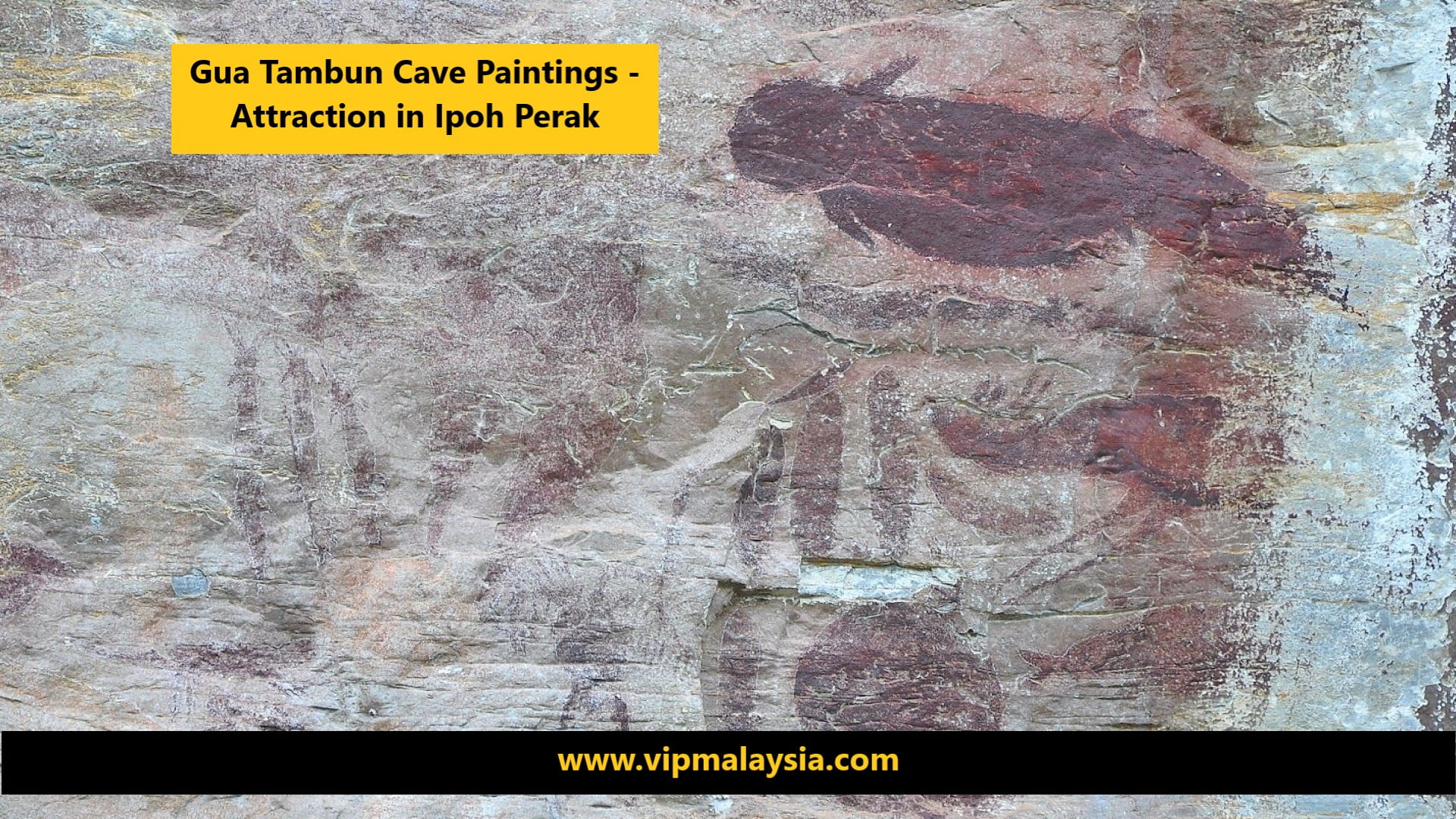
The cave’s walls are adorned with over 600 paintings, ranging from zoomorphic depictions of deer, tapirs, and marine creatures to anthropomorphic figures engaged in rituals. Geometric designs, possibly symbolizing spiritual or astronomical beliefs, add further intrigue.
Zoomorphic Representations
Animal figures dominate the panels, showcasing the importance of wildlife in prehistoric life. Deer, dugongs, and even marine species are painted in striking red hues, reflecting both subsistence and symbolic roles.
A dugong (Dugong dugon) is a large, aquatic, herbivorous marine mammal found in warm coastal waters of the Indo‑Pacific region. It belongs to the order Sirenia, which also includes manatees, and is the only living species in the family Dugongidae. Dugongs are distinguished by their fusiform bodies, paddle‑like flippers, and a dolphin‑like fluked tail. They feed primarily on seagrass and can live up to 70 years. The species is currently listed as Vulnerable by the IUCN due to threats such as habitat loss, fishing‑related fatalities, and hunting.
Anthropomorphic Figures
Human-like drawings illustrate scenes of hunting, dancing, and ritual practices. These depictions highlight the social and cultural dimensions of early communities.
Geometric and Abstract Motifs
Triangles, circles, and linear patterns suggest symbolic meanings, possibly linked to cosmology or spiritual beliefs. Their presence underscores the complexity of prehistoric thought.
Nearby Attractions
Gunung Lang Recreational Park
Located nearby, Gunung Lang Recreational Park features limestone formations, a scenic lake, and boat rides. It’s a perfect complement to a heritage visit, offering relaxation and nature exploration.
Perak Cave Temple
A Buddhist temple built within a limestone cavern, Perak Cave Temple offers panoramic views of Ipoh and intricate murals depicting Buddhist teachings.
Kek Lok Tong Cave Temple
Known for its vast caverns and serene gardens, Kek Lok Tong is a spiritual retreat where visitors can admire Buddhist shrines and limestone formations.
Trekking and Adventure
Main Hiking Trails
Reaching Gua Tambun requires a short but steep hike, involving around 120 steps. The trek rewards visitors with breathtaking views of Ipoh and the surrounding limestone hills.
Tambun Heritage Trail
The Tambun Heritage Trail is the primary route leading visitors to the cave paintings. It involves a short hike of about 120 steps, shaded by limestone overhangs and greenery. Along the way, hikers may encounter wildlife such as hornbills, monitor lizards, and monkeys, making the journey both cultural and natural.
Gunung Panjang Nature Path
The Gunung Panjang Nature Path extends along the limestone ridge near Gua Tambun, offering scenic views of Ipoh and its surroundings. This less structured trail is ideal for adventurous hikers who enjoy exploring natural terrain. The path showcases diverse flora and fauna, adding a wildlife element to the cultural experience.
Unrecognized or Maintained Trails
Bukit Kledang Route 4‑9 Loop
Located close to Ipoh, the Bukit Kledang Route 4‑9 Loop is a challenging 5.5 km trail known for its steep inclines and lush forest cover. The route begins with a river crossing and gradually ascends through shaded terrain, rewarding hikers with panoramic views of Perak at the summit.
Gunung Alai Trail
The Gunung Alai Trail offers a 5.6 km hike with multiple checkpoints, starting from a rubber plantation and transitioning into bamboo forests. It is popular for sunrise treks, with breathtaking views from the peak that make it a favorite among seasoned hikers.
Bukit Liman Kati Path
The Bukit Liman Kati Path is a 6.4 km trail featuring steep sections and diverse flora and fauna. Though less frequented, it provides a more rugged adventure, with muddy terrain during the rainy season and scenic hilltop vistas.
Other Adventures
Wildlife Encounters
The area is home to diverse species, including macaques, hornbills, and butterflies. Birdwatchers and nature enthusiasts will find the trek especially rewarding.
Photography Opportunities
The cave’s elevated position offers stunning vantage points for photography, capturing both prehistoric art and panoramic landscapes.
Must-Visit Highlights
The Dugong Painting
One of the most famous figures at Gua Tambun is the dugong, painted approximately 10 meters above the cave floor. Its rarity makes it a highlight for visitors.
Main Rock Panels
The central panels, featuring clusters of human and animal figures, provide the most comprehensive glimpse into prehistoric artistry.
Scenic Overlook
From the cave’s ledge, visitors can enjoy sweeping views of Ipoh, blending cultural heritage with natural beauty.
Cultural Festivals and Nearby Towns
Ipoh’s Cultural Scene
Visitors can explore Ipoh’s vibrant food culture, famous for white coffee and street food. The city also hosts cultural festivals celebrating Perak’s diverse heritage.
Tambun Town
Known for its pomelo orchards, Tambun offers a taste of local agriculture and traditional markets.
Conclusion
Gua Tambun is more than a cave—it is a living museum of Malaysia’s prehistoric past. With over 600 ancient paintings, recognized heritage status, and proximity to cultural and natural attractions, it offers a rare opportunity to connect with early human civilization. Whether you are a history enthusiast, adventure seeker, or casual traveler, Gua Tambun promises an unforgettable journey into the heart of Southeast Asia’s heritage.
Summary
- Attraction: #GuaTambun
- Location: #Perak
- Attraction Type: #Cave
- Why Visit:
- One of Malaysia’s oldest rock art sites – Dating back to 2,500–4,000 years ago
- Home to more than 600 ancient drawings – Featuring animals, human figures, and geometric designs
- Recognized as a National Heritage Site – Officially gazetted in 2010
- Educational guided tours available – Learn about Neolithic cave art, early human life, and rock art preservation
Quick Info
| Attribute | Details |
|---|---|
| Name | Gua Tambun, Perak |
| Address | Tambun, 31400 Ipoh, Perak, Malaysia |
| GPS Position | 4.6235° N, 101.1336° E |
| State | Perak |
| Year Discovered | 1959 (by Lt. R. L. Rawlings) |
| Facility Type | Archaeological Heritage Site |
| Special Attractions | Ancient Rock Paintings (2,000–12,000 years old), occasional guided tours, short hiking trail |
| Nearby Attractions | Gunung Lang Recreational Park, Perak Cave Temple, Kek Lok Tong Cave Temple |
| Accessibility | Located near Ipoh, accessible via local roads; requires short hike of ~120 steps |
| Best Time to Visit | Morning or late afternoon for cooler temperatures |
| Contact – JKKN Perak (Perak State Heritage Department) | Kompleks JKKN Perak, Lot 20561 & 20565, Jalan Caldwell, Off Jalan Raja Di Hilir, 30350 Ipoh, Perak Darul Ridzuan. Phone: 05-253 7001 / 05-254 1027 |
| Contact – Tourism Perak Malaysia (Ipoh Tourism Office) | 22, 22A & 22B, Jalan Teh Hawa, Kampung Jawa, 30300 Ipoh, Perak, Malaysia. Phone: 05-249 9966 |
Visitor Reviews
Amira Yusof, Kuala Lumpur – ★★★★★ “I was amazed by the sheer number of paintings. The hike was short but steep, and reaching the site felt like stepping back in time. Truly worth the effort!”
Farzana Rahim, Penang – ★★★★☆ “The rock art is fascinating, though the site could use better maintenance. Still, the historical value is undeniable, and the views of Ipoh are stunning.”
Iza Farlini, Johor Bahru – ★★★★★ “Visiting Gua Tambun was an eye-opening experience. The guided tour helped me understand the significance of the paintings. Highly recommended for families and students.”
Zoei Tan, Singapore – ★★★★☆ “The dugong painting was my favorite highlight. The trek was manageable, and the surrounding nature made the visit even more enjoyable. A hidden gem near Ipoh.”