Kota Bharu
Kota Bharu, the capital of Kelantan, Malaysia, is a city where tradition and modernity intertwine. Known for its vibrant markets, royal palaces, and proximity to pristine beaches, it offers travelers a rich cultural immersion. Whether you’re drawn to its Islamic heritage, bustling bazaars, or adventurous trekking routes, Kota Bharu is a destination that rewards curiosity and exploration.
Introduction
Kota Bharu sits in Malaysia’s northeastern corner, close to the Thai border. This city of over 300,000 residents is often overlooked by travelers heading to the Perhentian Islands, yet it holds treasures of its own. With its strong Islamic identity, Kelantanese traditions, and Thai cultural influences, Kota Bharu provides a unique travel experience. Visitors encounter authentic Malay heritage, colorful handicrafts, and warm hospitality. The city’s compact center makes it easy to explore, while nearby villages and beaches expand the adventure.
History
Kota Bharu’s history is deeply tied to the Kelantan Sultanate, which has shaped its cultural and political landscape for centuries. Founded in 1844 by Sultan Muhammad II, the city became Kelantan’s royal seat. Its name, meaning “new city,” reflected its role as a fresh administrative hub. Over time, Kota Bharu grew into a center of Islamic scholarship and Malay arts.
During World War II, Kota Bharu was the site of the first Japanese landing in Malaya in December 1941, marking the beginning of the Malayan Campaign. This event left a lasting imprint on the city’s identity, with museums and memorials preserving the memory. Post-independence, Kota Bharu retained its reputation as a bastion of Malay culture, with traditional crafts, music, and cuisine flourishing under state support. Today, its historical palaces, mosques, and museums stand as living reminders of Kelantan’s royal and religious heritage.
Highlights
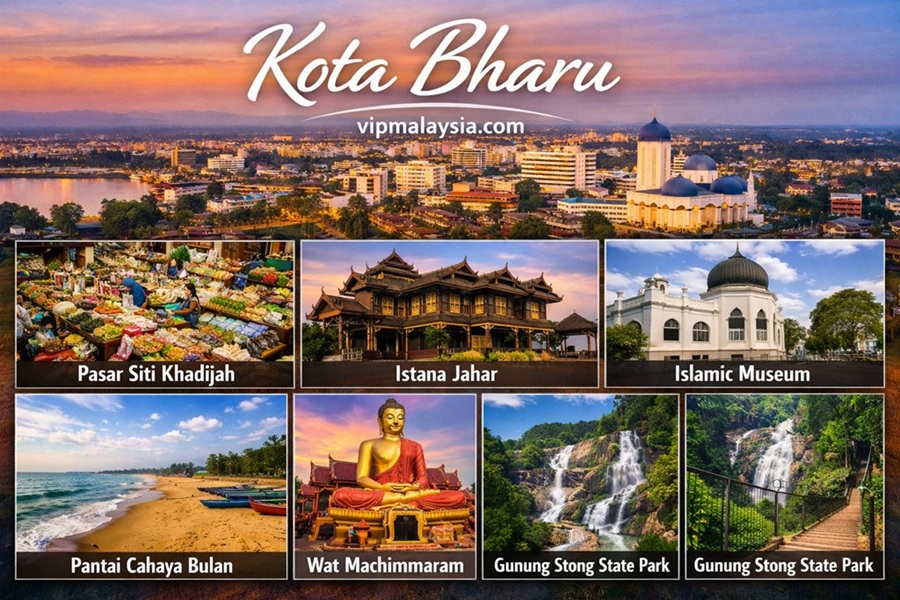
Pasar Siti Khadijah
Named after the Prophet Muhammad’s wife, this bustling market is run largely by women. It is a kaleidoscope of colors, with stalls selling fresh produce, textiles, and traditional snacks. Visitors can savor Kelantanese delicacies like nasi kerabu and kuih muih, while observing daily life in its most authentic form.
Istana Jahar
Built in 1855, this former royal residence now serves as a museum showcasing Kelantan’s royal traditions. Exhibits include ceremonial attire, royal gifts, and historical artifacts. The palace’s intricate wood carvings reflect Malay craftsmanship at its finest.
Islamic Museum
Housed in a former palace, the Islamic Museum explores the spread of Islam in Kelantan. Manuscripts, religious artifacts, and exhibits on Islamic calligraphy highlight the state’s spiritual heritage.
Pantai Cahaya Bulan
Known as “Moonlight Beach,” this coastal stretch is popular for picnics and kite flying. The beach offers a serene escape from the city, with seafood stalls lining the shore.
Attractions
Cultural Center (Gelanggang Seni)
This venue hosts traditional performances such as wayang kulit (shadow puppetry), silat (martial arts), and mak yong (dance-drama). Visitors gain insight into Kelantan’s performing arts, many of which are recognized by UNESCO.
Kampung Kraftangan
A handicraft village where artisans produce batik, songket, and wood carvings. Travelers can watch demonstrations and purchase souvenirs. Supporting local crafts helps sustain Kelantan’s cultural economy.
Wat Machimmaram and Tumpat Temples
Located near the Thai border, Tumpat is home to several Buddhist temples, including Wat Machimmaram with its towering sitting Buddha statue. These sites reflect the region’s Thai influence and religious diversity.
Trekking and Adventure
Jungle Railway Experience
Travelers can board the “jungle railway” from Johor Bahru to Kota Bharu, passing through lush rainforests and rural villages. This scenic journey is an adventure in itself.
Gunung Stong State Park
Located a few hours from Kota Bharu, Gunung Stong State Park offers trekking trails to waterfalls and limestone hills. The Jelawang Waterfall, one of Southeast Asia’s tallest, is a highlight.
Wildlife Encounters
Kelantan’s forests host species such as hornbills, gibbons, and tapirs. Trekking tours often include wildlife spotting, adding an adventurous edge to cultural exploration.
Nearby Attractions
Perhentian Islands
Accessible from Kota Bharu via Kuala Besut jetty, these islands are famed for snorkeling and diving. Crystal-clear waters and coral reefs make them a paradise for marine lovers.
Rantau Panjang
A border town known for duty-free shopping and Thai-Malay fusion cuisine. It’s a lively spot to experience cross-cultural exchange.
Kuala Krai
A riverside town offering boat rides and access to rural Kelantanese life. It’s ideal for travelers seeking off-the-beaten-path experiences.
Conclusion
Kota Bharu is more than a gateway city—it is a destination rich in culture, history, and adventure. From its royal palaces and bustling markets to its nearby beaches and trekking trails, it offers travelers a multifaceted experience. Whether you’re drawn to Islamic heritage, traditional crafts, or natural wonders, Kota Bharu rewards exploration with authenticity and charm.