The Best Attraction in Malaysia. Makam Mahsuri is an atttraction and Langkawi is a destination in Malaysia. The best food beach, historical building, landmarks, museum, zoo, art and agriculture. Discover Malaysia attraction now from the best local cuisine in every state, explore Taman Negara, beautiful mountain etc. We will provide all 14 states in Malaysia about the attractions you must visit. Read on!
Escape into the lush embrace of Taman Botani Negara Shah Alam—a 817-hectare sanctuary of flora, fauna, and family-friendly fun. From rice planting to petting zoos, this botanical haven offers hands-on learning, eco-adventures, and unforgettable memories for all ages.
Introduction
Nestled in Bukit Cahaya Seri Alam, Taman Botani Negara Shah Alam (TBNSA) is more than just a park—it is a living classroom, a conservation hub, and a playground for the soul. Established in 1986 as Taman Pertanian Bukit Cerakah, it was later renamed TBNSA in 2007 to reflect its expanded role as Malaysia’s premier botanical garden. Today, it houses over 450 plant species, diverse wildlife, and attracts thousands of visitors annually. Families, students, and nature lovers alike find themselves immersed in a space that balances recreation with ecological awareness.
History
The origins of TBNSA trace back to Malaysia’s vision of creating a national agricultural park that would serve as both a research center and a public attraction. In 1986, the government launched Taman Pertanian Bukit Cerakah, focusing on agriculture, forestry, and environmental education. Over time, the park evolved into a broader botanical and recreational space.
By 2007, it was officially renamed Taman Botani Negara Shah Alam, symbolizing its transformation into a botanical garden of national significance. The park’s mission expanded to include conservation of native flora and fauna, eco-tourism, and community engagement. Its facilities grew to encompass themed gardens, trekking trails, and educational programs. Today, TBNSA stands as a testament to Malaysia’s commitment to preserving biodiversity while offering meaningful leisure experiences.
CSR & Community Engagement
Corporate Social Responsibility
TBNSA offers custom CSR packages for organizations looking to give back through tree planting, clean-ups, and conservation work.
Strengthening Bonds
These activities not only support the environment but also foster teamwork and community spirit among participants.
Highlights
Laman Padi
The 2.1-hectare Laman Padi showcases Malaysia’s rice-growing heritage. With six plots—five dedicated to hybrid paddy cultivation and one for public activities—visitors can learn about direct seeding and transplanting techniques. Educational programs allow guests to experience soil preparation, planting, and harvesting, making it a hands-on journey into the country’s agricultural traditions.
Learn by Doing
Visitors, including children as young as four, can participate in semi-formal programs blending indoor briefings with outdoor demonstrations. These sessions cover plant biology, environmental sustainability, agricultural techniques, and forest conservation, ensuring that every participant leaves with a deeper appreciation of Malaysia’s farming culture.
Hussin Fauzi Farm
The Hussin Fauzi Farm is a family favorite, offering close encounters with animals such as camels, goats, rabbits, donkeys, and capybaras. Designed as a mini zoo, it provides a safe environment for children and adults to interact with friendly creatures.
Wildlife Encounters
Beyond domesticated animals, visitors may spot migratory birds and reptiles in the surrounding areas. Caretakers often conduct live demonstrations, sharing fun facts about animal behavior and conservation. This blend of entertainment and education makes the farm a highlight for families.
Four Seasons Temperate House
One of TBNSA’s most unique attractions is the Four Seasons Temperate House, where visitors can experience spring, summer, autumn, and winter in a controlled environment. This facility introduces Malaysians to temperate plants and climates, offering a rare glimpse of cherry blossoms, autumn foliage, and even artificial snow.
Attractions
Themed Gardens
TBNSA features several themed gardens, including the Cactus Garden, Tropical Fruits Garden, and Spice & Beverage Garden. Each section highlights specific plant groups, offering insights into their ecological and cultural significance.
Cactus Garden
Home to diverse succulents, the Cactus Garden demonstrates how plants adapt to arid environments. Visitors learn about water conservation strategies and the global importance of desert flora.
Tropical Fruits Garden
This garden celebrates Malaysia’s fruit diversity, from durians and rambutans to mangosteens. Seasonal harvests allow visitors to taste fresh produce while learning about cultivation techniques.
Eco-Education Programs
TBNSA runs structured programs for schools, universities, and corporate groups. These include tree planting, clean-up drives, and conservation workshops. Such initiatives foster environmental awareness and strengthen community bonds.
Things to Do
Cycling and Hiking
The park offers extensive cycling paths and hiking trails suitable for all fitness levels. Visitors can rent bicycles or embark on guided treks through lush forests.
Trekking Adventures
Trails vary from easy walks to challenging routes, with opportunities to spot wildlife such as macaques, hornbills, and monitor lizards. Trekking also provides access to scenic viewpoints overlooking Shah Alam.
Adventure Activities
For thrill-seekers, TBNSA features flying fox rides, wall climbing, and canopy walks. These activities combine adrenaline with nature appreciation, making them popular among younger visitors and corporate team-building groups.
Trekking and Adventure
Bukit Sapu Tangan Trail
This trail leads to one of the highest points in TBNSA, offering panoramic views of Shah Alam. The trek is moderately challenging, rewarding hikers with breathtaking scenery and a sense of accomplishment.
Flora and Fauna Along the Trail
Hikers encounter diverse plant species, including ferns, bamboo, and towering tropical trees. Birdwatchers often spot hornbills and kingfishers, while occasional sightings of wild boars add excitement to the journey.
Major Trails
Trail Name
Details
Bukit Sapu Tangan Trail
The park’s most notable trail, leading to its highest peak at 204 meters above sea level. The route is about 6.9 km round trip, moderately challenging, and takes 2–3 hours to complete. Along the way, hikers encounter tropical flora, hornbills, macaques, and occasional wild boars. At the summit, a viewing tower (currently in poor condition) offers panoramic views of Shah Alam.
Nearby Attractions
Shah Alam City
Located just minutes away, Shah Alam offers cultural and urban attractions such as the Sultan Salahuddin Abdul Aziz Mosque, shopping malls, and local eateries. Visitors often combine a trip to TBNSA with city exploration.
Klang Town
Nearby Klang is famous for its heritage sites and culinary delights, particularly bak kut teh. A short drive from TBNSA, Klang provides a cultural contrast to the botanical experience.
Cultural Festivals
Visitors who time their trip during festivals such as Hari Raya Aidilfitri or Deepavali can enjoy vibrant celebrations in Shah Alam and Klang, adding cultural depth to their nature excursion.
Rental Facilities
Facility Name
Description
Capacity
Rental Rate
Main Courtyard
A multipurpose open space ideal for runs and group activities
1,000 – 1,500 people
From RM300/day (weekdays), RM500/day (weekends)
Balai Seri Kantan
Elegant hall for official events, seminars, or social gatherings with scenic paddy field views
100 – 200 people
RM800/day (weekdays), RM1,000/day (weekends)
Astaka Laman Padi
Open-air pavilion for small events, seminars, or casual gatherings surrounded by greenery
100 people
RM200/day
Laman Santai
Relaxed outdoor space for team building, archery, family days, or group meetups
50 – 70 people
RM100/day
Tanjung Court
Spacious venue for sports, community events, or family gatherings
100 – 150 people
RM150/day
Sand Court
Ideal for sports and large-scale team activities in a natural setting
150 – 200 people
RM200/day
Herbarium Amphitheater
Tranquil outdoor venue for talks, small performances, or group activities
100 – 150 people
RM150/day
Keruing Amphitheater
Open-air space surrounded by greenery for performances, talks, or community events
150 – 200 people
RM150/day
Camar Rimba Amphitheater
Natural outdoor venue for group activities, talks, or performances
150 – 200 people
RM150/day
Conclusion
Taman Botani Negara Shah Alam is more than a park—it’s a living classroom, a family retreat, and a green legacy. Whether you’re planting rice, bonding with animals, or learning about sustainability, every visit plants a seed of appreciation for nature.
Mark your calendar and bring your loved ones to Taman Botani Negara Shah Alam (TBNSA), capture the beauty, share the joy. Let’s grow a greener tomorrow—together
Norizan Besar., Kuala Lumpur – ★★★★☆ “I visited with my family and we rented bicycles to explore the park. The cycling paths were well maintained, and the kids enjoyed the Hussin Fauzi Farm where they saw camels and rabbits. The only downside was limited food stalls, so we brought our own snacks.”
Shukri Abdullah, Petaling Jaya – ★★★★☆ “The Bukit Sapu Tangan Trail was a highlight. It took us about two hours to reach the top, and the view of Shah Alam was worth the effort. The trail was moderately challenging, with lots of tropical plants and occasional sightings of monkeys. Bring water, as facilities are sparse along the trail.”
Mohd Sholihin, Shah Alam – ★★★★★ “I loved the Four Seasons Temperate House. Experiencing autumn leaves and even artificial snow in Malaysia was surreal. It’s a unique attraction that makes TBNSA stand out compared to other parks. Entry fees were very affordable, which makes it accessible for families.”
Erma Zulkarnain., Klang – ★★★★☆ “Our company organized a CSR tree planting activity here. The staff guided us through the process, and it was both educational and fun. The park is huge, so we didn’t manage to see everything in one day. It’s a great place for team building and environmental awareness.”
Discover the natural soul of Selangor at Taman Warisan Negeri Selangor—a protected forest sanctuary spanning Ulu Selangor, Gombak, and Ulu Langat. With waterfalls, jungle trails, and eco-education, this is your gateway to the state’s most breathtaking green escapes.
Introduction
Taman Warisan Negeri Selangor, also known as the Selangor State Park, is one of Malaysia’s most significant conservation areas. Covering more than 108,000 hectares, it is the third-largest park in Peninsular Malaysia and plays a vital role in supplying water to Selangor, Kuala Lumpur, and Putrajaya. Beyond its ecological importance, the park is a sanctuary for recreation, research, and cultural heritage, offering visitors a chance to immerse themselves in lush rainforests, cascading waterfalls, and diverse wildlife.
History
The history of Taman Warisan Negeri Selangor is deeply tied to Malaysia’s conservation movement. Tucked within the lush districts of Hulu Selangor, Gombak, and Hulu Langat lies Taman Warisan Negeri Selangor, a protected forest sanctuary gazetted in 2007. Spanning more than 108,000 hectares, it is the third-largest park in Peninsular Malaysia and a vital water catchment for the Klang Valley.
Officially gazetted on 25 January 2007 under the National Forestry Act, the park was established to protect critical water catchment areas and biodiversity. Its creation was driven by the need to safeguard Selangor’s rivers and reservoirs, which provide nearly all of the state’s water supply. Historically, these forests were also home to indigenous communities and served as natural corridors for wildlife. Over time, pressures from urbanization and logging highlighted the urgency of preservation, leading to the park’s designation as a Hutan Perlindungan (Protected Forest). Today, it stands as a testament to Selangor’s commitment to balancing development with environmental stewardship.
Highlights
A Forest Protected by Law
The park’s gazettement ensures its preservation for future generations. It functions as a green lung, regulating climate, preventing floods, and maintaining soil fertility. Its legal status as a protected forest means that logging, mining, and development are strictly prohibited, making it a safe haven for flora and fauna.
A Natural Classroom
Taman Warisan Negeri Selangor is more than just a recreational space—it is an eco-education hub. Schools, universities, and researchers frequently use its trails and facilities to study Malaysia’s biodiversity. Interpretative trails and guided programs help visitors understand the delicate balance of rainforest ecosystems.
Attractions
Picnicking, Camping & Waterfalls
Sungai Sendat
Sungai Sendat is a popular recreational forest in Hulu Selangor, offering clear pools and shaded picnic areas. Families often visit for its accessible waterfall tiers, where shallow waters make it safe for children.
Kanching
Kanching Recreational Forest is famous for its seven-tiered waterfall, one of the most photographed in Selangor. Visitors enjoy picnics at the lower tiers, while adventurous hikers climb higher for panoramic views.
Kanching provides designated camping areas near its waterfalls. Rangers oversee the site, ensuring safety while visitors enjoy nights under the rainforest canopy.
Sungai Congkak
Sungai Congkak is a well-developed recreational forest with chalets, campsites, and picnic facilities. Its riverbanks are ideal for family outings, and the cool waters provide relief from the tropical heat.
Jungle Trekking & Nature Trails
Sungai Congkak is one of the most accessible trekking destinations within Taman Warisan Negeri Selangor. Its trails are beginner-friendly, winding through riverside paths shaded by towering dipterocarp trees. Families and school groups often use these routes for eco-education programs, as the forest provides a living classroom to observe native flora and fauna. The gentle terrain makes it suitable for casual hikers who want to enjoy nature without strenuous climbs.
The area is also well-equipped with facilities such as chalets, campsites, and gazebos, making it a popular weekend retreat. The combination of river crossings and forest trails creates a balanced trekking experience that blends adventure with relaxation. Visitors often pair trekking with picnics by the river, making Sungai Congkak a versatile destination for both recreation and learning.
Trail Name
Description
Riverside Trail
This beginner-friendly path follows the riverbanks, shaded by dipterocarp trees. It is popular among families and school groups for eco-education programs, offering easy access to picnic areas and shallow streams.
Forest Canopy Trail
A slightly more challenging route that winds deeper into the forest. Visitors encounter diverse flora such as bamboo and wild orchids, along with occasional sightings of macaques and bird species.
Eco-Education Loop
Designed for school trips and nature clubs, this loop integrates interpretative signage about rainforest ecology. It combines short climbs with river crossings, making it a balanced trail for learning and recreation.
Hilltop Trail
A moderate trek leading to elevated viewpoints over the forest canopy. The trail is often used by fitness groups and hikers seeking a more strenuous workout while still within a recreational forest setting.
Sungai Tekala
Located in Hulu Langat, Selangor, Sungai Tekala Recreational Forest (Hutan Lipur Sungai Tekala) is part of the Sungai Lalang Forest Reserve and forms a section of Taman Warisan Negeri Selangor. Just 43 km from Kuala Lumpur, it is easily accessible for day trips and is especially popular among school groups and families. The forest features gentle streams, multi-tiered waterfalls, and shaded picnic spots, making it a tranquil escape from the city. Facilities include gazebos, restrooms, and basic changing huts, ensuring comfort for visitors.
The park offers a short jungle trail known as Denai Jelutong, which is about 1.5 km long and includes 11 interpretative stops. This trail highlights native flora such as dipterocarp trees, ferns, and orchids, while also providing opportunities to spot butterflies, freshwater fish, and tropical birds. Activities include hiking, swimming in shallow river pools, camping, and nature study. Entry fees are affordable: RM2 for adults and RM1 for children, with camping permits available at RM5 per tent. Operating hours are 7:00 AM – 7:00 PM daily, and visitors are advised to seek approval from the forest ranger before starting the jungle trail.
Address: Sungai Tekala Recreational Forest, Jalan Semenyih, Hulu Langat, 43500 Semenyih, Selangor, Malaysia
Phone: 03-9075 2885 (Pejabat Hutan Daerah Selangor Tengah)
Ampang
Hutan Lipur Ampang, also known as Taman Rimba Ampang, is a lowland dipterocarp forest located just 8 km from Kuala Lumpur. Its proximity to the city makes it one of the most accessible birdwatching sites in Selangor. The forest reserve is home to diverse bird species, including hornbills, drongos, and the globally threatened Blue-banded Kingfisher, which thrives along the riverbanks.
Birdwatchers often follow the paved road leading to the Ampang Water Intake Compound, where sightings are most frequent. The lush canopy and flowing river provide ideal habitats for both resident and migratory species. The area has long been recognized as an Important Bird Area (IBA Code: MY10), underscoring its ecological significance.
Despite ongoing construction of the East Klang Valley Expressway, which has impacted accessibility, Hutan Lipur Ampang remains a favored destination for nature enthusiasts. Facilities such as picnic areas and jogging trails complement birdwatching activities, making it a versatile recreational forest. Its combination of biodiversity and urban proximity ensures it continues to attract both casual visitors and dedicated ornithologists.
Sungai Tua Recreational Forest
Sungai Tua Recreational Forest (Hutan Lipur Sungai Tua) is located just 15 km north of Batu Caves, making it one of the most accessible gateways to Selangor State Park. The forest features cascading streams, riverside gazebos, toilets, barbecue areas, and designated campsites shaded by towering dipterocarp trees. It is popular among families for picnics and among youth groups for camping and eco-education programs.
The forest spans approximately 600 hectares and is managed by the Selangor Forestry Department. Facilities include changing rooms, multipurpose halls, and riverside picnic areas. Entry fees are affordable, with adults charged RM1 and children RM0.50, while camping permits cost RM5 per tent. Operating hours are 7:00 AM to 7:00 PM daily, making it suitable for both day trips and overnight stays.
Address: Sungai Tua Recreational Forest, Batu Caves, 68100 Selangor, Malaysia Phone: 03-6091 6131 (Pejabat Hutan Daerah Hulu Selangor)
Sungai Gabai Waterfalls
Sungai Gabai Waterfalls (Air Terjun Sungai Gabai) are located in Hulu Langat, about 22 km from Cheras and Ampang. Known for their multi-level cascades, visitors climb stairways alongside the falls to reach picnic platforms and pools at the top. Gazebos are available along the way, making it a favorite for adventurous families seeking both relaxation and photography opportunities.
The site is managed by the local JKKK (village committee), with an entrance fee of RM1. Operating hours are 8:00 AM to 6:00 PM daily. The area is surrounded by lush rainforest and is close to Kampung Orang Asli Sungai Gabai, adding cultural interest to the visit.
Address: Air Terjun Sungai Gabai, 43100 Hulu Langat, Selangor, Malaysia
Phone: 03-9075 2885 (Pejabat Hutan Daerah Selangor Tengah)
Sungai Tekala
Sungai Tekala Recreational Forest, located near Semenyih, offers short trails that are ideal for families and school groups. The paths highlight native plants such as rattan, bamboo, and wild orchids, making it a natural classroom for eco-education. The trails are relatively easy, allowing visitors to explore without extensive preparation, and they lead to shaded picnic areas along the riverbanks.
Facilities at Sungai Tekala include gazebos, restrooms, and multipurpose halls, which support group activities and educational programs. The forest is also home to diverse wildlife, including macaques and bird species, which can be spotted along the trails. Its accessibility and infrastructure make it a favorite for day trips, especially for those seeking a balance between outdoor adventure and comfort.
Address: Sungai Tekala Recreational Forest, Jalan Semenyih, Hulu Langat, 43500 Semenyih, Selangor, Malaysia
Phone: 03-2616 4488 (general contact listed for Sungai Tekala Recreational Forest) Alternative inquiries can also be directed to the Pejabat Hutan Daerah Selangor Tengah at 03-9081 6054.
Trail Name
Description
Family Trail
This short and gentle path is ideal for families and school groups. It winds along shaded streams and picnic areas, highlighting native plants such as bamboo and orchids. The trail is designed to be accessible and educational, making it a favorite for eco-learning programs.
Educational Loop
A slightly longer circuit that integrates interpretative signage about rainforest ecology. Visitors encounter diverse flora and occasional wildlife such as macaques and bird species. The loop is often used by nature clubs and student groups for hands-on environmental studies.
Riverbank Path
This trail follows the riverbanks, offering scenic views of clear streams and shaded resting spots. It is popular among casual hikers and picnickers, providing easy access to gazebos and facilities.
Forest Canopy Trail
A moderate trek that ventures deeper into the forest canopy. The trail showcases towering dipterocarp trees and provides opportunities for birdwatching. It is suitable for those seeking a more immersive rainforest experience.
Kanching
Kanching Recreational Forest is renowned for its seven-tiered waterfall, and its trekking trails lead visitors through lush rainforest to reach the upper cascades. The lower tiers are easily accessible, while the higher levels require moderate effort, rewarding hikers with panoramic views and cool forest air. The trails are well-marked, making them suitable for both casual visitors and more adventurous trekkers.
Beyond trekking, Kanching is a hotspot for photography and nature study. The forest is rich in biodiversity, with sightings of silvered leaf monkeys and a variety of bird species. Its proximity to Kuala Lumpur makes it a convenient escape for urban dwellers, offering a refreshing immersion into nature without long travel times.
Address: Tourism Selangor Office (for enquiries): Tingkat 5, Bangunan Darul Ehsan, Jalan Indah, Seksyen 14, 40000 Shah Alam, Selangor, Malaysia. The forest itself is situated within the Kanching Reserved Forest and Lagong Reserved Forest, approximately 13 km from Bandar Rawang and easily accessible via the Rawang–Selayang route.
This short and accessible path leads to the first few tiers of the Kanching waterfall. It is ideal for families and casual visitors, offering shaded picnic spots and easy river access. The trail is well-maintained and frequently used for eco-education programs.
Mid-Level Trail
A moderately challenging route that ascends to the middle tiers of the waterfall. Visitors encounter lush rainforest vegetation and occasional sightings of silvered leaf monkeys. The trek provides a balance of adventure and relaxation.
Upper Cascade Trail
This trail requires more effort, leading hikers to the uppermost tiers of the seven-level waterfall. The climb rewards trekkers with panoramic views and cool forest air, making it popular among seasoned hikers and photographers.
Forest Loop Trail
A circular trail that winds deeper into the rainforest canopy. It is used by nature clubs and researchers for biodiversity studies, highlighting native flora and bird species. The loop offers a more immersive jungle experience.
Mountain Climbing & Rock Adventures
Permatang Kuartza (Klang Gates Quartz Ridge)
The Klang Gates Quartz Ridge, also known as Permatang Kuartza, is recognized as the longest pure quartz dyke in the world, stretching over 14 km and up to 200 meters wide. Formed more than 200 million years ago, it is a geological monument of immense scientific value. Its dramatic landscape, often compared to the spine of a dragon, rises above the tropical forest and provides breathtaking views of Kuala Lumpur and the surrounding valleys.
The ridge is home to five endemic plant species and rare animals such as the serow, a goat-like mammal found only in certain parts of Southeast Asia. Its biodiversity makes it not only a geological wonder but also a biological treasure. The ridge is part of Malaysia’s tentative list for UNESCO World Heritage status, underscoring its global significance.
Hiking trails at Bukit Tabur, which is part of the ridge, offer routes of varying difficulty, including West, East, Far East, and Extreme sections. These trails provide panoramic views of the Klang Gates Dam and Kuala Lumpur’s skyline. However, due to accidents in the past, permits are required, and safety precautions are strictly enforced by the Selangor Forestry Department.
Address: Persiaran Bukit Melawati, 68000 Selangor, Malaysia
Gunung Nuang
Gunung Nuang, standing at 1,493 meters, is the tallest peak in Selangor and a rite of passage for Malaysian hikers. Located in Hulu Langat, it is part of the Titiwangsa Range and serves as a training ground for climbers preparing for Mount Kinabalu. The trek is demanding, often taking 8–9 hours, and is considered one of Malaysia’s toughest hikes.
The trail begins at Pangsun and passes through checkpoints such as Kem Lolo, Kem Pacat, and Puncak Pengasih before reaching the summit. Along the way, hikers encounter dense rainforest, bamboo groves, and multiple river crossings. The terrain becomes progressively steeper, with sections requiring scrambling over rocks and roots.
Despite the modest views at the summit due to dense vegetation, the sense of accomplishment is immense. Wildlife such as macaques, birds, and small mammals can be spotted along the trail, adding to the experience. Permits are mandatory, and hikers are advised to prepare thoroughly with proper gear, water filtration, and physical conditioning.
Mountain Biking
Cyclists often use the lower sections of the Pangsun route, which includes the “never-ending road” and forested tracks leading to Kem Lolo. These trails provide a mix of gravel, mud, and root-covered paths, testing both stamina and bike-handling skills. The rainforest setting adds to the adventure, with dense vegetation and occasional wildlife encounters along the way.
Although biking is limited to the lower trails, the area’s popularity among hikers and campers means facilities such as parking, rest areas, and campsites are available. Riders are advised to secure permits from the Selangor Forestry Department and to prepare for slippery conditions during the rainy season. The combination of accessibility and difficulty makes Gunung Nuang a prime destination for mountain biking enthusiasts in Selangor.
Bukit Kutu
Bukit Kutu, also known as Treacher’s Hill during the colonial era, is located near Kuala Kubu Bharu. Once a hill station, it was abandoned after World War II and reclaimed by nature. Today, it offers a challenging trek that combines history, adventure, and panoramic views of the Titiwangsa Range and Selangor Dam.
The trail begins at Kampung Pertak and involves river crossings, steep ascents, and rugged terrain. Along the way, hikers encounter remnants of colonial-era structures, including stone walls and a chimney, which provide a glimpse into the past. The trek typically takes 3–4 hours to reach the summit, depending on fitness levels.
At the summit, hikers are rewarded with sweeping views of Kuala Kubu Bharu and surrounding valleys. Bukit Kutu is popular among seasoned trekkers due to its demanding terrain and historical significance. Permits are required, and guided tours are available to ensure safety and compliance with forestry regulations.
Fish Sanctuaries
Sungai Chiling
Sungai Chiling is one of Selangor’s most unique eco-tourism destinations, officially designated as a fish sanctuary under the management of the Selangor Fisheries Department. Located near Kuala Kubu Bharu, the sanctuary is dedicated to protecting the mahseer fish species, which thrive in its pristine river waters. Visitors must trek through several river crossings to reach the main waterfall area, making the journey itself part of the adventure. The sanctuary is strictly regulated, with fishing prohibited to ensure the long-term survival of the mahseer population.
The trek to Sungai Chiling is moderately challenging, requiring hikers to cross rivers multiple times while navigating forest trails. This immersive experience allows visitors to appreciate the surrounding rainforest ecosystem, which is home to diverse flora and fauna. Along the way, interpretative signs provide information about conservation efforts and the importance of maintaining clean waterways. The sanctuary is often used for environmental education programs, making it a living classroom for schools and nature enthusiasts.
At the end of the trek, visitors are rewarded with the sight of the Chiling Waterfall, a spectacular cascade surrounded by lush greenery. The pools at the base of the waterfall are filled with mahseer fish, offering a rare opportunity to observe them in their natural habitat. The sanctuary’s strict rules—such as prohibiting littering and restricting access during certain seasons—help preserve its delicate ecosystem. Sungai Chiling is not only a recreational destination but also a vital conservation site, balancing tourism with ecological protection.
Nearby Attractions
Fraser’s Hill
Located near Hulu Selangor, Fraser’s Hill is a colonial-era hill station known for birdwatching festivals and cool weather. It complements the park’s attractions with its quaint town and nature trails.
Kuala Kubu Bharu
This historic town serves as a gateway to the park. Visitors often stop here for supplies, local food, and cultural festivals before heading into the forest.
Batu Caves
Just outside Gombak, Batu Caves is a world-famous Hindu temple complex. Its limestone caves and towering statue of Lord Murugan make it a must-visit for those exploring Selangor.
Conclusion
Taman Warisan Negeri Selangor is not just a park—it is Selangor’s ecological lifeline, a sanctuary for biodiversity, and a playground for adventurers. From waterfalls and camping grounds to trekking trails and geological wonders, it offers something for everyone. Its role in water catchment and conservation makes it a critical natural resource, while its recreational facilities ensure it remains accessible to the public. Whether you are a researcher, a family on a picnic, or a hiker chasing summits, this park is a destination that embodies the spirit of Malaysia’s natural heritage.
Summary
Attraction: Taman Warisan Negeri Selangor
Location: #Selangor
Attraction Type: #Park
Source: forestry.gov.my, dewan.selangor.gov.my
Quick Info
Attribute
Details
Name
Taman Warisan Negeri Selangor
Location
Ulu Selangor, Gombak, Ulu Langat
State
Selangor
GPS (HQ)
3.0736° N, 101.7641° E (approx.)
Operating Hours
7:00 AM – 6:00 PM daily
Camping Permission
Required via Pejabat Hutan Daerah
Main Office
Pejabat Hutan Daerah Selangor Tengah, KM11, Jalan Cheras, 43200 Cheras
Step into the heart of Klang’s 19th-century civil wars at Kota Raja Mahadi, a hilltop fortress built in 1866. Discover the story of power, pride, and politics that unfolded within its walls—and why this site remains a must-visit for heritage lovers today.
Introduction
Nestled on Bukit Kota overlooking the Klang River, Kota Raja Mahadi is more than a historical monument—it is a living testament to Selangor’s 19th-century civil wars. Built by Raja Mahadi Ibni Almarhum Raja Sulaiman, this fortress became the stage for fierce battles of power and pride. Its strategic location and symbolic presence made it a cornerstone of Selangor’s political landscape. For heritage lovers, the site offers not only a journey into history but also an immersive cultural experience.
History
The Birth of Kota Raja Mahadi
In 1866, Raja Mahadi constructed the fortress to assert his authority against rivals who controlled Klang’s lucrative river trade. Built from earthworks and reinforced with cannons brought from Kuala Selangor, the fort symbolized defiance and sovereignty. Its elevated position gave Raja Mahadi a commanding view of the Klang River, a vital artery for commerce and military movement.
The Civil Wars That Shaped Selangor
First Civil War (1866–1867)
Raja Mahadi clashed with Raja Abdullah, who had been granted control over Klang’s riverbanks. The fortress became a stronghold, with defenses that repelled attacks for nearly a year. Ultimately, Raja Abdullah’s forces withdrew, cementing Raja Mahadi’s temporary dominance.
Second Civil War (1868)
Tengku Kudin of Kedah entered as a mediator but soon took sides. When diplomacy failed, he launched an offensive that overpowered Raja Mahadi. The fortress fell, and Tengku Kudin made it his residence until 1898, marking a new chapter in Selangor’s governance.
Highlights
Architectural Ingenuity
The fortress was built primarily from earth, reinforced with timber and cannons. Its design emphasized defense, with elevated walls and strategic positioning. The hilltop location provided visibility across Klang, making it both a military and symbolic stronghold.
Symbol of Sovereignty
Beyond its military role, Kota Raja Mahadi represented resistance against colonial influence and internal rivals. It was a statement of Selangor’s autonomy, embodying the pride and ambition of its rulers.
Heritage Landmark
Visitors today can explore remnants of the fortress walls and cannons. Informational plaques narrate the site’s history, offering insights into Selangor’s civil wars. The fortress is a popular stop on Klang’s heritage trail, connecting travelers to other colonial-era landmarks.
Cultural Festivals
Klang hosts annual cultural events that often highlight its historical sites. Kota Raja Mahadi becomes a focal point during heritage walks and festivals, where local guides recount stories of battles and diplomacy.
Things to Do
Guided Tours
Local heritage organizations conduct tours that explain the fortress’s role in Selangor’s civil wars. Guides bring history to life with vivid storytelling, making the experience engaging for visitors of all ages.
Photography
The fortress offers panoramic views of Klang town and the river. Photographers are drawn to its rustic walls, cannons, and scenic backdrop.
Bukit Kota Exploration
Bukit Kota is not just a hill but a vantage point that shaped Selangor’s history. The fortress of Raja Mahadi was built here in 1866, and the pathways leading up the hill retrace the footsteps of warriors and rulers. Walking these trails allows visitors to imagine the civil wars that unfolded, with cannons once positioned to guard the river below. The trek is short but meaningful, offering a direct connection to Klang’s political past.
The terrain is manageable, with gentle inclines that make it accessible to casual hikers and families. Along the way, visitors encounter remnants of fortifications and interpretive signs that narrate the battles between Raja Mahadi and Raja Abdullah. This historical layering makes Bukit Kota more than a trekking spot—it is a living museum of Selangor’s turbulent 19th century.
For those interested in heritage tourism, Bukit Kota provides a unique opportunity to combine physical activity with cultural learning. The trails are not overly demanding, but they carry the weight of history, making every step feel significant.
Wildlife and Nature
Beyond its historical significance, Bukit Kota is home to diverse flora and fauna. Visitors often spot macaques, monitor lizards, and bird species such as kingfishers and hornbills. The semi-urban environment allows wildlife to thrive, creating a natural backdrop to the fortress ruins. This blend of nature and heritage makes the trek engaging for both history enthusiasts and nature lovers.
The vegetation along the trails includes tropical trees and shrubs that provide shade, making the climb comfortable even during warmer hours. Seasonal flowers add bursts of color, and the sounds of birdsong accompany hikers as they ascend. These natural elements enhance the sensory experience of exploring Bukit Kota.
For eco-tourists, the hill offers a chance to appreciate Klang’s biodiversity while learning about its cultural heritage. The coexistence of wildlife and historical ruins highlights the resilience of both nature and human legacy in this part of Selangor.
Scenic Views and Accessibility
At the summit, Bukit Kota rewards visitors with sweeping views of Klang town and the Klang River. The river, once a contested trade route, now flows peacefully, offering a striking contrast to its turbulent past. Photographers find the vantage point ideal for capturing both the fortress ruins and the surrounding urban landscape.
Accessibility is another advantage of Bukit Kota. Located within Klang, it is easy to reach by car or public transport, making it a convenient day trip for visitors from Kuala Lumpur or Shah Alam. The trails are short, typically taking less than an hour to explore, which makes them suitable for beginners or those with limited time.
Facilities around the site include informational plaques, resting spots, and nearby food outlets in Klang town. This combination of convenience and cultural depth ensures that Bukit Kota remains a popular destination for both locals and tourists seeking a balanced mix of history, nature, and leisure.
Nearby Attractions
Klang Royal Town
Just a short walk away lies Klang’s royal town, home to Istana Alam Shah. This palace continues to serve as the official residence of the Sultan of Selangor.
Little India Klang
A vibrant cultural district nearby offers colorful shops, traditional Indian cuisine, and festive decorations. It is a perfect complement to a heritage tour, blending history with living culture.
Klang Riverfront
The riverfront area has been revitalized with parks and walking paths. Visitors can enjoy riverside dining while reflecting on the fortress’s strategic importance.
Conclusion
Kota Raja Mahadi is a fortress of history, power, and pride. Built in 1866, it witnessed Selangor’s civil wars and became a symbol of sovereignty. Today, it stands as a heritage landmark, offering visitors a blend of historical exploration, cultural immersion, and natural adventure. Whether you are a history enthusiast, a photographer, or a casual traveler, Kota Raja Mahadi promises a memorable journey into Klang’s past.
Summary
Attraction: Kota Raja Mahadi
Location: #Selangor
Attraction Type: #HistoricalSite
Source: padat.gov.my
Quick Info
Attribute
Details
Name
Kota Raja Mahadi
Address
60, Jalan Raya Barat, Majlis Perbandaran Klang, 41100 Klang, Selangor
State
Selangor
GPS Coordinates
3.0452° N, 101.4449° E
Year Built
1866 (PADAT record; some sources cite 1860)
Founder
Raja Mahadi Ibni Almarhum Raja Sulaiman
Historical Role
Military fortress during Selangor Civil Wars
Conflict Timeline
First war: 1866–1867, Second war: 1868
Materials
Earthworks, cannons from Kuala Selangor
Strategic Location
Hilltop overlooking Klang River
Later Occupant
Tengku Kudin (1868–1898)
Transferred Artifacts
Cannons moved to Istana Mahkota Puri in 1899
Nearby Landmark
Istana Alam Shah
Contact (PADAT)
03-5519 0050 / 03-5510 3220
Email
info@padat.gov.my
Facebook
PADAT Facebook
Visit Office
Muzium Sultan Alam Shah, Shah Alam
Visitor Reviews
Tahirah Musa, Klang – ★★★★★ “I grew up in Klang but only recently visited Kota Raja Mahadi with my children. The fortress sits on Bukit Kota, and from the top you can see the Klang River winding through the town. The plaques explaining the civil wars gave me a deeper appreciation of our local history. My kids loved spotting the old cannons and imagining the battles. It’s a place that connects us to Selangor’s roots.”
Rosli the Foreman, Kuala Lumpur – ★★★★☆ “I joined a heritage walk organized by the Klang Municipal Council. The guide explained how Raja Mahadi fought against Raja Abdullah, and later Tengku Kudin took over the fort. Standing on the hill, I could picture the clashes that shaped Selangor. The site is small, but the storytelling made it powerful. Facilities like seating and shade could be improved, but the historical value is undeniable.”
Ahmad Dahlan Sayap-Sayap Wings, Petaling Jaya – ★★★★★ “As a photographer, I found Kota Raja Mahadi fascinating. The fortress walls, though weathered, make for dramatic shots, especially with the Klang River in the background. I visited during the Klang Heritage Festival, and the cultural performances nearby added vibrancy to the experience. It’s not just about history—it’s about living culture blending with the past.”
Nurul Fatihah, Shah Alam – ★★★★☆ “I came here after exploring Little India Klang. The fortress is within walking distance, and the trek up Bukit Kota was easy. I was surprised to see macaques along the trail, which added a bit of adventure. The view from the top was worth it, and learning about Tengku Kudin’s residence until 1898 made me realize how long this site remained important. It’s a hidden gem for those who enjoy both history and light trekking.”
Ramesh Kumar, Penang – ★★★★★ “I traveled to Klang specifically for its heritage trail, and Kota Raja Mahadi was the highlight. The fort’s story of civil wars and shifting power was explained clearly by local volunteers. I appreciated how the site ties into Klang’s broader history, including the royal town and Istana Alam Shah nearby. It’s a compact but powerful reminder of Malaysia’s political struggles in the 19th century.”
Discover the majestic charm of Masjid Sultan Suleiman Jamiur Rahmah, a royal mosque that blends Western Art Deco, Moorish and Islamic styles elegance with Islamic heritage. Once Selangor’s state mosque, this architectural gem in Klang holds royal tombs, colonial artistry, and a spiritual legacy that continues to inspire.
Introduction
Nestled in the heart of Klang, Masjid Sultan Suleiman Jamiur Rahmah is a royal mosque built in 1932 and opened in 1934. Blending Western Art Deco, Moorish, and Islamic styles, this former Selangor state mosque in Klang holds royal tombs, colonial artistry, and a spiritual legacy that continues to inspire generations.
History
A Mosque of Royal Status
The foundation stone of Masjid Sultan Suleiman was laid in 1932, in the presence of British dignitaries such as Sir Laurence Peel and Tuan J. Lornie. Officially opened in 1934 by Sultan Alaeddin Suleiman Shah, the mosque symbolized the union of colonial administration and royal patronage. For decades, it stood as Selangor’s state mosque, hosting official ceremonies and Friday prayers until Shah Alam’s Sultan Salahuddin Abdul Aziz Mosque took over in the late 20th century.
A Royal Resting Place
The mosque grounds are home to royal tombs, including Sultan Salahuddin Abdul Aziz Shah and members of the Selangor royal family. This makes the site not only a spiritual center but also a sacred royal heritage landmark, where history and faith intertwine.
Highlights
Architectural Brilliance
Masjid Sultan Suleiman is renowned for its octagonal layout and smooth semi-spherical domes. Designed by British architect Leofric Kesteven, the mosque blends Western Art Deco, Moorish, and Islamic styles. Its main dome, painted in royal yellow, is surrounded by smaller domes that crown the minarets, creating a regal skyline visible across Klang.
Colonial Touches with Local Soul
Inside, the mosque reflects English colonial influence through its beams, windows, and doors. The mimbar (pulpit) is a masterpiece of carved wood and wrought iron, symbolizing the fusion of classical elegance with Islamic spirituality.
Attractions
Spiritual Atmosphere
Every Friday, the mosque comes alive with congregational prayers. The acoustics, stained glass windows, and reverent silence between prayers create a deeply moving experience for worshippers and visitors.
Visitor Facilities
The mosque offers ample parking, funeral services (van jenazah), and is easily accessible from Klang town center. Visitors are welcomed respectfully, provided they observe proper etiquette.
Things to Do
Cultural Festivals
During Islamic festivals such as Hari Raya Aidilfitri and Maulidur Rasul, the mosque hosts vibrant celebrations. Visitors can witness traditional prayers, community feasts, and cultural performances that highlight Selangor’s rich heritage.
Photography and Heritage Walks
The mosque’s unique architecture makes it a favorite spot for heritage photography. Guided walks around Klang often include the mosque as a highlight, alongside colonial-era buildings and royal landmarks.
Trekking and Adventure
Klang Heritage Trails
Travelers can combine a visit to Masjid Sultan Suleiman with trekking routes around Klang’s heritage district. These trails pass through old shophouses, temples, and colonial structures, offering a blend of cultural and physical exploration.
Wildlife Encounters
While Klang is urban, nearby areas such as Kota Kemuning Lake and Bukit Cherakah Forest Reserve provide opportunities to spot local wildlife, including hornbills, macaques, and monitor lizards.
Nearby Attractions
Royal Klang Town
The mosque is located near Istana Alam Shah, the royal palace of Selangor. Visitors can explore Klang’s bustling town center, famous for its bak kut teh cuisine and traditional markets.
Port Klang
Just a short drive away, Port Klang offers ferry rides to Pulau Ketam, a fishing village known for its seafood and stilt houses.
Masjid Sultan Suleiman Jamiur Rahmah is not just a mosque—it is a royal monument, a colonial-era masterpiece, and a living spiritual hub. Its blend of Western Art Deco, Moorish, and Islamic styles makes it one of Malaysia’s most unique mosques. Whether you come for prayer, history, or cultural exploration, the mosque offers a deeply enriching experience in the heart of Klang.
Summary
Attraction: Masjid Sultan Suleiman
Location: #Selangor
Attraction Type: #HistoricalSite #Mosque
Source: mbdk.gov.my, masjid.islam.gov.my
Quick Info
Attribute
Details
Name
Masjid Sultan Suleiman Jamiur Rahmah
Address
Jalan Raya Timur, Kawasan 1, 41000 Klang, Selangor
State
Selangor
GPS Coordinates
~3.0370°N, 101.4450°E
Phone
+60 3-3374 3391
Date Built
Foundation stone laid 11 Sept 1932, opened 1934
Official Opening
1934 by DYMM Sultan Alaeddin Suleiman Shah
Architect
Leofric Kesteven
Architectural Style
Western Art Deco + Moorish + Islamic styles with English Colonial influence
Main Structure
Octagonal prayer hall with domes
Dome Design
Single egg-yellow dome with smaller domes
Capacity
~1,000 worshippers
Facilities
Spacious prayer hall, van jenazah, large parking
Royal Tombs
Graves of sultans, consorts, and royal kin
Visitor Reviews
Nurul Azrina– ★★★★☆
“I visited Masjid Sultan Suleiman for Friday prayers before Ramadhan 2025. The main hall has been upgraded with glass doors and air-conditioning, which made the prayer experience more comfortable. For those who prefer natural ventilation, there is still ample space outside. The mosque’s unique Art Deco design is unlike any other mosque I’ve seen in Malaysia.”
Bang Sudin, Batu Pahat, Johor – ★★★★★
“As someone passionate about heritage, I was impressed by the mosque’s rare Art Deco architecture and bas-relief murals. These artworks depict rivers, hills, and plants from Klang’s natural landscape. The conservation project in 2016 restored these murals beautifully, making the mosque not just a place of worship but a national heritage treasure.”
Hairuddin Nasir, Klang – ★★★★★
“The yellow domes are iconic, and the blend of colonial and Islamic design is breathtaking. I brought my children here to learn about Selangor’s royal heritage, and they were fascinated by the royal tombs and the mosque’s history. The mimbar inside is stunning, with intricate wood and ironwork that reflects both elegance and spirituality.”
Amiruddin Hassan, Klang – ★★★★☆
“The mosque is peaceful and majestic. It’s easily accessible from Klang town center, with ample parking and funeral facilities. I often come here for Friday prayers, and the acoustics inside the prayer hall make the recitations feel deeply moving. It’s a place where history and faith truly meet.”
Step into the past and uncover Selangor’s royal roots with a visit to Istana Bandar, a stunning 19th-century palace nestled in Jugra. This guide unveils its architectural splendor, rich history, and nearby heritage gems that make Kuala Langat a must-visit for history lovers and curious travelers alike.
Introduction
Nestled in Kuala Langat, Selangor, Istana Bandar Jugra stands as a majestic reminder of Malaysia’s royal past. This palace, once the residence of Sultan Ala’eddin Sulaiman Shah, embodies a unique blend of Islamic, Indian, Middle Eastern, and Chinese influences. Today, it serves as a heritage landmark, drawing travelers eager to explore its regal halls, nearby attractions, and the natural beauty of Jugra.
History
The story of Istana Bandar Jugra begins in 1899, when Sultan Ala’eddin Sulaiman Shah commissioned its construction. Completed around 1905, the palace became the Sultan’s residence until his passing in 1938. Its walls witnessed royal ceremonies, family life, and the birth of Sultan Salahuddin Abdul Aziz Shah in 1926.
After Malaysia’s independence, the palace was abandoned, reflecting the shift of administrative power to Kuala Lumpur. Yet, it found new life as a district craft center and Quranic school, serving the community in different ways. In 1988, the palace was recognized as a heritage site, and major conservation works in 2008–2009 by Jabatan Warisan Negara restored its grandeur. Today, it stands proudly with over 40 rooms across five hectares, offering visitors a glimpse into Selangor’s royal narrative.
Highlights
A Royal Past Comes Alive
Walking through the palace, visitors can imagine the daily life of Sultan Ala’eddin and his consort. The dragon-scale carvings, thick brick walls, and Persian-inspired motifs evoke a sense of regal elegance. Each room tells a story of power, tradition, and quiet sophistication.
A Fusion of Culture and Architecture
The palace’s design is a masterpiece of cultural fusion. Islamic arches, Indian motifs, Middle Eastern domes, and Chinese wood carvings coexist harmoniously. This eclectic blend makes Istana Bandar one of Malaysia’s most distinctive architectural gems.
Forgotten, Then Reborn
Though abandoned for decades, the palace’s rebirth through restoration projects has ensured its survival. Today, it stands as a symbol of resilience and heritage, reminding visitors of Selangor’s ability to preserve its past while embracing modernity.
Attractions
Royal Chambers and Courtyards
The palace’s chambers showcase traditional Malay royal living spaces. Courtyards provide open-air areas where ceremonies and gatherings once took place.
Intricate Carvings and Woodwork
Chinese artisans contributed exquisite carvings that remain intact. These details highlight the craftsmanship and artistry that went into the palace’s construction.
Quranic School Legacy
One section of the palace was once used as a Quranic school, reflecting its role in education and community life.
Things to Do
Explore Heritage Architecture
Visitors can admire the palace’s unique fusion of styles, taking time to study its carvings, arches, and domes.
Photography and Cultural Documentation
The palace offers countless opportunities for photography, especially for those interested in documenting Malaysia’s architectural heritage.
Attend Cultural Festivals
Local festivals often highlight Jugra’s heritage, with performances, exhibitions, and guided tours that bring the palace’s history to life.
Trekking and Adventure
Bukit Jugra Hiking Trails
Bukit Jugra offers trekking opportunities with panoramic views of the Straits of Malacca. Trails vary in difficulty, making them suitable for both casual hikers and seasoned adventurers.
Wildlife Encounters
The area around Jugra is home to diverse wildlife, including hornbills, macaques, and monitor lizards. Birdwatchers will find the region particularly rewarding.
Adventure Sports
Paragliding from Bukit Jugra is a popular activity, offering breathtaking aerial views of the palace and surrounding landscapes.
Nearby Attractions
Jugra Lighthouse
Built in 1976, the lighthouse still guides ships along the Straits of Malacca. Visitors enjoy sweeping coastal views from its vantage point.
Former Jugra District Office
This colonial-era building reflects Selangor’s early administrative history under British influence.
Jugra Police Station and Jailhouse
Constructed during Sultan Abdul Samad’s reign, this granite structure showcases early prison design in Malaysia.
Batu Hampar Jetty
Once vital for tin and timber trade, the jetty connected Jugra to Klang, serving as a lifeline for Selangor’s economy.
Masjid Sultan Alaeddin
Located just 200 meters from the palace, this mosque was built around 1905. Its timber mimbar and carved pillars echo influences from Deli, Medan. Sultan Ala’eddin himself often led Friday prayers here.
Royal Mausoleum of Sultan Abdul Samad
Situated on Bukit Jugra, this mausoleum houses the graves of Selangor’s royal family, dating back to the 1800s.
Istana Long Puteri / Istana Maimun
This lesser-known residence of Raja Long Puteri features a raised stone staircase and split-level wooden design. Though awaiting restoration, it remains architecturally significant.
Jugra Ammunition Store
A domed concrete structure by the Langat River, this store once housed munitions, strategically located for transport.
Conclusion
Istana Bandar Jugra is a living monument to Selangor’s royal heritage. Its fusion of cultures, historical significance, and surrounding attractions make it a destination that blends history, architecture, and adventure. Whether exploring its regal halls, trekking Bukit Jugra, or visiting nearby landmarks, travelers will find Jugra a rich tapestry of Malaysia’s past and present.
Summary
Attraction: Istana Bandar Jugra
Location: Kuala Langat, #Selangor
Attraction Type: #HistoricalSite
Source: selangor.gov.my, mpkl.gov.my
Quick Facts
Attribute
Details
Name
Istana Bandar (Alaeddin Palace)
Address
Jalan Istana Lama, Kampung Bandar, 42700 Jugra, Kuala Langat, Selangor
GPS Coordinates
2.8385° N, 101.4258° E
State
Selangor Darul Ehsan
Built
1899 – Completed circa 1905
Founder
Sultan Ala’eddin Sulaiman Shah
Architectural Style
Islamic-Indian, Middle Eastern, Chinese & Colonial fusion
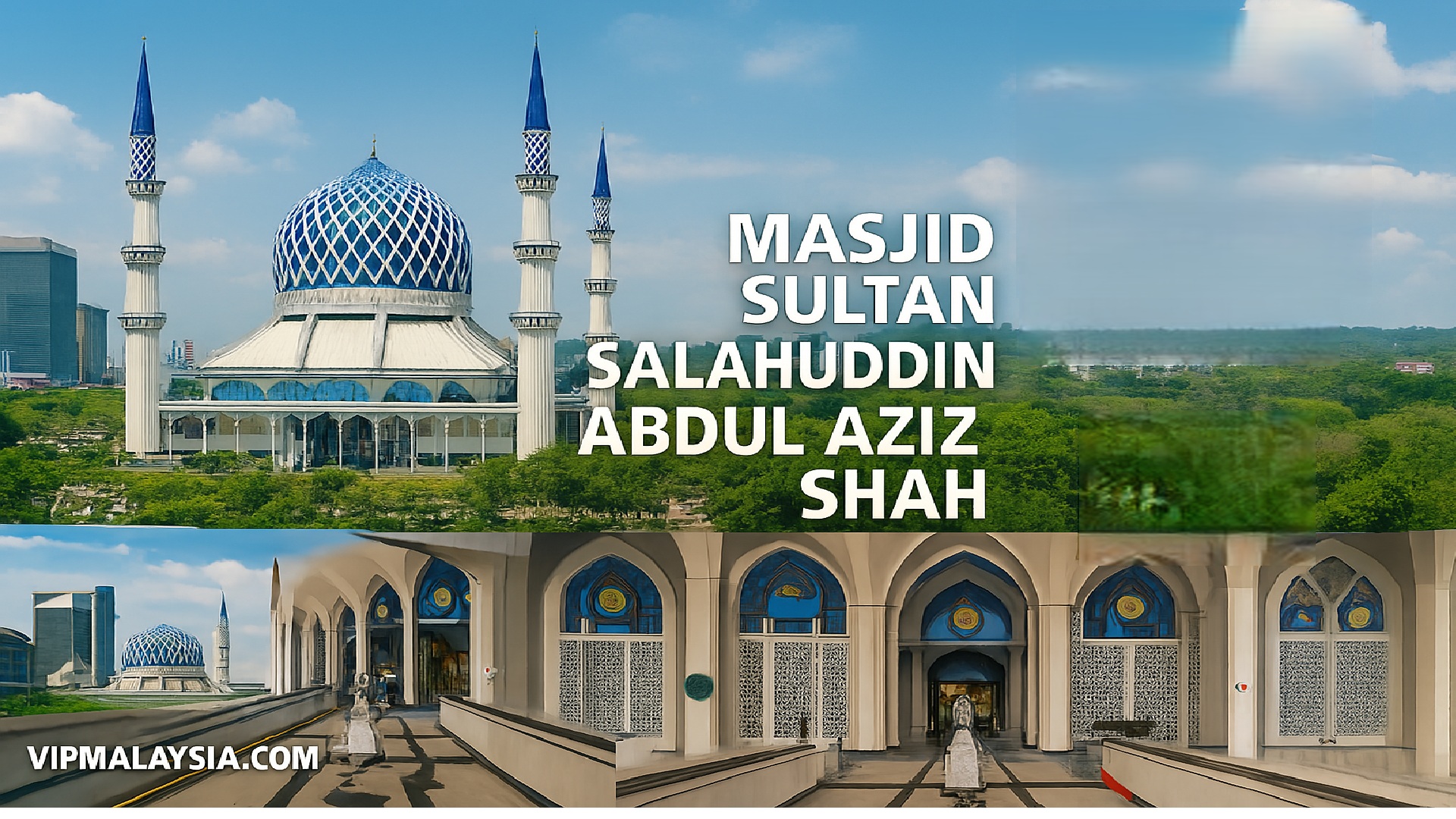
Masjid Sultan Salahuddin Abdul Aziz Shah, famously known as the Blue Mosque, is the largest mosque in Malaysia and one of the grandest in Southeast Asia. With its majestic dome and towering minarets, it stands as a beacon of Islamic architecture, spirituality, and cultural heritage in Shah Alam, Selangor.
Introduction
Standing tall in Shah Alam, the Blue Mosque is more than a place of worship—it is a symbol of faith, unity, and architectural excellence. Its striking blue dome, visible from miles away, reflects the sky and embodies the spiritual aspirations of the Muslim community. Beyond prayer, the mosque plays a vital role in education, cultural exchange, and community development, making it a must-visit landmark for travelers and worshippers alike.
History
The story of Masjid Sultan Salahuddin Abdul Aziz Shah begins in 1974 when Shah Alam was declared the new capital of Selangor. Sultan Salahuddin Abdul Aziz Shah envisioned a grand mosque that would symbolize the state’s Islamic identity. Construction began in 1982, led by architect Dato’ Baharuddin Abu Kassim, blending Malay and Islamic modernist styles.
By 1988, the mosque was completed, boasting the largest dome in the world at the time and four minarets that reached 142.3 meters, once the tallest globally. The mosque could accommodate 24,000 worshippers, cementing its reputation as a monumental achievement in Islamic architecture. Calligraphy by Egyptian artist Sheikh Abdel Moneim Mohamed Ali El Sharkawi adorns the interior, adding spiritual depth to its design.
Over the decades, the mosque has hosted countless religious events, educational programs, and cultural festivals, becoming a cornerstone of Selangor’s identity and a magnet for international visitors.
Highlights
Architectural Grandeur
The mosque’s blue dome measures 51.2 meters in diameter and rises 106.7 meters high. Its four minarets, each 142.3 meters tall, dominate Shah Alam’s skyline. The design integrates Malay motifs with Islamic artistry, creating a harmonious blend of tradition and modernity.
Spiritual Significance
Beyond its physical beauty, the mosque serves as a spiritual hub for Muslims across Malaysia. Daily prayers, Friday sermons, and Ramadan activities draw thousands, reinforcing its role as a center of faith and unity.
Attractions
Interior Splendor
Inside, visitors are greeted by intricate Islamic calligraphy, marble floors, and expansive prayer halls. The main prayer hall alone can host tens of thousands, while smaller halls accommodate lectures and community gatherings.
Cultural Programs
The mosque regularly organizes Islamic education sessions, da’wah programs, and family-oriented activities, making it not just a religious site but a cultural institution.
Things to Do
Guided Tours
Visitors can join guided tours to learn about Islamic architecture, history, and the mosque’s role in Selangor’s development.
Photography
The mosque’s striking dome and minarets make it a favorite spot for photographers, especially during sunrise and sunset when the sky enhances its blue hues.
Festivals
During Ramadan and Eid, the mosque becomes a vibrant hub of activity, with communal prayers, bazaars, and cultural performances.
Facilities for Rental
Mosque Facilities
Seminar Hall
Meeting Room
Studio MSSAAS
Multipurpose Banquet Hall
Marriage (Nikah) Room
VIP Room
Lecture Room
Training Room
Lecture & Discussion Spaces
Orkid Hall
Melati Room
Dahlia Auditorium
VIP Room
Banquet & Additional Rooms
VIP Banquet Room
Baby Changing Room
Waiting Room
Surau
Trekking and Adventure
Shah Alam Lake Gardens
Located nearby, the Shah Alam Lake Gardens offer trekking trails, boating, and picnic spots. Visitors often combine a mosque visit with outdoor exploration.
Bukit Cahaya Seri Alam
This eco-park provides jungle trekking, cycling, and wildlife encounters. It’s a perfect complement for travelers seeking both spiritual and natural experiences.
Nearby Attractions
Sultan Alam Shah Museum
A short distance away, this museum showcases Selangor’s history, culture, and Islamic heritage.
i-City Shah Alam
Known for its digital lights and theme park attractions, i-City offers family-friendly entertainment after a mosque visit.
Klang Town
Just 30 minutes away, Klang is famous for its royal palace, heritage sites, and culinary delights, making it a worthwhile stop.
Visitor Facilities
The mosque offers extensive facilities, including seminar halls, lecture rooms, banquet halls, marriage (nikah) rooms, and VIP spaces. Visitors will also find baby changing rooms, waiting areas, and surau for smaller prayer gatherings. These facilities highlight the mosque’s role as a community hub, not just a place of worship.
Conclusion
More than just a mosque, Masjid Sultan Salahuddin Abdul Aziz Shah stands as a living symbol of Islamic excellence and community empowerment. From education and family development to da’wah and unity, every corner of the mosque is filled with purpose and grace. Whether you’re visiting for worship, learning, or events—you’ll leave inspired.
Summary
Attraction: Masjid Sultan Salahuddin Abdul Aziz Shah
Location: #Selangor
Attraction Type: #Mosque
Source: mssaas.gov.my
Quick Info
Attribute
Details
Name
Masjid Sultan Salahuddin Abdul Aziz Shah (State Mosque of Selangor)
Nickname
Blue Mosque
Address
Persiaran Masjid, Seksyen 14, 40000 Shah Alam, Selangor
GPS Coordinates
3.0697°N, 101.5194°E
State
Selangor
Established
1988
Architectural Style
Modern Islamic blend (Malay + Ottoman influences)
Main Dome
51.2 m diameter, 106.7 m height; among the largest in Southeast Asia
Rental includes 4-hour preparation time prior to the event (without air-conditioning). • Example: For a morning event, prep time is from 7:00 PM – 11:00 PM the day before (if the hall is available).
Payment of deposit must be made to Bendahari Negeri Selangor, account number 8603252659 (CIMB Islamic Berhad).
Email receipt to: kewanganmssaas@gmail.com
Full payment must be made 14 working days before the event date to confirm booking.
Catering must be provided by MSSAAS-approved caterers.
MSSAAS does not provide chair/table covers or decorations, nor other event equipment.
Claims against the renter will be made for any damages or loss to MSSAAS property.
MSSAAS is not responsible for injuries, loss, or damages to persons or items during rental.
Renters must ensure guests are dressed appropriately and modestly.
Smoking, alcohol, non-halal food, and pets are strictly prohibited.
Renters are responsible for ensuring caterers maintain cleanliness during and after the event.
All rubbish must be removed from the premises after the event.
The State Government reserves the right to use the hall for official events; if so, the deposit will be returned.
MSSAAS may cancel bookings or withhold refunds if rules are violated.
Security deposit refunds:
Must be requested in writing after the event.
Refunded within 30 days from the request date.
Only the name listed on the receipt may request the refund.
Refunds will not be issued for:
Unused bookings.
Bookings made by unauthorized persons.
Renters must comply with any updated MSSAAS regulations.
It is prohibited to organize or host music performances that violate Islamic values.
Important
Before making any payments, renters must call MSSAAS Management Unit (UPM) at 03-55238006 to confirm availability.
Acknowledgement
I, ______________________________________ (IC No: ____________________) have read, understood, and agree to all the terms set by MSSAAS above.
Marissa ID, Kuala Lumpur – ★★★★★ “I visited the Blue Mosque during Ramadan, and the atmosphere was incredible. The prayer hall was filled with thousands of worshippers, yet everything was organized and peaceful. The dome’s interior calligraphy is breathtaking, and the facilities such as the seminar hall and nikah room show how the mosque serves the community beyond prayer.”
Zarith & Mimi, Johor Bahru – ★★★★☆ “The mosque is stunning, especially when viewed from Shah Alam Lake Gardens. I attended a family wedding in the multipurpose banquet hall, and the staff were very professional. Parking was a bit crowded, but the overall experience was memorable. The baby changing room and waiting areas were convenient for families.”
Habsah Holdings, Kuala Lumpur – ★★★★★ “As a tourist, I joined a guided tour of the mosque. The guide explained the history from its construction in the 1980s to its role today. I was impressed by the scale of the dome and minarets, and the cultural programs made me feel welcome as a non-Muslim visitor. It’s one of the most impressive religious sites I’ve seen worldwide.”
Farah Bobo, Penang – ★★★★★ “I attended Eid prayers here with my relatives, and the sense of unity was overwhelming. The mosque’s facilities, like Orkid Hall and Dahlia Auditorium, were used for community gatherings afterward. The calligraphy and architecture are truly world-class, making it a proud symbol of Selangor.”
Farid bin Dato’ Harun, Shah Alam – ★★★★☆ “Living nearby, I often come for Friday prayers. The mosque is not only a spiritual center but also hosts lectures and training programs. The Melati Room and lecture halls are well-equipped. Sometimes traffic around the mosque can be heavy, but the facilities and atmosphere make it worth the visit.”
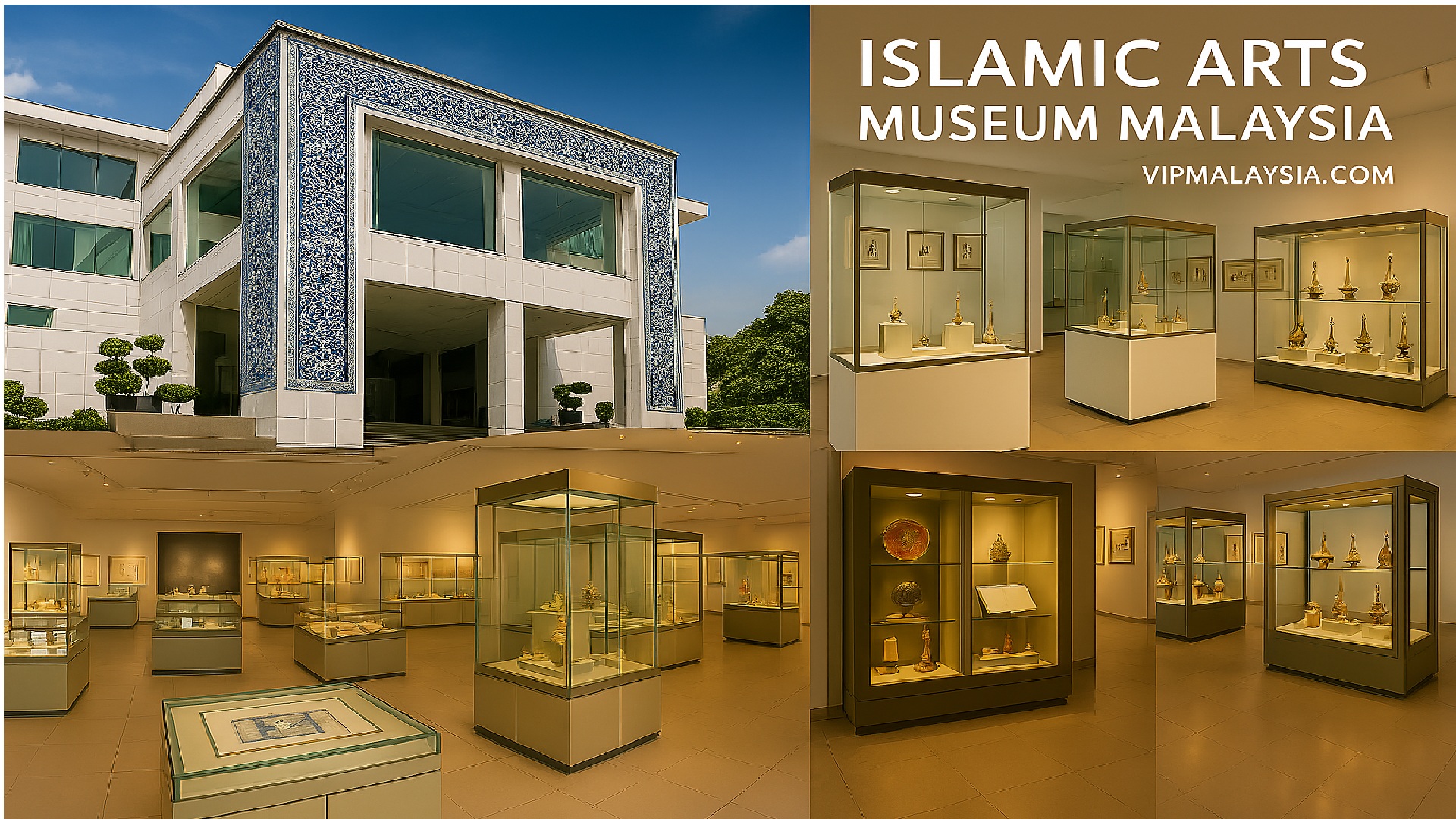
A serene treasure in the heart of Kuala Lumpur, the Islamic Arts Museum Malaysia (IAMM) invites visitors to explore over a millennium of Islamic culture, architecture, and craftsmanship. From luminous domes to intricate artefacts, this museum is more than a gallery—it’s a timeless journey through the diversity and elegance of the Islamic world.
Introduction
The Islamic Arts Museum Malaysia (IAMM) stands as a beacon of knowledge and beauty in the heart of Kuala Lumpur. Since its opening in 1998, it has grown into Southeast Asia’s largest museum dedicated to Islamic art, housing thousands of artefacts that span continents and centuries. With its turquoise domes, Iranian-style iwan entrance, and thoughtfully designed galleries, IAMM blends modern architecture with traditional motifs, creating a space that inspires reflection and appreciation.
History
The museum was officially inaugurated on 12 December 1998, marking a significant milestone in Malaysia’s cultural landscape. Its establishment was driven by a vision to preserve and showcase the rich legacy of Islamic art across Asia, the Middle East, and beyond. Over the years, IAMM has expanded its collection to include 7,000+ artefacts, ranging from manuscripts and textiles to ceramics and jewelry.
The museum’s design reflects Islamic architectural traditions, with turquoise domes and intricate tilework inspired by Persian and Iranian aesthetics. Its galleries were curated to highlight the diversity of Islamic influence across regions—from the Malay world to China, India, and the Ottoman Empire. IAMM quickly became a hub for scholars, artists, and visitors seeking to understand the depth of Islamic heritage.
Highlights
Architecture Gallery
The Architecture Gallery showcases scale models of iconic mosques and Islamic structures worldwide. Visitors can admire detailed replicas of the Taj Mahal, Masjid al-Haram in Mecca, and the Dome of the Rock in Jerusalem, each accompanied by historical context and architectural insights.
Qur’an and Manuscript Gallery
This gallery houses rare Qur’anic manuscripts, some dating back centuries. Illuminated texts, calligraphy, and bindings reveal the artistry and devotion embedded in Islamic scripture.
India, China and Malay World Galleries
These galleries highlight the spread of Islamic art across Asia. From Chinese Islamic ceramics to Malay woodcarvings and Indian textiles, the exhibits illustrate how Islamic culture adapted and flourished in diverse regions.
Gallery Highlights
Ground Floor
Architecture Gallery
Qur’an & Manuscript Gallery
India, China & Malay World Galleries
First & Second Floors
Textile, Jewelry, Metalwork, Ceramics, Woodwork
Arms & Armour Gallery
Coins & Seals Gallery
Lifestyle Cases: Ottoman, Persian, Spanish, Indian, Malay, Central Asian displays
Special & Photography Exhibitions
Special Galleries 1 & 2
Attractions
Scholar’s Library
The Scholar’s Library is a treasure trove of Islamic art books, journals, and references. It serves as a resource for researchers and enthusiasts, offering insights into Islamic history, philosophy, and aesthetics.
MOZA Restaurant
Visitors can enjoy authentic Middle Eastern and Malaysian cuisine at MOZA Restaurant, located within the museum. The restaurant’s ambiance complements the cultural journey, making it a perfect stop after exploring the galleries.
Special Exhibitions
IAMM regularly hosts special exhibitions and photography showcases, featuring contemporary Islamic artists and thematic displays. These exhibitions provide fresh perspectives on Islamic creativity in the modern world.
Things to Do
Attend Cultural Festivals
The museum often collaborates with cultural organizations to host festivals celebrating Islamic traditions, including calligraphy workshops, music performances, and art demonstrations.
Explore Lifestyle Cases
Lifestyle cases display artifacts from Ottoman, Persian, Spanish, Indian, Malay, and Central Asian cultures. These exhibits highlight everyday objects, from textiles to household items, offering a glimpse into the lives of past civilizations.
Family-Friendly Activities
IAMM provides educational programs for children, including guided tours and interactive workshops. Families can engage in hands-on activities that make learning about Islamic art fun and accessible.
Nearby Attractions
Perdana Botanical Garden
Located within the Perdana Botanical Garden, IAMM offers visitors the chance to combine cultural exploration with outdoor adventure. The garden features walking trails, lakes, and lush greenery, making it ideal for trekking and relaxation.
National Mosque of Malaysia
Just a short walk from IAMM, the National Mosque (Masjid Negara) is one of Malaysia’s most iconic religious landmarks, known for its striking modernist design and expansive prayer hall.
Kuala Lumpur Bird Park
The Kuala Lumpur Bird Park, located within the Perdana Botanical Garden, is the world’s largest free-flight walk-in aviary. It houses over 3,000 birds from 200 species, making it a must-visit for nature lovers.
Merdeka Square
A historic site where Malaysia declared independence in 1957, Merdeka Square is a cultural landmark featuring colonial architecture and the towering flagpole.
Conclusion
At the Islamic Arts Museum Malaysia, you don’t just view art—you feel it. With every artifact, domed ceiling, and handwritten manuscript, IAMM offers a bridge between civilizations, inviting every guest to connect with humanity’s shared artistic legacy. Whether you come for the artefacts or the architecture, you’ll leave moved and inspired.
Summary
Attraction: Islamic Arts Museum Malaysia
Location: #KualaLumpur
Attraction Type: # Museum
Source: iamm.org.my
Visitor Information
Attribute
Details
Name
Islamic Arts Museum Malaysia (IAMM)
Address
Jalan Lembah Perdana, 50480 Kuala Lumpur, Malaysia
GPS Position
Approx. 3.1412°N, 101.6880°E (close to your entry but slightly corrected)
State
Wilayah Persekutuan Kuala Lumpur
Operating Since
December 1998
Daily Opening Hours
9:30 AM – 6:00 PM (Last Entry 5:30 PM)
Ramadan Hours
Typically 9:30 AM – 5:00 PM (confirm annually, may vary)
Closed Days
Hari Raya Aidilfitri & Hari Raya Aidiladha
Admission Adults
RM20
Admission Students
RM10 (with valid student ID)
Senior Citizens
RM10 (Malaysian), RM20 (Non-Malaysian) — note: nationality distinction not always published
Children Under 6
Free
Restaurant
MOZA Restaurant (Open 9:30 AM – 5:00 PM daily)
Parking
Free parking bays available
Accessibility
Wheelchair-friendly paths, lifts, and facilities
Public Transport
Near Pasar Seni MRT/LRT, KL Sentral, Muzium Negara
Nearby Attractions
Masjid Negara, KL Bird Park, KL Butterfly Garden, Merdeka Square
Private Tours
General Contact: +603 2092 7070, Email: info@iamm.org.my
Visitor Reviews
Philips Graham, London, United Kingdom ⭐⭐⭐⭐⭐
“This is a must-visit if you’re interested in art. The museum was beautifully curated with jewelry, weapons, textiles, books, and ceramics, all laid out in spacious rooms. The highlight was the special calligraphy exhibition occupying the first two floors—it was one of the most beautiful I’ve ever seen. The shop was lovely too, though I couldn’t buy much due to luggage space!”
Danny, Australia ⭐⭐⭐⭐⭐
“A remarkable collection of Islamic art. The museum was one of the highlights of our Kuala Lumpur trip. It showcases over 12,000 artefacts across twelve galleries, with displays transcending religion to highlight the beauty of Islamic art from Malay, India, and China. The curation is excellent, and the breadth of exhibits is impressive.”
Jeremiah Karla, Kanada ⭐⭐⭐⭐
“The museum is large and open-plan, spread across four levels. The wood carvings were my favorite, and the manuscripts were fascinating. It took us about 2–3 hours to explore thoroughly. The only downside was that some sections felt less interactive, but overall it was a wonderful cultural experience.”
Matt Holland, Singapore ⭐⭐⭐⭐⭐
“The Arms & Armour Gallery was stunning, with beautifully preserved pieces. The museum is well-maintained, and the surrounding Perdana Botanical Garden makes the visit even more enjoyable. It’s perfect for families, and the Scholar’s Library is a hidden gem for those who love books.”
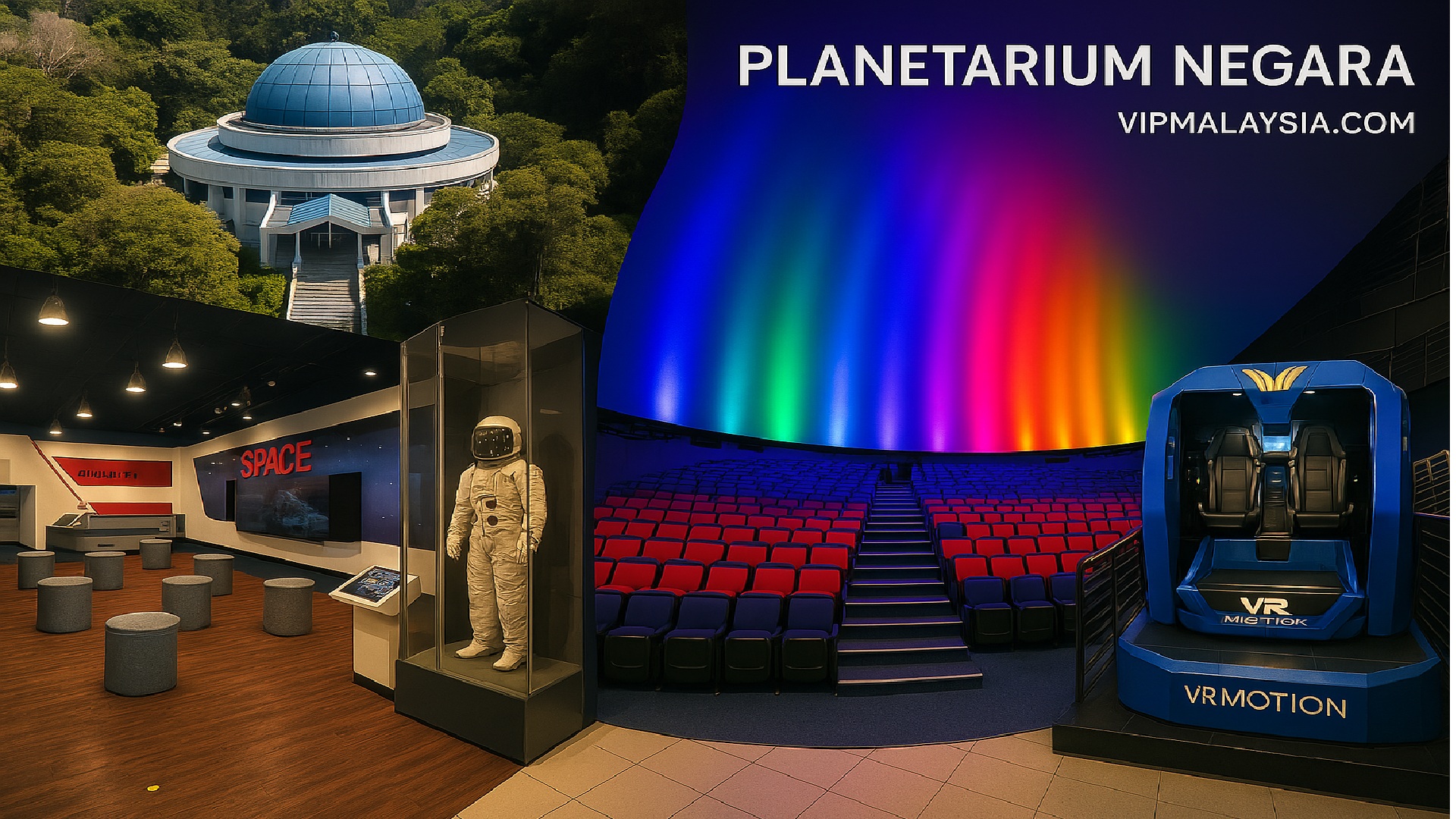
Discover Planetarium Negara Kuala Lumpur, Malaysia’s premier space and astronomy center. Nestled in the lush Taman Botani Perdana, this national planetarium blends Islamic-inspired architecture with immersive sky shows, interactive exhibits, and panoramic city views. A must-visit for dreamers, students, and explorers of all ages.
Introduction
Planetarium Negara, or the National Planetarium of Malaysia, stands proudly in Kuala Lumpur’s green heart. Surrounded by the sprawling Taman Botani Perdana, it offers visitors a unique blend of science, culture, and architecture. With its striking blue dome and Islamic-inspired design, the planetarium is more than a science center—it is a gateway to the cosmos. Visitors can enjoy immersive sky shows, hands-on exhibits, and even simulators that replicate the sensation of space travel.
History
Early Vision and Establishment
The idea for Planetarium Negara was conceived in the late 1980s, when Malaysia sought to strengthen its role in science and technology education. In 1989, the project was placed under the Prime Minister’s Department, reflecting its national importance. Construction began in 1990, and by 1993 the building was completed.
Official Launch
On 7 February 1994, Prime Minister Tun Dr. Mahathir Mohamad officially inaugurated the planetarium. His vision was to create a hub that would inspire Malaysians to look beyond Earth and embrace the wonders of astronomy and space science.
Architectural Inspiration
The design of Planetarium Negara draws heavily from Islamic geometry and cosmology, echoing the golden age of Islamic astronomy. The cascading steps and water features symbolize harmony between Earth and sky, while the dome reflects celestial unity.
Highlights
The Blue Dome
The planetarium’s iconic blue dome is visible from afar, symbolizing the heavens. Inside, visitors are greeted by exhibits and theaters that bring the mysteries of the universe to life.
Educational Mission
Planetarium Negara serves as Malaysia’s hub for informal education in astronomy. It combines scientific innovation with cultural heritage, making it both an educational and spiritual experience.
Attractions
Indoor Attractions
Space Theater (Teater Angkasa)
The Space Theater is a dome cinema that simulates sky journeys. Using immersive projection technology and 270° surround visuals, visitors can experience the cosmos in vivid detail. Shows range from astronomy documentaries to creative visual journeys.
Space Gallery
The Space Gallery houses interactive exhibits on astronomy, rocketry, and Malaysia’s contributions to space exploration. Visitors can explore models of satellites, rockets, and telescopes, making it a favorite among students and families.
Spaceflight Simulators
Simulators allow visitors to experience what spaceflight might feel like. These cockpit-style simulators replicate motion and visuals, offering a thrilling taste of astronaut life.
Observatory Tower (Balai Cerap)
The observatory tower provides panoramic views of Kuala Lumpur. On special days, telescopes are set up for solar viewing, allowing visitors to safely observe the sun.
Satellite and Radio Communications Station
The planetarium features a micro-satellite station (9M2RPN), which demonstrates how signals travel to and from orbit. Occasionally, it has been used to communicate with astronauts aboard the International Space Station.
Outdoor Attractions
Space-Themed Recreational Park
The outdoor park features installations like the Titan Model, Milky Way Trail, and Ancient Observatory Garden. These attractions combine leisure with education, making the park ideal for families.
Panorama Deck
At 33 meters high, the panorama deck offers sweeping views of Kuala Lumpur’s skyline and surrounding greenery. Visitors can use binoculars to spot landmarks and enjoy the serenity of the gardens.
Things to Do
Attend Sky Shows
Visitors can watch immersive sky shows in the Space Theater. These shows often feature themes like the solar system, black holes, and Malaysia’s role in space exploration.
Explore Interactive Exhibits
The Space Gallery encourages hands-on learning. Visitors can engage with exhibits on satellites, rockets, and astronomy tools.
Join Special Programs
Planetarium Negara hosts workshops, lectures, and astronomy nights. These programs are designed to inspire curiosity and deepen understanding of the cosmos.
Trekking and Adventure
Exploring Taman Botani Perdana
The planetarium is located within Taman Botani Perdana, Kuala Lumpur’s oldest public park. Visitors can trek through lush trails, enjoy botanical gardens, and spot wildlife such as hornbills, macaques, and butterflies.
Wildlife Encounters
The park surrounding the planetarium is home to diverse species. Birdwatchers can spot kingfishers and herons, while nature enthusiasts may encounter squirrels and tropical plants.
The Islamic Arts Museum houses one of the largest collections of Islamic art in Southeast Asia, making it a perfect complement to the planetarium’s Islamic-inspired architecture.
Conclusion
Planetarium Negara Kuala Lumpur is more than a tourist attraction—it is a national institution dedicated to science, culture, and inspiration. From its immersive sky shows to its Islamic-inspired architecture, it offers visitors a chance to explore the cosmos while appreciating Malaysia’s heritage. Whether you are a student, a traveler, or a dreamer, Planetarium Negara promises an unforgettable journey.
Summary
Attraction: Planetarium Negara
Location: #KualaLumpur
Attraction Type: #Museum
Source: planetariumnegara.gov.my and other sources
Quick Facts
Attribute
Details
Name
Planetarium Negara (National Planetarium of Malaysia)
Managing Ministry
Ministry of Science, Technology and Innovation (MOSTI)
Operator
Managed directly under MOSTI
Address
53, Jalan Perdana, 50480 Kuala Lumpur, Malaysia
Phone
+603-2273 4303
Fax
+603-2273 5488
Email
info@planet.gov.my
Website
planetariumnegara.gov.my
GPS Position
3.1429° N, 101.6868° E
State
Wilayah Persekutuan Kuala Lumpur
Date Established
Construction completed 1993, inaugurated 7 February 1994
Land Area
14 acres (~11,000 m²)
Dome Size
20 meters diameter
Theater Capacity
Up to 200 people
Stair Count
110 symbolic steps leading to the dome
Architecture
Islamic-inspired with muqarnas and cascading water features
Operating Hours
Tue–Sun: 9:00 AM – 4:30 PM (Closed Mondays & select public holidays)
Closed On
Hari Raya Aidilfitri (1st & 2nd day), Hari Raya Aidiladha (1st day), Federal Territory Day, Labour Day, Malaysia Day, National Day, King’s Official Birthday
Entrance Fee
ATTRACTION
ADULT (13 YEARS & ABOVE)
CHILD (Ages 2–12)
STUDENT & GROUP (≤18 YEARS or ≥30 Persons)
Planetarium Show
Non-Malaysian: RM 12.00 MyKAD: RM 6.00
Non-Malaysian: RM 8.00 MyKID: RM 4.00
Space Pod Simulation Ride
Non-Malaysian: RM 24.00 MyKAD: RM 12.00
Non-Malaysian: RM 16.00 MyKID: RM 8.00
—
Exhibition Gallery
FREE
Note: Admission is free for senior citizens and persons with disabilities (OKU).
Visitor Reviews
Nat G, Kuala Lumpur ⭐⭐⭐⭐
“I visited the Planetarium in September 2025 and the simulator ride was a must-do. It gave a thrilling sense of space travel. The location is convenient, just a short walk from KL Sentral. I paired my visit with the nearby Butterfly Park and Orchid Garden, which made for a full day of exploration. The planetarium itself is educational, though some exhibits could use updating.”
Sue, Malaysia ⭐⭐⭐⭐⭐
“Our family trip was wonderful. My teenager loved the anti-gravity room, which creates an optical illusion of distorted gravity. We also had fun at the AI space photo booth, taking creative pictures that looked like we were on other planets. The highlight was exploring the Soyuz space capsule replica, where my child interacted with the control panels and imagined being an astronaut. The Ariane IV rocket engine exhibit was impressive, showing how rockets generate thrust. This place is perfect for sparking curiosity in children.”
Julie G, United States ⭐⭐⭐⭐
“We visited during the school holidays. Entry was free, except for the space pod ride and theater shows, which were reasonably priced. The staff were friendly and helpful, and we enjoyed the AI photo booth where we downloaded pictures via QR code. However, some exhibits were under maintenance, which was disappointing. Parking is free but requires climbing a hill. Despite the maintenance issues, it’s a fun and educational spot for families.”
Jen S, Australia ⭐⭐⭐⭐⭐
“I really enjoyed my visit to Planetarium Negara. The blue dome architecture is stunning, and the exhibits are engaging. The observatory tower gave us panoramic views of Kuala Lumpur, and the space theater was immersive. Best of all, entry is free, making it a great value attraction. It’s a place where both adults and children can learn about astronomy in an accessible way.”
Step inside the Muzium Negara Malaysia a hidden gem easily accessible by MRT Muzium Negara Station. From prehistoric relics to royal regalia and independence-era artifacts, this captures Malaysia’s past and present through personal reflections and vibrant storytelling. Plan your visit now.
Introduction
Muzium Negara, or the National Museum of Malaysia, stands as a cultural beacon in Kuala Lumpur. Since its opening in 1963, it has welcomed millions of visitors eager to explore Malaysia’s diverse past. The museum is more than a repository of artifacts—it is a living narrative of the country’s evolution, from ancient civilizations to modern independence. With its strategic location near KL Sentral and direct MRT access, Muzium Negara is both a tourist attraction and a heritage institution cherished by locals.
History
The origins of Muzium Negara trace back to the early 20th century when the Selangor Museum served as the primary repository of Malayan artifacts. After World War II and the destruction of much of the Selangor Museum, the idea of a new national museum gained momentum. Construction began in 1962, and the museum was officially opened by Malaysia’s first Prime Minister, Tunku Abdul Rahman, in 1963.
The building itself is a masterpiece of post-independence architecture, blending traditional Malay design with modern functionality. Its sweeping Minangkabau-style roof symbolizes cultural continuity, while murals on the façade depict Malaysia’s journey from prehistoric times to independence. Over the decades, Muzium Negara has expanded its collections, hosting both permanent galleries and rotating exhibitions that highlight Malaysia’s role in Southeast Asia’s cultural tapestry.
Getting There
By Bus
Visitors can board the GoKL RED Line bus and alight at the stop near Muzium Negara. Alternatively, the KL Hop-On Hop-Off Bus service stops at Stop No. 20, which is designated for the National Museum. These routes make the museum easily reachable for both tourists and locals without needing private transport.
By KTM Komuter / LRT / Monorail / ERL
Travelers using rail services such as KTM Komuter, LRT, Monorail, or ERL should alight at KL Sentral Station. From there, a covered pedestrian walkway connects directly to the MRT Muzium Negara Station, ensuring a safe and convenient walk to the museum entrance.
By MRT
The most straightforward option is to take the MRT Kajang Line and head directly to Muzium Negara Station. This underground station is located just a short walk from the museum and is connected to KL Sentral via a 240-meter pedestrian link, making it one of the most convenient access points.
Car Parking
For those driving, comfortable parking areas are available at Muzium Negara. The official rates are RM3.00 for the first hour and RM2.00 for each subsequent hour, inclusive of 6% SST. This makes it practical for families or groups traveling by car.
Highlights
Gallery A: Early History
This gallery showcases Malaysia’s prehistoric roots. Visitors encounter Perak Man, the oldest complete human skeleton in Southeast Asia, dating back over 10,000 years. Stone tools from the Paleolithic era and Neolithic burial jars illustrate the ingenuity of early communities. A striking Dong Son bell from 150 CE reflects ancient trade and cultural exchanges with Vietnam.
Perak Man’s Significance
Perak Man is not only a scientific marvel but also a cultural symbol. His discovery in 1991 reshaped understanding of early human settlement in Southeast Asia. The skeleton’s burial posture and accompanying artifacts suggest ritual practices, offering a glimpse into the spiritual life of Malaysia’s earliest inhabitants.
Gallery B: Malay Kingdoms
This gallery celebrates the grandeur of ancient Malay polities such as Langkasuka, Srivijaya, and Melaka. Exhibits include Islamic regalia, royal weaponry, and the Avalokiteshvara statue, designated a National Heritage Artifact. These artifacts highlight Malaysia’s role as a hub of trade, religion, and diplomacy in the region.
Srivijaya’s Maritime Power
The Srivijaya empire, centered in Palembang, controlled trade routes across the Straits of Malacca. Artifacts in this gallery illustrate how Malaysia’s coastal kingdoms thrived through maritime commerce, connecting India, China, and the Middle East.
Gallery C: Colonial Era
Here, visitors journey through centuries of colonization by the Portuguese, Dutch, British, and Japanese. Exhibits include maps, weaponry, and cultural artifacts that reveal the profound impact of colonial rule. The Golden Flower replica, a tribute to the King of Siam, symbolizes diplomatic exchanges during this era.
Japanese Occupation
The Japanese occupation (1941–1945) is vividly portrayed through uniforms, propaganda materials, and personal accounts. This section emphasizes the resilience of Malaysians during wartime hardship.
Gallery D: Modern Malaysia
This gallery narrates Malaysia’s path to independence and nationhood. Exhibits highlight the rise of UMNO in 1946, the declaration of independence in 1957, and the formation of Malaysia in 1963 with Sabah, Sarawak, and Singapore. Multimedia displays showcase Malaysia’s post-independence progress in education, technology, and culture.
Independence Memorabilia
Visitors can view photographs of Tunku Abdul Rahman proclaiming “Merdeka!” at Stadium Merdeka, alongside documents and artifacts from the independence movement. These items embody the spirit of unity and determination that shaped modern Malaysia.
Things to Do
Family-Friendly Activities
Muzium Negara offers free guided tours led by museum volunteers, lasting 1–2 hours. These tours cover all four galleries and provide engaging stories behind the artifacts.
Program Ceria @ Muzium Negara
Held every Saturday at Dewan Tengah, this program invites children aged 7–12 to participate in heritage craft-making. Activities include creating wau bulan (traditional kites), playing traditional drums, and learning about cultural practices.
Special Exhibitions
Beyond permanent galleries, Muzium Negara hosts rotating exhibitions on topics such as Islamic art, Southeast Asian textiles, and contemporary Malaysian animation. These exhibitions ensure that each visit offers something new.
Nearby Attractions
Malay World Ethnology Museum
Located within the museum complex, this institution focuses on Malay cultural traditions, including attire, weaponry, and performing arts.
Orang Asli Craft Museum
Dedicated to Malaysia’s indigenous peoples, this museum showcases handicrafts, musical instruments, and traditional dwellings.
KL Bird Park
Known as the “World’s Largest Free-Flight Walk-In Aviary,” KL Bird Park houses over 3,000 birds across 200 species.
National Monument (Tugu Negara)
This iconic sculpture commemorates Malaysia’s fallen heroes and is a short walk from Muzium Negara.
NU Sentral Mall
For those seeking modern amenities, NU Sentral Mall offers shopping, dining, and entertainment just next to KL Sentral.
Conclusion
Just minutes from the city center and directly connected to the MRT Muzium Negara station, Muzium Negara invites you to dive into Malaysia’s past—from ancient civilizations to modern independence. It’s where education meets experience, wrapped in culture, nostalgia, and heritage.
Summary
Attraction: Muzium Negara
Location: #KualaLumpur
Attraction Type: #Museum
Source: muziumnegara.gov.my and other sources
Quick Info
Attribute
Details
Name
National Museum of Malaysia (Muzium Negara)
Address & Contact
Muzium Negara Jabatan Muzium Malaysia Jalan Damansara 50566 Kuala Lumpur (+60) 03-2267 1111 pr.mn[at]jmm.gov.my
Location
Kuala Lumpur, Malaysia
Nearest MRT Station
Muzium Negara MRT Station
Entrance Fee
RM5 per person
Main Galleries
Pre-History, Malay Kingdoms, Colonial Era, Malaysia Today
Highlight Exhibits
Perak Man, Royal Regalia, Independence Archives
Accessibility
Wheelchair Friendly, Bilingual Signs
Operating Hours
9:00 AM – 5:00 PM (Last Admission: 4:30 PM) Open daily except 1st & 2nd day of Eid al-Fitr and 1st day of Eid al-Adha
Language Support
Malay, English, Chinese Descriptions
Photography
Allowed (No Flash)
Ticket
Category
Price
Malaysian Citizens
Adults
RM 2.00
Senior Citizens & Persons with Disabilities (OKU)
RM 1.00
Children (12 years and below)
Free
Secondary School Students (in uniform)
Free
Secondary School Students (not in uniform)
RM 2.00
ICOM Members
Free
Non-Malaysian Visitors
Adults
RM 5.00
Children (6–12 years)
RM 2.00
Children (below 6 years)
Free
ICOM Members
Free
Visitor Reviews
Anne Ahmad, United Kingdom ⭐⭐⭐⭐⭐ “I joined the free guided tour and it was excellent. The volunteer guides were knowledgeable and refused tips, which made the experience feel genuine. The galleries gave a clear overview of Malaysia’s history, and I especially enjoyed the colonial section. Easy access from KL Sentral made the visit convenient.”
Raja Rimba, Ampangan, Negeri Sembilan ⭐⭐⭐⭐ “As part of our KCA University academic trip, we visited Muzium Negara and had Ee Lin as our volunteer guide. She explained Malaysia’s journey from prehistoric times to independence with passion. The students were impressed by the Perak Man exhibit and the independence memorabilia. It was both educational and inspiring.”
Loan Phạm, Ho Chi Minh City ⭐⭐⭐⭐ “This museum is ideal if you want to learn about Malaysian history and culture. I admired the traditional weaponry and ceremonial attire, and the modern gallery gave me insight into Malaysia’s independence movement. The museum is well-maintained, though the café could offer more local food options.”
Mohd Mustaqem ‘the biceps’, Kuala Lumpur ⭐⭐⭐⭐⭐ “I often bring visiting friends here because it’s affordable and accessible via MRT. The galleries are well laid out, and the murals on the building façade are stunning. The Program Ceria for kids is a great initiative, making the museum family-friendly. Parking is spacious, which is convenient for locals driving in.”
Ready for a wild adventure near Kuala Lumpur? Explore Zoo Negara, Malaysia’s national zoo that promises unforgettable encounters with over 3,500 animals, charming wildlife shows, and conservation wonders—all wrapped in one, family-friendly experience. Step inside Malaysia’s premier zoological park, where the roar of tigers, the swing of orangutans, and the splash of hippos await. Whether you’re a local planning a weekend trip or a traveler eager to explore native wildlife, Zoo Negara is a place where conservation meets inspiration.
Introduction
Zoo Negara blends conservation, education, and family recreation in a landscaped, open‑concept park. The site is easily reached from central Kuala Lumpur (roughly 5–8 km northeast) and is a popular half‑day outing for families and wildlife enthusiasts.
History
Zoo Negara Malaysia is the country’s national zoo located in Ulu Klang, Selangor, covering about 110 acres and officially opened on 14 November 1963. Today it hosts several thousand animals across hundreds of species and is managed by the Malaysian Zoological Society.
Zoo Negara’s story begins with a small MAHA miniature zoo in the 1950s; the national park was formally opened by Tunku Abdul Rahman in 1963 and quickly became known as the “Zoo in the Jungle” for its lush setting. Urban growth around Ulu Klang prompted relocation proposals in later decades, but public support and government backing kept the zoo in place while it modernised exhibits and welfare standards. The zoo’s evolution reflects Malaysia’s changing relationship with wildlife: from exhibition to scientific breeding, rehabilitation, and public education.
Over the decades, Zoo Negara transformed from traditional cages into open‑concept exhibits, mirroring global trends in animal welfare. Its breeding programmes for endangered species such as the False Gharial and Milky Stork have positioned it as a leader in conservation. The zoo also collaborates with universities and international zoological institutions, making it a hub for scientific research and training.
The Five Pillars
Education
We believe that education is the key to creating awareness about wildlife conservation. Zoo Negara serves as an open-air classroom where young minds learn about, and nurture, a deep care for wildlife. Explore our tailored Education Packages designed for schools and the public alike!
Conservation
Imagine a world without wildlife. At Zoo Negara, conserving Malaysian wildlife is at the heart of our mission. We work tirelessly to protect lesser-known yet highly endangered species such as the False Gharial and the Milky Storks, alongside iconic species like the Malayan Tiger and Bornean Orang Utan. Our active breeding programs, in collaboration with the local Wildlife Department, aim to reintroduce these creatures back into the wild.
Research
Zoo Negara is a living laboratory for research. With over 400 species available for study, researchers from zoology, biology, and veterinary fields—both local and international—find a treasure trove of knowledge waiting behind our gates. We invite everyone, including foreigners, to step into our doors of knowledge.
Recreation
Entertainment is a cherished aspect of Malaysian culture—and the zoo embodies that spirit without compromising ethics. Our animal shows capture the natural behavior of wildlife in an educational and engaging way. Expect authenticity over spectacle, as our shows are designed to educate while entertaining, without the aura of circus acts.
Training
Zoo Negara is committed to sharing its vast expertise in wildlife management with other zoos and conservation bodies across Malaysia and internationally. By actively collaborating within the zoological community, we contribute significantly to the national and global wildlife conservation agenda.
Highlights
Giant Panda Conservation Centre
The arrival of Fu Wa and Feng Yi, Malaysia’s resident giant pandas, marked a milestone in 2014. Their climate‑controlled enclosure is one of the most visited attractions, offering educational displays on panda conservation.
Panda Experience
Visitors can observe pandas in a carefully maintained environment, with feeding times scheduled to maximize viewing opportunities. The centre also highlights Malaysia’s role in global conservation diplomacy.
Savannah Walk
This open plain exhibit features giraffes, zebras, and antelopes. Designed to mimic African grasslands, it allows visitors to see animals roaming freely in spacious habitats.
Educational Value
Interpretive panels explain ecological relationships between species, helping visitors understand the importance of biodiversity in savannah ecosystems.
Zoo Negara Malaysia’s conservation work is real and documented: the zoo has successfully bred over 100 Milky Storks since 2005 and runs a captive breeding programme for the endangered False Gharial, supporting reintroduction and awareness efforts.
Education and Research
Zoo Negara is more than a leisure park; it functions as an open‑air classroom. Collaborations with universities such as Universiti Putra Malaysia provide opportunities for students and researchers to study animal health, behavior, and ecology. These partnerships have produced valuable insights into species like the Malayan Tapir and Milky Stork, reinforcing the zoo’s role as a living laboratory.
Student Engagement
Students gain hands‑on exposure to animal care, veterinary practices, and habitat management. This practical training nurtures future conservationists and strengthens Malaysia’s scientific community.
Wildlife Conservation Efforts
Zoo Negara plays a hands‑on role in breeding and reintroduction programmes for endangered species.
False Gharial Programme
The False Gharial (Tomistoma schlegelii), a rare freshwater crocodilian, is bred at Zoo Negara to counter habitat loss and declining wild populations. With fewer than 2,500 individuals left in the wild, the zoo’s captive breeding programme contributes to species survival and public awareness.
Milky Stork Programme
Zoo Negara has successfully bred over 100 Milky Storks since 2005, supporting reintroduction efforts in wetlands such as Kuala Selangor and Kuala Gula. While challenges remain—such as habitat destruction and pollution—the programme demonstrates Malaysia’s commitment to restoring wild populations.
Visitor Engagement Programmes
Adopt Our Animals
Visitors can symbolically adopt animals like the Malayan Tiger or Orangutan, directly funding their care and conservation.
Donors and Sponsors
Zoo Negara’s conservation work is sustained by a network of donors and sponsors. Contributions fund veterinary care, habitat maintenance, and educational outreach.
KeeperKu Programme
This initiative allows participants to shadow zookeepers, learning firsthand about animal care and daily responsibilities. It is both educational and experiential.
Student Training
Structured training programmes combine classroom learning with practical fieldwork, preparing future zoologists, veterinarians, and conservationists.
CSR Programme
Corporate partners engage through CSR initiatives, sponsoring habitats, educational campaigns, and community outreach. These collaborations amplify the zoo’s conservation impact.
Attractions
Visitor Facilities
Zoo Negara offers tram rides, picnic areas, restrooms, food kiosks, and shaded walking trails. Families can enjoy playgrounds, while students benefit from educational packages tailored to school groups.
Amphitheatre and Shows
Daily wildlife shows highlight natural animal behaviors. Unlike circus acts, these performances emphasize education, showcasing species such as sea lions and macaws.
Cultural Events and Festivals
The zoo hosts Zoo Camp overnight experiences, conservation awareness days, and school holiday programmes. These events foster community engagement and highlight Malaysia’s cultural connection to wildlife.
Things To Do
Keeper Talks and Feeding Sessions
Scheduled throughout the day, these interactive sessions allow visitors to learn directly from zookeepers. Feeding times for elephants, giraffes, and pandas are particularly popular.
Aquarium and Aviary
The Tunku Abdul Rahman Aquarium houses freshwater and marine species, while the aviary features hornbills, storks, and flamingos. Both areas emphasize Malaysia’s aquatic and avian biodiversity.
Trekking & Adventure
Landscaped Trails
Zoo Negara’s 110 acres of trails provide gentle walks through tropical greenery. While not wilderness treks, they offer shaded paths ideal for photography and exploration.
Adventure for Families
Children can enjoy interactive zones, while adults appreciate the opportunity to explore diverse habitats at a leisurely pace. The zoo’s design encourages discovery without overwhelming visitors.
Facilities
Tram Ride
The zoo operates a tram service that loops around major exhibits. Tickets cost MYR 10.90 for adults with MyKad and MYR 6.90 for children, while non‑MyKad holders pay slightly more. Babies under 2 ride free, and OKU cardholders receive a 10% discount. This service is especially useful for covering long distances across the 110 acres.
Wheelchair and Stroller Rentals
Wheelchairs and baby strollers are available at Information Counter B. Wheelchair rental is RM10 with a refundable deposit of RM50, while strollers cost RM20 with a RM50 deposit. The stroller service is sponsored by Mother Care, making it convenient for parents with young children.
Electronic Lockers
Lockers are located at the ticket counter for safe storage of personal belongings. Rental rates are RM20 for small, RM35 for medium, and RM55 for extra‑large lockers, payable via e‑wallet or card. This facility is ideal for tourists carrying cameras, backpacks, or extra clothing.
Prayer Room and Zoo Huts
The Surau Abu Hurairah provides a quiet space for prayer or rest, located near Dataran Dato’ Ismail Hutson and The Wild Restaurant. Shaded zoo huts are scattered across the grounds, offering families a place to relax, feed babies, or take breaks from the tropical heat.
Amphitheatre and Multi‑Animal Show
The amphitheatre hosts the Multi‑Animal Show, featuring sea lions and macaws. Showtimes are typically 11:00 AM and 3:00 PM daily, though the show is closed on Fridays except during school holidays and public holidays. Seating is shaded, making it a highlight for families.
Nearby Attractions
Ampang and Taman Melawati
These nearby towns offer local eateries and shopping options, making them convenient stops before or after a zoo visit.
Kuala Lumpur City Centre
Just 5–8 km away, visitors can combine a zoo trip with iconic attractions such as the Petronas Twin Towers, KLCC Park, and cultural museums.
Conclusion
Zoo Negara Malaysia remains a cornerstone for wildlife education and conservation near KL—ideal for families, students, and travellers seeking close encounters with Southeast Asian and global species.
Summary
Attraction: Zoo Negara Malaysia
Location: #KualaLumpur
Attraction Type: #Zoo
Source: zoonegara.my
Ticket Prices
Information
Details
Operation Hours
9:00 AM – 5:00 PM (Open Daily)
Multi‑Animal Show
Daily at 11:00 AM & 3:00 PM; Friday: 11:00 AM & 3:30 PM; Closed on Fridays except school/public holidays
Entrance Fee – Adult (Malaysian)
RM48.00
Entrance Fee – Adult (i‑KAD / Work Permit)
RM53.00
Entrance Fee – Adult (Foreigner)
RM93.00
Entrance Fee – Children (3–12 years)
Malaysian: RM21.00; i‑KAD / Work Permit: RM28.00; Foreigner: RM48.00
Children Below 36 Months
Free
Senior Citizen (60+ years)
Malaysian: RM26.00; i‑KAD / Work Permit: RM53.00; Foreigner: RM93.00
School Concession Ticket
Student: RM18.00; 1 Teacher per 10 Students: Free; Additional Teacher: RM20.00 (Letter from school & student in uniform required)
Malayan Tiger, Bornean Orangutan, Sun Bear, Capybara Families, False Gharial Crocodile, Milky Stork, Malayan Tapir, Hippos & White Tigers
Fun Experiences for Visitors
Educational Wildlife Shows, Open Concept Exhibits, Tram Rides Through the Park, Aquarium & Aviary Zones, Feeding Sessions and Keeper Talks
Visitor Reviews
★★★★☆ — Stan Gus, Cape Town, South Africa
Visited in April 2024. “The giant pandas were the highlight and the enclosures looked neat and clean. However, I noticed the lions and tigers appeared lethargic and possibly underweight, though it might have been due to the heat. Overall, the zoo seemed well maintained, but I left conflicted about animal welfare. Still, the panda exhibit alone made the trip worthwhile.”
★★★☆☆ — Haji Os Bin Ibrahim, Kuala Lumpur, Malaysia
Visited in November 2023. “Bring lots of water and wear comfortable clothing. Some animals, especially the big cats, looked miserable and poorly cared for compared to Singapore Zoo. Facilities were basic, and the zoo clearly struggles with funding. I treated my visit as a donation to a struggling institution, but improvements are urgently needed.”
★★★★☆ — Abdul Ghani Pasembor, Petaling Jaya, Malaysia
Visited in 2025. “The Panda Conservation Centre was excellent, with clear educational displays and a cool environment. The tram ride was convenient for families, and the aviary offered a wide range of bird species. My children enjoyed the keeper talks, which were informative and interactive. Overall, a good half‑day trip, though food options inside could be better.”