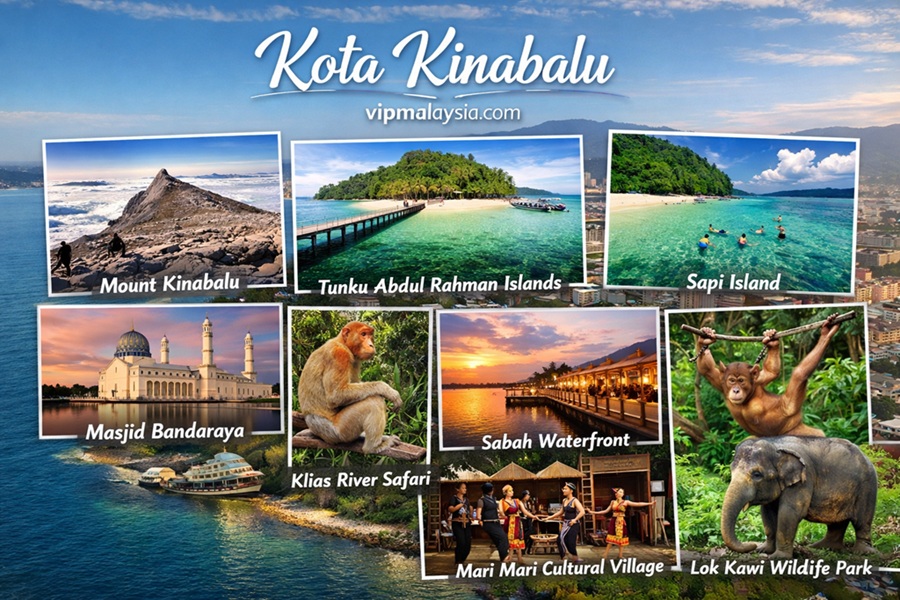
Kota Kinabalu
Kota Kinabalu, the vibrant capital of Sabah, Malaysia, is a coastal gem that blends rich cultural heritage, breathtaking natural landscapes, and modern city life. Known as the gateway to Mount Kinabalu and the South China Sea, this destination offers travelers a mix of history, adventure, and relaxation. From bustling night markets to pristine islands, Kota Kinabalu is a city that rewards exploration at every turn.
Introduction
Kota Kinabalu, often called “KK,” sits on the northwest coast of Borneo. Facing the South China Sea and backed by lush mountains, it is a city where tradition meets modernity. Once a humble fishing village named Api-Api, it has grown into a thriving hub for tourism, commerce, and culture. Today, KK is celebrated for its sunset views, diverse ethnic communities, and easy access to both marine and mountain adventures.
History
The history of Kota Kinabalu is deeply tied to resilience and transformation. Originally known as Api-Api, the settlement became Jesselton under British colonial rule in the late 19th century. During World War II, much of Jesselton was destroyed by bombings, leaving only a handful of structures like the Atkinson Clock Tower. After the war, the city was rebuilt and renamed Kota Kinabalu in 1967, honoring Mount Kinabalu, the sacred peak of Sabah.
The Atkinson Clock Tower in Kota Kinabalu is the city’s oldest standing structure, built in 1905 in memory of Francis George Atkinson, the first District Officer of Jesselton (now Kota Kinabalu), who died of malaria at the age of 28. Constructed from durable Mirabau wood, the tower stands about 15.7 meters tall and originally housed a two-faced clock imported from England. Remarkably, it survived the heavy bombings of World War II that destroyed most of Jesselton, making it one of the few pre-war landmarks still intact. Over the decades, it served both as a memorial and as a navigation beacon for ships entering the harbor, its illuminated silhouette guiding vessels at night. Today, the tower is recognized as a heritage site under the Sabah Museum and Sabah Cultural Board, symbolizing resilience, colonial history, and cultural heritage in Borneo.
This historical journey reflects the spirit of survival and renewal. The city’s past is visible in its colonial remnants, war memorials, and cultural traditions preserved by indigenous groups such as the Kadazan-Dusun. Today, Kota Kinabalu stands as a symbol of Sabah’s identity, balancing its colonial legacy with modern development.
Highlights
Signal Hill Observatory Tower
Offering panoramic views of the city and the South China Sea, Signal Hill is a favorite spot for sunset photography. The short hike or drive to the top rewards visitors with a sweeping perspective of KK’s skyline and offshore islands.
Atkinson Clock Tower
Built in 1902, this landmark is one of the few structures to survive WWII bombings. It commemorates Francis George Atkinson, the first District Officer of Jesselton. The tower is a testament to KK’s resilience and colonial heritage.
Kota Kinabalu Waterfront
A lively promenade lined with seafood restaurants, bars, and cafes, the waterfront is the city’s social hub. At night, it transforms into a vibrant scene of music, dining, and nightlife.
Attractions
Tunku Abdul Rahman Marine Park
Just minutes offshore, this cluster of islands—Gaya, Manukan, Sapi, Mamutik, and Sulug—offers snorkeling, diving, and beach relaxation. The marine park is home to coral reefs, tropical fish, and clear turquoise waters, making it a paradise for nature lovers.
Gaya Street Sunday Market
Every Sunday, downtown KK becomes a bustling bazaar. Visitors can browse stalls selling local crafts, fresh produce, traditional snacks, and souvenirs. It’s a cultural immersion into Sabah’s diverse communities.
Sabah State Museum
This museum showcases Sabah’s history, ethnography, and natural heritage. Exhibits include indigenous artifacts, colonial relics, and wildlife displays, offering insight into the region’s identity.
Todak Waterfront
Todak Waterfront is a public space offering front-row views of Tunku Abdul Rahman Park and Kota Kinabalu’s legendary sunsets. The iconic “I Love KK” sign has become a popular photo spot for visitors.
Trekking and Adventure
Mount Kinabalu
Standing at 4,095 meters, Mount Kinabalu is Malaysia’s tallest peak. Trekkers embark on a two-day climb through diverse ecosystems, from tropical rainforest to alpine meadows. The summit, Low’s Peak, offers spectacular sunrise views over Borneo.
Kinabalu Park
A UNESCO World Heritage Site, Kinabalu Park is rich in biodiversity. It hosts over 5,000 plant species, including orchids and pitcher plants, as well as wildlife such as orangutans and hornbills. The park is a haven for eco-tourism and scientific exploration.
White-Water Rafting on Kiulu River
For adrenaline seekers, rafting down the Kiulu River provides a mix of gentle rapids and scenic countryside views. It’s suitable for beginners and families, making adventure accessible to all.
Bukit Botak Trail
Bukit Botak, also known as Bukit Gundul, is a moderate trail about 3.1 km long, taking roughly 1.5–2 hours to complete. The trail is popular for sunrise and sunset hikes, offering panoramic views of Sepangar Bay, Pulau Gaya, and even Mount Kinabalu on clear days. Its exposed peak makes it essential to bring sun protection and plenty of water.
Teluk Likas to Muara Likas Trail
This seaside trail stretches 7.3 miles and is considered easy, making it ideal for walking and cycling. It offers scenic views of the beach and is popular among locals for morning and evening activities. The route is also home to diverse flora and fauna, adding to its charm.
Bukit Kopungit Trail
Bukit Kopungit, also called Sulky Hill, is a moderate 1.1-mile trail located near Jalan Pintas. Along the way, hikers encounter a small cave dating back to the Japanese occupation during World War II. The summit provides stunning views of Kota Kinabalu International Airport and surrounding landscapes.
Bukit Kopungit Loop
This 1.9-mile loop trail takes about 1–1.5 hours to complete. It leads hikers to the top of Bukit Kopungit, where dusk views are particularly beautiful. The trail includes steep sections and stairs made from old car tires, adding a unique challenge.
Bukit Padang North to South Trail
Bukit Padang’s trail winds through tropical rainforest and leads to the summit, offering views of the park’s lake surrounded by hills. The 2.1-mile moderate trail takes about 1–1.5 hours and is popular for its lush greenery and tranquil environment.
Surveyors’ Trail from Bukit Padang via Minintod
This moderate 7.4 km trail offers a scenic hike through forested areas with elevation gains of over 200 meters. It is known for its peaceful environment and is suitable for hikers seeking a longer, moderately challenging route near the city.
Bukit Tirig Trail
Bukit Tirig is considered easier than Bukit Botak, making it suitable for beginners. The trail is shorter and less steep, but still offers rewarding views of the surrounding countryside and cityscape. It is a favorite among local families and casual hikers.
Bukit Bonduk Trail
Bukit Bonduk, another name for Bukit Botak, is a trail with sandy and bushy sections. It is well-marked and maintained, offering a decent challenge for beginners while rewarding them with views of Pulau Gaya and the sea port.
Signal Hill Observatory Trail
This short 3.8 km trail leads from the city center to Signal Hill Observatory Tower. It is an easy hike that takes about an hour, offering panoramic views of Kota Kinabalu’s skyline and the South China Sea.
Sembulan to Putatan Long Trail
This difficult 25.6 km trail passes through Putatan, Kepayan, and Lido, offering a long-distance adventure for experienced hikers. It takes about 6.5 hours to complete and showcases diverse landscapes along the way.
Nearby Attractions
Mari Mari Cultural Village
Located just outside KK, this village offers immersive experiences into Sabah’s ethnic traditions. Visitors can witness traditional dances, bamboo cooking, and longhouse architecture, connecting with indigenous heritage.
Lok Kawi Wildlife Park
A family-friendly attraction, the park houses orangutans, proboscis monkeys, and pygmy elephants. It emphasizes conservation and education, showcasing Sabah’s unique wildlife.
Tanjung Aru Beach
Renowned for its sunsets, Tanjung Aru is a popular spot for evening strolls and picnics. The beach is lined with food stalls serving local delicacies like satay and coconut drinks.
Must Visit Mosques
Kota Kinabalu City Mosque (Floating Mosque)
The Kota Kinabalu City Mosque, often called the Floating Mosque, is the most iconic in Sabah. Completed in 2000, it sits on a man-made lagoon at Likas Bay, creating a stunning reflection that makes it appear as if it floats on water. With a capacity of 12,000 worshippers, its blue-and-gold dome and four minarets make it a landmark of Islamic architecture and spirituality.
Masjid Negeri Sabah (Sabah State Mosque)
Located near the city center, the Sabah State Mosque is a grand structure blending Islamic and contemporary design. Its golden dome and tall minaret dominate the skyline, while the mosque itself can accommodate thousands of worshippers. It serves as the main mosque for Sabah and hosts major religious events.
Masjid Bandaraya Likas
This mosque is situated in the Likas area and is known for its peaceful surroundings. Its architecture reflects modern Islamic design, and it is frequently visited by both locals and travelers seeking a quieter spiritual experience compared to the City Mosque.
Masjid Jamek Kg. Likas
A community mosque serving the Kampung Likas area, Masjid Jamek is smaller but significant for local worshippers. It plays a vital role in hosting Friday prayers and community gatherings, reflecting the grassroots Islamic culture of Kota Kinabalu.
Masjid Kg. Sembulan
Located in the historic Sembulan area, this mosque is closely tied to the Bajau community. It is a cultural and religious hub, offering insight into the traditions of Sabah’s coastal people while serving as a place of daily worship.
Masjid Kg. Likas Baru
This mosque is a newer addition to the Likas district, built to accommodate the growing population. Its design incorporates modern facilities, making it accessible for worshippers and visitors alike.
Masjid Kg. Darau
Situated on the outskirts of Kota Kinabalu, Masjid Kg. Darau is a community mosque surrounded by traditional villages. It is a center for religious education and community bonding, reflecting the rural character of Sabah.
Masjid Kg. Inanam
Inanam’s mosque is a focal point for the district, serving a large population of worshippers. It is known for its spacious prayer hall and active involvement in local Islamic festivals and events.
Masjid Kg. Menggatal
This mosque caters to the Menggatal area north of Kota Kinabalu. It is a hub for Friday prayers and religious classes, providing spiritual guidance to the local community.
Masjid Kg. Petagas
Located near the Petagas War Memorial, this mosque combines spiritual significance with historical context. It serves the surrounding community and is often visited by travelers exploring the area’s heritage.
Must Try Foods
Tuaran Mee
Tuaran Mee is Sabah’s signature noodle dish, made from egg noodles that are wok-fried to perfection with egg rolls, char siu, and leafy greens. Its springy texture and smoky wok aroma make it a beloved staple, originating from the town of Tuaran but now widely enjoyed in Kota Kinabalu.
Beaufort Mee
Beaufort Mee features soft flat noodles stir-fried in thick dark soy sauce with pork slices and vegetables. The dish is rich and savory, often cooked with lard for added depth, and remains one of Sabah’s most iconic comfort foods.
Ngiu Chap
Ngiu Chap is a hearty Hakka beef noodle soup, simmered for hours with beef brisket, tripe, tendon, and meatballs. Served with noodles of your choice, it is a deeply flavorful dish that showcases Sabah’s Chinese culinary heritage.
Sang Nyuk Mee
Sang Nyuk Mee, meaning “pork noodle soup,” is a Sabah classic featuring thin egg noodles with blanched pork slices, liver, and intestines. Served in either clear or dark broth, it is a soul-warming dish that originated in Tawau but became a Kota Kinabalu breakfast staple.
Hinava
Hinava is a Kadazan-Dusun delicacy made from raw fish marinated in lime juice, ginger, chili, and bitter gourd. It is a refreshing and tangy dish often served during cultural festivals, representing the indigenous flavors of Sabah.
Tuhau
Tuhau is a traditional condiment made from wild ginger, finely chopped and pickled with lime juice and chili. Its pungent aroma and unique taste make it a distinctive side dish, often paired with rice or grilled meats.
Laksa
Sabah-style Laksa is a creamy coconut milk curry noodle soup, served with prawns, chicken, bean sprouts, and tofu puffs. Unlike Penang Laksa, it is less spicy but rich in flavor, offering a comforting meal for locals and visitors alike.
Cinnamon Pancake (Ham Xin Piang)
Ham Xin Piang is a local cinnamon pancake found in morning markets and kopitiams. Crispy on the outside and soft inside, it carries a subtle cinnamon aroma and salty undertone, making it a simple yet addictive breakfast treat.
Tenom Mee
Tenom Mee is a noodle dish from Tenom, featuring thin homemade noodles fried and then immersed in broth. It is served with roasted pork belly, chicken, and fish balls, offering a comforting balance of flavors.
Seafood at Pasar Ikan Sembulan
Fresh seafood is a highlight of Kota Kinabalu, especially at Pasar Ikan Sembulan, where locals gather nightly for grilled fish, prawns, and crabs. The market atmosphere and freshly caught seafood make it a must-visit culinary experience.
Conclusion
Kota Kinabalu is more than just a gateway—it is a destination that blends history, culture, and adventure. From the colonial echoes of Jesselton to the natural wonders of Mount Kinabalu and the marine park, KK offers travelers a complete experience of Sabah’s spirit. Whether you seek trekking challenges, cultural immersion, or seaside relaxation, Kota Kinabalu delivers unforgettable memories.
Visitor Reviews
Sharon Gourlay, Melbourne, Australia — ★★★★☆ “I spent five days in Kota Kinabalu and loved the mix of city and nature. The Mari Mari Cultural Village was a highlight, with traditional dances and bamboo cooking demonstrations. The only downside was the occasional heavy rain, but overall KK is a fantastic base for exploring Sabah.”
Farieza Aiza, Melaka — ★★★★★ “Snorkeling off Manukan Island was unforgettable. The coral reefs were vibrant, and the water was crystal clear. I also enjoyed the street food at Central Market—cheap, delicious, and authentic. Kota Kinabalu feels like a paradise for adventure lovers.”
Samantha Cools, London, UK — ★★★★★ “The trek up Mount Kinabalu was challenging but worth every step. Watching the sunrise from Low’s Peak was one of the most memorable experiences of my travels. The city itself is welcoming, with friendly locals and lively night markets.”
Khairul Nizam Azhar, Kuala Lumpur — ★★★★☆ “Kota Kinabalu surprised me with its balance of modern shopping malls and natural escapes. The Signal Hill Observatory gave me stunning views of the city and sea. I recommend visiting between February and September for the best weather.”