Tag: Destination

  • Langkawi: Discover Paradise Island Now!

    Langkawi: Discover Paradise Island Now!

    Langkawi, Malaysia

    Langkawi, Malaysia’s jewel of the Andaman Sea, is a tropical archipelago of 99 islands that blends pristine beaches, lush rainforests, and rich cultural heritage. Known for its duty-free shopping, breathtaking landscapes, and adventure opportunities, Langkawi is a destination that promises both relaxation and excitement. This long-form guide explores its history, highlights, attractions, trekking adventures, and visitor experiences to help you plan the ultimate trip.

    Introduction

    Langkawi is more than just a beach getaway — it is a UNESCO Global Geopark recognized for its geological wonders and biodiversity. The island offers a slower pace compared to Phuket or Bali, making it ideal for families, honeymooners, and travelers seeking tranquility. With world-class resorts, vibrant night markets, and natural marvels, Langkawi has steadily grown into one of Southeast Asia’s most beloved destinations.

    History

    Langkawi’s history is best understood as a tapestry of legend, trade, and colonial encounters. The most famous tale is that of Mahsuri, a young woman of Padang Matsirat whose beauty and kindness stirred jealousy in her village. Wrongly accused of adultery, she was executed, and as she died, white blood flowed from her wounds — a sign of her innocence. Mahsuri cursed Langkawi to endure seven generations of hardship, a prophecy locals believe was fulfilled through invasions, famine, and poverty. Her tomb, Makam Mahsuri, remains a cultural site where visitors reflect on the island’s tragic past and enduring folklore.

    Beyond legend, Langkawi’s strategic location made it a vital stop along the spice trade routes of the Kedah Sultanate in the 15th century. Traders from India, China, and the Malay Archipelago exchanged tin, ceramics, and spices here, embedding multicultural influences into the island’s identity. In 1821, Siamese forces invaded Kedah, burning Langkawi’s capital, Padang Matsirat, and leaving scars that reinforced Mahsuri’s curse in the collective memory. Later, during the colonial era, the British and Japanese exploited Langkawi’s harbors, with the Japanese establishing naval bases during World War II. Post-war, the island languished in poverty, relying on fishing and rice farming.

    The turning point came in 1987, when Prime Minister Mahathir Mohamad declared Langkawi a duty-free zone, sparking rapid development. Luxury resorts replaced fishing villages, and UNESCO recognized Langkawi as a Global Geopark in 2007, highlighting its ecological and geological significance. Today, Langkawi balances its mythical past with modern tourism, offering visitors both cultural depth and natural beauty.

    Highlights

    Langkawi Sky Bridge

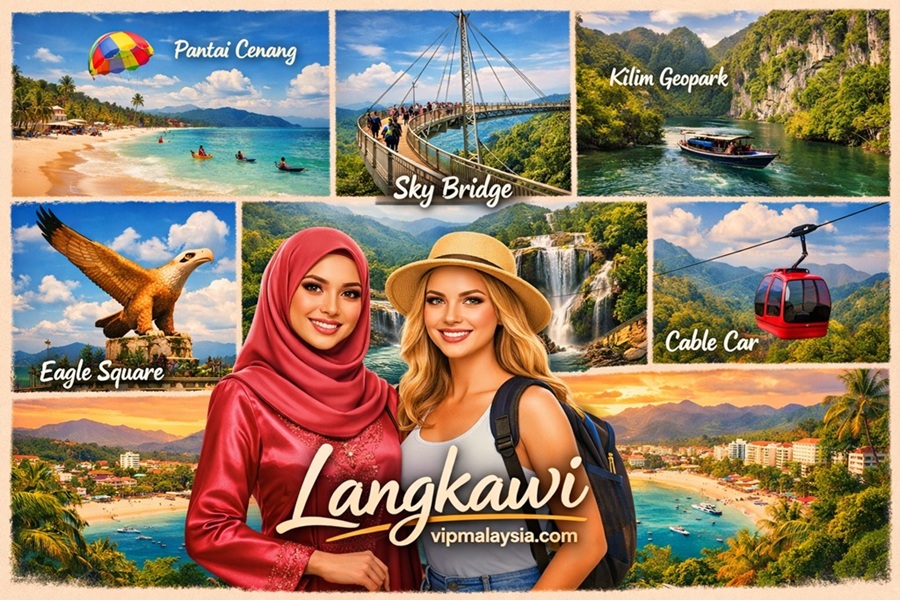
    Suspended 125 meters above sea level, the Sky Bridge is a curved pedestrian marvel stretching 125 meters across the mountains. It offers panoramic views of Gunung Mat Cincang, Telaga Tujuh Waterfalls, and the Andaman Sea. Accessible via the SkyCab cable car, the bridge is an engineering feat and one of the most photographed landmarks in Malaysia. Visitors can enjoy cool breezes and breathtaking sunsets from this vantage point.

    Eagle Square (Dataran Lang)

    Located in Kuah Town, Eagle Square features a 12-meter-tall eagle statue poised for flight, symbolizing Langkawi’s heritage. The square is beautifully landscaped with fountains, terraces, and bridges, making it a popular spot for evening strolls. It is especially stunning at night when the statue is illuminated against the backdrop of the sea.

    Duty-Free Shopping

    Langkawi’s duty-free status makes it a shopper’s paradise. Visitors can purchase chocolates, alcohol, tobacco, perfumes, and kitchenware at significantly lower prices compared to mainland Malaysia. Popular shopping hubs include Cenang Mall, Langkawi Fair Shopping Mall, and various duty-free outlets in Kuah Town.

    Tanjung Rhu Beach

    Known for its crystal-clear waters and soft white sand, Tanjung Rhu is a quieter alternative to Pantai Cenang. Surrounded by limestone cliffs and mangroves, it is perfect for solitude seekers. The beach is also a gateway to boat tours exploring nearby caves and islands.

    Kilim Karst Geoforest Park

    A UNESCO Global Geopark, Kilim Karst is famous for its mangrove forests, limestone formations, and diverse wildlife. Visitors can take boat tours to explore bat caves, crocodile caves, and spot eagles swooping down for fish. It is a must-visit for eco-tourism enthusiasts.

    Langkawi Cable Car (SkyCab)

    The SkyCab is one of the steepest cable car rides in the world, taking visitors up to Gunung Mat Cincang. The ride offers spectacular views of rainforest, waterfalls, and the surrounding islands. At the top, visitors can access the Sky Bridge and observation decks.

    Underwater World Langkawi

    One of Southeast Asia’s largest aquariums, Underwater World Langkawi houses over 200 marine and freshwater species. Highlights include penguins, sharks, stingrays, and a 15-meter-long tunnel tank that immerses visitors in aquatic life.

    Langkawi Wildlife Park

    An interactive zoo where visitors can feed animals such as deer, flamingos, raccoons, and parrots. The park emphasizes close encounters, making it popular among families. It also showcases Malaysia’s native species in a safe and educational environment.

    Beaches

    The most famous beach in Langkawi, Pantai Cenang is lined with resorts, bars, and restaurants. It offers water sports such as jet skiing, parasailing, and banana boat rides. The lively atmosphere makes it ideal for families and young travelers seeking both relaxation and entertainment.

    Night Markets

    Held in different towns each night, Langkawi’s pasar malam (night markets) offer local delicacies like satay, nasi lemak, and fresh seafood.

    Trekking and Adventure

    Gunung Mat Cincang

    Gunung Mat Cincang is not just a mountain — it is a living monument to Langkawi’s geological and cultural heritage. Rising to 701 meters above sea level, it is the second-highest peak on the island and part of one of Southeast Asia’s oldest rock formations, dating back over half a billion years. Visitors who ascend its trails are rewarded with sweeping views of the Andaman Sea, lush rainforests, and the famous Langkawi Sky Bridge suspended nearby. The mountain is also steeped in legend: local folklore tells of a giant named Mat Cincang who was turned into stone after a fierce quarrel with another giant, Gunung Raya, during a wedding feast. This mythical tale adds a mystical aura to the landscape.

    For adventurers, Gunung Mat Cincang offers trekking trails through dense rainforest, where hornbills, macaques, and exotic orchids thrive. The climb is challenging but deeply rewarding, especially at sunrise when the mist lifts to reveal golden light over the archipelago. The nearby Telaga Tujuh Waterfalls (Seven Wells) add to the allure, with natural pools said to be enchanted by fairies. UNESCO recognized the mountain as part of Langkawi’s Global Geopark in 2007, underscoring its geological significance and biodiversity.

    Seven Wells Waterfall (Telaga Tujuh)

    Named after seven natural pools, this waterfall is a favorite among hikers. The climb is challenging but rewards visitors with refreshing dips in cool mountain water. Legends say fairies once bathed here, adding a mystical charm to the site.

    Mangrove Kayaking

    Exploring Kilim Karst Geoforest Park by kayak reveals limestone caves, hidden lagoons, and diverse ecosystems. It is both adventurous and educational.

    Conclusion

    Langkawi is a destination that combines natural beauty, cultural richness, and adventure opportunities. From its legendary history to its modern attractions, the island offers something for every traveler. Whether you seek relaxation on pristine beaches, thrilling treks in rainforests, or cultural immersion in festivals and markets, Langkawi promises unforgettable experiences.

    If you want to explore all the attractions in detail, check out this comprehensive guide: Langkawi Malaysia.

    Visitor Reviews

    Mohan Joas, Singapore ⭐⭐⭐⭐⭐ “Langkawi exceeded my expectations. The Sky Bridge views were breathtaking, and the mangrove tour was both fun and educational. The locals were welcoming, and the food was delicious.”

    Isabelle Tris, Barcelona, Spain ⭐⭐⭐⭐ “I loved the beaches, especially Tanjung Rhu. The duty-free shopping was a bonus. However, Pantai Cenang was a bit crowded during peak season. Still, Langkawi is worth visiting.”

    Sankara Cibok, Chennai, India ⭐⭐⭐⭐⭐ “The Seven Wells Waterfall trek was challenging but rewarding. Langkawi’s wildlife and cultural festivals made the trip memorable. Highly recommend for adventure seekers.”

    Roy Elliot, Dublin, Ireland ⭐⭐⭐⭐⭐ “Langkawi is paradise. The night markets were vibrant, and Eagle Square was iconic. Perfect mix of relaxation and exploration.”

  • Discover Ipoh: Malaysia’s Hidden Gem City

    Discover Ipoh: Malaysia’s Hidden Gem City

    Ipoh, the capital of Perak, is a city of limestone caves, colonial charm, and culinary wonders. Once the “City of Millionaires” during the tin boom, today it blends heritage with modern creativity, offering travelers temples, street art, and unforgettable food.

    Introduction

    Ipoh is often overlooked by travelers rushing between Kuala Lumpur and Penang, yet it is one of Malaysia’s most rewarding destinations. Known for its tin mining past, British colonial architecture, and vibrant food culture, Ipoh offers a slower pace with rich experiences. From cave temples carved into limestone hills to hip cafés serving the famous Ipoh white coffee, the city is a perfect blend of history and modernity.

    History

    Ipoh’s origins trace back to the poisonous “Ipoh tree,” used by Orang Asli to coat blowdart tips. The discovery of tin in the Kinta Valley in the 1880s transformed Ipoh into one of Southeast Asia’s wealthiest cities. By the 1920s, it was nicknamed the “City of Millionaires,” with ornate mansions and shophouses built by wealthy tin tycoons. The Japanese occupation during World War II brought hardship, but Ipoh recovered, only to face decline when tin prices collapsed in the 1980s. Today, restored heritage buildings, street art, and creative cafés have sparked a renaissance, making Ipoh a vibrant cultural hub.

    Must-Visit Attractions

    Birch Memorial Clock Tower

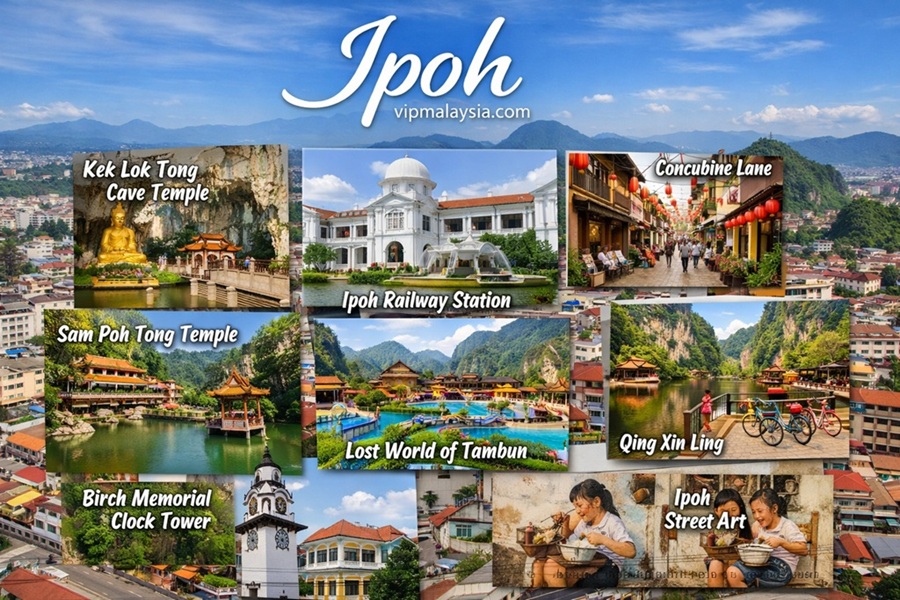
    Ipoh’s Old Town is filled with colonial landmarks such as the Birch Memorial Clock Tower, the Town Hall, and the grand railway station. These buildings reflect British influence and remain central to the city’s identity.

    Ipoh Railway Station

    Known as the “Taj Mahal of Ipoh,” the railway station is a striking white structure built in 1917. Its domes and arches showcase Indo-Saracenic architecture, and it remains a functioning station today. Visitors often admire its gardens and take photos against its elegant façade.

    Street Art and Urban Culture

    Ipoh’s Mural Art Trail tells stories of tin miners and local traditions. Colorful umbrellas along Kinta Riverfront Walk and murals in Mural Arts Lane have transformed the city into an open-air gallery.

    Cave Temples

    Ipoh is home to spectacular cave temples carved into limestone hills.

    Sam Poh Tong Temple

    This temple, set within a cave, features a serene pond with turtles and striking Buddha statues. Its peaceful atmosphere makes it a favorite among visitors.

    Perak Tong Temple

    Built in 1926, Perak Tong houses a massive golden Buddha and colorful murals. Climbing its 400 steps rewards visitors with panoramic views of Ipoh.

    Natural Wonders

    Ipoh’s limestone hills and caves are natural marvels.

    Gua Tempurung

    Located south of Ipoh, Gua Tempurung is one of the longest caves in Peninsular Malaysia. Visitors can explore dry tours or adventurous wet tours through underground rivers.

    Gunung Lang Recreational Park

    This park features a man-made lake, boat rides, and limestone hills. It’s a popular spot for families and nature lovers.

    Gua Tambun

    Walk into the wonder of Gua Tambun, where ancient red ochre paintings glow against limestone cliffs and invite you to journey back thousands of years. Each figure etched on the rock is a silent storyteller, carrying the spirit of Ipoh’s earliest people. This is a place of mystery and awe, where history is not read in books but seen on stone walls—waiting for you to stand before it and feel the timeless connection.

    Ipoh Heritage Trail

    The Ipoh Heritage Trail is a captivating walking route through the city’s old town, where visitors can explore colonial landmarks like the Ipoh Railway Station, Town Hall, High Court, and Birch Memorial Clock Tower. Along the way, you’ll discover charming streets, vibrant murals, and historic coffee shops that showcase Ipoh’s rich cultural past. This trail offers a perfect blend of history, architecture, and local flavors, making it an unforgettable experience for anyone eager to see the soul of Ipoh up close.

    Little India

    Lose yourself in the lively streets of Little India, where tradition and modern life blend seamlessly. Here, the air is filled with the aroma of spices, the sparkle of jewelry shops, and the warmth of authentic Indian hospitality. Whether you’re drawn by the festive lights of Deepavali, the taste of biryani and dosa, or the charm of colorful sarees, this cultural enclave offers a journey into the heart of Malaysia’s Indian heritage—making it a destination you simply cannot miss.

    Ipoh Railway Station

    If you’re looking for a place that blends history with charm, Ipoh Railway Station is one you shouldn’t miss. Often called the Taj Mahal of Ipoh, its whitewashed walls, sweeping arches, and grand dome make it a stunning sight right in the city center. Beyond being a transport hub, it’s surrounded by lively streets, heritage cafés, and cultural trails that let you step straight into Ipoh’s story. Visiting feels less like catching a train and more like discovering a piece of living history.

    D.R. Seenivasagam Park

    Visiting D.R. Seenivasagam Park is like stepping into a calm oasis right in the middle of the city. With its wide-open lawns, shady jogging paths, and a tranquil lake framed by bamboo groves, the park feels welcoming to everyone—families, joggers, cyclists, and travelers alike. The Japanese Garden adds a touch of elegance, while the playgrounds and cycling zone keep the atmosphere lively. Whether you’re looking to relax, exercise, or simply enjoy fresh air, the park offers a genuine slice of Ipoh’s charm that makes it worth adding to your travel plans.

    Yasmin Ahmad at Kong Heng Museum

    The Yasmin Ahmad at Kong Heng Museum is a cozy cultural space where visitors can explore her film memorabilia, personal notes, and rare screenings, making it a heartfelt tribute to Malaysia’s most beloved storyteller.

    Must Visit Mosques

    Masjid Ubudiah

    Nestled on Bukit Chandan in Kuala Kangsar, Masjid Ubudiah is often hailed as Malaysia’s most beautiful mosque, with its dazzling golden dome and elegant minarets rising against the sky. Designed by architect Arthur Benison Hubback in the Indo-Saracenic Revival style, the mosque’s marble floors and intricate details reflect both royal grandeur and spiritual serenity. Surrounded by lush greenery and steeped in history, a visit here offers not only breathtaking architecture but also a glimpse into Perak’s royal heritage—making Masjid Ubudiah an unforgettable stop for any traveler.

    Masjid Panglima Kinta

    Come discover the soul of Ipoh at Masjid Panglima Kinta, where the gentle flow of the Kinta River meets timeless elegance. This heritage mosque invites you not just to see, but to feel—its grand dome and twin minarets rising proudly as symbols of faith and history. Step inside and let the serene atmosphere, rich legacy, and riverside charm draw you into an unforgettable journey of culture and reflection.

    Ipoh Hoho Bus

    Step aboard the Ipoh Hoho Bus and discover Perak in the most effortless way—this hop‑on hop‑off service lets you glide past colonial landmarks, vibrant street markets, and breathtaking limestone hills, all while enjoying the comfort of open‑air views and flexible stops. With affordable tickets, friendly guides, and routes that connect you to must‑see attractions like Ipoh Old Town, Gunung Lang Park, and Kellie’s Castle, the bus transforms sightseeing into a seamless adventure where history, culture, and nature come alive in every ride.

    Ipoh War Memorial

    The Ipoh War Memorial is a landmark that blends solemn remembrance with cultural discovery, making it a unique stop for travelers in Perak. Standing proudly in front of the grand Ipoh Railway Station, the cenotaph honors soldiers who sacrificed their lives in World War I and World War II. Its engraved tributes and annual ceremonies create a powerful atmosphere of unity and respect, while its central location connects visitors to Ipoh’s vibrant heritage trail, colonial architecture, and nearby attractions. A visit here offers not just history, but an inspiring experience that celebrates courage, resilience, and Malaysia’s enduring spirit.

    Trekking and Adventure

    Popular Trails

    Trail NameDifficulty & DistanceDescription
    Bukit Kledang Route 4‑9 LoopHard · 5.5 kmScenic forest loop with streams and panoramic views over Perak; usually takes about 2–3 hours to complete.
    Bukit Kledang via Jalan KledangModerate · 6 kmPopular route with birdlife and paved sections leading to a viewing platform; average trek time is 2–2.5 hours.
    Kledang Trail 2‑4Moderate · 3 kmShort but steep trail with muddy terrain and rich flora; hikers spend around 1.5–2 hours here.
    Kledang Hill LoopHard · 10.6 kmChallenging long loop through forest trails with summit views; requires about 5–5.5 hours.
    RTM Old Route via Kledang 4.9Moderate · 3.2 kmHistoric red earth path winding through tropical forest; typically completed in 1–1.5 hours.
    Kledang Hill via Jalan Kledang Long TrailHard · 13.4 kmLong trek with tropical flora, monkeys, and viewpoints; takes about 5.5–6 hours.
    Kledang Hill via Trails 4.9 and RTMHard · 9.6 kmAdventurous route with streams, boulders, and jungle terrain; usually 4.5–5 hours in duration.
    Ulu Piah TrailModerate · 16 kmLengthy trail through tropical forest with quiet atmosphere; hikers spend 4.5–5 hours here.
    Ulu Piah Short TrailModerate · 10 kmShorter version of Ulu Piah with secondary forest and streams; takes 3.5–4 hours.
    Pinji Estate Extended LoopModerate · 11 kmTrail passing Sengat River and plantations with wildlife sightings; usually completed in 2.5–3 hours.

    Culinary Delights

    Popular Halal Culinary Delights

    Halal Culinary Delight / RestaurantAddress & Phone
    Greentown Dim Sum Café – halal dim sum varieties10, Persiaran Greentown 4, Greentown Avenue, 30450 Ipoh, Perak. Tel: +605-243 7851
    Restoran New Holly Wood – halal breakfast & local dishes38, Lorong Cecil Rae, Taman Canning, 31400 Ipoh, Perak. Tel: +605-545 1455
    Ipoh Hainan Chicken Rice – halal poached chicken rice107, Jalan Raja Musa Aziz, Kampung Jawa, 30300 Ipoh, Perak. Tel: +605-241 4243
    Assam House – halal Asian cuisine, famous curry assam fish head29, Persiaran Greentown 4, Greentown Business Centre, 30450 Ipoh, Perak. Tel: +605-243 7851
    Mee Daud Mat Jasak – halal mee rebus & local noodlesJalan Dato’ Onn Jaafar, 30300 Ipoh, Perak. Tel: +605-255 4567
    Nasi Ganja Ipoh (Nasi Kandar Ayam Merah) – halal nasi kandar specialtyKedai Kopi Yong Suan, 2, Jalan Yang Kalsom, 30250 Ipoh, Perak. Tel: +605-254 4313
    Pakeeza Restaurant & Catering – halal North Indian cuisine15–17 Jalan Dato Seri Ahmad Said, 30300 Ipoh, Perak. Tel: +605-241 4243
    Thumb’s Café – halal Western & Malaysian fusion133, Jalan Sultan Abdul Jalil, 30000 Ipoh, Perak. Tel: +6019-614 6618
    Nifayyi Warung & Kafe – halal Malay comfort food1, Jalan Tun Abdul Razak, 30100 Ipoh, Perak. Tel: +605-255 6789
    Konda Kondi Café & Bistro – halal café with Western & local dishes2, Jalan Sultan Idris Shah, 30000 Ipoh, Perak. Tel: +605-241 5678

    Top Nasi Kandar Spots

    Nasi Ganja @ Kedai Kopi Yong Suan

    This legendary coffee shop, established in 1957, is famous for its Ayam Merah (red chicken), salted egg, and sambal kelapa. The addictive taste earned it the nickname “Nasi Ganja.” Beyond the food, the bustling crowds and rustic atmosphere make it a cultural landmark, drawing both locals and tourists who want to experience authentic Ipoh heritage.

    Restoran M Salim

    Known for its Nasi Biryani Anarkali and rich mutton curry, this restaurant blends nasi kandar with biryani specialties, offering bold and aromatic flavors. Its heritage recipes passed down through generations ensure authenticity, making it a trusted spot for families and food lovers alike.

    Nasi Kandar Pekan Lama

    This humble eatery is celebrated for beef rendang and mixed curry platters, delivering an old‑school nasi kandar taste. Despite its simple setup, it has a loyal following, proving that tradition and flavor matter more than fancy décor.

    Nasi Kandar Rahamath

    Signature dishes like Ayam Rose and Sambal Nyor give Rahamath a unique twist compared to other nasi kandar outlets. Its creative menu and consistent flavors make it a hotspot for those seeking variety beyond the usual curries.

    Nasi Vanggey

    Originating in Ipoh, Nasi Vanggey is famous for fried chicken and thick curry gravies, now expanded nationwide. The brand’s cult following is reflected in its slogan “Nasi Vanggey, Nasi Vanggey,” with customers returning for its irresistible taste.

    Restoran Nasi Kandar Majeedia

    Majeedia is best known for fish head curry and squid egg curry, both hot‑selling items that showcase bold flavors. Its adventurous menu attracts foodies looking for rare specialties not commonly found elsewhere in Ipoh.

    Restoran Nasi Kandar Ali

    This long‑standing restaurant is famous for lamb curry and spicy chicken dishes, with gravies rich in spices. Its reputation as a traditional nasi kandar spot makes it a go‑to for locals who value authenticity.

    Restoran Nasi Kandar Yasmeen

    Yasmeen’s killer menu includes chicken curry and lamb shank, served with generous portions of rice and gravy. Affordable prices and hearty servings make it especially popular among students and working locals.

    Restoran Nasi Kandar Kahar

    Hot‑selling items like mutton curry and fried fish highlight Kahar’s focus on traditional cooking methods. Its status as a hidden gem makes it a rewarding find for those exploring beyond Ipoh’s main streets.

    Restoran Nasi Kandar Simpang Pulai

    Located just outside Ipoh, this spot is famous for spicy prawn curry and fried chicken, worth the short drive. It’s especially popular among travelers heading in or out of Ipoh, serving as a convenient yet authentic nasi kandar stop.

    RestaurantSignature DishAddress & Phone
    Nasi Ganja @ Kedai Kopi Yong SuanAyam Merah, Salted Egg, Sambal Kelapa2, Jalan Yang Kalsom, 30250 Ipoh, Perak. Tel: 05-254 4314
    Restoran M SalimNasi Biryani Anarkali, Mutton Curry22, Jalan Yang Kalsom, Taman Jubilee, 30300 Ipoh, Perak. Tel: 05-254 4319
    Nasi Kandar Pekan LamaBeef Rendang, Mixed Curry PlatterJalan Dato Sagor, Pekan Lama, 30000 Ipoh, Perak. Tel: 05-255 6789
    Nasi Kandar RahamathAyam Rose, Sambal NyorJalan Sultan Idris Shah, 30000 Ipoh, Perak. Tel: 05-241 2345
    Nasi VanggeyFried Chicken, Thick Curry Gravies1, Persiaran Greentown 5, Greentown Business Centre, 30450 Ipoh, Perak. Tel: 05-243 5678
    Restoran Nasi Kandar MajeediaFish Head Curry, Squid Egg CurryJalan Raja Musa Aziz, 30300 Ipoh, Perak. Tel: 05-245 9876
    Restoran Nasi Kandar AliLamb Curry, Spicy ChickenJalan Sultan Iskandar Shah, 30000 Ipoh, Perak. Tel: 05-246 1122
    Restoran Nasi Kandar YasmeenChicken Curry, Lamb ShankJalan Yang Kalsom, 30300 Ipoh, Perak. Tel: 05-247 3344
    Restoran Nasi Kandar KaharMutton Curry, Fried FishJalan Bijih Timah, 30000 Ipoh, Perak. Tel: 05-248 5566
    Restoran Nasi Kandar Simpang PulaiPrawn Curry, Fried ChickenSimpang Pulai, 31300 Ipoh, Perak. Tel: 05-249 7788

    Conclusion

    Ipoh is more than a stopover; it is a destination rich in heritage, nature, and food culture. From colonial landmarks to limestone caves, from street art to culinary delights, Ipoh offers travelers a unique blend of old and new. Its renaissance has transformed it into one of Malaysia’s most exciting cities to explore.

    Quick Info

    AttributeDetails
    DestinationIpoh, Perak, Malaysia
    Location / AddressNorthern region of Peninsular Malaysia, about 200 km north of Kuala Lumpur
    StatePerak
    CapitalIpoh is the capital city of Perak
    GPS Position4.5975° N, 101.0901° E
    Date EstablishedLate 19th century (tin mining boom era); modern administrative formation in 1988
    ElevationApprox. 20–40 m above sea level; surrounded by limestone hills
    WeatherTropical rainforest climate, 23°C – 32°C; humid with frequent rainfall
    Main AttractionsCave temples (Perak Tong, Sam Poh Tong), Gua Tempurung, Gunung Lang Recreational Park, Concubine Lane
    Popular AttractionsIpoh Railway Station, Birch Memorial Clock Tower, Kellie’s Castle, Lost World of Tambun
    Nearby LandmarksKinta Valley, Cameron Highlands (1.5 hrs drive), Kellie’s Castle, Batu Gajah
    FacilitiesHotels, boutique stays, eco‑lodges, restaurants, cafés, shopping malls
    AccessibilityAccessible via North–South Expressway, KTM ETS trains, Sultan Azlan Shah Airport
    TransportationCar, bus, train, domestic flights
    Best Time to VisitDecember – March (cooler, less rain) or June – September (dry season)
    Recommended ActivitiesHeritage walks, cave temple visits, culinary tours, jungle trekking
    ActivitiesHiking, sightseeing, food hunting, cultural festivals
    AccommodationLuxury resorts, boutique hotels, budget stays, homestays
    Local CuisineBean Sprout Chicken, Ipoh White Coffee, Salt‑Baked Chicken, Curry Mee, Nasi Ganja
    Nearby CitiesKuala Lumpur (200 km), Penang (160 km), Taiping (70 km)
    ContactTourism Perak Office, Bangunan Perak Darul Ridzuan, Jalan Panglima Bukit Gantang Wahab, 30000 Ipoh, Perak. Tel: +605-241 3747

    Visitor Reviews

    Johari Bin Abdul Ghafur, Perlis ⭐⭐⭐⭐⭐ “Ipoh surprised me with its charm. The cave temples were breathtaking, and the food was unforgettable. The white coffee lived up to the hype!”

    Aidid Bin Hassan, Kuala Lumpur ⭐⭐⭐⭐ “The colonial buildings and street art made Ipoh feel unique. I loved Concubine Lane, though it was crowded. Still, a must-visit city.”

    Yeo Heng, Penang ⭐⭐⭐⭐⭐ “Banjaran Hotsprings was the highlight of my trip. Trekking around limestone hills and relaxing in hot springs made Ipoh unforgettable.”

    Mohd Faizal Along Husin, Johor Bahru, Malaysia ⭐⭐⭐⭐⭐ “Ipoh blends history and modern vibes perfectly. The Perak Tong Temple view was stunning, and the local food is among the best in Malaysia.”

  • Cameron Square: Best Shopping Hub Highlands

    Cameron Square: Best Shopping Hub Highlands

    Cameron Square

    Cameron Square is a three‑level commercial shopping complex strategically situated at Jalan Aranda Nova, Kea Farm, Cameron Highlands, Pahang. It comprises over 100 retail shop lots, food and beverage outlets, and entertainment facilities, along with 342 parking spaces. Surrounded by scenic mountain views, it is designed to blend modern lifestyle amenities with the natural charm of the highlands. The complex is directly connected to Nova Highlands Hotel, making it a convenient stop for travelers staying in Brinchang.

    Introduction

    Cameron Square is the beating heart of modern leisure in Cameron Highlands. Located at Kea Farm near Brinchang, this three‑level shopping complex combines retail, dining, and entertainment with the cool mountain atmosphere. It is directly connected to Nova Highlands Hotel, making it a convenient stop for travelers seeking both comfort and adventure. Surrounded by tea plantations and cultural attractions, Cameron Square serves as a gateway to the highland experience.

    Cameron Square was officially opened in May 2016, making it the first shopping mall in Cameron Highlands. It is located at Kea Farm, Brinchang, and includes retail outlets, dining options, and a basement car park.

    History

    Cameron Square was developed to meet the growing demand for a centralized shopping and entertainment hub in Cameron Highlands. Traditionally known for tea estates and farms, the region lacked modern facilities for visitors. The opening of Cameron Square introduced a new dimension to tourism, blending colonial‑inspired architecture with contemporary amenities. Over time, it has become a landmark for both locals and tourists, offering a space where commerce, culture, and leisure intersect.

    Highlights

    Shopping and Retail

    Cameron Square houses over 100 retail outlets, ranging from souvenir shops to convenience stores. Visitors can purchase local crafts, fresh produce, and daily essentials without leaving the highlands.

    Cameron Square in Cameron Highlands is a shopping and leisure complex that features a mix of souvenir shops and convenience stores, making it a central hub for tourists to buy local crafts, daily essentials, and refreshments. It combines retail, dining, and entertainment under one roof, directly connected to Nova Highlands Hotel.

    Cameron Square is home to a variety of souvenir shops selling local handicrafts, strawberry‑themed products, teas, and highland memorabilia, alongside convenience stores such as 7‑Eleven and TF Value‑Mart. This combination allows visitors to purchase both unique keepsakes and everyday necessities in one location. The shopping arcade is designed to cater to tourists who want a blend of cultural shopping and practical services.

    Retail Experience

    The shopping arcade is designed with wide corridors and colonial‑style facades. Boutiques sell handmade goods, while convenience stores provide practical items for long‑stay travelers.

    Dining and Culinary Delights

    Food is a central attraction at Cameron Square. Restaurants and cafés serve both local highland specialties and international cuisine.

    Halal Restaurant and Café

    NameCuisine, Highlights & Location
    Pizzarella MisoKimchiFusion restaurant serving Korean stews, Japanese bento sets, Western pasta, and Asian rice bowls. All dishes are Halal‑certified, freshly prepared without MSG, and customizable for spice levels. Located inside Cameron Square, Brinchang. ★★★★☆
    Nova Highlands CaféCasual café connected to Nova Highlands Hotel within Cameron Square. Serves Halal local and international cuisine, including strawberry desserts, steamboat meals, and Cameron tea. Family‑friendly and ideal for breakfast or light meals. ★★★★☆

    Halal Restaurants near Cameron Square

    Restaurant NameCuisine, Highlights & Location
    Sri BrinchangIndian & Asian cuisine. Famous for naan, tandoori, and curries. Located in Tanah Rata (~10.6 km from Cameron Square). ★★★★☆
    Ferm NyonyaChinese & Nyonya dishes. Known for steamboat and traditional flavors. Found in Tanah Rata (~10.8 km). ★★★★☆
    Cameron Curry HouseIndian & Pizza. Offers curries, naan, and roti. Located in Tanah Rata (~10.7 km). ★★★★☆
    Restoran Taman Apple Steamboat & GrillMalaysian steamboat & grill. Halal certified. In Tanah Rata (~10.6 km). ★★★★☆
    200 Seeds Café by Abang StrawberryMalaysian cuisine. Famous for Nasi Lemak Sambal Strawberry. Tanah Rata (~10.3 km). ★★★★☆
    Orchid Food CornerAsian & Malaysian dishes. Popular for rice meals and green curry chicken. Tanah Rata (~10.8 km). ★★★★☆
    Glory 78 Steamboat & Snack CornerMalaysian steamboat and bamboo briyani. Located in Tanah Rata (~10.7 km). ★★★★☆
    Green View CaféWestern cuisine. Burgers, pasta, and steaks (Halal certified). Kampung Raja (~11 km). ★★★★☆
    Avant CaféJapanese & Asian fusion. Sushi rolls and rice bowls (Halal). Kampung Raja (~11 km). ★★★★☆

    Entertainment and Holiday’s Park

    Cameron Square integrates entertainment through Holiday’s Park, which features a 3D interactive museum and 7D theatre. Families find engaging exhibits and game elements suitable for all ages.

    Family Fun

    Children enjoy interactive displays, while adults appreciate the blend of education and entertainment. The amusement park adds vibrancy to the shopping complex.

    Parking

    Cameron Square offers one of the most convenient parking facilities in Cameron Highlands, with a basement car park that operates 24 hours a day. The complex provides 342 parking spaces, making it suitable for both hotel guests at Nova Highlands and visitors to the shopping arcade. The system is fully cashless, supporting Touch ‘n Go, Visa, Mastercard, MyDebit, and the FlexiParking app, which ensures smooth entry and exit. A 15‑minute grace period is available for quick stops, and the car park is monitored by CCTV for added security.

    Parking rates are affordable and capped daily, which is especially useful for long stays. On weekdays, the maximum charge is RM6.40 per day, while weekends and public holidays are capped at RM7.50 per day. The facility is wheelchair accessible, with ramps and designated spaces, and has a height limit of 2.1 meters for vehicles. Its direct connection to Cameron Square and Nova Highlands Hotel means visitors can move seamlessly between shopping, dining, and accommodation without worrying about parking availability.

    Trekking and Adventure

    Jungle Trails near Cameron Square

    While Cameron Square itself is urban, it is surrounded by trekking opportunities. Trails led to nearby attractions such as Mossy Forest and Gunung Brinchang.

    Trail Exploration

    Hikers encounter orchids, mosses, and rare pitcher plants. The cool climate makes trekking comfortable, and guided tours emphasize conservation.

    Wildlife Encounters

    The highlands are home to diverse species, including mountain hawk‑eagles, civet cats, and tree shrews. Birdwatchers often spot bulbuls and sunbirds along trails.

    Conservation Awareness

    Local guides highlight the importance of preserving fragile ecosystems. Trekking tours often include educational segments on sustainable tourism.

    Nearby Towns

    Brinchang and Tanah Rata are the main towns near Cameron Square. Brinchang is famous for its night market, while Tanah Rata offers colonial architecture and cafés.

    Town Exploration

    Travelers can shop for souvenirs, taste local street food, and explore historical sites. The towns provide a glimpse into highland community life.

    Conclusion

    Cameron Square is the premier lifestyle hub of Cameron Highlands. With shopping, dining, entertainment, and direct access to Nova Highlands Hotel, it offers a complete highland experience. Visitors can enjoy modern convenience alongside cultural and natural attractions, making it a must‑visit destination. Whether you’re exploring tea plantations or attending local festivals, Cameron Square provides the perfect base for leisure and adventure.

    Visitor Reviews

    Name: Nurul Huda Locality: Ipoh, Malaysia Review: “Cameron Square was a pleasant surprise. We loved the variety of shops and the convenience of having everything in one place. The colonial design added charm to our visit.” Rating: ★★★★☆

    Name: Marissa Lim Locality: Singapore Review: “The dining options were excellent. We tried strawberry desserts and steamboat, and both were delicious. Cameron Square made our stay at Nova Highlands even better.” Rating: ★★★★★

    Name: Ah Meng Locality: Penang, Malaysia Review: “Holiday’s Park was fun for the kids. The 3D museum kept them entertained while we shopped. It’s a great family destination in Cameron Highlands.” Rating: ★★★★☆

    Name: Suria KCD Locality: Kuala Lumpur, Malaysia Review: “Cameron Square is a convenient hub. After trekking in Mossy Forest, we relaxed here with good food and shopping. Highly recommended for travelers.” Rating: ★★★★★

  • Kuala Sepetang: Explore Culture & Nature Today!

    Kuala Sepetang: Explore Culture & Nature Today!

    Kuala Sepetang, Perak

    Discover Kuala Sepetang, a coastal gem in Perak where mangrove forests meet vibrant fishing villages. From firefly cruises to seafood feasts, this destination blends nature, heritage, and authentic Malaysian culture. Plan your visit today for an unforgettable journey.

    Introduction

    Kuala Sepetang, once known as Port Weld, is a small fishing town located about 15 kilometers west of Taiping in Perak, Malaysia. Nestled at the mouth of the Sepetang River, this charming town is surrounded by mangrove forests, mudflats, and waterways that flow into the Straits of Malacca. It is a place where history, ecology, and community life intertwine, offering visitors a glimpse into Malaysia’s coastal heritage. Whether you are drawn by its natural wonders, culinary delights, or cultural landmarks, Kuala Sepetang promises a rich and rewarding experience.

    History

    Kuala Sepetang’s history is deeply tied to its role as a fishing hub and its connection to Malaysia’s first railway line. In 1885, the Port Weld Railway Station was built, linking the town to Taiping and marking the beginning of modern transportation in the region. Although the station itself no longer operates, its signboard remains as a testament to this milestone in Malaysian history.

    The town’s population is a blend of Chinese (predominantly Hokkien), Malays, and Indians, many of whom have lived here for generations. Fishing, charcoal production, and seafood restaurants have long sustained the community. The mangrove forests, particularly the Matang Mangrove Forest Reserve, have been central to both the economy and ecology, providing timber for charcoal kilns and serving as a habitat for diverse wildlife.

    Over time, Kuala Sepetang has evolved into a destination for eco-tourism, attracting visitors eager to explore its mangroves, river cruises, and traditional villages. Yet, it retains its authenticity, offering a rare glimpse into a way of life that remains closely tied to nature and tradition.

    Highlights

    Scenic Coastal Landscapes

    The town’s location along the Sepetang River offers stunning views of mangrove forests and waterways. Visitors can enjoy tranquil boat rides, sunsets over the river, and the unique ecosystem that thrives here.

    Seafood Paradise

    Kuala Sepetang is renowned for its seafood, particularly Mee Udang Special, a prawn noodle dish that has become a local signature. Fresh catches from the river and sea are served daily in riverside restaurants, making it a culinary hotspot.

    Must Try Foods

    FoodDescription
    Mee Udang SpecialSignature prawn noodles made with large, fresh river prawns, served in a rich, spicy broth.
    Ikan Bakar (Grilled Fish)Freshly caught fish grilled over charcoal, often served with sambal belacan and rice.
    Udang Celup Tepung (Fried Prawns)Crispy battered prawns, a favorite snack or side dish at seafood stalls.
    Ketam Masak Telur Masin (Salted Egg Crab)Crab cooked in creamy salted egg sauce, a rich and savory specialty.
    Seafood PorridgeComforting rice porridge cooked with fresh seafood like prawns, clams, and fish.
    Shellout Seafood PlatterA communal seafood feast with prawns, crabs, squid, and clams tossed in spicy sauces.
    Udang Masak Tomyam (Tom Yum Prawns)Thai‑inspired spicy and sour prawn soup, popular in Kuala Sepetang’s seafood eateries.
    Curry MeeNoodles in a fragrant curry broth topped with seafood, tofu, and bean sprouts.
    Pau (Steamed Buns)Soft steamed buns filled with savory or sweet fillings, sold in village markets.
    Seafood Fried RiceStir‑fried rice with prawns, squid, and clams, often served riverside with fresh catches.

    Must Try Halal Seafood Restaurants and Warong

    Restaurant/WarongDetails
    D’Port Ikan Bakar Seafood Kuala Sepetang,
    Jalan Trump, Kampung Kuala Sepetang,
    34650 Kuala Sepetang, Perak
    Halal seafood restaurant specializing in grilled fish and shellfish. Riverside dining, open until late evening.
    Salleh Stall Mee Udang,
    Near Port Weld Jetty, Kuala Sepetang
    Famous Halal prawn noodle stall (Mee Udang). Affordable, local favorite, recommended by Muslim travelers.
    Warong Pak Ali Mee Udang,
    Jalan Taiping – Kuala Sepetang, Perak
    Another Halal prawn noodle warong, known for large prawns and spicy broth. Popular among locals.
    Restoran Ikan Bakar Sungai Sepetang,
    Sungai Sepetang riverside,

    Kuala Sepetang, Perak
    Halal grilled fish restaurant offering fresh catches daily. Family‑friendly, riverside location.
    Warong Mak Jah,
    Kampung Menteri,

    34650 Kuala Sepetang, Perak, Malaysia.
    Halal seafood warong serving Mee Udang, fried fish, and shellfish. Simple, authentic village dining.

    Thriving Fishing Community

    The fishing villages, especially Kuala Sangga, showcase traditional fish farming and authentic village life. Visitors can observe floating fish farms and learn about the daily routines of local fishermen.

    Kuala Sangga is indeed a small Chinese fishing village located on a mangrove island, accessible only by boat from Kuala Sepetang. It is home to a close‑knit Teochew community of about 100 residents. The village is notable for its stilt houses, reliance on fishing and aquaculture, and the unique St. Anne’s Chapel, which is maintained by Buddhist villagers despite there being no resident Catholics. Kuala Sangga has no piped water or electricity, with locals relying on rainwater collection and small generators. It remains a secluded yet culturally rich destination for eco‑tourism and heritage exploration.

    A close‑knit Teochew community refers to the tightly bonded social and cultural networks formed by the Teochew people, an ethnic Chinese group originally from the Chaoshan region of Guangdong, China. The Teochews are known for their strong sense of identity, language preservation, and cultural traditions such as opera, ancestral worship, and distinctive cuisine. In Malaysia, including areas like Kuala Sepetang, Teochew settlers established fishing villages and small towns where families lived in proximity, supported one another, and maintained their heritage through clan associations, temples, and communal activities. This close‑knit nature emphasizes mutual support, cultural continuity, and resilience in diaspora communities.

    Firefly & Eagle-Watching Tours

    Night-time firefly cruises are a magical experience, with thousands of glowing insects lighting up the mangroves. Eagle feeding tours at sunset add another dimension to Kuala Sepetang’s wildlife encounters.

    Firefly and eagle‑watching tours in Kuala Sepetang are guided river cruises along the Sepetang River and surrounding mangrove forests, offering visitors the chance to witness two of the area’s most spectacular natural attractions. At dusk, eagles such as the Brahminy Kite and White‑bellied Sea Eagle can be seen swooping down to feed, while after nightfall, thousands of fireflies illuminate the mangrove trees, creating a magical spectacle. These tours typically combine eco‑education, birdwatching, and cultural experiences, making them a highlight of Kuala Sepetang’s eco‑tourism.

    Brahminy Kite and White‑bellied Sea Eagle

    SpeciesDetails
    Brahminy Kite (Haliastur indus)A medium‑sized raptor with a distinctive chestnut body and contrasting white head and breast. Commonly seen soaring over rivers and mangroves in Kuala Sepetang. It is known for opportunistic feeding, often scavenging or hunting small fish and crustaceans. Behavioral studies in Kuala Sepetang show it spends significant time flying and socializing, with a lower predation success rate compared to the sea eagle.
    White‑bellied Sea Eagle (Haliaeetus leucogaster)A large, powerful raptor with a white head, breast, and tail, contrasted by dark wings. It is one of the apex predators in coastal Malaysia, often seen perching or soaring near rivers and estuaries. In Kuala Sepetang, it demonstrates high hunting efficiency, with predation success rates exceeding 90%. It is more influenced by time of day in its hunting behavior compared to the Brahminy Kite.

    Attractions

    Matang Mangrove Forest Reserve

    This reserve is one of the largest and best-preserved mangrove ecosystems in Malaysia. It features wooden boardwalks, educational trails, and opportunities to spot wildlife such as mudskippers, crabs, and migratory birds. The reserve also plays a crucial role in coastal protection and biodiversity conservation.

    Visitor Facilities

    The reserve offers guided tours, information centers, and observation towers. Educational programs highlight the importance of mangroves in combating climate change and supporting fisheries.

    • Address: 230 Jalan Bukit 8, Kamunting, Perak 34600, Malaysia
    • Eco‑Education Center Contact: Pejabat Hutan Daerah Larut & Matang, 34000 Taiping, Perak Phone: 05-8072 672 Fax: 05-8067 743
    • Eco Park Contact (Tourist Info): Jalan Taiping – Kuala Sepetang, Perak Phone: +60 12-514 5023

    Attractions

    AttractionDetails
    Boardwalk TrailsWooden walkways allow visitors to explore mangrove ecosystems up close, ideal for eco‑education and photography.
    BirdwatchingThe reserve is a haven for migratory birds, with over 155 species recorded, including herons, egrets, and kingfishers.
    Charcoal Factory ToursNearby Kuala Sepetang charcoal kilns use mangrove wood, offering insight into traditional charcoal‑making.
    Boat CruisesScenic river cruises showcase mangroves, wildlife, and fishing villages, with chances to spot dolphins.
    Eco‑Education CentreFacilities provide information on mangrove conservation, replanting programs, and sustainable forestry.
    Wildlife DiversityThe reserve hosts 19 mammals, 112 fish species, 50 crab species, and even Chinese White Dolphins.
    Firefly WatchingNight tours at Kampung Dew jetty let visitors witness glowing fireflies among mangrove trees.
    Kuala Gula Bird Sanctuary NearbyA connected site where migratory birds gather, complementing the reserve’s biodiversity.
    Fishing VillagesTraditional communities along Sungai Sangga highlight local culture and aquaculture practices.
    Mangrove Replanting ProgramsVisitors can participate in tree planting initiatives led by the Perak State Forestry Department.

    Kuala Sepetang River Cruise

    Boat tours along the Sepetang River provide scenic views of mangroves, fishing villages, and wildlife. Daytime cruises focus on birdwatching and village life, while night cruises highlight fireflies.

    • Address: Kuala Sepetang, Kampong Port Weld, 34650 Taiping, Perak, Malaysia
    • Phone Numbers: Main Contact: +60 12-463 1845 Alternative Contact (Bot River Cruise): +60 12-631 6132

    Attractions

    AttractionDetails
    Firefly WatchingNight cruises showcase thousands of fireflies illuminating mangrove trees, creating a magical spectacle.
    Eagle FeedingSunset tours feature Brahminy Kites and White‑bellied Sea Eagles swooping down to catch food.
    Mangrove ExplorationCruises pass through the Matang Mangrove Forest Reserve, offering views of diverse flora and fauna.
    Fishing VillagesVisitors can see traditional stilt houses and floating fish farms at Kuala Sangga.
    Dolphin SpottingOccasionally, Irrawaddy dolphins are sighted in the river waters, adding excitement to the cruise.
    Sunset ViewsEvening cruises provide stunning views of the sun setting over the Sepetang River.
    Charcoal Kilns NearbySome tours include stops at traditional charcoal factories, showcasing local industry.
    BirdwatchingDaytime cruises highlight herons, kingfishers, and migratory birds along the riverbanks.
    Cultural InsightsGuides share stories about local traditions, fishing practices, and mangrove conservation.
    Eco‑EducationTours emphasize the importance of mangroves in coastal protection and biodiversity.

    Charcoal Kilns

    Traditional charcoal-making is still practiced in Kuala Sepetang. Factories such as Khay Hor Holdings offer tours where visitors can see large kilns, learn about the process, and purchase charcoal products.

    • Address: Jalan Taiping – Kuala Sepetang, Kampung Menteri, 34650 Kuala Sepetang, Perak, Malaysia
    • Phone: +60 12-428 6098
    • Email (for inquiries): mycharcoalfactory@gmail.com
    • Contact Person: Chuah Kee Yong (associated with the factory)

    Cultural Significance

    Charcoal production has been passed down through generations, reflecting the town’s reliance on mangrove wood and its integration into local industry.

    Former Port Weld Railway Station

    Built in 1885, this was Malaysia’s first railway station. Although only remnants remain, the site is historically significant and offers insight into the country’s colonial past.

    InfoDetails
    Address75, Jalan Trump, Kampung Kuala Sepetang, 34650 Kuala Sepetang, Perak, Malaysia
    Business HoursOpen 24 hours (public outdoor heritage site, accessible anytime)
    TicketsFree entry; it is a historical landmark, not a functioning railway station
    HighlightsOriginal 1885 railway signboard in English, Jawi, Tamil, and Chinese; commemorates Malaysia’s first railway line from Taiping to Port Weld

    Fishing Villages & Kuala Sangga

    Accessible by boat, Kuala Sangga is a traditional Chinese fishing village where houses are built on stilts. Visitors can explore floating fish farms and experience authentic village life.

    Traditional Markets

    The local markets in Kuala Sepetang offer visitors a glimpse into the daily life of this fishing town. The Kuala Sepetang Morning Market is a lively hub where residents shop for fresh produce, seafood, and homemade noodles. It opens early in the morning and is best experienced before 9 a.m., when the stalls are busiest and the atmosphere most vibrant. This market reflects the authentic rhythm of village life and is a great stop for travelers heading to the charcoal kilns or mangrove tours.

    Another highlight is the Kheng Seafood Market, located along Jalan Sungai Manggis in Kampung Kuala Sepetang. Known for its fresh seafood, it caters to both locals and visitors looking to purchase fish, prawns, and crabs straight from the fishermen. The market operates until 6:30 p.m. daily, making it a convenient stop for those exploring the town later in the day. Address: Jalan Sungai Manggis, Kampung Kuala Sepetang, 34650 Perak, Malaysia.

    Trekking and Adventure

    Mangrove Trekking

    Boardwalks through the mangrove forest allow visitors to explore the ecosystem up close. Educational signage explains the role of mangroves in coastal protection and biodiversity.

    Adventure Experience

    Walking through the swamp ecosystem offers encounters with mudskippers, fiddler crabs, and migratory birds. The trek is both educational and adventurous.

    Firefly Night Tour

    A river cruise at night reveals thousands of fireflies glowing in the mangroves. This spectacle is best enjoyed on moonless nights when the insects’ lights are most visible.

    Visitor Tips

    Avoid full moon nights, as the brightness can overshadow the fireflies. Tours are usually conducted by local boat operators who share insights into the ecosystem.

    Eagle Feeding Experience

    At sunset, boat tours offer eagle feeding sessions where visitors can watch majestic birds swoop down to catch food.

    Wildlife Encounter

    This activity highlights the abundance of birdlife in Kuala Sepetang and provides opportunities for photography and observation.

    Conclusion

    Kuala Sepetang isn’t just a fishing village—it’s a coastal retreat, offering fresh seafood, stunning mangrove landscapes, and unique heritage experiences. Whether you’re feasting on mee udang, spotting fireflies along the river, or exploring Malaysia’s first railway station, this town is a must-visit in Perak.

    Plan your unforgettable seaside escape—visit Kuala Sepetang today!

    Summary

    • Attraction: #KualaSepetang  
    • Location: #Perak 
    • Attraction Type: #Destination 
    • Source: tourismperakmalaysia.com, https://en.wikipedia.org/
    • Why Visit:
      • Stunning coastal landscapes – Explore river views and mangrove forests
      • Seafood paradise – Indulge in fresh prawns, mee udang, and local delicacies
      • Thriving fishing community – Witness traditional fish farming at Kuala Sangga
      • Firefly & eagle-watching tours – A unique night-time spectacle for nature lovers

    Quick Info

    AttributeDetails
    NameKuala Sepetang, Perak
    AddressLarut, Matang & Selama District, Perak, Malaysia
    GPS Position4.8544° N, 100.6484° E
    StatePerak
    Historical SignificanceMalaysia’s first railway station (Port Weld, 1885)
    Best Seafood DishesMee Udang, Curry Mee, Pau, Fresh Grilled Fish
    Outdoor ActivitiesFirefly Night Cruise, Mangrove Trekking, Eagle Watching
    Nearby AttractionsMatang Mangrove Forest, Kuala Sangga Fishing Village, Taiping
    Accessibility30 mins from Taiping via major roads
    Best Time to VisitEvening for fireflies & seafood dining
    Contact+60 12-514 5023 (Eco Tourism Association)

    Visitor Reviews

    Name: Agus Locality: Indonesia Review: “The firefly cruise was magical, and the seafood was the freshest I’ve ever tasted. Kuala Sepetang is a hidden gem worth exploring.” Rating: ★★★★★

    Name: Ahmad Faiz Lokman Locality: Kuala Lumpur, Malaysia Review: “I loved the mangrove trekking and learning about the charcoal kilns. It’s a great place for families and eco-tourists.” Rating: ★★★★☆

    Name: Rina Rashid Locality: Penang, Malaysia Review: “The fishing village of Kuala Sangga was fascinating. Meeting the locals and seeing their way of life was truly eye-opening.” Rating: ★★★★★

    Name: Harrison Devya Locality: Chennai, India Review: “The eagle feeding tour was breathtaking. Watching those birds soar over the river at sunset was unforgettable.” Rating: ★★★★★

  • Kuala Lumpur Football News & Updates

    Kuala Lumpur Football News & Updates

    Persatuan Bolasepak Kuala Lumpur (KLFA)

    Persatuan Bolasepak Kuala Lumpur FA – Get info about the history of KLFA, achievement, merchandised, stadium, player, coaches, new season here. Read here for more information.

    The Kuala Lumpur Football Association (KLFA), established in 1975, may be one of Malaysia’s youngest state football associations, but its achievements have cemented its place as a powerhouse in the nation’s sporting history. From Malaysia Cup victories to international tournaments, KLFA has shaped football culture in Kuala Lumpur and beyond.

    The Malaysia Cup is the oldest and most prestigious football (soccer) competition in Malaysia, first held in 1921. It is a knockout tournament featuring top clubs from the Malaysian football league system, and winning it is considered one of the highest honors in Malaysian football. Origins: Introduced by the British military; initially contested by state teams. Evolution: Transitioned from state-based teams to professional clubs after the Malaysian football league system was restructured.

    Introduction

    Formed originally as the Federal Territory Football Association (FTFA), KLFA emerged from the growing need for a dedicated football body in the Klang Valley. Despite its relatively short history compared to other associations, KLFA quickly rose to prominence, winning multiple national titles and producing players for the Malaysian national team. Today, with over 70 affiliated clubs, KLFA continues to foster talent, promote community engagement, and uphold its reputation as a cornerstone of Malaysian football.

    The Klang Valley is the metropolitan region surrounding Kuala Lumpur, Malaysia, encompassing the capital city and its adjoining suburbs and towns. It is the country’s most developed and densely populated urban area, serving as Malaysia’s political, economic, and cultural hub. Location: Central Selangor, anchored by Kuala Lumpur. Coverage: Includes Kuala Lumpur and major towns such as Petaling Jaya, Shah Alam, Subang Jaya, Klang, Gombak, Ampang, and Cheras.

    Highlights

    Historical Achievements

    KLFA’s journey began in 1975, with its first league featuring 30 clubs. By 1979, the association made its debut in the Malaysia Cup, and within a few years, it became a formidable force. The pinnacle came in the late 1980s when Kuala Lumpur won the Malaysia Cup three consecutive times (1987–1989).

    Malaysia Cup Triumphs

    Winning the Malaysia Cup three years in a row was a remarkable achievement. It showcased KLFA’s ability to recruit top players, implement professional training, and compete against seasoned teams. These victories remain a proud chapter in Kuala Lumpur’s football history.

    Leadership and Vision

    KLFA’s success was driven by visionary leaders such as Elyas Omar, who introduced professionalism and modern facilities. Leadership transitions over the years brought new strategies, ensuring the association’s resilience despite challenges.

    Elyas Omar’s Contribution

    Elyas Omar’s presidency marked a turning point. His dedication elevated KLFA’s standards, attracting players from other states and Singapore. His efforts laid the foundation for Kuala Lumpur’s dominance in the late 1980s.

    Tan Sri Elyas Omar (1936–2018) was the third Mayor of Kuala Lumpur, serving from 1980 to 1992, and remains the city’s longest-serving mayor. He was also President of the Badminton Association of Malaysia (BAM), under whose leadership Malaysia famously won the Thomas Cup in 1992. Born: 16 November 1936, Penang, Straits Settlements. Died: 15 May 2018, Kuala Lumpur (aged 81). Education: PhD, Harvard University, USA, BA (Hons), University of Malaya (Singapore), Master’s, University of Pittsburgh, USA.

    International Exposure

    KLFA gained international recognition by hosting the Inter-City Tournament, with teams from countries such as England, Austria, Germany, and Indonesia. These events provided valuable exposure and strengthened Kuala Lumpur’s reputation globally.

    Inter-City Tournament Impact

    The tournament allowed local players to compete against international teams, enhancing their skills and confidence. It also promoted cultural exchange, making Kuala Lumpur a hub for football diplomacy.

    Visitor Facilities

    KLFA ensures that its affiliated clubs and stadiums are equipped with modern facilities. Training grounds, locker rooms, and spectator amenities enhance the football experience for both players and fans.

    Stadium Atmosphere

    KLFA matches are known for their lively atmosphere. Fans bring energy and passion, creating an unforgettable experience. The stadiums are designed to accommodate large crowds while maintaining safety and comfort.

    Cultural Festivals and Football Events

    KLFA often integrates football with cultural celebrations. Festivals such as Hari Raya and Deepavali are marked by themed matches and community programs, reflecting Kuala Lumpur’s multicultural identity.

    Football and Culture

    These events highlight how football transcends sport, becoming a unifying force. Fans from diverse backgrounds come together, celebrating both athleticism and cultural heritage.

    Trekking and Adventure

    Nature and Outdoor Activities

    Kuala Lumpur is surrounded by trekking trails and eco-parks. Football fans seeking adventure can explore Bukit Tabur or KL Forest Eco Park, both offering scenic views and diverse wildlife.

    Bukit Tabur is a hill located in Taman Melawati, Kuala Lumpur, Malaysia, famous for its quartz ridge and hiking trails. It is part of the Klang Gates Quartz Ridge, which is the longest quartz formation in the world. Height: Approximately 300–400 meters above sea level. Popularity: Known among hikers for its challenging trails and panoramic views of Kuala Lumpur city and the Klang Gates Dam.

    KL Forest Eco Park

    This urban rainforest provides canopy walks and guided tours. Visitors can spot wildlife such as hornbills, macaques, and monitor lizards, making it a refreshing escape from the city’s energy.

    Wildlife and Nature Nearby

    For visitors seeking balance between sports and nature, Kuala Lumpur offers nearby parks such as Taman Tasik Titiwangsa. Families can enjoy boating, jogging, and wildlife spotting after attending football events.

    Taman Tasik Permaisuri

    Taman Tasik Permaisuri is a popular recreational park located in Cheras, Kuala Lumpur. It features a large lake surrounded by lush greenery, jogging tracks, and cycling paths, making it a favorite spot for outdoor activities. Families often gather here for picnics, while fitness enthusiasts enjoy the well-maintained facilities. The park also hosts a variety of flora and fauna, offering visitors a refreshing escape from the city’s hustle and bustle.

    Conclusion

    The Kuala Lumpur Football Association is not just a sports body — it’s a symbol of resilience, achievement, and community spirit. From its humble beginnings in 1975 to its Malaysia Cup victories and international tournaments, KLFA has left an indelible mark on Malaysian football. Today, with its strong network of clubs and commitment to development, KLFA continues to inspire athletes and fans alike. Whether you’re drawn by historic triumphs, cultural festivals, or modern facilities, KLFA offers a rich and rewarding experience.

    Summary

    • Attraction: Persatuan Bolasepak Kuala Lumpur (KLFA)
    • Location: Kuala Lumpur, Malaysia
    • Attraction Type: Sport in Malaysia
    • Category: #Destination #Football #KualaLumpur 

    Visitor Reviews

    James O’Connor, Ireland – ★★★★★ “Watching a KLFA match was unforgettable. The atmosphere was electric, and the fans were incredibly passionate. It felt like football was truly part of the city’s soul.”

    Nurul Suhana, Brunei – ★★★★☆ “The facilities were impressive, and the staff were welcoming. I enjoyed the cultural events tied to the matches, though parking could be improved.”

    David Müller, Germany – ★★★★★ “The Inter-City Tournament was a highlight of my visit. Seeing Kuala Lumpur compete against European teams was inspiring, and the hospitality was excellent.”

    Sofia Rossi, Italy – ★★★★★ “I loved how football and culture blended here. The stadium atmosphere was vibrant, and exploring Bukit Bintang after the match made the day perfect.”

    *Source: kualalumpurfa.com

    Contact Information

    Jalan Tenteram, Bandar Tun Razak,
    56000 Kuala Lumpur
    Telephone: 03-9134 5445

    Frequently Asked Questions (FAQs)

    Where is KLFA Stadium located?

    The KLFA Stadium is located at Bandar Tun Razak Kuala Lumpur in front of HUKM or Hospital Chancellor Tuanku Mukhriz. You can do a lot of physical activities like running because there is a lake called Tasik Permaisuri.

error: