Tag: Attraction

  • Negeri Sembilan: Culture, Nature and Adventure

    Negeri Sembilan: Culture, Nature and Adventure

    Negeri Sembilan

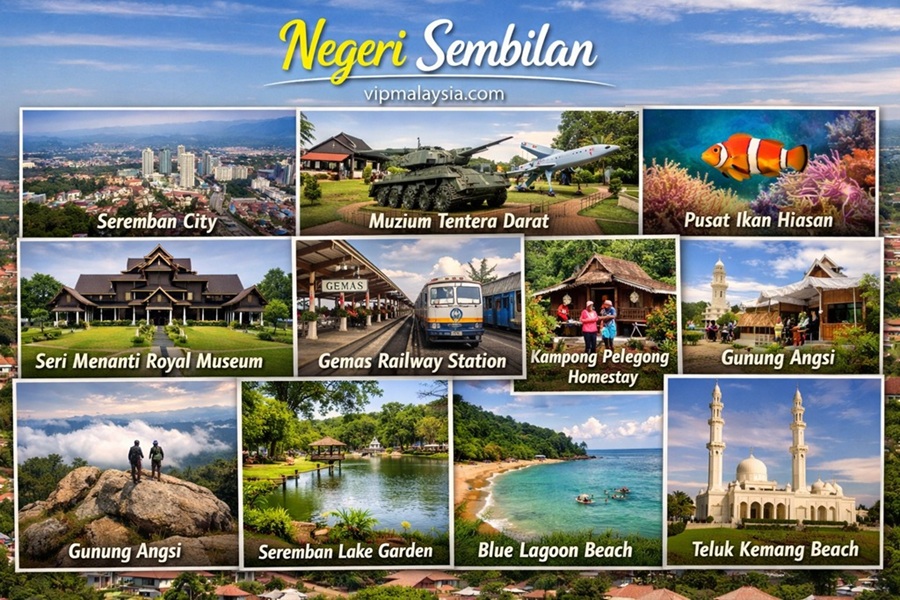
    Negeri Sembilan, a state in southwest Peninsular Malaysia, is a destination where heritage meets natural beauty. Known for its Minangkabau traditions, lush rainforests, and coastal charm, it offers travelers a blend of cultural depth and outdoor adventure.

    Introduction

    Negeri Sembilan is often described as Malaysia’s cultural heartland. Its name, meaning “Nine States,” reflects the historical confederation of districts under the Minangkabau people who migrated from Sumatra. Today, the state is celebrated for its unique architecture with sweeping buffalo-horn roofs, its preserved Adat Perpatih customs, and its diverse landscapes ranging from serene beaches to rugged mountains. Whether you are a history enthusiast, a nature lover, or an adventure seeker, Negeri Sembilan promises a rich travel experience.

    Adat Perpatih is a traditional Minangkabau system of customs and governance practiced in Negeri Sembilan, Malaysia, that is unique for its matrilineal inheritance structure, where property and lineage are passed through women rather than men. Rooted in communal values, it emphasizes collective decision-making, with leadership chosen by consensus rather than hereditary succession. This system organizes society into clans (suku) and districts (luak), with women as custodians of family wealth and men serving as protectors and administrators. It continues to shape cultural identity and social practices in Negeri Sembilan today, distinguishing the state from other Malay regions that follow patrilineal traditions.

    History

    Negeri Sembilan’s history is deeply tied to the Minangkabau migration from West Sumatra in the 15th century. These settlers brought with them the Adat Perpatih, a matrilineal system of governance and inheritance that remains influential today. The state was originally a loose federation of districts, each led by its own chieftain, known as an Undang.

    During the colonial era, Negeri Sembilan became a focal point for British administration, with Seremban emerging as a key town. The Gemas Railway Station, built in 1922, stands as a testament to this period, connecting the state to broader trade and travel networks. The royal town of Seri Menanti, with its wooden palace built without nails, symbolizes the resilience and artistry of Minangkabau craftsmanship.

    Minangkabau Migration and Adat Perpatih

    The roots of Negeri Sembilan trace back to the migration of Minangkabau people from West Sumatra between the 15th and 16th centuries. They brought with them the Adat Perpatih, a matrilineal system of inheritance and governance. This unique tradition shaped the social fabric of the state, emphasizing family harmony and community leadership.

    Historical Formation

    In 1773, Raja Melewar was appointed as the first Yam Tuan ruler, unifying the state under a structured governance system. This marked the beginning of Negeri Sembilan’s identity as a distinct political and cultural entity. The legacy of Adat Perpatih continues to influence social customs today, making it a living tradition rather than a relic of the past.

    Raja Melewar originally a prince from Pagaruyung, Minangkabau (in present-day West Sumatra, Indonesia), invited by the local chiefs of Negeri Sembilan to establish leadership under the Adat Perpatih system. Established the foundation of Negeri Sembilan’s monarchy, which continues today. His leadership brought together various clans and districts under one ruler.

    British Intervention and Modern Development

    By the late 1800s, British involvement in Negeri Sembilan helped mediate conflicts and establish structured governance. This period marked the transition from an agrarian society to one embracing industrial and economic growth. Urban expansion in Seremban and other regions transformed the state into a thriving hub of trade and manufacturing.

    Industrial Growth

    Factories, plantations, and trade networks flourished under British influence. The modernization of infrastructure, including railways and administrative buildings, laid the foundation for Negeri Sembilan’s current industrial strength. Today, the state balances its historical heritage with modern progress.

    Minangkabau-Inspired Architecture

    One of the most striking features of Negeri Sembilan is its architecture. Traditional houses, known as Rumah Gadang, feature upswept roofs resembling buffalo horns. These designs symbolize strength and resilience, deeply rooted in Minangkabau culture.

    Rumah Gadang is the traditional house of the Minangkabau people of West Sumatra, Indonesia, distinguished by its dramatic buffalo-horn-shaped roof and ornate carvings. It serves not only as a residence but also as a cultural symbol of Minangkabau identity and matrilineal society. Rumah Gadang belongs to the women of the family, symbolizing inheritance through the maternal line.

    Architectural Landmarks

    The Seri Menanti Royal Palace stands as a prime example of Minangkabau architecture. Built without nails, it showcases the craftsmanship and ingenuity of traditional builders. Government buildings and cultural centers across the state also adopt this style, preserving the architectural identity of Negeri Sembilan.

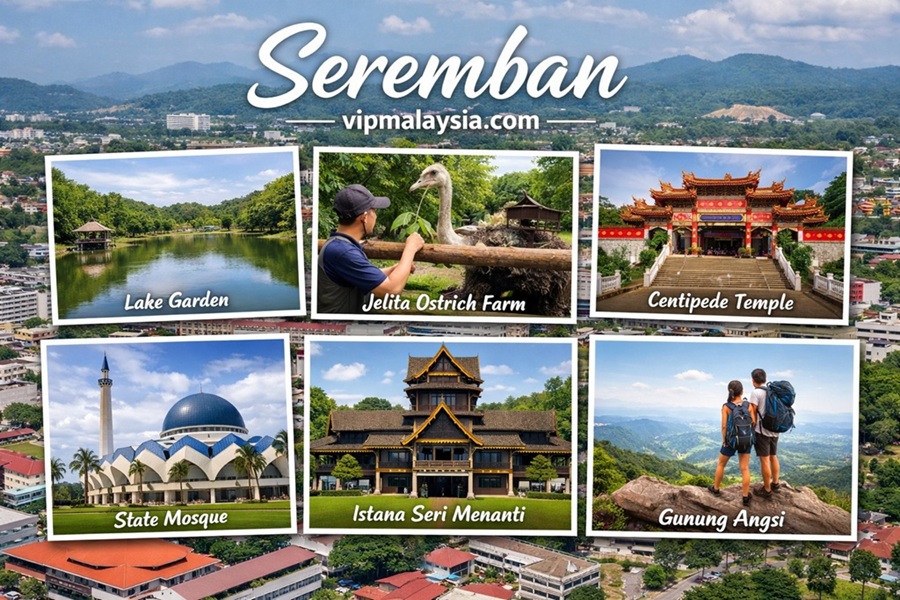
    The Seri Menanti Royal Palace, also known as Istana Seri Menanti, is the former royal residence of the Yang di-Pertuan Besar (ruler) of Negeri Sembilan, Malaysia. Built in 1902 and completed in 1908, it is celebrated as one of the finest examples of Minangkabau-inspired Malay architecture. Constructed entirely of timber without nails, using interlocking techniques. Served as the royal residence until 1992; now a museum showcasing royal regalia and heritage.

    Must Visit Cities

    Seremban City

    Seremban, the capital, is a bustling hub where modernity meets tradition. The State Museum, housed in the former Istana Ampang Tinggi, showcases artifacts of Minangkabau heritage. Visitors can explore local markets, taste Negeri Sembilan’s famous spicy cuisine, and witness cultural festivals that celebrate traditional dance and music.

    Port Dickson

    Port Dickson is the state’s coastal jewel, offering sandy beaches like Blue Lagoon and Tanjung Tuan. It is a popular weekend getaway for locals and international tourists alike. The Muzium Tentera Darat (Army Museum) provides insight into Malaysia’s military history, while water sports and sunset cruises make Port Dickson a lively destination.

    Nilai

    Nilai is a growing urban centre known for its shopping malls, universities, and proximity to Kuala Lumpur International Airport. It serves as a strategic stopover for travelers and offers modern amenities alongside traditional food markets.

    Kuala Pilah

    Kuala Pilah is a heritage-rich town with traditional Minangkabau houses and bustling local markets. It is also the gateway to Seri Menanti, making it a cultural stop for those interested in royal history and architecture.

    Rembau

    Rembau is steeped in history, with landmarks like Astana Raja Melewar and cultural museums. The town is also famous for its local delicacies and traditional crafts, offering visitors a taste of authentic Negeri Sembilan culture.

    Jelebu

    Jelebu is known for eco-tourism and natural attractions such as Jeram Toi Waterfall. The district offers homestay experiences, jungle treks, and cultural storytelling, making it a destination for nature lovers and cultural explorers.

    Tampin

    Tampin lies on the border of Negeri Sembilan and Melaka, offering a mix of historical and natural attractions. It is a quieter town with access to waterfalls and forest reserves, ideal for those seeking off-the-beaten-path experiences.

    Bahau

    Bahau is a small town known for its agricultural activities and local markets. It serves as a base for exploring nearby rural landscapes and offers a glimpse into traditional Malaysian town life.

    Seri Menanti

    Seri Menanti is the royal town of Negeri Sembilan, home to the iconic Seri Menanti Palace built entirely of timber without nails. It is a cultural highlight, showcasing Minangkabau aristocratic traditions and heritage.

    Kuala Klawang

    Kuala Klawang is notable for the Kuala Klawang Memorial and its tranquil rural setting. It offers cultural depth and natural beauty, making it a destination for history enthusiasts and those seeking peaceful retreats.

    Must Visit Attractions

    Muzium Tentera Darat

    The Army Museum in Port Dickson is one of Negeri Sembilan’s most visited attractions, showcasing Malaysia’s military history through interactive exhibits, tanks, and aircraft displays. Entry is free, making it a family-friendly destination that combines education with entertainment.

    Pusat Ikan Hiasan

    Located in Port Dickson, Pusat Ikan Hiasan is a small but fascinating aquarium featuring marine life such as clownfish, corals, and seahorses. Admission is free, making it an ideal stop for families with children.

    Cape Rachado Lighthouse

    Cape Rachado Lighthouse, situated in Tanjung Tuan Forest Reserve, is Malaysia’s oldest lighthouse. Visitors can trek through the forest reserve to reach the lighthouse, which offers panoramic views of the Straits of Malacca.

    Seri Menanti Royal Museum

    The Seri Menanti Royal Museum, housed in a palace built entirely of timber without nails, is a cultural landmark showcasing Minangkabau royal heritage. It offers insights into Negeri Sembilan’s aristocratic traditions.

    Astana Raja Melewar (Muzium Rembau)

    Astana Raja Melewar in Rembau was once the residence of the Undang (chieftain) of Rembau and today serves as a museum. The two-storey building showcases regalia, historical records, and artifacts tied to Negeri Sembilan’s Minangkabau heritage. Its traditional architecture, with distinctive buffalo-horn rooflines, makes it a cultural landmark worth visiting.

    Gemas Railway Station

    Built in 1922, Gemas Railway Station remains one of Malaysia’s oldest functioning stations. It is a nostalgic stop for railway enthusiasts, offering a glimpse into colonial-era infrastructure that connected Negeri Sembilan to wider trade and travel networks. The station continues to operate, blending history with modern rail services.

    Museum & Crafts and Culture Complex

    Opened in 1986, the Museum & Crafts and Culture Complex in Seremban spans 2.4 hectares and includes the State Museum (formerly Istana Ampang Tinggi), Teratak Perpatih, and a Minangkabau House. It is a hub for arts, crafts, and cultural exhibitions, preserving Negeri Sembilan’s heritage for future generations.

    Handicraft Centre

    The Handicraft Centre in Seremban, operated by the Malaysian Handicraft Development Corporation, specializes in bamboo, rattan, and glass crafts. Visitors can watch artisans at work, purchase souvenirs, and even participate in workshops to learn traditional techniques.

    Kampong Pelegong Homestay

    Kampong Pelegong Homestay offers cultural immersion where visitors live with host families, participate in cooking, farming, and storytelling. It is also home to the legendary Virgin Well (Perigi Dara), built in 1866, which is tied to local folklore and believed to bring good fortune.

    The Dusun

    The Dusun is a tropical rainforest retreat near Seremban that emphasizes eco-tourism. Visitors can enjoy jungle trekking, birdwatching, and farm-to-table dining experiences. Its serene environment makes it a popular choice for those seeking relaxation and nature immersion.

    Ladang Anggur Sendayan (Siliau)

    Ladang Anggur Sendayan in Siliau is a vineyard with over 6,000 grapevines, offering agricultural tourism experiences. Visitors can tour the vineyard, learn about grape cultivation, and sample fresh produce. It is a unique attraction highlighting Negeri Sembilan’s diversification into agro-tourism.

    Must Visit Natures

    Jeram Toi Waterfall

    Jeram Toi Waterfall in Jelebu is a popular nature spot surrounded by lush rainforest. It offers picnic areas, trekking trails, and refreshing pools where visitors can swim. The waterfall is easily accessible and is a favorite among families and hikers looking for a quick escape into nature.

    Tanjung Tuan Forest Reserve

    Tanjung Tuan, near Port Dickson, is a coastal forest reserve famous for its Cape Rachado Lighthouse and migratory bird-watching. The reserve combines historical significance with natural beauty, offering jungle trails that lead to secluded beaches.

    Gunung Angsi

    Gunung Angsi is one of Negeri Sembilan’s most trekked mountains, located near Seremban. The trail takes about 3–4 hours and rewards hikers with panoramic views of valleys and forests. It is a moderately challenging climb, suitable for both beginners and seasoned trekkers.

    Seremban Lake Garden

    Seremban Lake Garden is a scenic urban park offering jogging paths, cycling routes, and boating activities. It is a tranquil retreat within the city, surrounded by diverse flora and fauna, making it ideal for relaxation and family outings.

    Jeram Gading Waterfall

    Jeram Gading Waterfall in Jelebu is a hidden gem surrounded by dense jungle. It is less crowded compared to Jeram Toi, offering a peaceful environment for picnics and nature walks. The cool waters and shaded areas make it a refreshing retreat.

    Kenaboi State Park

    Kenaboi State Park is a biodiversity hotspot in Jelebu, home to rare orchids, hornbills, and Malayan tapirs. It offers jungle trekking, camping, and eco-tourism activities. The park is a conservation area, making it ideal for nature enthusiasts and researchers.

    Ulu Bendul Recreational Forest

    Ulu Bendul Recreational Forest, located at the foot of Gunung Angsi, is a popular spot for camping and jungle trekking. It features rivers, picnic areas, and trails leading up the mountain. The forest is well-maintained, making it suitable for families and groups.

    Jeram Berungut Gorge

    Jeram Berungut Gorge in Kenaboi is a natural wonder with towering rock walls and a river running through it. The gorge is accessible via jungle trekking and is considered one of Negeri Sembilan’s most unique geological formations.

    Bukit Taisho

    Bukit Taisho in Bahau is a hilltop destination offering panoramic sunrise views. The trek is relatively short but steep, attracting hikers who enjoy early morning climbs. The summit provides sweeping vistas of surrounding towns and countryside.

    Must Visit Beaches

    Blue Lagoon Beach

    Blue Lagoon Beach in Port Dickson is one of the most famous coastal attractions, known for its calm waters and golden sands. Families and tourists enjoy swimming, kayaking, and banana boat rides here. The beach is also close to Tanjung Tuan Forest Reserve, making it a perfect blend of seaside relaxation and nature trekking.

    Teluk Kemang Beach

    Teluk Kemang Beach is the largest and most popular beach in Port Dickson, offering fine sand, vibrant crowds, and a variety of water sports such as jet skiing and banana boat rides. It is well-equipped with facilities like food stalls, parking, and shaded areas, making it ideal for weekend getaways.

    Pantai Cahaya Negeri

    Pantai Cahaya Negeri is a scenic beach connected to Pulau Burung by a bridge, offering visitors a chance to explore mangroves and bird habitats. It is popular for camping, fishing, and photography, especially during sunrise and sunset.

    Pantai Saujana

    Pantai Saujana is a relaxing beach surrounded by greenery and a clean coastline. It is perfect for fishing, strolling, or simply enjoying the sea breeze. The beach is also known for its stunning sunrise and sunset views.

    Pantai Purnama

    Pantai Purnama is renowned for its peaceful atmosphere and clean surroundings. Families often visit for picnics, sand play, and leisurely walks along the shore. Its tranquil environment makes it a favorite for those seeking a quiet retreat.

    Pantai Tanjung Biru

    Pantai Tanjung Biru, also known as Blue Sand Beach, is famous for its turquoise waters and white sand. It is a romantic spot for couples and a family-friendly destination with breathtaking sunset views.

    Pantai Tanjung Gemok

    Pantai Tanjung Gemok is a wide and calm beach lined with coconut trees. It is suitable for picnics, light water sports, and photography, especially during sunrise and sunset. Its serene landscape attracts visitors looking for relaxation.

    Bagan Pinang Beach

    Bagan Pinang Beach is popular among campers and weekend travelers. It offers campsites, basic facilities, and opportunities for water activities. The beach is lively yet retains a natural charm.

    Dickson Beach

    Dickson Beach is one of the main beaches in Port Dickson, well-known for its fine sand and complete facilities. Visitors enjoy family activities, light water sports, and seaside relaxation with amenities such as food stalls and prayer rooms.

    Pantai Cermin

    Pantai Cermin is a quieter beach offering a calm atmosphere and clean seawater. It is ideal for landscape photography, leisurely walks, and family relaxation. Its less crowded environment makes it a hidden gem for those seeking peace.

    Must Visit Mosques

    Masjid Jamek Seri Menanti

    Masjid Jamek Seri Menanti is one of the most iconic mosques in Negeri Sembilan, located in the royal town of Seri Menanti. Built with traditional Malay architecture, it reflects Minangkabau heritage and serves as a spiritual and cultural centre for the community. Its historical significance and unique design make it a must-visit for travelers interested in religious and cultural landmarks.

    Masjid Kariah Dato’ Klana Petra Ma’amor

    This mosque in Seremban is renowned for its grandeur and community role. It is a central place of worship and also hosts religious events and gatherings. The mosque’s architecture blends traditional and modern elements, making it a striking landmark in the capital city.

    Masjid Kariah Tanjung Ipoh

    Located in Kuala Pilah, Masjid Kariah Tanjung Ipoh is a serene mosque surrounded by rural landscapes. It is known for its peaceful environment and serves as a hub for local religious activities. The mosque’s design reflects the simplicity and harmony of traditional Malay architecture.

    Masjid Kariah Rantau

    Masjid Kariah Rantau is a prominent mosque in the town of Rantau. It is well-regarded for its spacious prayer halls and active community involvement. The mosque is a focal point for religious education and cultural gatherings in the district.

    Masjid Kariah Kuala Pilah

    This mosque is one of the central religious landmarks in Kuala Pilah. It plays a significant role in the town’s spiritual life and is often visited by travelers exploring the cultural heritage of Negeri Sembilan. Its architecture and community presence make it a notable destination.

    Masjid Kariah Tampin

    Masjid Kariah Tampin is located near the border with Melaka, serving both locals and travelers. It is known for its welcoming atmosphere and beautiful design. The mosque is a key religious site in Tampin, reflecting the town’s cultural and spiritual identity.

    Masjid Kariah Teluk Kemang

    Situated near Port Dickson, Masjid Kariah Teluk Kemang is a coastal mosque that attracts both worshippers and tourists. Its proximity to beaches makes it a unique spiritual stop for visitors enjoying the seaside. The mosque is also active in community outreach and religious education.

    Masjid Kariah Rembau

    Masjid Kariah Rembau is a historic mosque in the district of Rembau. It is closely tied to the town’s cultural heritage and traditions. The mosque’s architecture and role in preserving local customs make it a significant religious site.

    Masjid Kariah Port Dickson

    Masjid Kariah Port Dickson is a central mosque in the coastal town, serving both residents and tourists. It is known for its accessibility and active role in community life. Visitors often stop here while exploring Port Dickson’s beaches and attractions.

    Masjid Sri Sendayan

    Masjid Sri Sendayan is one of the most modern and grand mosques in Negeri Sembilan, officially opened in 2019. Inspired by Abbasid, Mamluk, Umayyad, and Ottoman architectural styles, it is a masterpiece of Islamic design. Beyond worship, it functions as a community centre, hosting educational programmes and solemnisation ceremonies, making it a landmark of both faith and culture.

    Trekking and Adventure

    Gunung Angsi

    Gunung Angsi, near Seremban, is a popular trekking destination. The trail takes about 3–4 hours and rewards hikers with panoramic views of the surrounding valleys. Facilities include rest huts and guided tours for beginners.

    Trekking Experience

    The trek up Gunung Angsi is moderately challenging, making it suitable for both novice and experienced hikers. Along the way, trekkers encounter streams, dense forest, and occasional wildlife. The summit offers a breathtaking sunrise view, making early morning hikes especially rewarding.

    Eco-Tourism in Jelebu

    Jelebu district is known for eco-tourism, with homestays that allow visitors to experience rural life. Activities include rubber tapping, traditional cooking, and folklore storytelling. The Virgin Well (Perigi Dara) in Kampong Pelegong is a site of local legend, believed to bring good fortune.

    Nearby Attractions

    Kuala Pilah

    Kuala Pilah is a town rich in heritage, with traditional Minangkabau houses and bustling markets. It is also a gateway to Seri Menanti.

    Nilai

    Nilai is a growing urban centre with shopping malls and universities. Its proximity to Kuala Lumpur International Airport makes it a convenient stop for travelers.

    Rembau

    Rembau offers cultural depth with its historical sites and museums. It is also known for local delicacies and traditional crafts.

    Conclusion

    Negeri Sembilan is a destination where history, culture, and nature converge. From the royal palaces of Seri Menanti to the beaches of Port Dickson, the state offers diverse experiences. Its Minangkabau heritage, eco-tourism initiatives, and adventure trails make it a compelling choice for travelers seeking authenticity. Whether you are exploring museums, trekking mountains, or enjoying coastal sunsets, Negeri Sembilan promises a journey that is both enriching and memorable.

    Summary

    • Attraction: Negeri Sembilan
    • Location: #NegeriSembilan 
    • Attraction Type: #Heritage 
    • Source: tourismnegerisembilan.com
    • Why Explore:
      • Rich Minangkabau traditions – Unique social customs & heritage
      • Historical significance – Shaped by Malay Sultanate and British rule
      • Architectural beauty – Home to the iconic upswept Minangkabau-style roofs
      • Diverse culinary delights – Enjoy fiery ‘masak lemak cili api’ dishes

    Quick Info

    AttributeDetails
    NameNegeri Sembilan
    LocationCentral Region, Peninsular Malaysia
    GPS Position2.7258° N, 101.9373° E
    StateNegeri Sembilan
    Historical SignificanceMinangkabau Influence, Adat Perpatih, British Intervention
    Special AttractionsSeri Menanti Royal Palace, Port Dickson Beach, Seremban Lake Garden
    Nearby StatesSelangor, Pahang, Melaka, Johor
    Main Economic ActivitiesAgriculture, Manufacturing, Trade
    Best Time to VisitYear-round, avoid monsoon season (September–November)
    ClimateWarm & humid, temperature: 23°C–33°C
    Accessibility50 km from Kuala Lumpur, easily reachable via highways

    Visitor Reviews

    ★★★★★ Lorenzo C., Rome, Italy

    “I hiked Gunung Angsi via the Bukit Putus trail. The incline was steep but manageable, and reaching the summit in about 1.5 hours felt rewarding. The entry permit was only RM5, and there was free parking near the trailhead. The tropical forest atmosphere was refreshing, though it gets crowded on weekends. Overall, a solid workout with beautiful scenery.”

    ★★★★☆ Mohamad Khan, Singapore

    “I brought my two kids, aged 8, for the Gunung Angsi trek. It took us nearly six hours because of muddy terrain after rain. The rope climbs and river crossings were challenging but memorable. It was tough guiding children through the trail, yet the sense of being back in nature was worth it. The scenery at the peak was calming, though facilities could be improved.”

    ★★★★★ Zulkarnain Bin Mat Isa, Kuala Lumpur

    “Gunung Angsi is not about the summit view—it’s about the trail itself. Rope climbs, slippery roots, and river crossings make it a proper workout. Parking is roadside, so weekends can be hectic. The Bukit Putus trail is the best maintained, while the alternative trail is muddy and poorly supported. For a hike just an hour from KL, it’s a fantastic option for fitness hikers.”

  • Seremban Travel Guide: History, Highlights, Attractions

    Seremban Travel Guide: History, Highlights, Attractions

    Seremban, Negeri Sembilan

    Seremban, the capital of Negeri Sembilan, is a city where heritage, culture, and modern charm converge. From colonial trails and lush gardens to grand mosques and cultural complexes, Seremban offers travelers a rich blend of history, adventure, and authentic Malaysian experiences. This guide explores its past, attractions, trekking spots, and cultural highlights, making it a must-visit destination.

    Introduction

    Located just 60 kilometers south of Kuala Lumpur, Seremban is often overlooked as a travel destination, yet it offers a wealth of experiences. Known for its Minangkabau heritage, architectural marvels, and thriving food scene, Seremban is both accessible and distinct. Its proximity to Kuala Lumpur makes it a convenient getaway, while its cultural depth ensures that every visit is memorable.

    History

    Seremban’s origins trace back to the tin mining boom of the 19th century, when traders and settlers flocked to the area. The influx of Minangkabau migrants from Sumatra shaped the cultural identity of Negeri Sembilan, and their influence remains visible in the city’s architecture and traditions.

    The Seremban Railway Station, built in 1924, became a symbol of progress, connecting the town to other parts of Malaysia. Colonial-era shop houses along Jalan Sungai Ujong still stand, offering a glimpse into Seremban’s past. Today, Seremban balances its historical legacy with modern development, making it a city of contrasts.

    Highlights

    Seremban Heritage Trail

    Starting at the Seremban Railway Station, the Heritage Trail showcases colonial-era architecture, the First Rubber Tree, and old shop houses. Informative street signs guide visitors, while nearby eateries like Restoran Yi Poh serve the famous Lou Shi Fun noodles.

    • Address: Seremban Railway Station 239, Jalan Tuanku Antah, Jalan Rahang Kecil, Seremban, Negeri Sembilan, Malaysia
    • Phone: +606-761 1708 (Station Office) +603-2267 1200 (KTM Customer Service)

    The Seremban Railway Station is a historic and operational railway hub located in the heart of Seremban, Negeri Sembilan, Malaysia. Constructed between 1904 and 1910 at a cost of RM26,000, it originally served the Sungai Ujong Railway Co. Ltd before being taken over by the Federated Malay States Railways in 1908, and later by Keretapi Tanah Melayu (KTM) in 1948. The station has long been a vital link on the West Coast Line, offering both intercity and commuter services. It was once the terminus of the Port Dickson branch line, which operated until 2008. Today, the station continues to serve KTM ETS (Electric Train Service) and KTM Komuter trains, making it a key transport gateway for Negeri Sembilan.

    Seremban Heritage Trail Attractions

    AttractionDetails
    Seremban Railway StationBuilt in 1924, featuring terracotta roof and Islamic-style cupola. Serves as the starting point of the Heritage Trail.
    First Rubber TreeA preserved historical tree marking Malaysia’s early rubber industry, located along the trail.
    Colonial-Era Shop HousesRows of old shop houses showcasing colonial architecture and Seremban’s commercial past.
    Jalan Sungai UjongHistoric street lined with heritage buildings, murals, and cultural markers.
    Nearby Food Spot: Restoran Yi PohFamous for Lou Shi Fun noodles, offering a culinary stop along the trail.

    Jalan Sungai Ujong Experience

    Walking along Jalan Sungai Ujong, travelers encounter colonial buildings alongside bustling shops. Murals and cultural markers highlight Seremban’s transformation from a mining town to a modern city.

    Lake Gardens (Taman Tasik Seremban)

    Located at Jalan Taman Bunga, Lake Gardens is a serene escape featuring paddle boating, jogging trails, and playgrounds. Families enjoy its facilities, while photographers capture scenic lake views. Nearby, Seremban Seafood Village is famous for baked crabs.

    Morning Jog Atmosphere

    Joggers often begin their day here, enjoying the cool breeze and tranquil surroundings. The gardens also host cultural festivals, adding vibrancy to its natural beauty.

    General InfoDetails
    NameLake Gardens (Taman Tasik Seremban)
    OverviewOne of Malaysia’s oldest natural lake gardens, established during the British colonial era. Known for scenic promenades, lotus ponds, and landscaped greenery.
    AddressTaman Tasik Seremban, 70000 Seremban, Negeri Sembilan, Malaysia
    Phone+6012-677 3693
    Visitor InfoOpen daily, free entry. Best visited in the morning or evening for cooler weather. Facilities include jogging tracks, gazebos, restrooms, and a floating stage.
    ActivitiesJogging, paddle boating, picnicking, photography, birdwatching, and community cultural festivals. Families enjoy playgrounds, while fitness enthusiasts use the trails.
    Nearby AttractionsNegeri Sembilan State Museum, Church of the Visitation, Palm Mall Seremban, and Seremban Seafood Village (famous for baked crabs).

    Negeri Sembilan State Mosque

    This mosque, located on Jalan Datuk Hamzah, features a Minangkabau-inspired roof and nine symbolic pillars representing the nine districts of Negeri Sembilan. It is both a spiritual and architectural icon.

    Symbolism of Nine Pillars

    The nine pillars symbolize unity among the districts. The mosque blends tradition with modern design, making it a must-visit for architecture enthusiasts.

    Sri Sendayan Mosque

    Opened in 2019, Sri Sendayan Mosque is one of Malaysia’s most beautiful mosques, combining Abbasid, Mamluk, and Ottoman styles. It spans 4.5 hectares and offers guided tours.

    Architectural Grandeur

    Intricate carvings, gold plating, and calligraphy showcase Islamic artistry. The mosque is not only a place of worship but also a hub for social and educational events.

    Seremban Cultural Complex

    The complex houses the State Museum and Negeri Sembilan House, both showcasing Minangkabau architecture and cultural artifacts. Exhibitions include traditional textiles and crafts.

    Minangkabau Roof Design

    The horn-shaped roof symbolizes cultural resilience. The complex offers a comprehensive look into Negeri Sembilan’s traditions.

    More Attractions

    Seremban Street Art Lane

    Lorong Seni Seremban features over 30 murals created by local artists. It transforms alleys into vibrant public spaces, making it a favorite spot for photography.

    Cultural Expression

    Murals depict local legends, daily life, and historical figures, offering visitors a colorful narrative of Seremban’s identity.

    Pasar Besar Seremban

    This bustling market offers fresh produce and local delicacies, including Seremban’s famous siew pau (baked buns). It reflects the city’s diverse community and culinary traditions.

    Culinary Adventure

    Walking through the market, visitors encounter tropical fruits, handmade crafts, and lively vendors eager to share stories.

    Trekking and Adventure

    Bukit Kepayang

    Bukit Kepayang offers 30 trails ranging from easy strolls to steep climbs. The hill is only 205 meters tall but provides panoramic views of Seremban.

    Sunrise Trek

    Early morning treks reward hikers with breathtaking sunrise views. Temples and lotus ponds near the hill add cultural and natural charm.

    Main Trails

    Trail NameDescription & DifficultyDuration / Time
    Super Way TrailSteep but short climb directly to the peak. Rope assistance provided. Suitable for intermediate hikers.~ 45 minutes
    Dog TrailSteep descent leading to Station 3 (Khoo Junction). Requires careful footing.~ 55 minutes
    Rainbow TrailRocky terrain with rope assistance. Moderate difficulty, popular exit route to tarmac road.~ 2.5 hours
    Eagle TrailDense foliage, moderate climbs with rope support. Offers sunrise/sunset views at the peak.~1.5 hour
    Sky Garden TrailPasses Lotus Pond and a Hindu temple. Moderate difficulty with steep sections. Scenic summit views.~ 1.5 hour
    Extended Loop TrailLonger circuit with steep and muddy sections. Requires insect repellent and good boots.~ 2.5 hours

    Centipede Temple (Then Sze Koon Temple)

    Located on Wu Gong Hill, this temple is famous for its striking centipede sculpture. It offers panoramic views of Seremban and serves as a mystical shrine.

    Visitors climb 264 steps to reach the temple, which sits about 127 meters above sea level, offering panoramic views of Seremban and the surrounding countryside. The temple complex includes a three‑storey pagoda with a Laughing Buddha statue, shrines dedicated to deities such as Guan Yin and Guan Di, a tortoise pond, koi pond, and the God of Marriage (Yue Lao) statue where couples leave lockets tied with red strings for blessings. The temple blends Taoist, Buddhist, and Chinese folk religious traditions, making it a unique cultural site.

    • Address: Centipede Temple (Then Sze Koon Temple) Persatuan Penganut Dewa Then Sze Bukit Jung Jalan Temiang, 70200 Seremban, Negeri Sembilan, Malaysia
    • Phone: +6019-620 6689 +6010-310 5880

    Mystical Atmosphere

    Visitors climb the hill to reach the temple, where they encounter intricate shrines and peaceful surroundings.

    Conclusion

    Seremban offers a perfect balance of heritage and modernity. From historical trails and cultural complexes to mosques and gardens, it provides travelers with a rich tapestry of experiences. Whether you seek spiritual reflection, outdoor adventure, or culinary delights, Seremban delivers it all. Its accessibility from Kuala Lumpur makes it an ideal getaway.

    Quick Info

    AttributeDetails
    DestinationSeremban, Malaysia
    NameSeremban
    Location / AddressNegeri Sembilan, Malaysia
    StateNegeri Sembilan
    GPS Position2.7100° N, 101.9500° E
    Date EstablishedLate 19th century (tin mining boom); declared city status on 20 January 2020
    Main AttractionsLake Gardens, Sri Sendayan Mosque, Negeri Sembilan State Mosque, Seremban Heritage Trail
    Popular AttractionsCentipede Temple, Street Art Lane, Pasar Besar Seremban, Bukit Kepayang
    Nearby LandmarksPalm Mall Seremban, Church of the Visitation, Negeri Sembilan Cultural Complex
    FacilitiesHotels, Resorts, Restaurants, Shopping Malls, Cultural Centers
    AccessibilityAccessible via North–South Expressway (PLUS), KTM ETS & Komuter trains
    TransportationCar, Bus, Train (KTM ETS/Komuter), Taxi, E‑hailing
    Best Time to VisitYear‑round; mornings/evenings best for outdoor activities
    Recommended ActivitiesHeritage Trail Walk, Mosque Tours, Street Art Photography, Market Food Tasting
    ActivitiesHiking (Bukit Kepayang), Sightseeing, Cultural Exploration, Culinary Tours
    AccommodationLuxury Hotels, Budget Inns, Homestays
    Local CuisineSeremban Siew Pau (baked buns), Lou Shi Fun noodles, Baked Crabs
    Nearby CitiesKuala Lumpur (~60 km), Port Dickson (~30 km)
    ContactSeremban City Council (Majlis Bandaraya Seremban), Wisma MBS, Persiaran Forest Heights 1, Jalan Seremban–Tampin, 70450 Seremban, Negeri Sembilan. Tel: +606‑765 4333

    Visitor Reviews

    Yahya Sumud Frotilla, Kuala Lumpur – ★★★★★ “I visited Sri Sendayan Mosque last year, and the experience was breathtaking. The mosque’s design, blending Abbasid and Ottoman styles, was unlike anything I had seen in Malaysia. The prayer hall could accommodate thousands, and the guided tour explained the symbolism behind the carvings and calligraphy. I appreciated the clear visitor guidelines, like modest dress codes, which made the visit respectful and organized.”

    Guthrie Konte, Singapore – ★★★★☆Lake Gardens (Taman Tasik Seremban) was a highlight of my trip. The jogging trails were shaded and well-maintained, and I enjoyed paddle boating on the lake. Families were picnicking, and the playgrounds were lively. Afterward, I tried the famous baked crabs at Seremban Seafood Village nearby—absolutely worth it. The only downside was weekend crowds, but the atmosphere was still relaxing.”

    Ibrahimsha Abu Mamu, Penang – ★★★★★ “The Heritage Trail was fascinating. Starting at the Seremban Railway Station, I walked past colonial-era shop houses and saw the First Rubber Tree. Informative signs explained the history, and I stopped at Restoran Yi Poh for their Lou Shi Fun noodles, which lived up to the hype. It felt like stepping back in time while still being part of a vibrant city.”

    Arif Alan, Johor Bahru – ★★★★☆Seremban Street Art Lane was colorful and creative. The murals stretched across several streets, with themes ranging from heritage to modern abstract art. It was fun to explore and take photos, though parking nearby was tricky. The lane has clearly revitalized the area, turning back alleys into vibrant public spaces.”

  • Sarawak: Gateway to Borneo Adventure

    Sarawak: Gateway to Borneo Adventure

    Sarawak

    Sarawak, a state brimming with natural beauty, rich cultural heritage, and unique history, is a must-visit for travelers in Malaysia. From enchanting tropical rainforests to intriguing historical sites, Sarawak promises an unforgettable experience for every type of traveler. Discover the main attractions and activities that make this state so special!

    Sarawak, the largest state in Malaysia, is a land of untamed rainforests, vibrant indigenous cultures, and breathtaking natural wonders. From the mystical caves of Mulu to the orangutans of Semenggoh, Sarawak offers travelers an unforgettable journey into the heart of Borneo.

    Introduction

    Sarawak is often described as Malaysia’s hidden gem, a destination where ancient traditions meet modern exploration. Located on the island of Borneo, it is home to diverse ethnic groups, lush national parks, and UNESCO World Heritage Sites. Whether you are drawn by its wildlife, trekking trails, or cultural festivals, Sarawak promises a rich and immersive travel experience.

    History

    Sarawak’s history is as fascinating as its landscapes. Originally inhabited by indigenous Dayak tribes, the region became part of the Bruneian Empire before being ceded to James Brooke in 1841. Brooke, known as the “White Rajah,” established a dynasty that ruled Sarawak for over a century. Under the Brooke family, Sarawak developed trade networks and maintained relative autonomy until World War II, when Japanese forces occupied the territory. After the war, Sarawak briefly became a British Crown Colony before joining Malaysia in 1963.

    This historical journey shaped Sarawak’s identity, blending indigenous traditions with colonial legacies. Today, visitors can explore heritage sites such as Fort Margherita in Kuching, museums showcasing tribal artifacts, and cultural villages that preserve the legacy of the Dayak, Iban, and Bidayuh peoples.

    Major Tribes in Sarawak

    TribeDescription
    IbanThe largest ethnic group in Sarawak, making up about 28–30% of the population. Historically known as “Sea Dayaks,” they were once feared headhunters. Today, they live in communal longhouses, practice farming, and celebrate the Gawai Dayak harvest festival.
    BidayuhOften called “Land Dayaks,” the Bidayuh people inhabit the highlands near Kuching. They are known for their bamboo longhouses, traditional dances, and unique beadwork. Christianity is widely practiced among them today.
    Orang UluA collective term for smaller interior tribes such as the Kenyah, Kayan, Kelabit, and Penan. They are famous for intricate beadwork, sape (traditional lute) music, and longhouse living. Some Penan groups still maintain nomadic lifestyles in the rainforest.
    MelanauTraditionally fishermen and sago producers, the Melanau people live along Sarawak’s coastal areas. They celebrate the Kaul Festival, a ritual of thanksgiving and purification. Many Melanau are Muslim, though Christianity is also practiced.
    MalayMalays in Sarawak are largely coastal dwellers, with roots tracing back to conversions of indigenous groups to Islam from the 15th century onward. They are known for their role in governance during the Brooke era and their strong Islamic traditions.
    ChineseMaking up about 23–24% of Sarawak’s population, the Chinese community is concentrated in towns and cities. They arrived in waves from the 18th century onward, contributing to trade, mining, and commerce. They practice Buddhism, Christianity, Taoism, and Confucianism.

    Must Visit Cities

    Kuching

    Kuching, the capital of Sarawak, is often called the “City of Cats.” It is a vibrant mix of colonial architecture, Chinese temples, and modern attractions. The Kuching Waterfront, Sarawak Museum, and Fort Margherita are highlights, while the city also serves as a gateway to Bako National Park and Semenggoh Wildlife Centre. Visitors enjoy its diverse food scene, including the famous Sarawak Laksa.

    Bau

    Located southwest of Kuching, Bau is known for its limestone mountains and caves, such as the Wind Cave and Fairy Cave. It is also rich in Bidayuh culture, offering visitors a glimpse into traditional longhouse living. Bau’s natural beauty and cultural heritage make it a fascinating stop for travelers seeking both adventure and authenticity.

    Sibu

    Sibu, situated along the Rajang River, is a bustling town known as the gateway to central Sarawak. Its vibrant waterfront, Chinese temples, and food markets highlight its cultural diversity. The town is famous for its Sibu Night Market and serves as a hub for riverine adventures deeper into Sarawak’s interior.

    Bintulu

    Bintulu is a coastal town renowned for Similajau National Park, golden beaches, and sightings of Irrawaddy dolphins. It hosts Malaysia’s longest kite festival and is also famous for its belacan (shrimp paste). Bintulu offers a mix of natural wonders and cultural experiences, making it a unique destination.

    Miri

    Miri is Sarawak’s second-largest city and the birthplace of Malaysia’s petroleum industry. It is the gateway to Gunung Mulu National Park, a UNESCO World Heritage Site. Miri also offers access to Niah Caves and Lambir Hills National Park, making it a hub for both history and adventure.

    Mukah

    Mukah is the heartland of the Melanau people, known for its sago production and the Kaul Festival, a traditional thanksgiving ritual. Visitors can explore Melanau culture through food, crafts, and coastal traditions. Mukah provides a cultural immersion into one of Sarawak’s oldest ethnic groups.

    Kapit

    Kapit lies deep along the Rajang River and is accessible mainly by boat. It is a center of Iban culture, with longhouses dotting the surrounding areas. The town is a gateway to upriver adventures and offers insights into Sarawak’s indigenous heritage.

    Limbang

    Located near Brunei, Limbang is a small town with a unique cultural blend. It is known for its proximity to the highlands and offers access to traditional longhouses and natural landscapes. Limbang’s position makes it a convenient stop for travelers crossing between Sarawak and Brunei.

    Lawas

    Lawas, situated in northern Sarawak, is a gateway to the Kelabit Highlands and Ba’kelalan. It is known for its agricultural produce, including apples and rice grown in highland villages. Lawas is a base for exploring remote communities and experiencing Sarawak’s rural charm.

    Sri Aman

    Sri Aman, formerly known as Simanggang, is famous for the Benak tidal bore phenomenon along the Batang Lupar River. The town also offers cultural experiences with Iban communities and serves as a stopover for travelers heading deeper into Sarawak.

    Must Visit Attractions

    Bako National Park

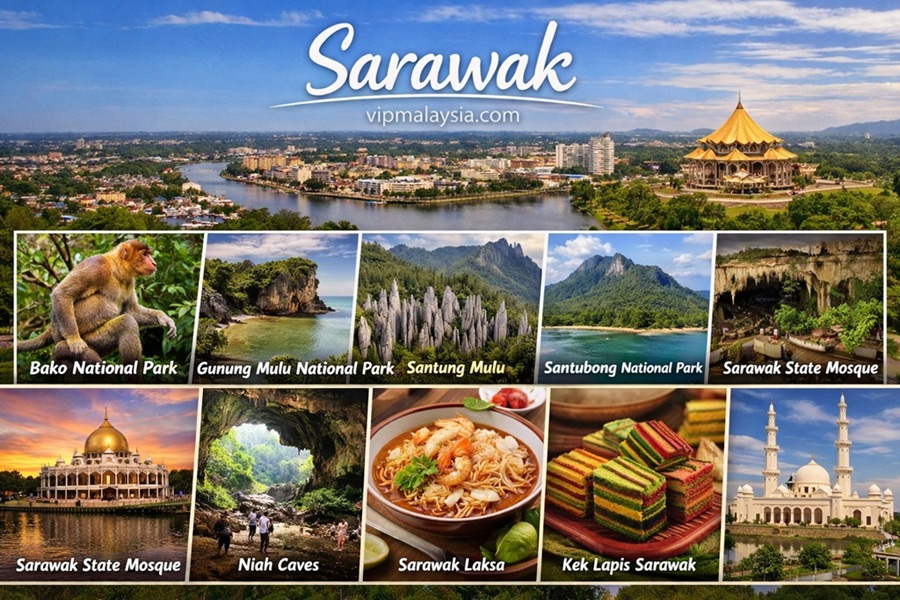
    Established in 1957, Bako is Sarawak’s oldest national park. It is famous for its proboscis monkeys, mangrove swamps, and rugged coastal cliffs. The park offers multiple trails, ranging from easy walks to challenging treks, each leading to secluded beaches and dramatic viewpoints.

    Semenggoh Wildlife Centre

    Located near Kuching, Semenggoh Wildlife Centre is dedicated to orangutan rehabilitation. Visitors can witness feeding sessions and learn about conservation efforts, making it one of the most popular attractions in Sarawak.

    Gunung Mulu National Park

    A UNESCO World Heritage Site, Gunung Mulu National Park is renowned for its limestone karst formations and vast cave systems. Highlights include the Sarawak Chamber, one of the world’s largest underground chambers, and the nightly bat exodus from Deer Cave.

    Niah National Park

    Niah National Park is home to caves with archaeological significance, including human remains dating back 40,000 years. The Great Cave and Painted Cave offer insights into Sarawak’s prehistoric heritage.

    Sarawak Cultural Village

    Known as the “living museum,” Sarawak Cultural Village showcases the traditions of Sarawak’s ethnic groups. Visitors can explore longhouses, watch cultural performances, and participate in craft-making workshops.

    Kubah National Park

    Kubah National Park is famous for its rich biodiversity, especially frogs and orchids. The park offers night tours where visitors can spot rare amphibians, making it a unique attraction for nature enthusiasts.

    Batang Ai National Park

    Batang Ai National Park is accessible via Malaysia’s largest man-made lake. It is known for its orangutan population and offers opportunities to stay in traditional longhouses, providing cultural immersion alongside wildlife encounters.

    Gunung Gading National Park

    Gunung Gading National Park is best known for the Rafflesia, the world’s largest flower. Visitors can trek through rainforest trails to witness this rare bloom, which can reach up to one meter in diameter.

    Similajau National Park

    Located near Bintulu, Similajau National Park features golden beaches, mangrove forests, and opportunities to spot Irrawaddy dolphins. It is a haven for birdwatchers and marine enthusiasts.

    Santubong Peninsula

    The Santubong Peninsula combines natural beauty with cultural heritage. Visitors can hike Mount Santubong, relax on beaches, and explore the Sarawak Cultural Village located nearby.

    Kuching Waterfront

    A scenic promenade along the Sarawak River, the waterfront is lined with food stalls, souvenir shops, and colonial-era buildings. It is a popular spot for evening strolls and river cruises.

    Sibu Central Market

    Sibu Central Market is Malaysia’s largest indoor market, with over 1,100 stalls offering jungle produce, exotic fruits, live poultry, and Sarawakian delicacies. It is more than a shopping destination — it’s a cultural hub where locals and travelers experience the vibrant daily life of Sarawak.

    Satok Weekend Market

    Located in Kuching, Satok Weekend Market is a colorful bazaar where native Sarawakian vendors, Chinese traders, and Malay communities converge. Visitors can find wild honey, orchids, handcrafted souvenirs, and exotic fruits, making it a must-visit for authentic local experiences.

    Santubong National Park

    Just 35 km from Kuching, Santubong National Park is famous for its legendary summit, jungle trails, and cascading waterfalls. It offers panoramic views of the South China Sea and is tied to local folklore about the mythical princess of Santubong.

    Talang Satang National Park

    Talang Satang National Park is Malaysia’s first marine national park, created to protect endangered sea turtles and coral ecosystems. Visitors can witness turtle hatchlings, dive into reef-rich waters, and participate in conservation programs.

    Piasau Nature Reserve

    Located in Miri, Piasau Nature Reserve was once an oil camp but has been transformed into a thriving sanctuary. It is home to Oriental Pied Hornbills and ancient Tapang trees, offering a unique ecological and cultural experience.

    Fairy Cave

    Fairy Cave near Bau is a limestone cave system filled with stalactites, stalagmites, and lush greenery. It has historical significance as a Japanese fortress during World War II and is popular among hikers and rock climbers.

    Must Visit Mosques

    Sarawak State Mosque (Masjid Jamek Negeri Sarawak)

    Located in Petra Jaya, Kuching, the Sarawak State Mosque is one of the most stunning Islamic landmarks in Borneo. Built in 1990, it features a massive central dome, tall minarets, and interiors adorned with Islamic calligraphy and chandeliers. It can accommodate thousands of worshippers and is a symbol of unity and peace in Sarawak.

    Petra Jaya State Mosque

    Also in Kuching, Petra Jaya State Mosque is considered an architectural masterpiece of modern Islamic design. Completed in 1990, it covers 4.6 acres and accommodates over 3,000 worshippers. Its striking white and blue geometric patterns make it a cultural landmark and a favorite among architecture enthusiasts.

    Masjid Bandaraya Kuching

    Situated near the Kuching Waterfront, Masjid Bandaraya is known for its scenic location by the Sarawak River. Its golden domes and elegant design make it a popular spot for both worshippers and visitors. The mosque offers panoramic views of the city and river, blending spirituality with urban beauty.

    Masjid An-Nur Sibu

    The largest mosque in central Sarawak, Masjid An-Nur Sibu is a striking modern structure with Middle Eastern-inspired architecture. It serves as a spiritual hub for the Muslim community in Sibu and is a prominent landmark in the town’s skyline.

    Masjid Darul Taqwa Bintulu

    Located in Bintulu, this mosque is known for its spacious prayer halls and contemporary design. It plays a central role in the town’s religious life and is often visited by travelers exploring Similajau National Park nearby.

    Masjid Al-Taqwa Miri

    Masjid Al-Taqwa is the largest mosque in Miri, featuring a grand dome and minarets that dominate the city’s skyline. It is a key religious and cultural center, often hosting community events and Islamic celebrations.

    Masjid Jamek Sri Aman

    This mosque in Sri Aman is a local landmark, serving the Muslim community in the town. Its design reflects traditional Islamic architecture, and it is often visited by travelers exploring the tidal bore phenomenon of Batang Lupar River.

    Masjid Al-Muttaqin Mukah

    Located in Mukah, this mosque is closely tied to the Melanau community. It is a hub during the Kaul Festival, reflecting the blend of Islamic faith and local traditions.

    Masjid Darul Syifa Limbang

    In Limbang, Masjid Darul Syifa is a prominent religious site, serving as a gathering place for worshippers and visitors crossing between Sarawak and Brunei. Its architecture blends modern and traditional Islamic elements.

    Masjid Al-Mustaqim Lawas

    Lawas’s main mosque, Masjid Al-Mustaqim, is a spiritual center for the northern Sarawak community. It is often visited by travelers heading to the Kelabit Highlands and Ba’kelalan, offering a peaceful stopover.

    Must Visit Caves

    Deer Cave

    Located in Gunung Mulu National Park, Deer Cave is one of the largest cave passages in the world. It is home to millions of bats that perform a spectacular exodus at dusk, spiraling into the sky in search of food. The cave’s immense size and dramatic formations make it a highlight for adventure seekers.

    Lang Cave

    Smaller than Deer Cave but equally captivating, Lang Cave is famous for its delicate stalactites and stalagmites. Some formations resemble jellyfish, creating a surreal underground landscape. Visitors often explore Lang Cave alongside Deer Cave on guided tours.

    Clearwater Cave

    Clearwater Cave is one of the longest cave systems in Southeast Asia, with a river flowing through its chambers. The crystal-clear water gives the cave its name, and adventure caving opportunities make it a favorite among thrill-seekers.

    Wind Cave (Mulu)

    Wind Cave in Mulu is renowned for its natural rock formations, where stalactites and stalagmites have fused into towering columns. The cave’s architecture showcases the slow artistry of nature, with formations that took thousands of years to develop.

    Fairy Cave

    Located near Bau, Fairy Cave is named after a rock formation resembling a fairy. The cave is filled with lush greenery and dramatic chambers, offering a mystical atmosphere. Visitors climb a series of steps to reach the entrance, rewarded with sweeping views inside.

    Niah Caves

    Niah Caves are historically significant, with archaeological discoveries dating back 40,000 years. The Great Cave and Painted Cave reveal prehistoric human remains and ancient cave paintings, making Niah a vital site for understanding early human history in Southeast Asia.

    Silabur Cave

    Silabur Cave, located in Serian, is known for its impressive stalactites and stalagmites. It requires a guided trek, often combined with a summit hike, offering both natural beauty and adventure. The cave’s remote setting adds to its allure.

    Gua Niah

    Part of the Niah National Park complex, Gua Niah features extensive plankwalks leading through its chambers. Visitors are advised to bring flashlights and sturdy shoes, as the cave’s vast interior requires careful exploration.

    Racer Cave

    Racer Cave in Mulu is popular among adventure cavers. Named after the racer snakes that inhabit it, the cave offers challenging climbs and narrow passages. It is recommended for experienced explorers seeking adrenaline-filled experiences.

    Sarawak Chamber

    Located within Gunung Mulu National Park, the Sarawak Chamber is one of the largest underground chambers in the world. Its sheer size is awe-inspiring, capable of fitting multiple football fields inside. Guided tours highlight its geological significance and grandeur.

    Must Try Foods

    Sarawak Laksa

    Sarawak Laksa is the state’s signature dish, often described as the “Breakfast of the Gods.” It features rice vermicelli in a spicy coconut-based broth made with sambal belacan, tamarind, and aromatic spices. Topped with prawns, shredded chicken, bean sprouts, and a squeeze of lime, it is a must-try for any visitor.

    Kolo Mee

    Kolo Mee is a beloved noodle dish in Sarawak, consisting of springy egg noodles tossed in light soy sauce, garlic oil, and sometimes vinegar. It is usually topped with minced pork or char siu, though halal versions substitute chicken. Served with pickled chilies, it is a staple breakfast or supper option.

    Kampua Mee

    Originating from Sibu, Kampua Mee is a Foochow specialty. The noodles are slightly thicker and flatter than Kolo Mee, dressed with lard oil and soy sauce, and topped with char siu or chicken in halal versions. It is considered the ultimate comfort food for locals.

    Belacan Beehoon

    Belacan Beehoon is a unique Sarawakian dish made with rice vermicelli topped with a pungent fermented shrimp paste sauce. It is usually served with cuttlefish, cucumber, beansprouts, sambal, and lime. Though strong in flavor, it is a local favorite once acquired.

    Ayam Pansuh (Manok Pansoh)

    Ayam Pansuh is a traditional Dayak dish where chicken is marinated and slow-cooked inside bamboo over an open fire. The bamboo imparts a smoky aroma, while herbs like lemongrass and ginger add depth. It is often served during festivals and communal gatherings.

    Umai

    Umai is a Melanau delicacy consisting of raw fish marinated with lime juice, chili, and onions. Similar to ceviche, it is refreshing and tangy, often eaten as an appetizer. Umai reflects the coastal traditions of the Melanau people.

    Midin Ferns

    Midin is a jungle fern stir-fried with garlic, chili, and shrimp paste. It is crunchy, fresh, and widely available in Sarawak’s food courts and restaurants. Midin is considered a quintessential Sarawakian vegetable dish.

    Nasi Aruk

    Nasi Aruk is a unique Sarawak fried rice cooked without oil. Instead, the rice is dry-fried in a wok with anchovies, shallots, and herbs, giving it a smoky flavor. It is a rustic dish often enjoyed in village settings.

    Kek Lapis Sarawak

    Kek Lapis Sarawak is a colorful layered cake served during festive occasions such as Hari Raya, Chinese New Year, and weddings. Each layer is baked separately, creating intricate patterns. It is both a dessert and a cultural symbol of Sarawak.

    Dabai Fruit Dishes

    Dabai, often called the “Sarawak olive,” is a seasonal fruit unique to the region. It is typically eaten with soy sauce and sugar or used in fried rice dishes. Dabai’s creamy texture and rich flavor make it a prized local ingredient.

    Conclusion

    Sarawak is a destination that combines history, culture, and adventure in one remarkable package. From its national parks to its cultural villages, Sarawak invites travelers to immerse themselves in the wonders of Borneo. Whether you seek wildlife encounters, trekking challenges, or cultural insights, Sarawak delivers an unforgettable journey.

    Visitor Reviews

    Adillah Ahmad Sulaiman, Kuala Lumpur – ★★★★★ “I joined a guided trip to Northern Sarawak covering Miri, Niah Caves, and Mulu. The highlight was definitely Deer Cave in Mulu, where millions of bats flew out at dusk — a sight I’ll never forget. The Kelabit culture in Bario was fascinating, especially the food and the warmth of the villagers. Traveling on the small Twin Otter plane into Bario was an adventure in itself.”

    Haider, Penang – ★★★★★ “My first visit to Sarawak included the Sarawak Cultural Village at Santubong. Walking through the longhouses and watching traditional dances gave me a deep appreciation for the diversity of ethnic groups here. I also joined a foodie tour in Kuching — the Sarawak Laksa and Kek Lapis were delicious. The only downside was the humidity, but that’s part of the rainforest charm.”

    Tengku Zanariah, Johor Bahru – ★★★★★ “Bako National Park was a wildlife haven. I saw proboscis monkeys, bearded pigs, and even hornbills. The trek to the sea stacks was challenging but rewarding, with dramatic coastal views. Staying overnight allowed me to catch wildlife at dawn, which was magical. The guides were knowledgeable and ensured we spotted as much as possible.”

    Samson, Singapore – ★★★★★ “Gunung Mulu National Park is a UNESCO marvel. The caves are massive, and the canopy skywalk gave me a bird’s-eye view of the rainforest. The Pinnacles trek was tough, but the limestone spires rising above the jungle were worth every step. The facilities were basic but adequate for such a remote location.”

    Frequently Asked Questions (FAQs)

    Looking for answers to common questions? Our FAQ section provides clear, concise explanations on key topics, helpful troubleshooting tips, and expert insights to guide you. Whether you’re a beginner or an experienced user, you’ll find quick solutions and essential information to streamline your experience.

    What are the 100 best destinations in Sarawak?

    National Parks & Nature Reserves

    1. Bako National Park
    2. Gunung Mulu National Park
    3. Niah National Park
    4. Batang Ai National Park
    5. Kubah National Park
    6. Gunung Gading National Park
    7. Similajau National Park
    8. Lambir Hills National Park
    9. Loagan Bunut National Park
    10. Talang-Satang National Park
    11. Tanjung Datu National Park
    12. Maludam National Park
    13. Usun Apau National Park
    14. Pulong Tau National Park
    15. Bukit Tiban National Park

    Caves & Geological Wonders

    1. Deer Cave (Mulu)
    2. Clearwater Cave (Mulu)
    3. Wind Cave (Bau)
    4. Fairy Cave (Bau)
    5. Painted Cave (Niah)
    6. Silabur Cave (Serian)
    7. Gua Sireh (Padawan)
    8. Gua Long House (Limbang)
    9. Gua Bukit Kana (Bintulu)
    10. Gua Batu Kapal (Lawas)

    Beaches & Islands

    1. Damai Beach
    2. Sematan Beach
    3. Tanjung Batu Beach (Bintulu)
    4. Siar Beach (Lundu)
    5. Pandan Beach
    6. Belawai Beach
    7. Telok Melano
    8. Satang Island
    9. Talang Island
    10. Pulau Lakei

    Cities & Towns

    1. Kuching
    2. Miri
    3. Sibu
    4. Bintulu
    5. Bau
    6. Kapit
    7. Sarikei
    8. Limbang
    9. Lawas
    10. Lundu

    Cultural & Historical Sites

    1. Sarawak Cultural Village
    2. Fort Margherita
    3. Fort Sylvia
    4. Brooke Gallery
    5. Chinese History Museum
    6. Tua Pek Kong Temple (Kuching)
    7. Annah Rais Longhouse
    8. Rumah Nyuka Longhouse (Lubok Antu)
    9. Siniawan Night Market
    10. Main Bazaar (Kuching)

    Wildlife & Conservation

    1. Semenggoh Wildlife Centre
    2. Matang Wildlife Centre
    3. Borneo Orangutan Sanctuary (Batang Ai)
    4. Taman Tumbina Bintulu
    5. Irrawaddy Dolphin Watching (Santubong)
    6. Crocodile Farm (Jong’s Crocodile Farm)
    7. Borneo Happy Farm
    8. Piasau Nature Reserve (Miri)
    9. Borneo Samariang Resort City Zoo
    10. Turtle Conservation at Talang-Satang

    Adventure & Outdoor Activities

    1. Mount Santubong Climb
    2. Pinnacles Trek (Mulu)
    3. Kayaking in Semadang River
    4. Caving in Fairy & Wind Caves
    5. Jungle trekking in Lambir Hills
    6. Diving at Miri-Sibuti Coral Reef
    7. Paragliding in Bintulu
    8. Ziplining at Borneo Highlands
    9. River Safari in Batang Ai
    10. Mountain biking in Bau

    Rivers & Waterways

    1. Sarawak River Cruise
    2. Rajang River (longboat rides)
    3. Baram River
    4. Limbang River
    5. Sungai Sarawak Kiri

    Relaxation & Wellness

    1. Borneo Highlands Resort
    2. Damai Beach Resort
    3. Permai Rainforest Resort
    4. Cove 55
    5. The Culvert

    Festivals & Events (Destinations during events)

    1. Rainforest World Music Festival (Damai)
    2. Borneo Jazz Festival (Miri)
    3. Kuching Waterfront Festival
    4. Pesta Kaul (Mukah)
    5. Gawai Dayak Celebrations (Longhouses)

    Markets & Local Experiences

    1. Satok Weekend Market
    2. Serikin Border Market
    3. Sibu Central Market
    4. Miri Handicraft Centre
    5. Kuching Open Air Market

    Hidden Gems & Offbeat Spots

    1. Ba’kelalan Highlands
    2. Long Semadoh (Limbang Highlands)
    3. Long Banga (remote village)
    4. Tusan Beach (Miri) – famous for “Blue Tears”
    5. Bung Jagoi Heritage Trail (Jagoi area)
  • Kilim Geo Forest Park: Secrets of Langkawi Nature

    Kilim Geo Forest Park: Secrets of Langkawi Nature

    Kilim Geo Forest Park​, Langkawi

    Discover the wonders of Kilim Geo Forest Park, Langkawi, a UNESCO-listed site where mangrove swamps, limestone caves, and pristine beaches meet. From Kelawar Cave with its bat colonies to the tranquil Langgun Lake, this guide explores history, highlights, trekking adventures, and nearby attractions. Plan your visit and experience Langkawi’s natural heritage like never before.

    Introduction

    Kilim Geo Forest Park in Langkawi is one of Malaysia’s most celebrated natural reserves, blending geological marvels with ecological richness. Located on the northeastern coast of Langkawi Island, this UNESCO Global Geopark is famed for its mangrove forests, karstic limestone formations, and diverse wildlife. Visitors are drawn to its caves, rivers, and beaches, making it both a scientific treasure and a tourist paradise.

    The park is not just a destination—it is a journey into Langkawi’s geological past and ecological present.

    History

    The history of Kilim Geo Forest Park is deeply tied to the Setul Formation, a geological sequence dating back over 400 million years. These limestone layers preserve fossils from the Ordovician to Devonian periods, including gastropods, trilobites, and cephalopods. Over millennia, erosion and tectonic activity shaped caves, dolines, and cliffs that now define the park’s landscape.

    In the 2000s, Langkawi was recognized as Southeast Asia’s first UNESCO Global Geopark, with Kilim Geo Forest Park as one of its core zones. This recognition highlighted the park’s importance not only for tourism but also for scientific research and conservation. Today, Kilim Geo Forest Park stands as a living museum of Earth’s history, where visitors can witness both ancient fossils and thriving ecosystems.

    Highlights

    Kelawar Cave

    Kelawar Cave, also known as Bat Cave, lies within the Kisap Forest Reserve at the heart of Kilim’s mangrove swamps. The cave stretches about 60 meters and is divided into two chambers: a smaller western cave with a low roof and a larger chamber with ceilings reaching up to 10 meters.

    Inside, visitors encounter stalactites, stalagmites, and fossilized shells. Radiocarbon dating of these shells revealed they are approximately 5,000 years old, proving that ancient sea levels once stood 2 meters higher than today. This scientific evidence transforms Kelawar Cave into more than a tourist attraction — it is a geological archive of Langkawi’s environmental past.

    The Kisap Forest Reserve is a protected forest area located in Langkawi, Kedah, Malaysia. It forms part of the Sungai Kilim basin and is notable for its unique geological formations, including karst hills and limestone substrates. The reserve supports diverse ecosystems such as mangrove forests and caves (e.g., Gua Kelawar), which provide habitats for species like fruit bats, sea eagles, Brahminy kites, smooth otters, dusky leaf monkeys, and mangrove pit vipers. It plays an important role in biodiversity conservation and eco-tourism, though it faces challenges from tourist activities that can cause erosion and habitat disturbance.

    Langgun Lake

    Langgun Lake is the second largest freshwater lake in Langkawi, located within the Lower Limestone Member of the Setul Formation. It was formed as part of a bowl-shaped depression known as a sinkhole or doline, created when groundwater dissolved the surrounding limestone walls. Over time, the cavern collapsed, leaving behind a depression that gradually filled with rainwater to form the lake.

    The lake sits along a major fault line that cuts across Langgun Island, making it a striking example of how geological forces shape landscapes. Sinkholes are common in limestone terrains, and Langgun Lake is a textbook case of karstic processes at work.

    Visiting Langgun Lake requires a 45-minute trek through lush forest. The journey itself is rewarding, with opportunities to spot hornbills, macaques, and diverse flora. The lake’s tranquil waters and surrounding cliffs make it a peaceful retreat, contrasting with the bustling mangrove tours nearby.

    Crocodile Cave

    Crocodile Cave is a natural tunnel carved by an ancient underground stream. Accessible by boat during low tide, the cave allows visitors to pass through its arched limestone walls.

    The cave’s name comes from its crocodile-like shape when viewed from certain angles. Inside, small bat colonies roost, and fossilized shells cling to the walls. It is one of the most photogenic sites in Kilim Geo Forest Park.

    Today, boats can pass through its arched limestone walls at low tide. Inside, fossilized shells embedded in the walls provide evidence of past marine environments. Combined with its crocodile-like shape, the cave offers both scientific intrigue and visual wonder.

    Tanjung Rhu

    Tanjung Rhu is a large sand spit at the mouth of Sungai Ayer Hangat. This sand spit acts as a natural barrier, protecting the lagoon behind it while offering one of Langkawi’s most beautiful beaches.

    The site is renowned for its long, white sandy beaches lined with Casuarina trees (Pokok Rhu in Malay), which give the cape its name. Offshore lies the iconic Ayam Island, adding to the scenic views.

    Beyond its beach appeal, Tanjung Rhu provides several viewpoints of karstic landscapes, including limestone hills, karstic islands, and lagoonal features. It is located about 20 km from Kuah town, making it easily accessible for visitors.

    Attractions

    Anak Tikus Island

    Anak Tikus, or Baby Rats Island, is a remnant island located at the southern tip of Langgun Island. It is composed of dark, thickly layered limestone from the Early Ordovician Lower Limestone Member of the Setul Formation.

    The island is exceptionally rich in fossils, particularly gastropods and cephalopods. Among the most common species identified are Malayaspira rugosa, Teichispira kobayashii, Helicotoma jonesi, Palaeomphalus giganteus, Lesuerilla zonata, and Hormotoma sp. These fossils provide a window into marine ecosystems that existed over 450 million years ago.

    Geologically, Anak Tikus Island was formed by prolonged erosion and solution along weaker zones of an ancient headland, leaving behind a rugged remnant that now stands as a natural archive of Earth’s deep past.

    Mempelam Bay

    Mempelam Bay, also known as Mango Bay, is the type section of the Setul Formation, making it a cornerstone for understanding Langkawi’s geological history. This site showcases a complete sequence of rock layers spanning the Ordovician to Devonian periods.

    The bay comprises:

    • Ordovician Lower Limestone Member
    • Early Silurian Lower Detrital Member
    • Late Silurian Upper Limestone Member
    • Early to Middle Devonian Upper Detrital Member

    These transitions reflect ancient sea-level changes. For example, the shift from limestone to detrital rocks indicates a rising sea level, while the later deposition of limestone corresponds to a drop in sea level.

    Fossils are abundant and vary by layer:

    • Lower Limestone Member: gastropods, cephalopods, conodonts
    • Lower Detrital Member: trilobites, graptolites
    • Upper Limestone Member: trilobites, cephalopods, crinoids, trace fossils
    • Upper Detrital Member: generally fossil-poor

    Over time, erosion shaped broad platforms and sea stacks, while deformation in sandstone created anticlines, synclines, and crenulation folds. These features make Mempelam Bay a living textbook of stratigraphy and tectonics.

    Langsir Cave

    Langsir Cave is located on the southwest of Peluru Strait, facing Langgun Island. Developed within the Lower Limestone of the Setul Formation, the cave showcases classic karst features such as dolines and vertical limestone cliffs.

    The cave is notable for its fossil richness. Visitors can easily spot ancient shells, oysters, and barnacles encrusted on the cave roof. These fossils are positioned 2–3 meters above the current sea level, providing clear evidence of past marine conditions and sea-level changes over thousands of years.

    Inside, the doline is filled with saline water, creating a unique ecosystem surrounded by towering cliffs. This combination of geological formations and fossil evidence makes Langsir Cave both a scientific archive and a visually dramatic attraction.

    Cherita Cave

    Cherita Cave is a two-chamber cave developed within the limestone of the Ordovician–Silurian Setul Formation (480–440 million years ago). The lower chamber is a raised ancient sea cave, while the upper chamber offers a stunning view of the calm turquoise waters of the bay.

    Inside, visitors encounter unusual formations of stalagmites and rock falls. The curved walls and ceilings are pockmarked, evidence of swallows and bats that once occupied the cave. These natural features make Cherita Cave a fascinating stop for both geology enthusiasts and casual explorers.

    Beyond its geological significance, Cherita Cave holds archaeological importance. Conserved by the Museum and Antiquity Department, the cave contains artifacts and faded cave paintings. Ancient markings on the outer walls, though weathered by time, remain visible and await full deciphering. This dual heritage — geological and cultural — makes Cherita Cave a rare site where natural history and human history intersect.

    Dedap Cave

    Dedap Cave, named after the local Dedap tree, is a short tunnel cave that connects a bay with calm turquoise waters to a doline intermittently filled with marine or brackish water. Developed within the Setul Formation, the cave is accessible by small boat during high tide, making it a unique stop for adventurous visitors.

    Inside, a shallow stream runs through the tunnel, while the doline beyond is surrounded by dramatic limestone cliffs. This doline functions as a mangrove fringe and wetland forest, supporting diverse flora and fauna.

    Geological studies using aerial photographs and topographic maps reveal a major lineament running through the cave. It is very likely that Dedap Cave was formed by the persistent action of sea waves beating through this lineament over thousands of years. The result is a natural tunnel that offers stunning views of the bay and the islands beyond.

    Trekking and Adventure

    Mangrove Tours

    Boat tours through Kilim’s mangrove forests are a highlight, allowing visitors to see eagles, kingfishers, and monitor lizards. The mangroves play a vital role in coastal protection and biodiversity.

    Trekking to Langgun Lake

    The trek to Langgun Lake is moderately challenging, taking about 45 minutes. Along the way, visitors encounter diverse plant species and occasional wildlife such as macaques and hornbills.

    Cave Exploration

    Exploring caves like Kelawar and Crocodile Cave offers adventure and insight into Langkawi’s geological history. Guided tours ensure safety while explaining the significance of fossils and formations.

    Kayaking and Eco-Adventures

    Kayaking through mangrove channels provides a closer look at the ecosystem. Eco-adventure packages often include birdwatching, fishing villages, and cultural experiences.

    Recommended Visit Order

    Cave / SiteVisit Order & Notes
    Kelawar (Bat) CaveFirst stop – Closest to Kilim Jetty, easy access by boat, short walk inside. Suitable for all ages.
    Crocodile CaveSecond stop – Accessible by boat at low tide, moderate difficulty due to timing. Scenic tunnel passage.
    Langsir CaveThird stop – Slightly farther, requires boat ride and short trek. Moderate difficulty, saline doline inside.
    Cherita CaveFourth stop – More remote, involves trekking and climbing. Archaeological interest but higher effort.
    Dedap CaveFifth stop – Accessible by small boat during high tide, short tunnel but requires careful timing. Moderate difficulty.
    Anak Tikus IslandOptional scientific stop – Farther from main tourist route, fossil-rich but less developed for casual visitors.
    Mempelam BayOptional scientific stop – Geological interest, erosion platforms and fossils. Not a standard tourist itinerary.

    Nearby Attractions

    Kuah Town

    Located about 20 km from Tanjung Rhu, Kuah Town is Langkawi’s main commercial hub. Visitors can explore duty-free shops, seafood restaurants, and cultural festivals.

    Gunung Raya

    Gunung Raya is Langkawi’s highest peak, offering panoramic views of the island. Trekking trails and a scenic drive lead to its summit.

    Pulau Dayang Bunting

    Known as the Lake of the Pregnant Maiden, this island features a freshwater lake surrounded by hills. It is one of Langkawi’s most popular tourist spots.

    Cultural Festivals

    Langkawi hosts festivals such as the Langkawi International Maritime and Aerospace Exhibition (LIMA) and local cultural events celebrating Malay heritage.

    The Langkawi International Maritime and Aerospace Exhibition (LIMA) is a biennial event held in Langkawi, Kedah, Malaysia. Established in 1991, it has grown into one of Asia’s premier platforms for showcasing advancements in maritime and aerospace technologies. LIMA serves both defense and commercial sectors, attracting governments, industry leaders, startups, and the public from around the world. The exhibition features naval vessels, military and civil aircraft, drones, space technologies, and sustainability showcases, alongside aerial and maritime demonstrations. It is recognized as one of the largest aerospace and maritime displays in the Asia-Pacific region, making Langkawi a hub for innovation and international collaboration every two years.

    Conclusion

    Kilim Geo Forest Park is a unique blend of geological heritage and ecological diversity. From bat-filled caves to fossil-rich islands, the park offers experiences for both casual tourists and scientific explorers. Whether trekking to Langgun Lake, boating through Crocodile Cave, or relaxing at Tanjung Rhu, visitors are immersed in Langkawi’s natural beauty.

    The park is not just a destination—it is a living story of Earth’s history, waiting to be discovered.

    Summary

    • Attraction: Kilim Geo Forest Park​, Langkawi
    • Location: Kedah, Malaysia
    • Attraction Type: #Attraction #Langkawi #Kedah 
    • Credit: visitkedah.com.my, kilimgeoforestpark.com

    Tourist Attractions vs Scientific/Geological Sites

    Main Tourist AttractionsScientific/Geological Sites (Less Touristy)
    Kelawar Cave – Bat cave with stalactites, stalagmites, and a large bat colonyAnak Tikus Island – Small Ordovician limestone island rich in fossils, especially gastropods and cephalopods
    Langgun Lake – Scenic freshwater lake formed in a limestone sinkholeMempelam Bay – Geological site with sedimentary rock exposures, less visited by tourists
    Crocodile Cave – Limestone cave accessible by boat, known for narrow passages and unique formationsLangsir Cave – Cave with dramatic stalactites and stalagmites, studied for karst processes
    Tanjung Rhu – Famous beach with clear waters and mangrove surroundingsCherita Cave – Contains fossil records and geological layers of interest
    Dedap Cave – Remote cave with unique limestone features, mainly of scientific interest

    Quick Info

    CategoryDetails
    NameKilim Geoforest Park, Langkawi
    AddressJalan Kilim, Mukim Ayer Hangat, Langkawi, Kedah, Malaysia
    GPS Position6.4190° N, 99.8510° E
    StateKedah
    Established2007 (UNESCO Global Geopark designation)
    Park TypeMangrove, karst, and coastal ecosystem
    Special AttractionsKelawar (Bat) Cave, Crocodile Cave, Langsir Cave, Cherita Cave, Dedap Cave, Langgun Lake, Anak Tikus Island, Mempelam Bay, Tanjung Rhu Beach
    Fossil HighlightsGastropods (Malayaspira rugosa, Teichispira kobayashii), cephalopods, trilobites, graptolites, crinoids, conodonts
    Geological FeaturesOrdovician–Devonian Setul Formation, dolines, sinkholes, erosion platforms, anticlines, synclines
    Nearby AttractionsTanjung Rhu Beach, Gunung Raya, Air Hangat Village, Langkawi Wildlife Park
    Accessibility20 km from Kuah town; boat tours available from Kilim Jetty
    Best Time to VisitMorning or late afternoon (cooler temperatures, calmer tides)
    Opening HoursDaily; Boat tours typically 9:00 AM – 5:00 PM
    PricingRM200–RM350 per boat (shared tours); private tours vary
    ContactPhone: +604-966-7789 (Langkawi Geopark Information Centre)

    Frequently Asked Questions (FAQs)

    What are geo sites and trails to be explored when you are at Kilim Geo Forest Park?

    There are many attractions at Kilim Geo Forest Park to explore. Visiting Kelawar Cave, Anak Tikus Island, Langgun Lake, Mempelam Bay, Geo Sites Langsir Cave, Gua Cherita, Dedap Cave and Gua Buaya are best in natures. Besides that, you can visit to Tanjung Rhu located at the mouth of Sungai Ayer Hangat.

    What is the second largest freshwater in Langkawi Island?

    Langgun Lake is the second largest freshwater lake in Langkawi and recognized under Kilim Geo Forest Park​ UNESCO.

    Langkawi Tourist Information Centre
    Kilim River Cruise Langkawi
    Phone: +604-966 7789/955 715

  • PD Waterfront Development: Luxury Living Port Dickson

    PD Waterfront Development: Luxury Living Port Dickson

    PD Waterfront Development in Port Dickson

    Discover the PD Waterfront Development in Port Dickson — a premier seafront destination offering luxurious residences, vibrant attractions, and exciting adventures. From D’Wharf Residence to Richmond Condotel and future Water Chalets, this development blends modern living with coastal charm. Whether you’re seeking investment opportunities or unforgettable leisure, PD Waterfront is a must-visit hub on Malaysia’s west coast.

    Introduction

    Port Dickson, located along the Straits of Malacca, has long been a favored coastal retreat for Malaysians and international visitors. The PD Waterfront Development represents a bold transformation of this seaside town, combining luxury residences, hospitality, and recreational facilities into a single integrated destination. With projects like D’Wharf Residence, Richmond Condotel, and planned Water Chalets, the development is designed to elevate Port Dickson into a modern lifestyle hub while preserving its natural beauty and maritime heritage.

    History

    The story of PD Waterfront begins with TSR Ocean Park Sdn Bhd, a developer with a vision to rejuvenate Port Dickson’s coastline. In the early 2010s, plans were unveiled to create a mixed-use waterfront township that would attract both investors and tourists. Construction of D’Wharf Residence began soon after, with its completion in 2016 marking the first milestone of the project. Richmond Condotel followed as part of the master plan, offering panoramic ocean views and luxury living.

    The development also envisioned a marina with 100 berths, catering to sailing enthusiasts and fostering a boating lifestyle in Port Dickson. This marina was not just a leisure facility but a strategic move to position Port Dickson as a regional hub for nautical tourism. The planned Water Chalets, inspired by traditional Malay coastal architecture, were designed to blend cultural heritage with modern luxury, offering visitors a unique stay directly above the water.

    Over time, PD Waterfront has become a symbol of Port Dickson’s evolution — from a quiet fishing town into a vibrant coastal destination that balances investment opportunities, tourism growth, and cultural preservation.

    Highlights

    D’Wharf Residence

    D’Wharf Residence is a serviced apartment complex overlooking the seafront. Completed in 2016, it features 227 units across 15 floors. The property offers modern facilities such as swimming pools, gymnasiums, and retail outlets at its base. Investors were drawn to its lease-back program, which promised returns and perks like free stays. While promotional claims of guaranteed returns should be approached cautiously, the residence remains a popular choice for both short-term stays and long-term investment.

    Facilities and Lifestyle

    Residents enjoy direct access to the waterfront promenade, dining outlets, and entertainment venues. The integration of retail and leisure facilities makes D’Wharf a self-contained lifestyle hub. Its proximity to Port Dickson town center ensures convenience while maintaining a resort-like atmosphere.

    Richmond Condotel

    Richmond Condotel was designed to complement D’Wharf Residence, offering luxury-furnished units with panoramic sea views. With unit sizes ranging from 436 sq. ft. to 1,342 sq. ft., it caters to both individual buyers and families. The project was marketed with flexible options: personal use or investment through professional hotel management.

    Investment Features

    Promotions included fixed returns of 6–7% per annum for the first six years, along with free stays. While these were developer-driven incentives, Richmond Condotel remains notable for its architectural design and prime location along the waterfront.

    Water Chalets and Marina

    The planned Water Chalets represent the most ambitious phase of PD Waterfront. Inspired by traditional chalets, these units will be built directly above the water, offering luxury furnishings and immersive ocean views. The accompanying marina, equipped with a breakwater, is intended to support sailing and boating activities, enhancing Port Dickson’s appeal to maritime tourists.

    Cultural and Environmental Impact

    The chalets aim to blend modern luxury with local heritage, reflecting Port Dickson’s fishing village roots. The marina also supports eco-tourism by encouraging sustainable boating practices and providing facilities for marine enthusiasts.

    Nearby Attractions

    Waterfront Promenade

    The promenade is a lively stretch lined with cafes, restaurants, and shops. Visitors can enjoy evening strolls, seafood dining, and cultural performances during festive seasons. The promenade has become a social hub for both locals and tourists.

    The best Halal Food options

    RestaurantSpecialty / Highlights
    Mimi Ikan Bakar & Kerang RebusFamous for grilled fish and boiled clams, offering authentic Malay seafood flavors with a cozy family-friendly atmosphere.
    Restoran Pantai RiaKnown for fresh lobster, crab, and fish dishes, located right by the waterfront with scenic ocean views.
    Samudra Ikan BakarOffers a wide variety of seafood including prawns, squid, and fish, popular among locals though crowded during holidays.
    Warung SalaiSpecializes in Negeri Sembilan’s signature Masak Lemak Cili Api and Asam Pedas, a must-try for traditional Malay cuisine.
    Aden RestoranServes Middle Eastern halal dishes like hummus, malawah bread, and tabouleh, adding international variety to the promenade.

    Nearby Towns

    Port Dickson town itself offers historical sites such as the Army Museum and Cape Rachado Lighthouse. Seremban, located about 35 minutes away, provides additional urban amenities and cultural experiences.

    Cultural Festivals

    Port Dickson hosts annual events such as the Port Dickson International Triathlon and local cultural festivals celebrating Malay traditions. These events draw crowds to the waterfront, enhancing its reputation as a vibrant destination.

    The Port Dickson International Triathlon (PDIT) is Malaysia’s longest-running triathlon event, held annually at Avillion Admiral Cove in Port Dickson. Established over two decades ago, it has become a premier endurance race in Southeast Asia, attracting both local and international athletes.

    The event typically spans two days:

    • Day 1 features the Junior Triathlon, with shorter swim, cycle, and run distances for participants aged 10–17.
    • Day 2 hosts the Olympic Distance Triathlon, consisting of a 1.5 km swim, 40 km cycle, and 10 km run, open to individual competitors and relay teams.

    The race is renowned for its challenging sea currents, undulating cycling routes, and scenic coastal running trails, making it both a competitive and cultural highlight in Port Dickson’s sporting calendar. It is currently in its 22nd edition, scheduled for May 2025.

    Trekking and Adventure

    Cape Rachado Forest Reserve

    Located near PD Waterfront, Cape Rachado offers trekking trails through lush forests leading to the historic lighthouse. The reserve is home to diverse wildlife, including macaques, hornbills, and monitor lizards.

    Wildlife Species

    Birdwatchers can spot migratory species along the Straits of Malacca, while nature enthusiasts enjoy sightings of coastal flora and fauna. The reserve provides a balance of adventure and ecological education.

    Water Sports

    PD Waterfront supports activities such as jet skiing, kayaking, and banana boat rides. The marina’s future development will expand opportunities for sailing and yachting, making Port Dickson a hub for water-based adventure.

    Must-Visit Highlights

    Army Museum Port Dickson

    A short drive from PD Waterfront, the Army Museum showcases Malaysia’s military history with interactive exhibits and preserved artifacts. It is a popular attraction for families and history enthusiasts.

    Cape Rachado Lighthouse

    This iconic lighthouse offers panoramic views of the Straits of Malacca. Visitors often trek through forest trails to reach the site, combining adventure with cultural exploration.

    PD Ostrich Farm

    Families can enjoy interactive experiences at the PD Ostrich Farm, where visitors can feed ostriches, ride ponies, and learn about farm animals. It adds a unique dimension to Port Dickson’s attractions.

    Conclusion

    The PD Waterfront Development in Port Dickson is more than just a property project — it is a transformative vision that blends luxury living, cultural heritage, and adventure tourism. From D’Wharf Residence and Richmond Condotel to the planned Water Chalets and marina, the development positions Port Dickson as a premier coastal destination. Visitors can enjoy vibrant attractions, trekking adventures, and cultural festivals, while investors see opportunities in a growing tourism hub.

    Summary

    • Attraction: PD Waterfront Development in Port Dickson
    • Location: Negeri Sembilan, Malaysia
    • Attraction Type:  #Attraction #PortDickson #NegeriSembilan 
    • Source: pdwaterfront.com.my

    Contact

    PD Waterfront Sales Gallery
    1-02-1, Persiaran Waterfront,
    PD Waterfront, 1st Mile,
    71000 Port Dickson, Negeri Sembilan, Malaysia.
    Telephone: 606.647.2808

    Visitor Reviews

    Name: Farah Ibrahim Locality: Kuala Lumpur Review: “PD Waterfront is perfect for a quick weekend escape. Just 1.5 hours from KL, the boardwalk offers stunning sunset views over the Straits of Malacca. I loved renting an e-scooter to explore the promenade and stopping at Sri Pantai Ria Seafood Restaurant for fresh grilled fish. The vibe is relaxed yet lively, and the sea breeze makes evening walks unforgettable.” ⭐⭐⭐⭐⭐

    Name: Jason Lim Locality: Petaling Jaya Review: “The waterfront is lively with cafés like Inside Scoop and ZUS Coffee, but it can get crowded on weekends. Parking was easy, and the atmosphere was vibrant with families flying kites and kids enjoying carnival rides. The sunset was the highlight, though I wish there were more shaded seating areas along the promenade. Still, a solid 4-star experience.” ⭐⭐⭐⭐

    Name: Nurul Huda Locality: Seremban Review: “I stayed at D’Wharf Hotel right on the waterfront. Waking up to the sound of waves and having breakfast by the boardwalk was magical. The hotel’s location made it easy to explore nearby attractions like Cape Rachado Lighthouse. The facilities were modern, and the sea view from my room was breathtaking. Highly recommend for couples or families.” ⭐⭐⭐⭐⭐

    Name: Ahmad Zaki Locality: Melaka Review: “PD Waterfront has a good mix of local and international dining options — from McDonald’s and Starbucks to Kim’s Seafood and PappaRich. It’s a one-stop hub for food, shopping, and leisure. I attended the International F3000 Powerboat Challenge here in 2014, and the waterfront was buzzing with energy. Great place for events and family outings.” ⭐⭐⭐⭐⭐

  • Masjid Lama Kampung Baharu: Heritage in Jerantut

    Masjid Lama Kampung Baharu: Heritage in Jerantut

    Masjid Lama Kampung Baharu, Jerantut, Pahang

    Masjid Lama Kampung Baharu in Jerantut, Pahang is a century-old mosque that blends Malay, Javanese, and Chinese architectural influences. With its pagoda-style roof, Merbau timber pillars, and rich cultural history, this heritage site offers visitors a glimpse into Malaysia’s spiritual and architectural past. Explore its highlights, nearby attractions, trekking adventures, and authentic visitor reviews.

    Introduction

    Nestled in Kampung Baharu, Jerantut, Pahang, Masjid Lama Kampung Baharu stands as a living testament to Malaysia’s diverse cultural and religious heritage. Built more than a hundred years ago, the mosque has served generations of villagers as a place of worship, education, and community gathering. Its unique architectural design, influenced by Masjid Demak in Java, Masjid Kampung Laut in Kelantan, and Masjid Kampung Kling in Melaka, makes it one of the most distinctive mosques in the region. Today, it remains a cherished landmark, attracting heritage enthusiasts, architects, and travelers seeking authentic cultural experiences.

    Heritage Mosques in the World

    CategoryDescriptionAddress & Phone
    Masjid Lama Kampung Baharu, JerantutA century-old mosque blending Malay, Javanese, and Chinese influences. Features Merbau timber pillars and a pagoda-style roof.Kampung Baharu, 27000 Jerantut, Pahang, Malaysia. Phone: 09-266 7079
    Masjid Demak, JavaOne of Indonesia’s oldest mosques, built in the 15th century by Wali Songo. Known for its three-tiered pyramidal roof symbolizing Iman, Islam, and Ihsan.Jl. Sultan Fattah No.57, Bintoro, Demak, Central Java, Indonesia. Phone: (0291) 685532
    Masjid Kampung Laut, KelantanConsidered Malaysia’s oldest surviving mosque, originally built on the banks of the Kelantan River by Javanese ulama. Constructed with cengal wood and a tiered roof.Wakaf Bharu, 16200 Kelantan, Malaysia. Phone: 09-741 2400
    Masjid Kampung Kling, MelakaBuilt in 1748, this mosque showcases Hindu, Chinese, and Malay influences. Located on Harmony Street, it is a symbol of multicultural heritage.Jalan Tukang Emas, 75400 Melaka, Malaysia. Phone: Not publicly listed

    History

    The mosque’s origins trace back to the early 20th century, when villagers sought a central place for prayer and community life. Constructed with Merbau timber pillars, the structure was designed to withstand the tropical climate while embodying traditional Malay craftsmanship. The beduk (drum) once played a vital role in announcing prayer times and important community events, echoing through the village as a call to gather.

    Architecturally, the mosque reflects a fusion of influences. The pyramidal roof supported by four central pillars mirrors Javanese and Malay traditions, while the pagoda-style tiers reveal Chinese artistry. This blending of cultures symbolizes Malaysia’s historical openness to diverse traditions and philosophies. Over time, the mosque became not only a spiritual hub but also a center for Quranic studies, religious discourse, and cultural preservation.

    Highlights

    Architectural Design

    The mosque’s most striking feature is its multi-tiered pagoda-like roof, which sets it apart from typical domed mosques. The roof’s layered structure allows for natural ventilation, keeping the prayer hall cool even during hot afternoons. The Merbau timber pillars are both functional and symbolic, representing strength and resilience.

    Cultural Significance

    For decades, the mosque was the heart of Kampung Baharu’s social life. Villagers gathered here not only for prayers but also for religious education, Quran recitation, and community announcements. The sound of the beduk resonated as a cultural marker, reminding everyone of their shared faith and heritage.

    Heritage Recognition

    In 2018, students from POLISAS documented the mosque under the Measured Drawing project, highlighting its importance as a heritage structure. Their work ensured that the mosque’s legacy would be preserved for future generations.

    Nearby Attractions

    Nearby Towns and Villages

    Jerantut is known as the gateway to Taman Negara National Park, one of the world’s oldest rainforests. Visitors to Masjid Lama Kampung Baharu often extend their journey to explore Jerantut town, with its bustling markets, traditional eateries, and cultural festivals.

    Cultural Festivals

    Local festivals such as Hari Raya Aidilfitri and Maulidur Rasul are celebrated with grandeur, often centered around the mosque. These events provide travelers with an immersive experience of Malay-Muslim traditions, complete with communal feasts and cultural performances.

    Wildlife Encounters

    Jerantut’s proximity to Taman Negara means visitors can encounter diverse wildlife, including Malayan tigers, tapirs, hornbills, and elephants. This makes a trip to the mosque not just a cultural journey but also a natural adventure.

    Trekking and Adventure

    Gateway to Taman Negara

    Masjid Lama Kampung Baharu is strategically located for travelers heading to Taman Negara, offering a spiritual pause before embarking on jungle treks. The national park features canopy walks, river cruises, and night safaris.

    Jungle Trekking

    Trekking routes range from short village trails to multi-day expeditions deep into the rainforest. Along the way, trekkers encounter towering trees, medicinal plants, and rare wildlife. The mosque serves as a serene starting point, grounding visitors in cultural heritage before they immerse themselves in nature.

    River Adventures

    The nearby Sungai Tembeling offers river cruises and fishing opportunities. Adventurers often combine mosque visits with river journeys, creating a balanced itinerary of spirituality and exploration.

    Conclusion

    Masjid Lama Kampung Baharu in Jerantut, Pahang is more than a place of worship—it is a living heritage site. Its unique architecture, cultural significance, and proximity to natural wonders make it a must-visit destination for travelers seeking both spiritual and adventurous experiences. Whether you are an architect, historian, or nature enthusiast, this mosque offers a rare blend of tradition, culture, and exploration.

    Summary

    • Attraction: Masjid Lama Kampung Baharu, Jerantut, Pahang
    • Location: Pahang Malaysia
    • Attraction Type: #Mosque #Attraction #Pahang 
    • Source: youtube.com

    Quick Info

    CategoryDetails
    NameMasjid Lama Kampung Baharu (Masjid Warisan 1 Abad)
    OriginKampung Baharu, Jerantut, Pahang, Malaysia
    GPS PositionApproximate coordinates: 3.9330° N, 102.3620° E (Jerantut town area)
    Architectural StyleFusion of Malay, Javanese, and Chinese influences; pagoda-style roof with Merbau timber pillars
    Historical SignificanceBuilt over a century ago, served as a hub for prayer, Quranic studies, and community announcements using the beduk drum
    Visitor FacilitiesOpen daily for prayers; basic amenities available; nearby Jerantut town offers food stalls, markets, and lodging
    Nearby AttractionsGateway to Taman Negara National Park, Sungai Tembeling river cruises, Jerantut town cultural festivals
    AccessibilityEasily accessible by road from Jerantut town; local buses and taxis available
    Best Time to VisitDuring cultural festivals such as Hari Raya or Maulidur Rasul, when the mosque becomes a vibrant community hub
    ContactPhone: 09-266 7079 / 011-1543 5123

    Frequently Asked Questions (FAQs)

    Berapakah usia Masjid Lama Kampung Baharu?

    Dikenali sebagai Masjid Tertua, ia terletak di Jerantut Pahang dan kini berusia 1 abad. Tapak masjid ini merupakan tapak asal dari dahulu sehingga sekarang. Masjid ini juga dibina mengikut arah kiblat.

    Apakah keunikan Masjid Tertua di Jerantut ini untuk kita ketahui?

    Masjid Lama Kampung Baharu merupakan masjid yang tertua yang pernah dibina di Kampung Baharu, Jerantut, Pahang. Masjid ini telah dibina serta digunapakai pada tahun 1922. Usia masjid ini menghampiri ratusan tahun (97 Tahun). Masjid lama ini telah dibina oleh seorang tukang kayu yang berketurunan cina dari Melaka. Masjid ini tidak pernah dialih atau dipindahkan, tidak dilanda banjir dan tidak pernah diubahsuai.

    Bagaimanakah cara pembinaan Masjid Tertua Jerantut berusia 1 abad?

    Pembinaan Masjid Lama Kampung Baharu ini menggunakan sistem tebuk dan pasak atau dikenali sebagai tangam yang tidak memerlukan pemasangan paku. Masjid ini dapat dikenali berdasarkan bentuk bumbung limas yang berbentuk pyramid (bertingkat) menirus ke atas dan diatas bumbung terdapat buah buton (tunjuk langit). Reka bentuk bumbung tirus itu melambangkan Islam, iman dan ihsan.

    Visitor Reviews

    Ahmad Syakirin, Kuala Lumpur – ★★★★★ “I visited Masjid Lama Kampung Baharu during a short trip to Jerantut. The mosque’s pagoda-style roof and Merbau pillars immediately caught my eye. The villagers explained how the beduk was once used to announce prayer times, and I could almost imagine the sound echoing through the village. It felt like stepping back in time, yet the atmosphere was warm and welcoming. Truly a heritage gem.”

    Shamsul Yusof Kadri, Kuantan – ★★★★☆ “My family and I stopped by after visiting Taman Negara. The mosque is small but rich in history. We were impressed by the craftsmanship of the wooden pillars and the serene prayer hall. The locals shared stories about how the mosque was once the center of community life. It’s not a touristy spot, but that’s what makes it special — you feel the authenticity.”

    Cikgu Lily, Selangor – ★★★★★ “As a heritage traveler, I was fascinated by the blend of Malay, Javanese, and Chinese influences in the architecture. The roof design reminded me of temples I’ve seen in China, yet the spiritual aura was distinctly Islamic. The villagers were kind enough to let me join a Quran recitation session, which gave me a deeper appreciation of the mosque’s role in education and faith. A highlight of my Malaysian journey.”

    Tun Faridah, Penang – ★★★★☆ “I came during a local festival, and the mosque was alive with activity. The communal prayers, feasts, and cultural performances made me realize how important this mosque is to the identity of Kampung Baharu. The setting is peaceful, surrounded by greenery, and it’s close enough to Jerantut town for easy access. I would recommend it to anyone interested in heritage tourism.”

    Venessa, Singapore – ★★★★★ “Before heading into Taman Negara, I stopped here and was amazed by the historical depth and architectural uniqueness. The mosque is modest compared to grand city mosques, but its character is unmatched. The villagers told me about the POLISAS students who documented the mosque, and I admired how the younger generation is helping preserve heritage. It’s a must-see for anyone who values culture and history.”

  • Mutiara Taman Negara: Explore Malaysia’s Rainforest

    Mutiara Taman Negara: Explore Malaysia’s Rainforest

    Mutiara Taman Negara Eco Park Resort, Malaysia

    Discover why Mutiara Taman Negara Eco Park Resort is a top choice for eco-tourism in Malaysia. Nestled in a pristine rainforest, this resort offers unparalleled access to virgin jungle adventures and natural exploration. Learn more about Malaysia’s premier destinations, top hotels, local foods, historical sites, and even football clubs. Your comprehensive guide to experiencing the best of Malaysia starts here!

    Introduction

    Nestled deep within the heart of Taman Negara National Park, the Mutiara Taman Negara Eco Park Resort is more than just a place to stay—it is a gateway to one of the world’s oldest rainforests. Established in 1939, Taman Negara spans 4,343 square kilometres across Pahang, Kelantan, and Terengganu, making it Malaysia’s largest protected area. The rainforest itself is estimated to be 130 million years old, a living museum of biodiversity that predates the Amazon and Congo rainforests.

    The resort, located at Kuala Tahan, sits at the confluence of the Tembeling and Tahan rivers, offering guests a rare opportunity to immerse themselves in pristine nature while enjoying modern comforts.

    History

    The origins of Taman Negara date back to British colonial administration, when conservationists recognized the need to protect Malaysia’s unique rainforest ecosystem. In 1939, it was gazetted as the King George V National Park, later renamed Taman Negara after independence. Its purpose was clear: safeguard the flora, fauna, and indigenous communities that had thrived here for millennia.

    King George V National Park was the original name given to what is now known as Taman Negara National Park in Malaysia. It was gazetted in 1938–1939 after conservationist Theodore Hubback lobbied the sultans of Pahang, Kelantan, and Terengganu to set aside land across the three states for protection. The park was named in honor of King George V during British colonial rule. After Malaysia’s independence in 1957, it was renamed Taman Negara, which means “National Park” in Malay. Today, it covers 4,343 km² and is recognized as one of the world’s oldest rainforests, estimated at 130 million years old.

    The Mutiara Taman Negara Resort was established decades later to provide eco-conscious accommodation within the park boundary. Built with traditional Malay-style timber chalets, the resort reflects Malaysia’s architectural heritage while blending seamlessly into the jungle environment. Over time, it has expanded to include 87 units of chalets, bungalows, and guesthouses, along with dormitories and camping facilities for budget travellers.

    Highlights

    Accommodation

    Guests can choose from wooden chalets, family bungalows, or guesthouses, each equipped with air conditioning, ceiling fans, hot showers, televisions, and private balconies overlooking either the river or forest. For eco-travellers, dormitories and a 1-hectare camping site provide affordable alternatives.

    Dining

    The Seri Mutiara Restaurant serves a mix of Malaysian and Western cuisine, operating daily from 7am to 11pm. Guests can enjoy buffet-style meals or à la carte options, with fresh river fish and local delicacies often featured.

    Malaysian and Western Cuisine

    Malaysian CuisineWestern Cuisine
    Nasi lemak, satay, river fish dishes, curries, local vegetablesPasta, grilled chicken, steaks, sandwiches, salads
    Traditional Malay desserts, tropical fruitsCakes, pastries, ice cream
    Local beverages like teh tarik, kopi, fresh juicesCoffee, tea, soft drinks, wine, beer

    Facilities

    • Banquet Hall Bayan Nuri: Three meeting rooms covering 2,920 sq meters, ideal for conferences and events.
    • Activities Centre: Organizes jungle treks, canopy walks, river cruises, and cultural visits.
    • Mini Market: Provides basic supplies for travellers.
    • Wi-Fi Access: Available in common areas, ensuring guests remain connected.

    Nearby Attractions

    Jungle Canopy Walk

    One of the park’s most iconic attractions, the Canopy Walkway, stretches 530 meters and rises 40 meters above the forest floor. It offers panoramic views of the rainforest canopy and is a must-visit for birdwatchers and photographers.

    Wildlife Encounters

    Taman Negara is home to Malayan tigers, Asian elephants, tapirs, hornbills, and over 350 bird species. Night safaris and guided jungle walks provide opportunities to spot nocturnal creatures such as civets, owls, and slow lorises.

    Indigenous Villages

    Visitors can explore the culture of the Orang Asli, Malaysia’s indigenous people, who live in small settlements within the park. Demonstrations of traditional hunting techniques, blowpipe skills, and storytelling sessions offer cultural immersion.

    Trekking and Adventure

    River Activities

    The Tembeling River is central to many adventures, including rapid shooting, a thrilling boat ride through cascading rapids, and river cruises that reveal lush landscapes and wildlife along the banks.

    Mountain Treks

    For seasoned hikers, climbing Gunung Tahan, Malaysia’s highest peak at 2,187 meters, is the ultimate challenge. The trek can take up to seven days, requiring stamina and preparation, but rewards climbers with breathtaking views.

    Cave Exploration

    The park features limestone caves such as Gua Telinga, where visitors can crawl through narrow passages and observe bats and unique rock formations.

    Must-Visit Highlights

    Kuala Tahan Village

    Located just outside the park, Kuala Tahan offers homestays, local eateries, and boat services. It is the main gateway to Taman Negara and a hub for travellers.

    Cultural Festivals

    Visitors during festive seasons may witness Hari Raya Aidilfitri celebrations in nearby towns, where traditional food, music, and dance showcase Malaysia’s vibrant culture.

    Flora and Fauna

    The rainforest shelters giant ficus trees, rare orchids, and medicinal plants used by indigenous communities. Wildlife enthusiasts may encounter sun bears, leopards, and exotic butterflies.

    Conclusion

    Mutiara Taman Negara Eco Park Resort is the only resort inside Malaysia’s oldest national park, offering unmatched access to jungle adventures and cultural experiences. Whether you are a nature lover, thrill-seeker, or cultural explorer, the resort provides the perfect balance of comfort and wilderness immersion.

    Summary

    • Attraction: Mutiara Taman Negara Eco Park Resort Malaysia
    • Location: Pahang Malaysia
    • Attraction Type:  #TamanNegara #Pahang #Attraction 
    • Source: mutiaratamannegara.com
    CategoryDescription
    AddressKuala Tahan, 27000, Jerantut, Pahang, Malaysia
    Telephone+609 266 3500
    LocationInside Taman Negara National Park, overlooking Tembeling and Tahan rivers
    Accommodation87 units including chalets, bungalows, and dormitories with modern amenities
    DiningSeri Mutiara Restaurant serving Malaysian and Western cuisine, open 7am–11pm daily
    FacilitiesBayan Nuri banquet hall (2,920 sq m), activities centre, mini market
    AccessReachable via Kuala Tembeling Jetty boat ride (2.5–3 hrs) or road from Jerantut
    Nearby TownJerantut, approx. 68 km away, main gateway to Kuala Tahan
    ActivitiesJungle trekking, canopy walkway, river cruises, night safaris, Orang Asli village visits

    Visitor Reviews

    Ahmad Khusairi Hamid, Kuala Lumpur ★★★★★

    “My family stayed at Mutiara Taman Negara for three nights, and it was magical. The chalets were comfortable, and waking up to the sound of the river was unforgettable. The night jungle walk was thrilling, and my kids loved spotting fireflies.”

    Sarah Moses, London ★★★★☆

    “As a solo traveller, I found the resort safe and welcoming. The staff arranged a canopy walk and river cruise, which were highlights of my trip. The food was decent, though I wished for more vegetarian options. Overall, a great eco-adventure.”

    Mokhtar Bin Samad, Singapore ★★★★★

    “We celebrated our anniversary here, and the staff went above and beyond to make it special. The chalet was beautifully maintained, and the rapid shooting activity was exhilarating. Truly one of the best eco-resorts I’ve visited.”

    Frequently Asked Questions (FAQs)

    What type of activities Mutiara Taman Negara Resort offer?

    Mutiara Taman Negara, a perfect retreat place after your adventures trip exploring the ancient rainforest and be part all kind of outdoor activities on our arrangement from jungle trekking, canopy walkaway, exploring the river, mount climbing, fishing, camping, observing wildlife and even for a teambuilding, all can be tailored based on your needs whether you are nature embracer, bird lovers, wildlife observers or expediters. Visit our activities page for the existing and pick the best for your trip.

  • Sungai Kampar Rapids: Plan Your Trip Now

    Sungai Kampar Rapids: Plan Your Trip Now

    Sungai Kampar White Water Rafting, Perak

    Sungai Kampar in Gopeng, Perak is Malaysia’s premier white-water rafting destination, offering 22 thrilling rapids, lush rainforest scenery, and a rich historical backdrop rooted in tin mining heritage. Just 45 minutes from Ipoh, this river promises an unforgettable adventure for beginners and thrill-seekers alike.

    Introduction

    Nestled in the heart of Perak, Sungai Kampar has become a magnet for adventure enthusiasts seeking both adrenaline and natural beauty. The river flows through dense tropical rainforest, offering rafters a chance to experience Grade I–III rapids that balance excitement with safety. Beyond rafting, the area is steeped in history, culture, and biodiversity, making it a holistic travel experience.

    History

    Sungai Kampar’s story is deeply tied to Perak’s tin mining boom of the 19th and 20th centuries. Gopeng was once a bustling mining town, attracting workers from China and beyond. The river served as both a lifeline and a challenge, carrying tin ore and shaping the livelihoods of local communities. Over time, as mining declined, Sungai Kampar transformed into a hub for eco-tourism. Today, rafters not only ride its waves but also trace the legacy of Perak’s industrial past, where heritage museums and old mining sites still stand as reminders of a bygone era.

    Gopeng is a historic town located in the Kampar District, Perak, Malaysia, about 20 km south of Ipoh. Once a major tin-mining hub in the Kinta Valley during the 19th century, Gopeng was an important settlement before Ipoh rose to prominence around 1890. The town has deep cultural roots, with significant Hakka Chinese influence under leaders like Chung Keng Kwee, and it was also one of the earliest places where the Orang Asli came into contact with outsiders. Today, Gopeng is known for its eco-tourism attractions such as Gua Tempurung, Gopeng Heritage House, and the Gaharu Tea Valley, while retaining its colonial-era charm and mining heritage.

    Chung Keng Kwee (鄭景貴; 1827–1901) was a prominent Hakka Chinese immigrant in British Malaya, best known as the Kapitan China of Perak. Appointed by the British in 1877, he played a pivotal role in the founding and administration of modern Taiping. He rose to prominence as the leader of the Hai San secret society during the Larut Wars (1861–1874), where rival factions clashed over tin mining rights. Beyond his influence in mining, he was a millionaire philanthropist, funding schools, temples, and community projects, and was respected by both Chinese and European communities. His innovations in tin mining, including the use of hydraulic machinery and steam pumps, made him one of the most successful entrepreneurs of his era. He also built the old fort at Teluk Batu to safeguard his mining operations and left a lasting legacy in Perak’s economic and cultural development.

    Highlights

    Thrilling Rapids

    The river boasts 22 rapids, ranging from gentle Class I waves to exhilarating Class III drops. Each rapid offers a unique challenge, ensuring both beginners and seasoned rafters find excitement.

    22-Rapid Journey

    Journey StageClass RangeFeatures & Experience
    Warm-Up Section (early rapids)Class IGentle waves and calm stretches, perfect for beginners to practice paddling and commands.
    Building Momentum (mid rapids)Class IIModerate rapids with small drops, splash zones, and teamwork challenges that boost adrenaline.
    Thrill Zone (core rapids)Class II–IIIStronger waves, technical paddling required, thrilling turns and drops with fast currents.
    Final Challenge (last rapids)Class II–IIIExciting turbulence and group challenges before calmer waters, ending with rainforest views.

    Safety and Guidance

    Professional rafting operators provide helmets, life jackets, and safety briefings. Rafters learn paddling commands, capsize drills, and rescue techniques before embarking on the journey.

    Scenic Rainforest Views

    The rafting route winds through lush rainforest, where visitors can spot butterflies, hornbills, and macaques. The serene backdrop contrasts beautifully with the adrenaline of the rapids.

    Nearby Attractions

    Gopeng Heritage Town

    Gopeng offers a glimpse into Perak’s tin mining past. The Gopeng Museum showcases artifacts, photographs, and mining equipment, while the town’s colonial architecture adds charm.

    Gopeng Museum (Muzium Gopeng)

    The Gopeng Museum is a private heritage museum located in Gopeng, Perak, Malaysia. It was opened to the public on 18 April 2009 (World Heritage Day) and was founded by Bernard Yaw Ban Yew, Wong Kuan Cheong, Phang See Kong, and Tan Yoke Chun. The museum is housed in a historic building along Jalan Eu Kong, originally built by Eu Kong, the founder of the famous Eu Yan Sang medical hall.

    The museum showcases the history of Gopeng, particularly its tin mining heritage, cultural development, and the lives of early settlers including the Orang Asli, Rawa, Mandailing, Chinese, and Tamils. Exhibits include mining equipment, photographs, and artifacts from the town’s colonial and industrial past. An annex called the Gopeng Heritage House complements the museum with displays of antiques and traditional household items.

    • Address: Muzium Gopeng, Jalan Eu Kong, 31600 Gopeng, Perak, Malaysia
    • Phone: +60 12-598 7857 / +60 16-542 1287
    • Opening Hours: Friday to Tuesday, 9:00 AM – 5:00 PM (closed Wednesday & Thursday)

    Ipoh City

    Located about 45 minutes away, Ipoh is famous for its limestone caves, street art, and culinary delights. Visitors often combine rafting with a food tour of Ipoh’s renowned hawker stalls.

    Ipoh is the capital city of Perak, Malaysia, located along the Kinta River about 200 km north of Kuala Lumpur and 150 km southeast of George Town, Penang. Established in the late 19th century after the discovery of rich tin deposits, Ipoh rapidly grew into one of the world’s leading tin mining centers, earning nicknames such as the “City of Millionaires” and the “Bougainvillea City.” Today, Ipoh is Malaysia’s fourth-largest city with a population of over 750,000, known for its preserved British colonial architecture, limestone hills and cave temples, vibrant street art, and culinary specialties like Ipoh white coffee. Its strategic location makes it a major transportation hub in West Malaysia, served by the North-South Expressway, railway connections, and Sultan Azlan Shah Airport.

    Discover Ipoh

    Cultural Festivals

    Perak hosts vibrant festivals such as the Ipoh International Run and traditional Chinese New Year celebrations, adding cultural depth to any rafting trip.

    The Ipoh International Run (IIR) is a long‑standing annual road race organized by the Majlis Bandaraya Ipoh (Ipoh City Council). First introduced in 1985, it has become one of Perak’s signature sporting events, attracting thousands of local and international participants. After a hiatus since 2017, the run was revived in 2024 as part of the “Visit Perak Year” campaign. The event features multiple categories including 21 km, 10 km, and 5 km races, with divisions for men, women, veterans, and school participants. The 2024 edition is scheduled for 28 July 2024 at Stadium Indera Mulia, Ipoh, with flag‑off times starting as early as 3:30 AM for the half marathon. The run not only promotes healthy living but also serves as a tourism draw, showcasing Ipoh’s vibrant culture and hospitality.

    Trekking and Adventure

    Jungle Trekking

    Surrounding Sungai Kampar are trails that lead into pristine rainforest. Trekkers encounter waterfalls, rare orchids, and diverse wildlife.

    Main Hiking Trails

    Trail NameFeatures
    Gunung Bujang MelakaHard trail, ~8 miles, 7.5 hours; steep continuous climb with roped sections, foggy summit views.
    Gunung RelauHard trail, ~5.2 miles, 5.5 hours; starts near Berangkai waterfalls, streams and orchards, requires permit.
    Batu Berangkai Falls LoopHard trail, ~3.2 miles, 4 hours; scenic 3‑tier waterfall, clear swimming pond, slippery rocks.
    Batu Putih Peak LoopModerate trail, ~2.5 miles, 2.5 hours; forest hike with steep sections, panoramic views at summit.
    Westlake Garden TrailEasy trail, ~0.5 miles; short walk suitable for families, popular local recreation spot.
    Dragon Hill Kampar (Peak 505)Short but steep hike (~1.7 miles); popular with locals, offers panoramic views and connecting trails.
    Bukit Memban Di AwanEasy hike (~0.9 miles); beginner‑friendly, summit marked with a signboard at 445m elevation.

    Body Rafting and River Jumps

    Some operators offer body rafting, where adventurers float through calmer sections of the river, or attempt river jumps into natural pools.

    Body rafting is an adventure activity where participants navigate river currents and rapids using only their bodies, without the aid of a raft or boat. Equipped with safety gear such as helmets and life jackets, rafters float, slide, and swim along natural river flows, often through canyons or gorges. Unlike traditional rafting, which uses inflatable rafts, body rafting emphasizes direct contact with the water, making it a more immersive and adrenaline‑filled experience. It is commonly practiced in rivers with moderate rapids and clear safety protocols.

    Nearby Attractions

    Gopeng Rainforest Resort

    Gopeng Rainforest Resort is a popular eco‑friendly retreat located near Sungai Kampar in Perak. It serves as a base for adventure seekers, especially those coming for white‑water rafting, caving, and jungle trekking. The resort offers rustic accommodations designed to blend with nature, giving visitors a chance to experience the rainforest environment up close.

    Guests can join guided tours led by experienced local guides, exploring waterfalls, caves, and traditional villages. The resort emphasizes sustainability and community involvement, making it not just a place to stay but also a gateway to learning about the natural and cultural heritage of Gopeng.

    • Address: Lot 15912, Kampung Geruntum, 31650 Gopeng, Perak, Malaysia
    • Phone: +60 12-510 7555 / +60 12-516 8200

    Kellie’s Castle

    Kellie’s Castle is an unfinished mansion located near Batu Gajah, Perak. Built by Scottish planter William Kellie Smith in the early 20th century, the castle was intended as a grand residence but was left incomplete after his sudden death. Its mix of Moorish, Indo‑Saracenic, and Western architecture makes it one of Malaysia’s most unique historical landmarks.

    Today, Kellie’s Castle is a tourist attraction filled with mystery and legend. Visitors explore its corridors, hidden rooms, and rooftop viewpoints while hearing stories of ghost sightings and colonial history. The castle’s romantic yet eerie atmosphere adds to its charm, making it a favorite spot for history lovers and photographers.

    Kinta Nature Park

    Kinta Nature Park is a birdwatcher’s paradise located in Batu Gajah, Perak. Once a tin mining area, it has been transformed into wetlands and lakes that attract a wide variety of bird species. The park is home to herons, egrets, and migratory birds, making it an important conservation site in the region.

    Visitors can enjoy peaceful walks along the trails and observe birds in their natural habitat. The park also provides opportunities for photography and environmental education, highlighting the importance of preserving wetlands. Its tranquil setting makes it a relaxing escape for nature lovers and families.

    • Address: 31000 Batu Gajah, Perak, Malaysia

    Caving in Gua Tempurung

    Gua Tempurung is one of the largest limestone caves in Peninsular Malaysia, stretching about 4.5 km with 1.9 km accessible to the public. Estimated to be 400 million years old, the cave features spectacular stalactites, stalagmites, underground rivers, and five giant domes, each with unique characteristics of temperature, water levels, and limestone formations. Guided tours are available in both dry and wet formats, ranging from easy walks along lit pathways with over 600 steps to adventurous treks involving wading through underground rivers and crawling through tight passages.

    Conclusion

    Sungai Kampar isn’t just a river—it’s an adventure-packed destination, offering thrilling rapids, stunning nature, and a safe yet exciting rafting experience. Whether you’re tackling fast currents, floating through scenic landscapes, or bonding with your group, this rafting trip is one for the bucket list.

    Challenge the rapids—plan your white water rafting experience at Sungai Kampar today!

    Summary

    • Attraction: #SungaiKampar 
    • Location: #Perak 
    • Attraction Type: #Attraction 
    • Source: tourismperakmalaysia.com, ipoh-city.com/
    • Why Visit:
      • Stunning natural surroundings – Glide through lush rainforests and clear river waters
      • Beginner-friendly yet thrilling rapids – Perfect for all experience levels
      • Guided rafting experience – Enjoy a safe and adrenaline-pumping adventure
      • Close to Ipoh’s attractions – Only 45 minutes from the city center

    Quick Info

    AttributeDetails
    NameSungai Kampar White Water Rafting, Perak
    Location / AddressRazak House, Jalan Sungai Itek, 31600 Gopeng, Perak, Malaysia
    GPS Coordinates4.4761° N, 101.1628° E
    StatePerak
    Operating Hours9:00 AM – 6:00 PM (Daily)
    Facility TypeWhite Water Rafting Adventure Park
    Highlights22 Rapids, River Challenges, Guided Tours
    Nearby AttractionsIpoh City, Gopeng Heritage Town, Ulu Geroh Rafflesia Trail
    AccessibilityConnected via major highways & public transport
    Best Time to VisitMorning or early afternoon for optimal water conditions
    Contact Numbers

    Visitor Reviews

    Melinda Mell, Kuala Lumpur – ★★★★★ “I had an amazing time rafting at Sungai Kampar. The guides were professional, and the rapids were thrilling yet safe. The rainforest scenery was breathtaking.”

    Roshan Syukur, Penang – ★★★★☆ “The rafting was exciting, and the safety briefings made me feel confident. I wish the trip included more wildlife spotting, but overall it was a fantastic adventure.”

    Dorrish Transman, Singapore – ★★★★★ “Perfect for a weekend getaway! The combination of rafting, jungle trekking, and visiting Ipoh made this trip unforgettable. Highly recommended for families.”

    Mohd Muiz Haji Badri, Johor Bahru – ★★★★☆ “The rapids were fun, and the guides were very experienced. The facilities at the resort were comfortable, though the drive from Ipoh took closer to 45 minutes.”


  • Kellie’s Castle: Haunted Beauty, Adventure Awaits

    Kellie’s Castle: Haunted Beauty, Adventure Awaits

    Kellie’s Castle, Perak

    Step into the unfinished grandeur of Kellie’s Castle in Batu Gajah, Perak—a colonial mansion steeped in mystery, ghostly legends, and breathtaking architecture. Discover its hidden tunnels, Moorish arches, and lush surroundings while immersing yourself in Malaysia’s colonial past. Plan your visit today and uncover the secrets of Kellie’s Castle.

    Introduction

    Kellie’s Castle, often called “Malaysia’s Haunted Castle,” is one of the country’s most intriguing landmarks. Nestled on a hilltop overlooking the Raya River and surrounded by lush Perak plantations, this unfinished mansion is a blend of Moorish Revival, Indo-Saracenic, and Roman architectural styles. Its story is not just about bricks and mortar but about ambition, tragedy, and enduring mystery. Visitors are drawn to its ghostly legends, underground tunnels, and the romantic yet eerie aura that continues to captivate travelers from around the world.

    The Legacy

    William Kellie Smith

    William Kellie Smith, a Scottish planter, arrived in Malaya in 1890 at the age of 20. Initially working as a civil engineer, he soon ventured into rubber planting and tin mining, amassing significant wealth. By 1910, he built Kellas House, the precursor to Kellie’s Castle. His fortune allowed him to dream of a grand mansion that would symbolize his success and love for his family. He even funded a Hindu temple for his workers, where his statue still stands among the deities—a rare honor that reflects his respect for his laborers.

    Kellas HouseKellie’s Castle
    Built in 1910 as William Kellie Smith’s first estate residence, located near Batu Gajah.Construction began in 1915 as a grand mansion blending Moorish Revival, Indo-Saracenic, and Roman styles.
    Served as the family’s main home before Kellie envisioned a larger, more opulent castle.Intended to feature 14 rooms, Malaysia’s first elevator, rooftop courtyard, and wine cellar.
    More modest in scale, reflecting Kellie’s early success in rubber and tin industries.Left unfinished after Kellie’s death in 1926, now famous for ghostly legends and hidden tunnels.
    Historical significance lies in being Kellie’s first architectural project in Malaya.Today, it stands as a cultural landmark and tourist attraction in Perak.

    The Unfinished Castle and Its Mysteries

    Construction of Kellie’s Castle began in 1915, with artisans and materials imported from India. The mansion was designed to include 14 rooms, Malaysia’s first elevator, a rooftop courtyard, wine cellar, and secret tunnels. However, tragedy struck when the Spanish flu claimed the lives of several workers in 1918. Later, in 1926, Kellie Smith died of pneumonia in Portugal, leaving the castle unfinished. The abandoned structure soon became shrouded in ghostly tales, with many believing Kellie’s spirit still roams its corridors.

    Highlights

    Architectural Grandeur

    The castle’s design is a fusion of Moorish arches, Indo-Saracenic domes, and Roman columns. Imported bricks and marble give the mansion a distinctive elegance. Visitors marvel at the unfinished tower, grand hallways, and Gothic-inspired details that make Kellie’s Castle a unique architectural gem in Malaysia.

    Ghostly Legends

    Stories of Kellie’s spirit wandering the halls, mysterious apparitions, and unexplained sounds have earned the castle its haunted reputation. These legends add an air of mystery, making it a popular destination for thrill-seekers and paranormal enthusiasts.

    Attractions

    Castle Exploration and Historical Insights

    Walking through Kellie’s Castle is like stepping back in time. Visitors can explore hidden corridors, rooftop courtyards, and rumored escape tunnels. Guided tours provide deeper insights into Malaya’s colonial past, offering context about the life of William Kellie Smith and the hardships faced during construction.

    Castle ExplorationDetails
    Grand HallwaysVisitors can walk through expansive corridors adorned with Moorish arches, Gothic elements, and British colonial details, showcasing the eclectic architectural blend.
    Hidden CorridorsThe castle features rumored escape tunnels and secret passageways, adding mystery and intrigue to the visitor experience.
    Rooftop CourtyardThe rooftop area offers panoramic views of Perak’s lush plantations and the Raya River, intended as a social gathering space.
    Colonial InsightsGuided tours provide historical context about William Kellie Smith, the colonial era, and the unfinished legacy of the mansion.

    Rooftop Courtyard

    The rooftop courtyard offers sweeping views of the Perak countryside. It was intended as a space for entertainment and social gatherings, symbolizing Kellie’s vision of grandeur.

    Underground Tunnels

    Rumored escape tunnels connect the castle to Kellie’s Temple. Though not all are accessible, they fuel the imagination of visitors intrigued by mystery and secrecy.

    The Elevator Shaft

    The unfinished elevator shaft is a reminder of Kellie’s ambition to install Malaysia’s first elevator—a symbol of modernity in colonial Malaya.

    Nearby Attractions

    Batu Gajah Town

    Batu Gajah is a historic town known for its colonial-era architecture and traditional Perak cuisine. Visitors can explore old government buildings, churches, and mansions that reflect its tin mining past. The town is also famous for local delicacies such as curry mee and Ipoh white coffee.

    • Address: Majlis Daerah Batu Gajah, Jalan Haji Abdul Wahab, Kampung Bendera, 31000 Batu Gajah, Perak, Malaysia
    • Phone: +605-363 2020 / +605-366 5930

    Tanjung Tualang Tin Dredge

    The Tanjung Tualang Tin Dredge No. 5 (TT5) is Malaysia’s last remaining tin dredge, built in 1938 and operated until 1982. It is now preserved as a heritage site within the Kinta Valley National Geopark. Visitors can join guided tours, try tin panning, and learn about Perak’s industrial history.

    • Address: 9th KM, Jalan Tanjung Tualang, 31000 Batu Gajah, Perak, Malaysia
    • Phone: +60 14-904 3255 Website: tt5perak.com

    Kellie’s Temple

    The Sri Maha Mariamman Temple near Kellie’s Castle was built for estate workers and is unique for featuring a statue of William Kellie Smith among its deities. The temple is believed to be connected to the castle via a secret tunnel, adding to its mystique.

    • Address: Jalan Gopeng, 31610 Batu Gajah, Perak, Malaysia
    • Phone: +60 14-944 1527

    Trekking and Adventure

    Exploring the Surroundings

    The lush plantations and scenic Raya River provide opportunities for trekking and photography. Adventurers can hike nearby trails, enjoy panoramic views of the castle, and immerse themselves in the natural beauty of Perak. Wildlife enthusiasts may spot species such as hornbills, macaques, and monitor lizards in the surrounding forests.

    Raya RiverDetails
    LocationThe Raya River flows through Batu Gajah in Perak, Malaysia, near Kellie’s Castle, and joins the larger Perak River system.
    Length & BasinIt is part of the Perak River basin, which stretches about 400 km and covers 14,900 km², making it the second longest river system in Peninsular Malaysia.
    Ecological ImportanceThe river supports diverse ecosystems, including wildlife from the Belum-Temenggor Forest Reserve such as hornbills, elephants, and tapirs.
    Cultural SignificanceHistorically, settlements and colonial estates were established along its banks, with Kellie’s Castle overlooking the river as a symbol of ambition and mystery.

    Cultural Festivals and Local Experiences

    Visitors often time their trips to coincide with Perak’s cultural festivals, such as Thaipusam at nearby temples or local food fairs in Ipoh. These experiences enrich the journey, blending history with living traditions.

    Conclusion

    Kellie’s Castle is more than just an unfinished mansion—it is a monument to ambition, tragedy, and enduring mystery. Its unique architecture, ghostly legends, and scenic location make it a must-visit destination in Perak. Whether you are a history buff, adventure seeker, or cultural explorer, Kellie’s Castle offers an unforgettable experience that blends the past with the present.

    Summary

    • Attraction: #KelliesCastle 
    • Location: #Perak 
    • Attraction Type: #Attraction 
    • Source: tourismperakmalaysia.com, http://www.mdbg.gov.my/, https://en.wikipedia.org/
    • Why Visit:
      • Unique colonial architecture – Designed in Moorish Revival, Indo-Saracenic, and Roman
      • Mysterious underground tunnels – Some believed to connect to secret escape routes
      • Fascinating ghostly legends – Allegedly haunted by William Kellie Smith’s spirit
      • Stunning hilltop location – Overlooking lush Perak plantations and the Raya River

    Quick Info

    AttributeDetails
    NameKellie’s Castle, Perak
    AddressBatu 5, Jalan Gopeng, 31000 Batu Gajah, Perak, Malaysia
    GPS Position4.4747° N, 101.0716° E
    StatePerak
    Operating Hours9:00 AM – 6:00 PM Daily
    Facility TypeHistorical Mansion & Cultural Landmark
    Special AttractionsHidden Tunnels, Rooftop Courtyard, Haunted Reputation
    Nearby AttractionsBatu Gajah Town, Tanjung Tualang Tin Dredge, Kellie’s Hindu Temple
    AccessibilityConnected via major highways & public transport
    Best Time to VisitMorning or sunset for stunning views
    Contact+605-365 3381

    Visitor Reviews

    Lessie Cassie, Penang – 5 Stars “The castle is breathtaking! Walking through the hallways felt like stepping into another era. The rooftop view was stunning, and the ghost stories made the visit even more thrilling.”

    Selvaram Raja Moonir, Kuala Lumpur – 4 Stars “Loved the architecture and the historical insights from the guided tour. The tunnels were fascinating, though some areas felt a bit too commercialized.”

    Ramadhan Mustaqim, London – 5 Stars “A highlight of my trip to Malaysia! The mix of history, mystery, and adventure made Kellie’s Castle unforgettable. Highly recommend visiting with a guide.”

    Seri Arni Hassanal, Melaka – 4 Stars “The castle is impressive, especially the Moorish arches and unfinished elevator shaft. The legends added excitement, though I wish more tunnels were open to explore.”

  • Little India, Ipoh: Colors, Culture & Cuisine

    Little India, Ipoh: Colors, Culture & Cuisine

    Little India, Ipoh

    Little India in Ipoh, Perak, is a lively ethnic enclave rich in Indian heritage, traditional cuisine, and cultural attractions. As the heart of Malaysia’s Indian community in Ipoh, this neighborhood is the go-to destination for authentic Indian food, festive shopping, and historical exploration.

    Introduction

    Nestled in the heart of Ipoh, Perak, Little India is a cultural jewel that reflects centuries of Indian migration, trade, and tradition. The neighborhood is alive with colorful sarees, fragrant spices, and the rhythms of classical Indian music. Whether you are a history enthusiast, a foodie, or a cultural explorer, Little India promises an unforgettable experience.

    History

    A Heritage of Trade and Tradition

    Little India traces its roots back to the tin boom era of the Kinta Valley, when Indian immigrants arrived to build businesses and communities. The Nattukkotai Chettiars from South India and Punjabi traders played a pivotal role in shaping the district’s commercial identity. Over time, the enclave became a hub for textiles, spices, and jewelry, blending old-world charm with modern commerce.

    The Kinta Valley is a geographical region in central Perak, Malaysia, surrounding Ipoh. It is formed by the Kinta River, a tributary of the Perak River, and lies between the Titiwangsa Range and the Keledang Range. Historically, the valley was one of the richest tin-mining areas in the world, with mines that were highly productive during the late 19th and 20th centuries. Today, it is recognized not only for its mining heritage but also for its karst landscapes, limestone hills, and cultural significance. In 2018, the Kinta Valley was declared Malaysia’s second national geopark, highlighting its geological and historical importance.

    Influence of South Indian and Punjabi Communities

    The streets of Little India still echo with the South Indian and Punjabi influence. Chettiars established financial institutions, while Punjabi merchants introduced fabrics and carpets. This cultural mix created a thriving business district that remains central to Ipoh’s identity today.

    South Indian and Punjabi Influences

    South IndianPunjabi
    Predominantly Nattukkotai Chettiars from Tamil Nadu, known for trade and financial services.Traders from Punjab region, often involved in textiles, carpets, and fabrics.
    Strong influence in temple culture, especially Hindu rituals and festivals like Deepavali.Contribution to business diversity, bringing North Indian traditions and Sikh religious practices.
    Cuisine includes dosa, idli, sambar, biryani, and spice-heavy vegetarian dishes.Cuisine features tandoori, naan, butter chicken, and rich dairy-based sweets.
    Established financial institutions and lending systems during the tin boom era.Expanded commercial networks, adding variety to Ipoh’s Indian business scene.
    Cultural performances often include Bharatanatyam and Carnatic music.Cultural identity expressed through Bhangra dance and Punjabi folk music.

    Highlights

    Annual Festivals and Events

    Little India is best experienced during its festive seasons. The Deepavali Carnival transforms the streets into a dazzling spectacle of lights, dance, and shopping. Thaipusam, though centered at Gunung Cheroh’s temple, spills into Little India with vibrant celebrations. Visitors can also enjoy traditional dance and music performances during cultural events.

    Gunung Cheroh is a prominent limestone hill located in Ipoh, Perak, Malaysia. It is part of the Kinta Valley’s karst landscape and is historically significant for its cave temples, particularly the Sri Subramaniar Temple, which is dedicated to Lord Murugan. The hill is composed of ancient limestone formations estimated to be around 400 million years old. In 1973, Gunung Cheroh was the site of a tragic cave collapse that killed over 40 people, leading to stricter geological monitoring and safety measures. Today, it remains a cultural and religious landmark, especially during Thaipusam, when thousands of devotees gather for rituals and processions.

    Culinary Experiences

    Food is at the heart of Little India. Restaurants serve authentic Indian dishes such as biryani, dosa, roti canai, and masala curries. Street stalls offer handmade sweets like laddu and jalebi, while spice shops provide fragrant herbs and ingredients for home cooking.

    Authentic Indian Dishes, Sweets, and Spices

    NameDescription
    BiryaniA fragrant rice dish cooked with spices, saffron, and meat or vegetables, often served with raita and curry.
    DosaA thin, crispy South Indian crepe made from fermented rice and lentil batter, usually paired with chutneys and sambar.
    Roti CanaiA flaky, layered flatbread popular in Malaysia, influenced by Indian cuisine, served with dhal or curry.
    Masala CurriesRich, spiced gravies made with a blend of masala powders, featuring chicken, lamb, or vegetarian options.
    LadduSweet round balls made from flour, ghee, and sugar, often flavored with cardamom and nuts.
    JalebiDeep-fried spirals soaked in sugar syrup, crispy on the outside and syrupy inside, a festive favorite.
    Fragrant SpicesShops offer turmeric, cumin, coriander, cardamom, and chili powders essential for Indian cooking.
    Fresh HerbsCurry leaves, coriander, and mint are widely available, adding aroma and flavor to traditional dishes.

    Little India Arch

    The Little India Arch at Jalan Lahat is a colorful gateway that welcomes visitors with intricate designs and vibrant hues. It symbolizes the pride and heritage of the Indian community in Ipoh.

    Deepavali Carnival

    Held annually, the Deepavali Carnival is a highlight for travelers. Streets are illuminated with oil lamps, stalls sell festive goods, and performances showcase classical Indian dance and music.

    Attractions

    Shopping Streets

    Little India’s shopping lanes are lined with saree boutiques, jewelry shops, and spice stores. Visitors can browse bangles, festive attire, and decorative items that reflect Indian craftsmanship.

    Religious Landmarks

    The Sri Maha Mariamman Temple stands as a spiritual centerpiece, adorned with intricate carvings and vibrant rituals. It is a must-visit for those seeking to understand the religious traditions of Ipoh’s Indian community.

    • Address: Persiaran Lapangan Perdana 3, Taman Panorama Lapangan Perdana, 31650 Ipoh, Perak, Malaysia
    • Phone: 011-2159 9630

    Sri Maha Mariamman Temple (Ipoh, Perak) is a Hindu temple dedicated to Goddess Mariamman, revered as the mother goddess in South Indian tradition. Established by the Indian community in the early 20th century, the temple has become a spiritual and cultural landmark for devotees in Ipoh. It is known for its intricate carvings, colorful gopuram (tower), and vibrant religious festivals such as Deepavali and Chitrai Thiruvilla. The temple serves as a center for worship, community gatherings, and cultural preservation.

    Nearby Cultural Sites

    Little India is located close to the Ipoh Heritage Trail, where colonial architecture and historical landmarks tell the story of the city’s past. The famous Ipoh murals add a modern artistic touch, depicting Malaysia’s diverse heritage.

    Trekking and Adventure

    Exploring Ipoh’s Surroundings

    Beyond the bustling streets, visitors can embark on trekking adventures in the limestone hills surrounding Ipoh. Trails such as Gunung Lang and Kinta Nature Park offer opportunities to spot wildlife, including hornbills, macaques, and monitor lizards.

    Wildlife Encounters

    Ipoh’s natural reserves are home to bird species like kingfishers and egrets, as well as butterflies and tropical flora. Trekking here provides a refreshing contrast to the urban vibrancy of Little India.

    Conclusion

    Little India in Ipoh is more than a shopping district—it is a living museum of Indian heritage. From its historical roots in trade to its modern-day festivals and cuisine, the enclave offers travelers a rich cultural journey. Whether you are savoring spicy curries, exploring temples, or trekking nearby hills, Little India is a destination that blends tradition with adventure.

    Summary

    • Attraction: #LittleIndia  
    • Location: #Perak 
    • Attraction Type: #Attraction 
    • Source: https://en.wikipedia.org/, tourismperakmalaysia.com
    • Why Visit:
      • Home to Ipoh’s Indian cultural scene – Discover vibrant traditions, music, and religious sites
      • Famous for Malaysian Indian cuisine – Enjoy spiced curries, biryani, and handmade sweets
      • Bustling shopping streets – Find traditional attire, jewelry, and decorative items
      • Rich historical significance – A hub for early Indian immigrants and merchants in Perak

    Quick Info

    AttributeDetails
    NameLittle India, Ipoh
    AddressJalan Lahat, Ipoh City Center, 30000 Ipoh, Perak, Malaysia
    GPS Position4.5971° N, 101.0807° E
    StatePerak
    Facility TypeCultural & Commercial District
    Special AttractionsIndian cuisine, traditional shops, annual festivities, vibrant street atmosphere
    Nearby AttractionsIpoh Heritage Trail, Sri Maha Mariamman Temple, Ipoh Street Murals
    AccessibilityCentrally located in Ipoh, easily reached via major roads and public transport
    Best Time to VisitEvening for lively shopping, dining, and festive ambiance
    Popular Shops1. Old Street Curry Mee House – Famous for Indian-Malaysian fusion dishes. 2. Beevi Jewellers – Renowned jewelry store offering gold and traditional designs. 3. Gabil Matching Centre – Women’s clothing boutique specializing in sarees and festive attire. 4. Chennai Collection’s – Jewelry and accessories with South Indian influence. 5. Madras Mess – Authentic Tamil restaurant serving banana leaf rice and curries.

     Visitor Reviews

    Gopi Nathan, Penang – ★★★★★ “Ipoh’s Little India is a feast for the senses. The food was authentic, and the Deepavali Carnival was breathtaking. I especially loved the vibrant saree shops.”

    Subadron Haji Tahir, Kuala Lumpur – ★★★★☆ “The atmosphere was lively and welcoming. The temple visit was serene, and the murals nearby added a modern touch. It can get crowded during festivals, but that’s part of the charm.”

    Timothy Prakash, Johor Bahru – ★★★★★ “Little India in Ipoh reminded me of Chennai’s bustling streets. The spice shops were incredible, and trekking in Gunung Lang after visiting the enclave made the trip perfect.”

    Siti Aisyah, Malacca – ★★★★☆ “I enjoyed exploring the shops and tasting Indian sweets. The cultural performances during Deepavali were unforgettable. Parking can be tricky, but the experience was worth it.”

error: