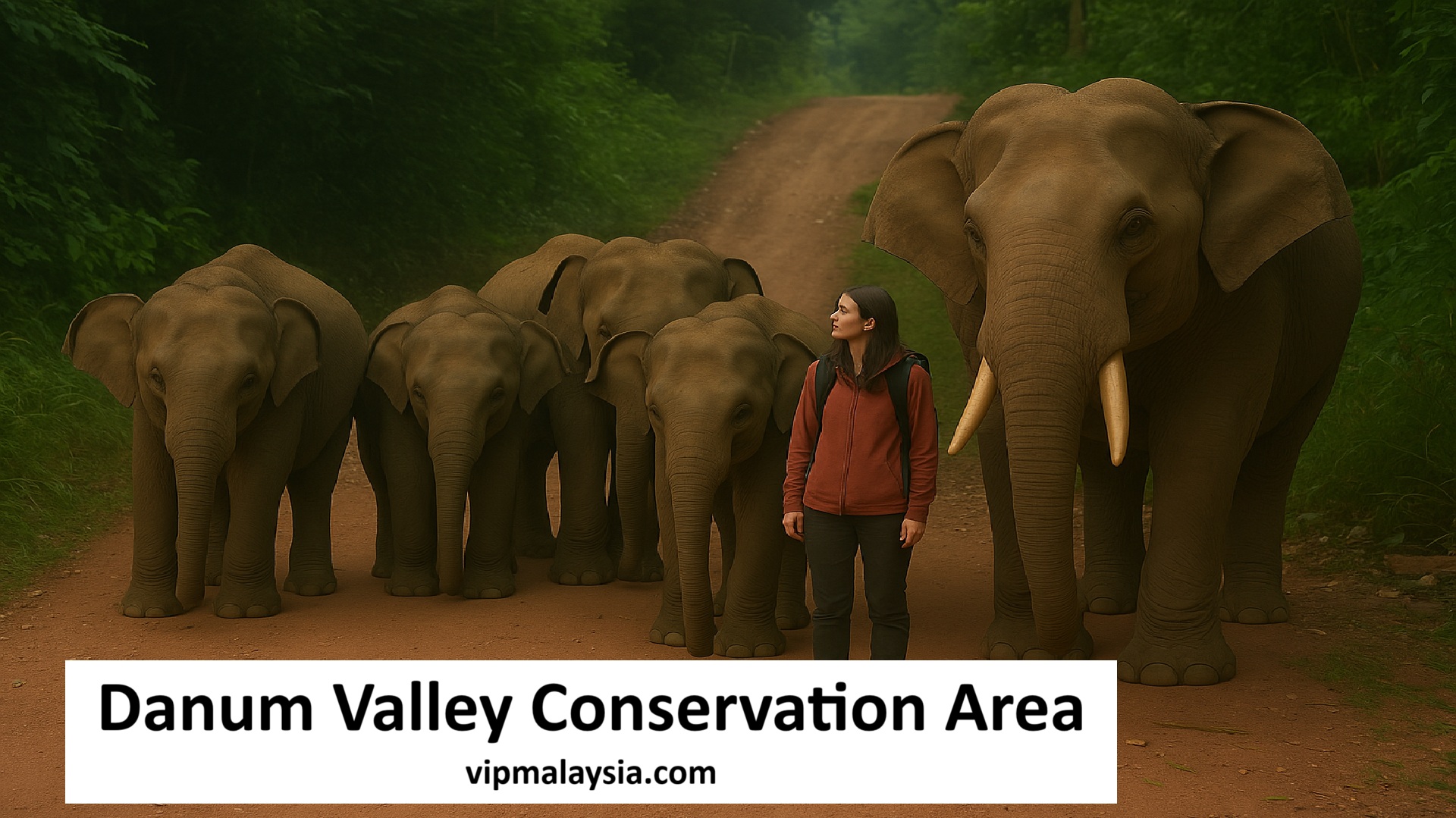
Danum Valley Conservation Area
Experience the untouched wonder of Danum Valley Conservation Area, a 130‑million‑year‑old rainforest sanctuary in Sabah, Malaysia. This pristine wilderness is home to rare wildlife, towering dipterocarp trees, cascading waterfalls, and world‑class research facilities. Whether you seek adventure, serenity, or ecological discovery, Danum Valley offers a once‑in‑a‑lifetime journey into nature’s finest sanctuary.
Introduction
Nestled deep in the heart of Sabah, Malaysia, the Danum Valley Conservation Area is one of the world’s most celebrated tropical rainforests. Covering 438 square kilometers of protected land, this ancient ecosystem has remained untouched by logging or permanent human settlement. Visitors are drawn to its extraordinary biodiversity, where orangutans swing through the canopy, hornbills soar overhead, and rivers carve their way through lush valleys. For eco‑tourists, scientists, and adventurers alike, Danum Valley represents a rare chance to step into a living museum of natural history.
History
The story of Danum Valley is one of foresight and preservation. In the early 1980s, Sabah faced increasing pressures from logging and development. Recognizing the irreplaceable ecological value of its lowland dipterocarp forests, the Sabah Forestry Department designated Danum Valley as a Class I Protection Forest Reserve in 1984. This status ensured that no logging, hunting, or permanent settlement would ever occur within its boundaries.
In 1986, the Danum Valley Field Centre (DVFC) was established as a hub for scientific research. Since then, it has attracted global researchers studying rainforest ecology, climate change, and endangered species. The centre’s work has contributed to international conservation efforts and deepened our understanding of tropical ecosystems. Today, Danum Valley stands as a testament to Malaysia’s commitment to preserving its natural heritage, offering both protection for biodiversity and opportunities for sustainable eco‑tourism.
How to Get Here
Flying Into Lahad Datu
The most common gateway to Danum Valley is via Lahad Datu, a small town on Sabah’s east coast. Daily flights operate from Kota Kinabalu, taking about one hour. From Lahad Datu Airport, visitors continue by road into the rainforest interior.
Road Journey from Lahad Datu
The drive from Lahad Datu to Danum Valley is approximately 81 km, but don’t let the distance fool you—it takes nearly two hours due to rugged terrain and unpaved roads. The journey itself is part of the adventure, winding through oil palm plantations before giving way to dense rainforest. Four‑wheel drive vehicles are essential, and transfers are usually arranged through lodges or the Danum Valley Field Centre.
Alternative Routes
Travelers can also reach Lahad Datu by road from Tawau or Sandakan. These drives are longer—five to seven hours depending on conditions—but they offer scenic views of Sabah’s countryside.
Permits and Access
Entry into the conservation area requires a permit, issued at the Danum Valley office in Fajar town, Lahad Datu. This regulation ensures that visitor numbers remain controlled and that the fragile ecosystem is protected. Most lodges and research centres assist with permit applications as part of their booking process.
Booking Transfers and Guides
Transfers, guided treks, and night safaris can be arranged through official channels. The contact point often provided is camd.reservations@gmail.com, which connects visitors with the Conservation Area’s management team. Booking in advance is strongly recommended, as access is limited and demand is high during peak seasons.
Travel Notes for Visitors
- Road Conditions: Expect bumpy, muddy tracks, especially after rain. Travel time can be longer than expected.
- Facilities: The Borneo Rainforest Lodge offers eco‑luxury stays, while the Danum Valley Field Centre provides simpler accommodations for researchers and budget travelers.
- Connectivity: There is little to no mobile signal or internet access once inside the valley. Visitors should prepare for a true digital detox.
- Best Time to Visit: Dry season months (March–October) are generally more comfortable for trekking, though wildlife sightings occur year‑round.
Highlights
Towering Biodiversity
Danum Valley is home to more than 200 tree species per hectare, with over 511 species identified overall. The towering dipterocarps dominate the canopy, some reaching heights of 70 meters. Beneath them thrive orchids, ferns, and medicinal plants still being studied by botanists. This dense vegetation provides shelter for countless species, making the valley a hotspot for ecological discovery.
Wildlife Wonderland
The conservation area shelters over 120 mammal species, including the Bornean orangutan, clouded leopard, sun bear, and Bornean pygmy elephant. Visitors often encounter civets, flying lemurs, and deer during night drives. The diversity of wildlife makes Danum Valley one of the most important refuges for endangered species in Southeast Asia.
The Birder’s Paradise
With more than 300 bird species recorded, Danum Valley is a dream destination for birdwatchers. All eight hornbill species found in Borneo can be spotted here, alongside rare birds such as the Bornean bristlehead and blue‑headed pitta. Birding trails and canopy towers provide excellent vantage points for spotting these feathered wonders.
Attractions
Jungle Trekking and Nature Trails
Guided treks lead visitors through dense rainforest trails, where every step reveals new flora and fauna. Trails vary in difficulty, from short walks to multi‑day expeditions. Along the way, trekkers may encounter orangutans feeding, gibbons calling, or butterflies fluttering in shafts of sunlight.
Waterfall Escapes
Hidden within the forest are natural pools and waterfalls such as Tembaling and Purut, where visitors can swim and relax. These serene spots offer a refreshing break from trekking and a chance to immerse in the rainforest’s tranquility.
Wildlife Safari and Night Drive
Night drives in 4×4 vehicles reveal the rainforest’s nocturnal life. Guides point out flying squirrels, civets, slow lorises, and even the elusive leopard cat. The thrill of spotting rare animals under the stars makes this one of the most popular activities.
Eco‑Education and Recreation
Danum Valley is not only a tourist destination but also a living classroom. Educational programs for schools, universities, and private groups are regularly conducted. Facilities include conference rooms, libraries, and laboratories, blending leisure with learning.
Things to Do
Trekking and Adventure
Adventurers can embark on multi‑day treks deep into the forest, camping under the canopy and exploring remote trails. These expeditions often include visits to ancient burial sites, waterfalls, and wildlife observation points. Trekking in Danum Valley is both physically challenging and spiritually rewarding, offering a profound connection to nature.
Example: Burial Sites of the Kadazan‑Dusun
Within the valley are ancient burial sites of the Kadazan‑Dusun people, marked by coffins placed in caves and cliff faces. These sites provide cultural depth to the natural landscape, reminding visitors of the human history intertwined with the forest. Exploring them offers a glimpse into Sabah’s indigenous heritage.
Nearby Attractions
Imbak Canyon
Known as Borneo’s “majestic refugium,” Imbak Canyon is another conservation area rich in biodiversity. Its dramatic cliffs and waterfalls make it a striking complement to Danum Valley.
Maliau Basin
Often called the “Lost World of Sabah,” Maliau Basin is a remote, pristine wilderness with unique ecosystems. Its circular basin and waterfalls attract researchers and adventurers alike.
Taliwas River
A tranquil retreat near Lahad Datu, the Taliwas River offers camping and eco‑education programs. It is a popular spot for families seeking a gentler rainforest experience.
Silam Coast
Where rainforest meets the sea, the Silam Coast offers mangrove forests and marine biodiversity. Visitors can enjoy coastal walks and birdwatching.
Kalabakan Upland
This area features healing nature trails and community‑based eco‑tourism initiatives. It highlights the role of local communities in conservation.
Segama Highlands
A stronghold of the red apes, the Segama Highlands are crucial for orangutan conservation. Trekking here provides opportunities to observe these endangered primates in their natural habitat.
Conclusion
The Danum Valley Conservation Area is more than a destination—it is a sanctuary of life, history, and discovery. Its untouched rainforest, extraordinary biodiversity, and cultural heritage make it one of the world’s most important conservation sites. Visitors leave with a deeper appreciation for nature, a sense of serenity, and unforgettable memories. Whether you are a scientist, adventurer, or nature lover, Danum Valley offers a journey into the heart of Earth’s oldest rhythms.
Summary
- Attraction: Danum Valley Conservation Area
- Location: #Sabah
- Attraction Type: #Wildlife
Quick Info
| Attribute | Details |
|---|---|
| Name | Danum Valley Conservation Area |
| Address | Approximately 80 km east of Lahad Datu, Sabah, Malaysia |
| GPS Position | 5.0316° N, 117.6893° E (approximate) |
| State | Sabah |
| Date Established | Declared Class I Protection Forest Reserve in 1984; Danum Valley Field Centre (DVFC) established in 1986 |
| Forested Area | Ancient rainforest estimated at 130 million years old |
| Forest Coverage | Predominantly lowland dipterocarp forest; small areas of montane forest |
| Wildlife | Over 120 mammal species including orangutans, gibbons, pygmy elephants, clouded leopards, sun bears |
| Bird Species | More than 300 species recorded; includes all 8 hornbill species and endemic birds like the Bornean bristlehead |
| Tree Diversity | Over 500 identified tree species; ~200 species per hectare |
| Main Activities | Jungle trekking, canopy walks, birdwatching, waterfall swimming, night safaris, eco‑education |
| Accommodation | Borneo Rainforest Lodge (eco‑luxury) and Danum Valley Field Centre (research/basic lodging) |
| Facilities | DVFC: labs, library, conference rooms, basic lodging; BRL: restaurant, bar, guided tours, eco‑luxury chalets |
| Best Experience | 3D2N or 4D3N rainforest immersion packages |
| Transfer Service | Scheduled/private 4WD transfers from Lahad Datu arranged by lodges or DVFC |
| Contact Info | camd.reservations@gmail.com (official booking email) |
| Head Office | Yayasan Sabah Complex, Tun Mustapha Tower, Kota Kinabalu |
Visitor Reviews
Marian, United States – ★★★★★ “I visited Danum Valley in 2025 and was blown away by its raw beauty. There’s no Wi‑Fi and barely any phone signal, which made the experience even more immersive. I woke up to gibbon calls echoing through the canopy and saw orangutans building nests during a guided trek. The night safari was unforgettable—we spotted civets and flying lemurs. Facilities were basic but comfortable, and the remoteness made it feel like stepping back in time.”
Mike Dorian, United Kingdom – ★★★★★ “Danum Valley is not for casual tourists—it’s for serious nature lovers. I stayed at the Borneo Rainforest Lodge, waking up to hornbills flying overhead and orangutans swinging near the chalets. The guides were excellent, pointing out rare species like the Bornean bristlehead. The road from Lahad Datu was rough and bumpy, taking nearly two hours, but the journey was worth it. The atmosphere was reverent; people spoke softly, moved slowly, and respected the wilderness.”
Joe Branco, Netherlands – ★★★★☆ “As a wildlife photographer, Danum Valley was paradise. I captured pygmy elephants along the Segama River and hornbills in flight. The biodiversity here is staggering—clouded leopards, gibbons, and sun bears all inhabit the area. The only downside was the challenging access road, which can be muddy after rain. Still, the pristine rainforest and the chance to photograph rare species made it one of the most rewarding trips of my career.”
Erling Carr, Malaysia – ★★★★★ “Danum Valley is one of Southeast Asia’s most important rainforest reserves. I joined a research group at the Danum Valley Field Centre and learned about conservation projects protecting over 124 mammal species and 340 bird species. The canopy walk was breathtaking, offering views of hornbills and gibbons at sunrise. The isolation was part of the magic—no settlements, no hunting, no deforestation. It felt like entering a living laboratory of nature.”