Ready to uncover one of Sabah’s best-kept nature secrets? Nestled in the heart of Crocker Range National Park, Mahua Waterfall is a natural wonder just 1.5 hours from Kota Kinabalu that delivers lush rainforest vibes, easy jungle trekking, and a thundering 17-meter cascade. Whether you’re a nature lover, hiker, photographer or weekend escape artist—Mahua should be on your radar.
Introduction
Mahua Waterfall is one of Sabah’s most enchanting natural attractions. Located in Tambunan District, this waterfall is celebrated for its accessibility, pristine rainforest setting, and refreshing climate. The paved trail leading to the falls makes it suitable for families, while the surrounding biodiversity draws nature enthusiasts from across Malaysia and beyond. Its combination of accessibility, natural beauty, and cultural charm makes Mahua a standout destination in Borneo.
History
The history of Mahua Waterfall is closely tied to the Crocker Range, a mountainous spine that stretches across western Sabah. For centuries, the Dusun people of Tambunan lived in harmony with this landscape, cultivating rice in fertile valleys and practicing traditional forest stewardship. Mahua itself was once a hidden gem known mainly to local villagers, who used the forest trails for gathering medicinal plants and hunting small game.
In the late 20th century, conservation efforts led to the establishment of Crocker Range National Park. Mahua was designated as one of the park’s visitor attractions, with a trail and basic facilities built to encourage eco‑tourism. Over time, Mahua became a symbol of Sabah’s commitment to balancing conservation with community development. Today, it stands not only as a natural wonder but also as a living reminder of the region’s cultural heritage and ecological importance.
Highlights
Easy Accessibility
Mahua Waterfall is only 500 meters from the entrance gate, with a paved trail suitable for children and elderly visitors. This makes it one of the most family‑friendly waterfalls in Sabah, unlike others that require hours of jungle trekking.
Nature’s Curiosities
Visitors often encounter unusual fungi, iridescent beetles, and lacewings along the trail. Some fungi resemble delicate dim sum dumplings, while rocks shaped like faces spark playful imagination. These curiosities add charm to the journey, making Mahua more than just a waterfall—it’s a living classroom of rainforest wonders.
Stunning Natural Beauty
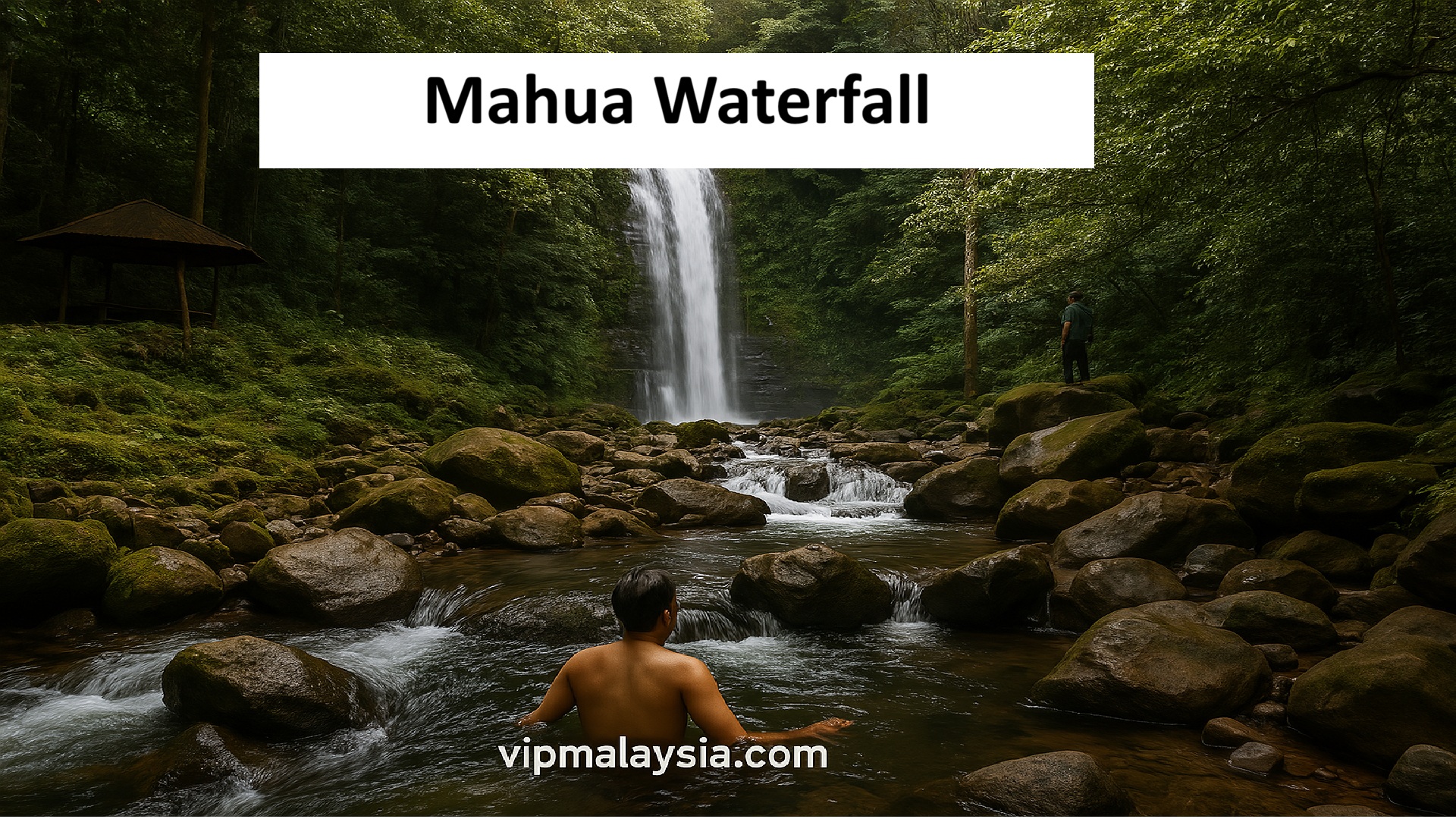
The waterfall plunges 17 meters into a crystal‑clear pool, surrounded by dense rainforest. The mist and sound of rushing water create a calming atmosphere that visitors consistently describe as refreshing and serene.
Cool Highland Climate
Located in Tambunan’s Crocker Range, Mahua enjoys cooler temperatures compared to coastal Kota Kinabalu. Visitors often note the cold mountain water and crisp air, making it a perfect escape from tropical heat.
Rich Biodiversity
The area is home to birds like wagtails, bulbuls, and sunbirds, as well as butterflies and rainforest insects. The lush greenery and wildlife sightings add an educational dimension for families and nature lovers.
Family‑Friendly Facilities
Mahua offers benches, picnic shelters, toilets, and changing rooms, ensuring comfort for visitors. Parents appreciate the safe, flat trail and facilities that make it easy to spend a full day at the site.
Affordable Entrance Fees
Entrance fees are very reasonable: RM5–RM6 for Malaysians and RM12–RM20 for international visitors, with discounts for children, seniors, and persons with disabilities. This affordability makes Mahua accessible to all.
Swimming Opportunities
The plunge pool at the base of the falls is 1.2–1.3 meters deep, suitable for swimming and splashing. Visitors often highlight the invigorating experience of dipping into the icy mountain water.
Eco‑Tourism Development
Mahua was developed by Sabah Parks as part of its eco‑tourism initiative, balancing visitor enjoyment with conservation. Safety features and trail maintenance ensure sustainability while preserving the pristine environment.
Scenic Drive from Kota Kinabalu
The journey itself is rewarding: a 1.5–2 hour drive through the Crocker Range Highlands, with views of rolling hills, paddy fields, and traditional villages. The drive adds cultural and scenic value to the trip.
Attractions
Visitor Facilities
Mahua offers benches, picnic shelters, toilets, and a viewing platform. These facilities make it comfortable for families and groups to spend extended time enjoying the falls. The viewing platform is especially popular for selfies and group photos with the roaring cascade as backdrop.
Overnight Options
Mahua Rainforest Paradise, located near the entrance, provides 12 charming rooms, a restaurant, and camping facilities. Rates range from RM30–RM95 per night, making it affordable for budget travelers and families. Staying overnight allows visitors to experience the forest’s tranquility after day‑trippers leave.
Cultural Festivals
Tambunan District is known for its Kaamatan (Harvest Festival), celebrated in May. Visitors who time their trip during this festival can enjoy traditional dances, rice wine, and Dusun cultural performances. Mahua becomes part of a larger cultural journey when paired with local festivities.
Things to Do
Trekking and Adventure
Mahua is ideal for light trekking, but adventurous visitors can extend their journey deeper into Crocker Range National Park. Longer trails lead to higher elevations, offering panoramic views of valleys and villages. The park caters to both casual walkers and seasoned trekkers.
Photography
The waterfall’s mist, rainforest textures, and vibrant wildlife provide endless opportunities for photography. Morning light is especially magical, casting golden hues across the cascade. Mahua is a paradise for landscape and macro photographers alike.
Picnicking
Families often bring food to enjoy at picnic shelters. The cool climate makes outdoor dining pleasant, and children delight in splashing near the shallow edges of the plunge pool. Picnicking here combines relaxation with immersion in nature.
Nearby Attractions
Tambunan Town
Just 15 kilometers away, Tambunan offers local markets, handicrafts, and traditional Dusun cuisine. Visitors can sample linopot (rice wrapped in leaves) and enjoy the hospitality of local villagers. Tambunan adds cultural depth to a Mahua trip.
Gunung Alab
Located along the Crocker Range, Gunung Alab is a popular trekking destination. Its summit provides panoramic views of valleys and distant peaks. Combining Mahua with Gunung Alab creates a balanced itinerary of waterfall relaxation and mountain adventure.
Kipandi Butterfly Park
Near Kota Kinabalu, Kipandi Butterfly Park showcases Sabah’s butterfly species, orchids, and pitcher plants. It complements Mahua by highlighting the region’s biodiversity in a curated setting.
Conclusion
Mahua Waterfall is more than a scenic cascade—it is a gateway to Sabah’s rainforest heritage. Its accessibility, biodiversity, and cultural connections make it a must‑visit destination. Whether you come for a quick trek, a family picnic, or an extended adventure, Mahua delivers an unforgettable experience. Pairing it with nearby attractions like Tambunan town and Gunung Alab enriches the journey, offering both natural and cultural immersion.
Summary
Attraction: Mahua Waterfall
Location: #Sabah
Attraction Type: #Waterfall
Quick Info
Category
Details
Name
Mahua Waterfall (Air Terjun Mahua)
Height
17 meters (≈ 6 floors)
Location
Kg. Patau, Tambunan, Sabah, Malaysia
GPS
5.796761, 116.408407
State
Sabah
Open Since
Early 2000s (developed under Crocker Range National Park, exact year not officially documented)
Luncai Gangsa– Kuala LumpurRating: ★★★★☆ “I took a 2‑hour drive from Kota Kinabalu to Tambunan and reached Mahua Waterfall on a Sunday. Amazingly, we had the whole place to ourselves. The water was ice‑cold, but refreshing, and the short trek was easy. Overall, it was a great day trip worth the drive.”
Periasamy Virusamy – PerakRating: ★★★★☆ “It’s not the largest waterfall, but it was still enjoyable. I went with friends, and despite heavy rain making the water very cold, we had fun chilling together. The drive down was memorable, and Mahua gave us a good experience to share.”
Amirolhadi Ismail Petra – TambunanRating: ★★★★★ “Mahua Waterfall is a gem in Tambunan. The paved trail makes it easy for families, and the facilities like huts and benches are convenient. The sound of the falls and the cool climate make it a perfect escape from city life.”
Nestled on the West Coast of Sabah, Taman Negara Banjaran Crocker is more than Malaysia’s largest park—it’s a UNESCO Biosphere Reserve, an eco-adventure hub, a conservation success story, and a healing escape for outdoor lovers. From rafting wild rivers to spotting the rare Rafflesia and camping beneath montane skies, this protected treasure invites you into nature’s living classroom.
Taman Negara Banjaran Crocker, Sabah’s largest protected area, is a UNESCO Biosphere Reserve and a sanctuary of biodiversity. From trekking the historic Salt Trail to spotting the rare Rafflesia, this eco-adventure hub offers a living classroom of nature, culture, and conservation.
Introduction
Nestled along the western spine of Sabah, Taman Negara Banjaran Crocker spans 139,919 hectares of rugged terrain, montane forests, and river valleys. Established in 1984, it is Malaysia’s largest terrestrial park and a cornerstone of conservation. In 2014, UNESCO recognized it as part of the Crocker Range Biosphere Reserve, elevating its global importance. Today, the park is not only a refuge for wildlife but also a destination for eco-tourism, cultural encounters, and outdoor adventure.
History
The origins of Taman Negara Banjaran Crocker trace back to Sabah’s post-independence conservation movement. In the early 1980s, rapid logging and agricultural expansion threatened the ecological balance of the Crocker Range. Recognizing its role as a water catchment for rivers like the Papar and Padas, the Sabah government gazetted the area in 1984.
Over the decades, the park became a focal point for biodiversity research. In 1996, the Fernarium was established to showcase Sabah’s native fern species, and by 2004, the Crocker Nature Centre opened to support environmental education. The UNESCO designation in 2014 marked a milestone, expanding the protected area into a biosphere reserve of 350,584 hectares. This recognition highlighted not only its ecological value but also its cultural significance, as indigenous Dusun and Murut communities continue to live in buffer zones, practicing sustainable agriculture and traditional crafts.
How to Get There
From Kota Kinabalu, visitors can reach Crocker Range National Park by taxi or bus. A taxi to Keningau Taxi Station costs around RM120, while a taxi directly to the Crocker Range Station is about RM40. Alternatively, buses depart from Merdeka Field to Keningau for RM16. The Tung Ma Bus service runs three times daily at 8:00 am, 12:00 pm, and 4:00 pm, with fares of RM20 each way.
From Keningau Town, the Crocker Range Park Headquarters is just 15 km away, roughly a 30‑minute drive by car. This proximity makes Keningau a convenient base for visitors, especially those planning to explore substations such as Gunung Alab, Mahua, or the Rafflesia Plot. Local taxis and private cars are the most common transport options, and signage along the road helps guide travelers to the park entrance .
Highlights
Immense Biodiversity
The park shelters ecosystems ranging from lowland dipterocarp forests to cloud forests. Endemic orchids, pitcher plants, and the giant Rafflesia bloom thrive here. Mammals include orangutans, gibbons, tarsiers, and clouded leopards. Birdwatchers can spot hornbills, bulbuls, and the Asian paradise flycatcher. Insects are equally diverse, with rhinoceros beetles and stick insects drawing attention at the insectarium.
UNESCO Biosphere Recognition
The biosphere reserve designation in 2014 created three zones: the core protected park, buffer zones with community settlements, and transition areas for sustainable development. This model integrates conservation with human livelihood, making Crocker Range a living example of coexistence between nature and culture.
Attractions
Birdwatching Wonderland
Crocker Range is a paradise for ornithologists. The montane forests host over 265 bird species, including the Bornean barbet, chestnut munia, and whitehead’s broadbill. Early mornings are best for sightings, with misty canopies alive with calls.
Salt Trail Trekking
The Salt Trail is a 34 km route once used by villagers to trade salt and rice. Today, trekkers experience deep jungle immersion, river crossings, and village homestays. The trail connects Inobong Substation to Tikolod, offering cultural encounters with Dusun communities.
Insectarium Encounters
The insectarium at park headquarters educates visitors about Sabah’s insect diversity. Displays include stag beetles, leaf insects, and luminous fireflies, making it a favorite for families and students.
Climb Iconic Peaks and Trails
Minduk Sirung: A 12 km trek from Gunung Alab Substation to Mahua Waterfall, offering mossy forest landscapes. Climbers receive an official tag and certificate.
Mount Tinutudan: Less publicized but officially recognized, requiring guides and offering panoramic views of the Crocker spine.
Things to Do
The Fernarium
Established in 1996 and opened in 2004, the fernarium spans 5 hectares and showcases over 55 native fern species. It is one of the most diverse fern gardens in Southeast Asia, serving as both a research site and visitor attraction.
The Crocker Nature Centre
Opened in 2004, the centre features a gallery, lecture hall, and eco-programmes. Activities include composting workshops, nature games, and conservation talks, making it a hub for environmental education.
Observation Tower
Located near Keningau, the tower offers sweeping views of the town and surrounding valleys. Sunrise and dusk are particularly stunning, with golden light illuminating the Crocker Range ridges.
Trekking and Adventure
Camping and Shelter Sites
Visitors can camp at headquarters, Inobong, and Mahua. Facilities include shelters, fire pits, and basic amenities, allowing immersion in rainforest nights under starry skies.
Inobong
The Inobong Substation is situated in the Penampang district and functions as both a visitor and research station. It is historically significant as the starting point of the Salt Trail, a 34 km jungle route once used by villagers to trade salt and rice. Today, trekkers begin their journey here, experiencing river crossings, dense rainforest immersion, and cultural encounters with Dusun communities along the way. Facilities include a visitor registration office, chalets, and trails leading to waterfalls and longer routes that form part of the Salt Trail.
Beyond trekking, Inobong offers panoramic views of Kota Kinabalu and the offshore islands from its vantage points. The surrounding montane forest is home to hornbills, bulbuls, and orchids, making it a hotspot for biodiversity enthusiasts. Visitors often highlight the cultural richness of nearby villages, where traditional Dusun practices such as bamboo weaving and subsistence farming are still preserved. This blend of natural and cultural heritage makes Inobong a vital entry point for eco‑tourism in Crocker Range .
Mahua
The Mahua Substation, located in Tambunan district, is best known for the Mahua Waterfall, a 17‑meter cascade that falls into a 1.3 m deep pool. It is one of the most accessible attractions within Crocker Range Park, situated about 16 km from Tambunan town and 8 km from Kg. Patau. Facilities include basic shelters, picnic areas, and camping grounds, making it popular with both local families and international tourists. The substation sits at about 1,000 meters above sea level, surrounded by tropical forest.
Mahua also serves as an educational hub, with ranger‑led tours explaining the ecological importance of the surrounding forest. The area is rich in biodiversity, including ferns, orchids, and insects that thrive in the moist environment. Visitors often describe Mahua as a serene escape, ideal for photography and relaxation, while still offering adventure through nearby trekking routes that connect deeper into the Crocker Range. Its accessibility and facilities make Mahua one of the most visited substations in the park, attracting around 1,600 visitors monthly .
Hostel Accommodation
The park offers dormitories for up to 36 guests and two king-bed rooms. Shared kitchens and lounges foster a communal atmosphere for trekkers and researchers.
River Adventures
While rafting is popular in the nearby Padas River, it complements the Crocker Range experience. The river’s Grade III–IV rapids attract thrill-seekers, often combined with park trekking itineraries.
Padas River
The Padas River flows through the interior of southwestern Sabah and is renowned for its white-water rafting adventures. Situated near Beaufort and Tenom, it is accessible only by train, adding to its distinctive charm. The rafting stretch covers about 9 km of Grade III–IV rapids, with seven named rapids such as Merry-Go-Round, Break Point, Scooby Doo, Cobra, Curve, Lambada, and Head Hunter. These rapids provide varying levels of challenge, making the river suitable for thrill-seekers looking for one of Southeast Asia’s most exhilarating rafting experiences.
Beyond the adrenaline rush, the Padas River offers scenic views of lush rainforest and glimpses of rural life along the railway. The journey itself is part of the adventure, as visitors ride the historic train from Beaufort or Tenom to reach the rafting stations at Pangi or Rayoh. This railway is the oldest in Borneo and passes through Murut tribal areas, adding cultural depth to the trip. Rafting operators typically provide safety briefings, guides, and riverside lunches, ensuring both excitement and comfort. The combination of natural beauty, cultural heritage, and thrilling rapids makes the Padas River a highlight of Crocker Range’s adventure tourism.
Major Trails
The three major trails in Taman Negara Banjaran Crocker are the Salt Trail, Minduk Sirung Trail, and Mount Tinutudan climb — each offering unique jungle trekking experiences with cultural immersion, biodiversity, and challenging terrain.
Salt Trail
The Salt Trail is a historic 34 km jungle route once used by the Dusun and Murut people to trade salt and rice between remote villages and the west coast. Today, it is a multi‑day trek (3–4 days) starting at the Inobong Substation and ending at Kg. Tikolod, passing through villages like Terian, Buayan, and Kionop. Trekkers encounter river crossings, suspension bridges, and homestays, making it both a cultural and ecological journey through dense rainforest and traditional communities.
Minduk Sirung Trail
The Minduk Sirung Trail connects Gunung Alab Substation to Mahua Waterfall, spanning about 12 km through mossy montane forest. Rising to ~2,050 m, it is a point‑to‑point trek that takes 7–8 hours, featuring root‑covered jungle paths, scrambles, and fixed ropes. The trail is known for its pristine biodiversity, panoramic viewpoints, and technical terrain, making it a moderately hard hike that rewards trekkers with the Mahua cascade at the finish.
Mount Tinutudan Trail
The Mount Tinutudan climb is another adventure route within Crocker Range, offering a challenging ascent with steep sections and rewarding views. The trail requires permits and guides, with fees set by Sabah Parks. It is less frequented than the Salt Trail or Minduk Sirung, making it ideal for trekkers seeking solitude and immersion in untouched rainforest. The climb highlights the rugged terrain of Crocker Range and contributes to its reputation as an eco‑adventure hub.
Nearby Attractions
Gunung Alab
The Gunung Alab Substation is a high-altitude trekking zone located within Crocker Range National Park. Situated at approximately 1,800 meters above sea level, it is known for its mossy forests, cool climate, and panoramic views of the Crocker spine. The substation serves as a gateway for trails such as Minduk Sirung, which connects Gunung Alab to Mahua Waterfall. Trekkers often highlight the unique flora here, including orchids, pitcher plants, and ferns that thrive in the misty montane environment.
Beyond trekking, Gunung Alab is a hub for eco-tourism and research. The area provides facilities for hikers, including registration offices and basic shelters. Birdwatchers frequent the substation to spot endemic species such as the Bornean barbet and Whitehead’s broadbill. Its accessibility from Kota Kinabalu makes it a popular starting point for both short hikes and multi-day treks deeper into Crocker Range.
Mahua Waterfall
The Mahua Waterfall, located near Tambunan, is one of the most popular attractions in Crocker Range. This 17-meter cascade drops into a clear pool surrounded by lush jungle, making it a favorite picnic and photography spot. The site is easily accessible, with facilities such as picnic shelters, camping grounds, and ranger stations. Its proximity to Tambunan town makes it a convenient destination for families and day-trippers.
Visitors often describe Mahua as a serene escape, ideal for relaxation and nature immersion. The waterfall is also part of educational tours organized by Sabah Parks, where guides explain the ecological importance of the surrounding forest. The biodiversity here includes ferns, orchids, and insects that thrive in the moist environment, making Mahua both a recreational and educational highlight of Crocker Range.
Rafflesia Plot
The Rafflesia Plot within Crocker Range is managed by Sabah Parks and offers visitors the chance to witness the world’s largest flower. The Rafflesia bloom is unpredictable, but when it occurs, it draws crowds eager to see its massive petals and unique structure. The plot is carefully monitored by park rangers to protect the delicate ecosystem and ensure sustainable tourism.
Beyond the spectacle of the bloom, the Rafflesia Plot serves as an educational site. Visitors learn about the plant’s parasitic nature, its role in the forest ecosystem, and the conservation challenges it faces. The site underscores Crocker Range’s biodiversity and highlights the importance of preserving rare species for future generations.
Inobong Substation
The Inobong Substation, located near Penampang, is the starting point of the historic Salt Trail. This 34 km jungle route was once used by villagers to trade salt and rice, and today it offers trekkers deep immersion into rainforest landscapes. Facilities at Inobong include registration offices, chalets, and access to guides who are essential for navigating the rugged terrain.
In addition to trekking, Inobong provides opportunities for birdwatching and cultural encounters. The surrounding montane forest is home to hornbills, bulbuls, and orchids, while nearby villages showcase traditional Dusun practices such as bamboo weaving and subsistence farming. This combination of natural and cultural heritage makes Inobong a vital eco-tourism hub in Crocker Range.
Mount Kinabalu
Located near Crocker Range, Mount Kinabalu is Southeast Asia’s tallest peak at 4,095 meters and a UNESCO World Heritage Site. It is often combined with Crocker Range itineraries, as both parks are managed by Sabah Parks and highlight the region’s ecological richness. Kinabalu is famous for its diverse flora, including orchids, pitcher plants, and the rare Nepenthes rajah.
Beyond its natural beauty, Mount Kinabalu is a cultural icon for the Kadazan-Dusun people, who regard it as sacred. Climbers from around the world attempt its summit, making it one of Malaysia’s most visited natural attractions. Its proximity to Crocker Range allows travelers to experience both high-altitude adventure and rainforest immersion in a single trip.
CRBR Buffer Zones
The buffer zones of the Crocker Range Biosphere Reserve (CRBR) surround the core protected areas and serve as transitional spaces where conservation and community life intersect. These zones are home to diverse ecosystems, including lowland forests, rivers, and agricultural landscapes that support species such as hornbills, orchids, and amphibians. They act as ecological corridors, allowing wildlife to move between habitats while reducing pressure on the strictly protected core zones.
Equally important, the buffer zones are inhabited by rural communities, primarily the Dusun and Murut peoples, who practice traditional farming, bamboo weaving, and small-scale agroforestry. These communities play a vital role in sustainable resource management, balancing livelihoods with conservation goals. Programs led by Sabah Parks and UNESCO encourage eco-tourism, organic farming, and cultural preservation, ensuring that biodiversity protection goes hand-in-hand with improving local quality of life. This integration of nature and community makes the CRBR buffer zones a living example of how conservation can support rural resilience.
Conclusion
Taman Negara Banjaran Crocker is Malaysia’s largest terrestrial park, a UNESCO Biosphere Reserve, and a biodiversity hotspot. It offers trekking, birdwatching, cultural encounters, and educational facilities, making it a destination for both adventure seekers and conservation enthusiasts. Its integration of indigenous communities into sustainable practices sets it apart as a model of coexistence.
Summary
Attraction: Taman Negara Banjaran Crocker
Location: #Sabah
Attraction Type: #NationalPark
Quick Info
Category
Description
Name
Taman Negara Banjaran Crocker
Location
West Coast of Sabah, Borneo
Established
1984
Biosphere Recognition
UNESCO Crocker Range Biosphere Reserve (June 2014)
Total Area
139,919 ha (Park) / 350,584 ha (Biosphere)
Elevation
~1,000 m above sea level (HQ near Keningau)
Forest Types
Lowland rainforest, montane forest, cloud forest
Flora
229 fern species, Rafflesia sites, diverse plant zones
Mahua, Gunung Alab, Inobong, Ulu Kimanis, Buayan, Melalap, Ulu Membakut
Contact HQ
Block H, Level 1–5, Lot 45 & 46, KK Times Square, Sabah
Phone
+6088-523500
Email
info@sabahparks.org.my
Entrance Fees
Category
Fee
International aged 18 years old and above
RM 20 / person / day
International aged 17 years old and below
RM 12 / person / day
Malaysian aged 18 years old and above
RM 6 / person / day
Malaysian aged 13 to 17 years old
RM 5 / person / day
Malaysian aged 12 & below, 60+ & PWD
Free of charge
Rafflesia Blooming Observation Fee
Category
Fee
International (all categories)
RM 30 / person / day
Malaysian (all categories)
RM 15 / person / day
Minduk Sirung Trail – Gunung Alab Substation
#
Particulars
18 Years & Above
17 Years & Below
Remarks
01
Minduk Sirung (Malaysian)
RM 40
RM 20
Includes tag & cert
02
Minduk Sirung (International)
RM 100
RM 50
Includes tag & cert
03
Insurance
RM 7 / day
—
04
Mountain Guide
RM 150 / day / 5 pax
Mount Tinutudan Climbing Fees
#
Particulars
18 Years & Above
17 Years & Below
Remarks
01
Mount Tinutudan (Malaysian)
RM 40
RM 20
Includes tag & cert
02
Mount Tinutudan (International)
RM 100
RM 50
Includes tag & cert
03
Insurance
RM 7 / day
—
04
Mountain Guide
RM 150 / day / 3 pax
Visitor Reviews
Johan Kruseman, Netherlands – ★★★★☆ “I backpacked through Crocker Range in April 2026. The humidity was intense, and leeches were everywhere, but the solitude was worth it. Unlike Kinabalu Park, this place feels raw and untamed. Facilities are basic, sometimes closed, but camping under the cloud forest ridges was unforgettable. Birdlife was abundant, and I spotted hornbills near the trail.”
Jacob Anak Salim, Borneo – ★★★★★ “Crocker Range is Sabah’s underrated giant. The air is cool, the forest alive with calls and mist rolling over ridges. It’s not polished—no glamping or fancy resorts—but that’s the charm. I loved hearing insects hum and spotting orchids along the trail. The drive through Kimanis-Keningau trunk road was scenic but rough, with potholes after rain. Still, the raw jungle vibe makes it special.”
Al Mustafa Kiting, Sabah – ★★★★☆ “Visited Mahua Waterfall in Tambunan, and it was stunning. The cascade is refreshing, perfect after a hike. The road conditions were challenging, especially deeper into Inobong, but manageable with a careful drive. The observation tower near Keningau gave breathtaking views at dusk. Facilities are simple, so bring your own supplies.”
Mimi Sadok, Sabah – ★★★★★ “I often camp in Crocker Range, and it’s always rewarding. The insectarium is fascinating, especially for kids, with beetles and stick insects. Registration at the park office is mandatory, and I appreciate the safety measures. The Salt Trail trek connects you with local Dusun villages, and homestays add cultural depth. It’s a place for nature lovers, not luxury seekers.”
Experience the untouched wonder of Danum Valley Conservation Area, a 130‑million‑year‑old rainforest sanctuary in Sabah, Malaysia. This pristine wilderness is home to rare wildlife, towering dipterocarp trees, cascading waterfalls, and world‑class research facilities. Whether you seek adventure, serenity, or ecological discovery, Danum Valley offers a once‑in‑a‑lifetime journey into nature’s finest sanctuary.
Introduction
Nestled deep in the heart of Sabah, Malaysia, the Danum Valley Conservation Area is one of the world’s most celebrated tropical rainforests. Covering 438 square kilometers of protected land, this ancient ecosystem has remained untouched by logging or permanent human settlement. Visitors are drawn to its extraordinary biodiversity, where orangutans swing through the canopy, hornbills soar overhead, and rivers carve their way through lush valleys. For eco‑tourists, scientists, and adventurers alike, Danum Valley represents a rare chance to step into a living museum of natural history.
History
The story of Danum Valley is one of foresight and preservation. In the early 1980s, Sabah faced increasing pressures from logging and development. Recognizing the irreplaceable ecological value of its lowland dipterocarp forests, the Sabah Forestry Department designated Danum Valley as a Class I Protection Forest Reserve in 1984. This status ensured that no logging, hunting, or permanent settlement would ever occur within its boundaries.
In 1986, the Danum Valley Field Centre (DVFC) was established as a hub for scientific research. Since then, it has attracted global researchers studying rainforest ecology, climate change, and endangered species. The centre’s work has contributed to international conservation efforts and deepened our understanding of tropical ecosystems. Today, Danum Valley stands as a testament to Malaysia’s commitment to preserving its natural heritage, offering both protection for biodiversity and opportunities for sustainable eco‑tourism.
How to Get Here
Flying Into Lahad Datu
The most common gateway to Danum Valley is via Lahad Datu, a small town on Sabah’s east coast. Daily flights operate from Kota Kinabalu, taking about one hour. From Lahad Datu Airport, visitors continue by road into the rainforest interior.
Road Journey from Lahad Datu
The drive from Lahad Datu to Danum Valley is approximately 81 km, but don’t let the distance fool you—it takes nearly two hours due to rugged terrain and unpaved roads. The journey itself is part of the adventure, winding through oil palm plantations before giving way to dense rainforest. Four‑wheel drive vehicles are essential, and transfers are usually arranged through lodges or the Danum Valley Field Centre.
Alternative Routes
Travelers can also reach Lahad Datu by road from Tawau or Sandakan. These drives are longer—five to seven hours depending on conditions—but they offer scenic views of Sabah’s countryside.
Permits and Access
Entry into the conservation area requires a permit, issued at the Danum Valley office in Fajar town, Lahad Datu. This regulation ensures that visitor numbers remain controlled and that the fragile ecosystem is protected. Most lodges and research centres assist with permit applications as part of their booking process.
Booking Transfers and Guides
Transfers, guided treks, and night safaris can be arranged through official channels. The contact point often provided is camd.reservations@gmail.com, which connects visitors with the Conservation Area’s management team. Booking in advance is strongly recommended, as access is limited and demand is high during peak seasons.
Travel Notes for Visitors
Road Conditions: Expect bumpy, muddy tracks, especially after rain. Travel time can be longer than expected.
Facilities: The Borneo Rainforest Lodge offers eco‑luxury stays, while the Danum Valley Field Centre provides simpler accommodations for researchers and budget travelers.
Connectivity: There is little to no mobile signal or internet access once inside the valley. Visitors should prepare for a true digital detox.
Best Time to Visit: Dry season months (March–October) are generally more comfortable for trekking, though wildlife sightings occur year‑round.
Highlights
Towering Biodiversity
Danum Valley is home to more than 200 tree species per hectare, with over 511 species identified overall. The towering dipterocarps dominate the canopy, some reaching heights of 70 meters. Beneath them thrive orchids, ferns, and medicinal plants still being studied by botanists. This dense vegetation provides shelter for countless species, making the valley a hotspot for ecological discovery.
Wildlife Wonderland
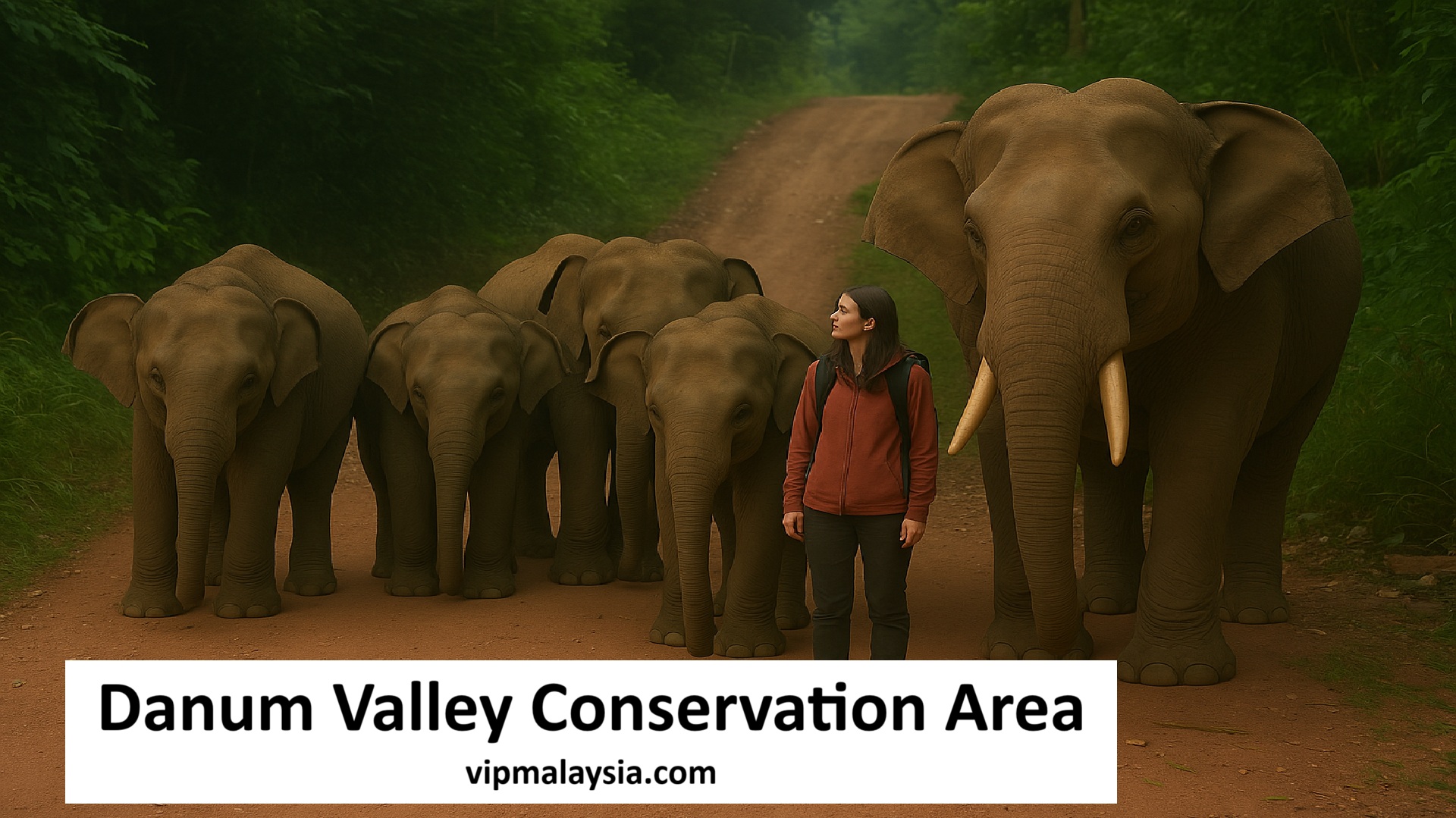
The conservation area shelters over 120 mammal species, including the Bornean orangutan, clouded leopard, sun bear, and Bornean pygmy elephant. Visitors often encounter civets, flying lemurs, and deer during night drives. The diversity of wildlife makes Danum Valley one of the most important refuges for endangered species in Southeast Asia.
The Birder’s Paradise
With more than 300 bird species recorded, Danum Valley is a dream destination for birdwatchers. All eight hornbill species found in Borneo can be spotted here, alongside rare birds such as the Bornean bristlehead and blue‑headed pitta. Birding trails and canopy towers provide excellent vantage points for spotting these feathered wonders.
Attractions
Jungle Trekking and Nature Trails
Guided treks lead visitors through dense rainforest trails, where every step reveals new flora and fauna. Trails vary in difficulty, from short walks to multi‑day expeditions. Along the way, trekkers may encounter orangutans feeding, gibbons calling, or butterflies fluttering in shafts of sunlight.
Waterfall Escapes
Hidden within the forest are natural pools and waterfalls such as Tembaling and Purut, where visitors can swim and relax. These serene spots offer a refreshing break from trekking and a chance to immerse in the rainforest’s tranquility.
Wildlife Safari and Night Drive
Night drives in 4×4 vehicles reveal the rainforest’s nocturnal life. Guides point out flying squirrels, civets, slow lorises, and even the elusive leopard cat. The thrill of spotting rare animals under the stars makes this one of the most popular activities.
Eco‑Education and Recreation
Danum Valley is not only a tourist destination but also a living classroom. Educational programs for schools, universities, and private groups are regularly conducted. Facilities include conference rooms, libraries, and laboratories, blending leisure with learning.
Things to Do
Trekking and Adventure
Adventurers can embark on multi‑day treks deep into the forest, camping under the canopy and exploring remote trails. These expeditions often include visits to ancient burial sites, waterfalls, and wildlife observation points. Trekking in Danum Valley is both physically challenging and spiritually rewarding, offering a profound connection to nature.
Example: Burial Sites of the Kadazan‑Dusun
Within the valley are ancient burial sites of the Kadazan‑Dusun people, marked by coffins placed in caves and cliff faces. These sites provide cultural depth to the natural landscape, reminding visitors of the human history intertwined with the forest. Exploring them offers a glimpse into Sabah’s indigenous heritage.
Nearby Attractions
Imbak Canyon
Known as Borneo’s “majestic refugium,” Imbak Canyon is another conservation area rich in biodiversity. Its dramatic cliffs and waterfalls make it a striking complement to Danum Valley.
Maliau Basin
Often called the “Lost World of Sabah,” Maliau Basin is a remote, pristine wilderness with unique ecosystems. Its circular basin and waterfalls attract researchers and adventurers alike.
Taliwas River
A tranquil retreat near Lahad Datu, the Taliwas River offers camping and eco‑education programs. It is a popular spot for families seeking a gentler rainforest experience.
Silam Coast
Where rainforest meets the sea, the Silam Coast offers mangrove forests and marine biodiversity. Visitors can enjoy coastal walks and birdwatching.
Kalabakan Upland
This area features healing nature trails and community‑based eco‑tourism initiatives. It highlights the role of local communities in conservation.
Segama Highlands
A stronghold of the red apes, the Segama Highlands are crucial for orangutan conservation. Trekking here provides opportunities to observe these endangered primates in their natural habitat.
Conclusion
The Danum Valley Conservation Area is more than a destination—it is a sanctuary of life, history, and discovery. Its untouched rainforest, extraordinary biodiversity, and cultural heritage make it one of the world’s most important conservation sites. Visitors leave with a deeper appreciation for nature, a sense of serenity, and unforgettable memories. Whether you are a scientist, adventurer, or nature lover, Danum Valley offers a journey into the heart of Earth’s oldest rhythms.
Summary
Attraction: Danum Valley Conservation Area
Location: #Sabah
Attraction Type: #Wildlife
Quick Info
Attribute
Details
Name
Danum Valley Conservation Area
Address
Approximately 80 km east of Lahad Datu, Sabah, Malaysia
GPS Position
5.0316° N, 117.6893° E (approximate)
State
Sabah
Date Established
Declared Class I Protection Forest Reserve in 1984; Danum Valley Field Centre (DVFC) established in 1986
Forested Area
Ancient rainforest estimated at 130 million years old
Forest Coverage
Predominantly lowland dipterocarp forest; small areas of montane forest
Wildlife
Over 120 mammal species including orangutans, gibbons, pygmy elephants, clouded leopards, sun bears
Bird Species
More than 300 species recorded; includes all 8 hornbill species and endemic birds like the Bornean bristlehead
Tree Diversity
Over 500 identified tree species; ~200 species per hectare
Main Activities
Jungle trekking, canopy walks, birdwatching, waterfall swimming, night safaris, eco‑education
Accommodation
Borneo Rainforest Lodge (eco‑luxury) and Danum Valley Field Centre (research/basic lodging)
Yayasan Sabah Complex, Tun Mustapha Tower, Kota Kinabalu
Visitor Reviews
Marian, United States – ★★★★★ “I visited Danum Valley in 2025 and was blown away by its raw beauty. There’s no Wi‑Fi and barely any phone signal, which made the experience even more immersive. I woke up to gibbon calls echoing through the canopy and saw orangutans building nests during a guided trek. The night safari was unforgettable—we spotted civets and flying lemurs. Facilities were basic but comfortable, and the remoteness made it feel like stepping back in time.”
Mike Dorian, United Kingdom – ★★★★★ “Danum Valley is not for casual tourists—it’s for serious nature lovers. I stayed at the Borneo Rainforest Lodge, waking up to hornbills flying overhead and orangutans swinging near the chalets. The guides were excellent, pointing out rare species like the Bornean bristlehead. The road from Lahad Datu was rough and bumpy, taking nearly two hours, but the journey was worth it. The atmosphere was reverent; people spoke softly, moved slowly, and respected the wilderness.”
Joe Branco, Netherlands – ★★★★☆ “As a wildlife photographer, Danum Valley was paradise. I captured pygmy elephants along the Segama River and hornbills in flight. The biodiversity here is staggering—clouded leopards, gibbons, and sun bears all inhabit the area. The only downside was the challenging access road, which can be muddy after rain. Still, the pristine rainforest and the chance to photograph rare species made it one of the most rewarding trips of my career.”
Erling Carr, Malaysia – ★★★★★ “Danum Valley is one of Southeast Asia’s most important rainforest reserves. I joined a research group at the Danum Valley Field Centre and learned about conservation projects protecting over 124 mammal species and 340 bird species. The canopy walk was breathtaking, offering views of hornbills and gibbons at sunrise. The isolation was part of the magic—no settlements, no hunting, no deforestation. It felt like entering a living laboratory of nature.”
Escape to Sabah’s healing jungle retreat—Poring Hot Springs. Just 40km from Kinabalu Park, this rainforest sanctuary offers steamy mineral baths, sky-high canopy walks, and rare flower sightings. Discover nature’s spa and adventure in one unforgettable destination.
Introduction
Nestled in the Ranau district of Sabah, Malaysia, Poring Hot Springs is a destination that seamlessly combines relaxation, adventure, and biodiversity. Located at approximately 400 meters above sea level, this retreat is famed for its sulphur-rich waters that soothe weary muscles after treks up Mount Kinabalu. Beyond its healing baths, Poring offers canopy walkways suspended high above the rainforest floor, vibrant nature gardens, and trails leading to waterfalls and rare flora. It is a place where families, hikers, and nature lovers converge to experience both serenity and thrill.
History
The history of Poring Hot Springs is deeply tied to the cultural and ecological heritage of Sabah. The name “Poring” comes from a local bamboo species, symbolizing the abundance of natural resources in the area. Originally used by locals for its therapeutic waters, the site gained prominence during the British colonial era when Kinabalu Park was established in 1964. As tourism expanded, Poring became a key attraction within the park’s network, offering visitors a chance to explore the lowland rainforest ecosystem distinct from the alpine environment of Mount Kinabalu. Over the decades, conservation efforts have ensured that the hot springs and surrounding rainforest remain protected, while facilities such as private baths, swimming pools, and educational gardens were introduced to enhance visitor experiences.
Highlights
The Healing Waters
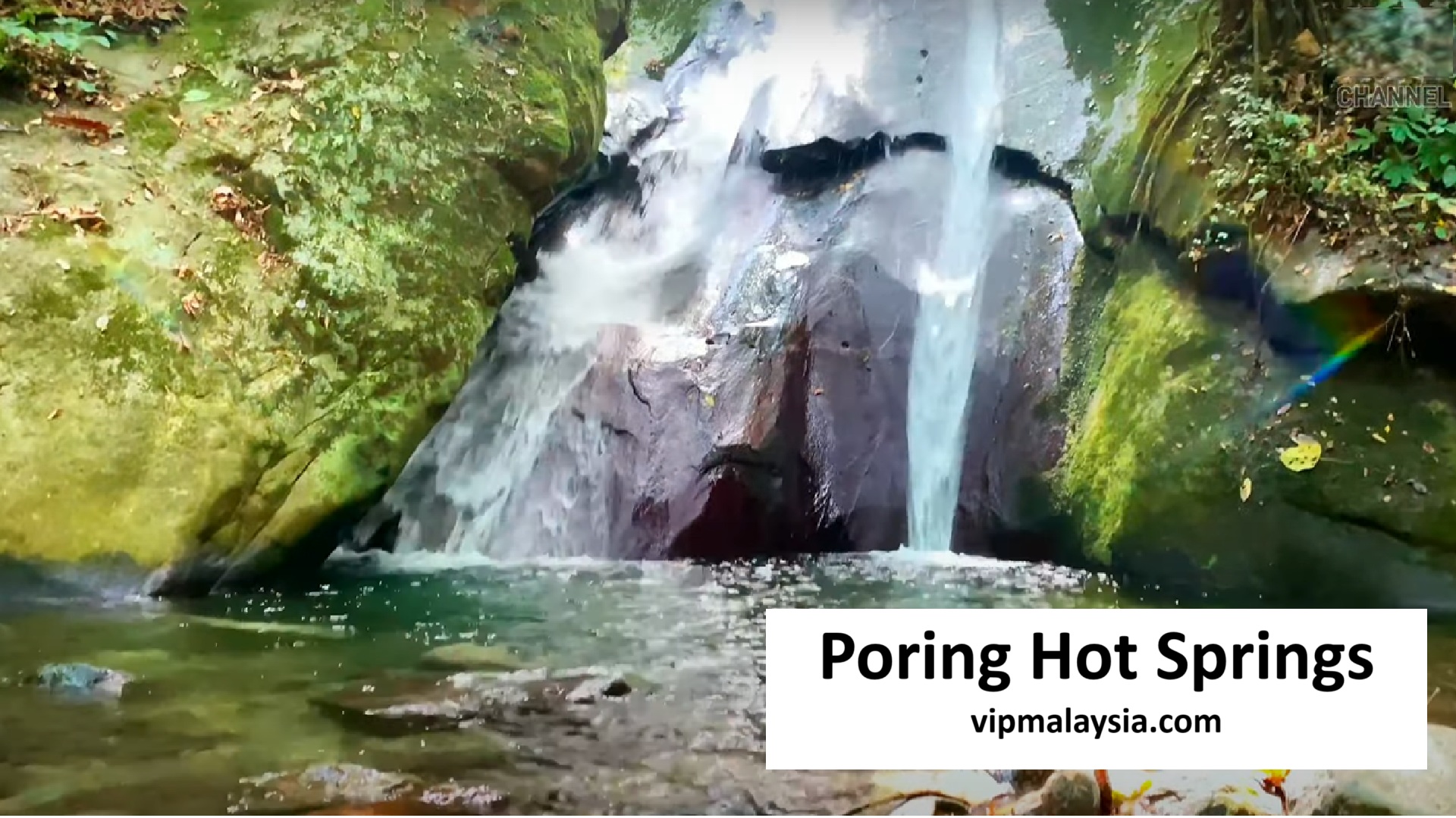
The sulphur-rich pools are the heart of Poring Hot Springs. Visitors often report improved circulation, relief from muscle aches, and a sense of rejuvenation after soaking in the mineral baths. Both open-air pools and private tubs are available, catering to families and individuals seeking tranquility.
Canopy Walkway
Suspended up to 43 meters above the ground and stretching 158 meters, the canopy walkway offers breathtaking views of the rainforest canopy. It provides a rare opportunity to observe wildlife that thrives in the treetops, including birds, insects, and small mammals. The walkway is constructed with aluminium ladders and wooden planks, ensuring both safety and adventure.
Rafflesia Flower
The Rafflesia, the world’s largest bloom, is one of Poring’s most iconic attractions. With flowers that can exceed one meter in diameter, spotting a Rafflesia in bloom is a rare and unforgettable experience. Trails around Poring are monitored by guides who alert visitors when a flower is in bloom.
Nature Gardens
Poring’s nature gardens serve as living classrooms. The butterfly farm, orchid conservation centre, and insectarium showcase the region’s biodiversity. These gardens highlight Sabah’s commitment to conservation and education, making them ideal for families and students.
Attractions
Pools for Families
Children can enjoy swimming pools with slides, while adults relax in rock pools surrounded by greenery. The combination of fun and relaxation makes Poring a family-friendly destination.
Waterfalls
Two waterfalls are accessible from Poring: Kipungit (10 meters, 15-minute walk) and Langanan (120 meters, 2-hour trek). These waterfalls offer refreshing breaks and scenic photo opportunities.
Wildlife Encounters
The rainforest around Poring is home to hornbills, gibbons, and a variety of butterflies. Birdwatchers and wildlife enthusiasts often find the area rewarding for spotting rare species.
Things to Do
Trekking and Adventure
Visitors can embark on treks to waterfalls, explore canopy trails, or hike through the rainforest. Adventure seekers often combine a visit to Poring with climbing Mount Kinabalu, using the hot springs as a recovery stop.
Educational Tours
Guided tours of the nature gardens provide insights into local flora and fauna. Students and researchers frequently visit Poring to study its biodiversity.
Relaxation
Private baths and spa-like facilities allow visitors to unwind in peace. The hot springs are especially popular among those seeking natural remedies for stress and fatigue.
Trekking and Adventure
Kipungit Waterfall
Kipungit Waterfall is indeed one of the most accessible natural highlights near Poring Hot Springs. The trail is about 665 meters long, taking 15–20 minutes at a relaxed pace. The waterfall itself measures roughly 10–12 meters in height, cascading into a shallow pool surrounded by dense rainforest vegetation.
Visitors often describe it as an ideal spot for picnics and refreshing dips, especially after soaking in the sulphur baths nearby. The pool at the base is shallow, making it suitable for families with children. Facilities such as picnic areas and camping grounds are available close to the site, and birdwatchers may spot species like the White-crowned shama or Asian Fairy-bluebird along the trail.
Langanan Waterfall
Langanan Waterfall is a far more demanding trek compared to Kipungit. The trail is approximately 6 kilometers one way, requiring 2–3 hours each way depending on fitness levels. Rising to an impressive 120 meters, it is considered one of Sabah’s tallest waterfalls. The trek passes through pristine rainforest rich in orchids, ferns, and occasional sightings of hornbills, squirrels, or gibbons. The terrain is moderately challenging, with steep sections and muddy paths, so proper footwear and preparation are essential.
Registration at the ticket counter is required before starting the trek, and entry is not allowed after 2 PM for safety reasons. Upon arrival, hikers are rewarded with the thunderous roar of the cascade and misty spray that cools the air—a dramatic payoff that makes the effort worthwhile.
Canopy Exploration
Although currently closed for maintenance, the canopy walkway remains one of Poring’s most iconic adventures. Its suspension bridges provide thrilling perspectives of the rainforest canopy.
Nearby Attractions
Kinabalu Park
Just 40 km away, Kinabalu Park is a UNESCO World Heritage Site. It is home to Mount Kinabalu, Southeast Asia’s highest peak, and offers diverse ecosystems ranging from alpine meadows to tropical rainforests.
Ranau Town
Ranau, the nearest town, provides access to local markets, cultural festivals, and traditional cuisine. Visitors often stop here to experience Sabah’s local culture.
Desa Dairy Farm
Located in Kundasang, Desa Dairy Farm offers panoramic views of Mount Kinabalu and fresh dairy products. It is a family-friendly stop often combined with trips to Poring.
Conclusion
Poring Hot Springs is more than a destination—it is an experience that blends relaxation, adventure, and education. From sulphur baths to canopy walks, waterfalls to rare flowers, it offers something for every traveler. Its proximity to Kinabalu Park makes it an essential stop for those exploring Sabah. Whether you seek healing waters, thrilling treks, or encounters with unique flora and fauna, Poring delivers a rainforest retreat that is both rejuvenating and unforgettable.
Summary
Attraction: Poring Hot Springs
Location: #Sabah
Attraction Type: #HotSpring Waterfall
Quick Info
Attribute
Corrected Details
Name
Poring Hot Springs
Address
About 40 km from Kinabalu Park Headquarters, Ranau District, Sabah, Malaysia
GPS Position
6.0167° N, 116.7167° E (accurate)
State
Sabah
Elevation
~400 meters above sea level (not 500 m)
Date of Public Access
Kinabalu Park was gazetted in 1964; Poring facilities developed later. May 1990 is not a confirmed official date.
Hot Spring Type
Sulphuric water baths (open‑air pools and private tubs)
Water Benefits
Traditionally believed to soothe aches, fatigue, and aid recovery after trekking Mount Kinabalu
Sabah Parks HQ, Block H, Lot 45 & 46, Signature Office, KK Times Square, Kota Kinabalu, Sabah, Malaysia
Phone
+6088-523500
Email
hello@sabahparks.org.my
Visitor Reviews
Andy Sinclair, North Yorkshire, United Kingdom – ★★★★★ “I loved the butterfly walk at Poring Hot Springs. It was on level ground, making it accessible even after a long trek in Kinabalu Park. The gardens were well maintained, and the variety of butterflies was stunning. It felt like a living classroom where you could learn while enjoying nature.”
Jonathan Davis, United States – ★★★★☆ “After soaking in the hot springs, I tried the Rainforest Restaurant nearby. Honestly, the burger wasn’t great—too much sauce—but the setting was beautiful, surrounded by lush greenery. The hot pools themselves were relaxing, and I could feel my muscles loosen after the climb up Mount Kinabalu.”
Puteri Balkish, Malaysia – ★★★★★ “It’s a long drive from Kota Kinabalu, but worth it. After trekking in Kinabalu National Park, soaking in the sulphur baths was heavenly. The water temperature was perfect, and I felt completely rejuvenated. The Rafflesia garden nearby was an added bonus—I was lucky enough to see one in bloom.”
Sarah Palmer, New Zealand – ★★★★☆ “The canopy walkway was the highlight for me. Suspended high above the rainforest, it gave incredible views and a chance to spot wildlife in the treetops. The trek to Langanan Waterfall was tough but rewarding. The hot springs were crowded, but still a great way to end the day.”
Kinabalu Park in Sabah, Malaysia, is a UNESCO World Heritage Site that blends breathtaking landscapes, extraordinary biodiversity, and thrilling adventure. From the towering Mount Kinabalu to lush rainforests and soothing hot springs, this destination offers travelers a rare chance to explore nature’s crown jewel in Southeast Asia.
Introduction
Kinabalu Park is more than just a national park—it is a living sanctuary where nature, culture, and adventure converge. Nestled in the northern tip of Borneo, this park is home to Mount Kinabalu, the highest peak in Southeast Asia, and a treasure trove of flora and fauna. Recognized as Malaysia’s first UNESCO World Heritage Site in 2000, Kinabalu Park has become a global symbol of conservation and exploration. Whether you are a hiker, a birdwatcher, or a family seeking a rejuvenating escape, Kinabalu Park promises an unforgettable journey.
History
Kinabalu Park’s history is deeply tied to both scientific discovery and cultural reverence. Established in 1964 as one of Malaysia’s earliest protected areas, the park was created to safeguard the unique ecosystems surrounding Mount Kinabalu. Over the decades, researchers uncovered its staggering biodiversity, documenting thousands of plant species and rare animals. In 2000, UNESCO recognized Kinabalu Park as a World Heritage Site for its outstanding universal value, citing its role as a “natural laboratory of evolutionary processes.”
Local legends also enrich its history. The Kadazan-Dusun people regard Mount Kinabalu as sacred, believing it to be the resting place of ancestral spirits. This cultural reverence blends seamlessly with scientific importance, making Kinabalu Park both a spiritual and ecological landmark. Today, it stands as a testament to Malaysia’s commitment to conservation and sustainable tourism.
Highlights
Mount Kinabalu
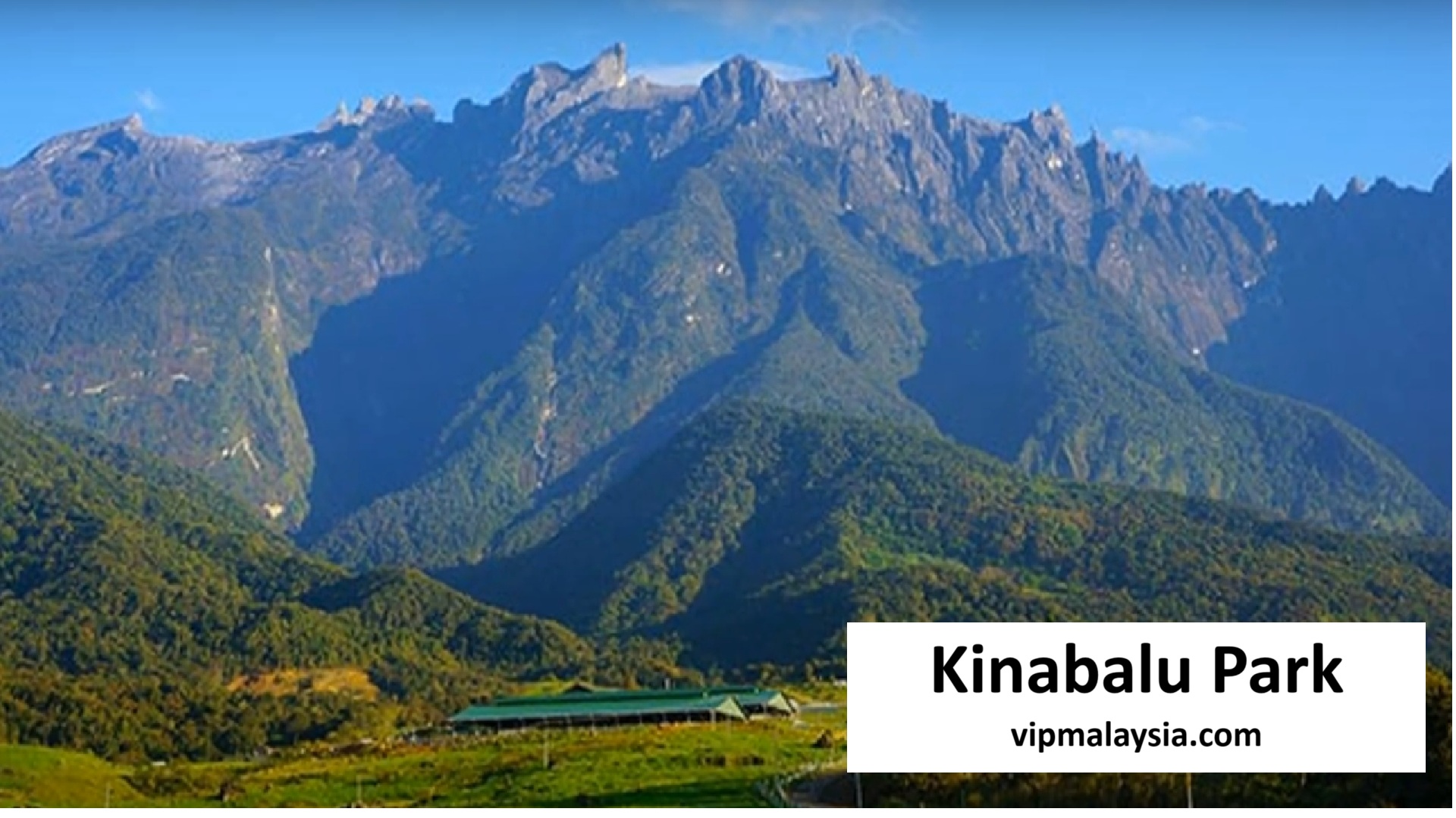
Mount Kinabalu rises majestically at 4,095.2 meters, making it the highest peak between the Himalayas and New Guinea. Climbers from around the world flock here to test their endurance and witness sunrise views that paint the sky in hues of gold and crimson. For many, the climb is not just physical but spiritual, offering a sense of achievement and connection with nature.
Trekking Routes and Facilities
The mountain offers two main climbing routes: the Timpohon Gate and the Mesilau Trail. Both provide unique perspectives of the mountain’s diverse ecosystems. Along the way, climbers encounter rest huts, ranger stations, and guided support, ensuring safety and accessibility.
Biodiversity Hotspot
Kinabalu Park is a paradise for naturalists. With over 5,000 plant species, including orchids, pitcher plants, and the rare Rafflesia, the park is a botanical wonderland. It also shelters more than 300 bird species and 100 mammals, ranging from clouded leopards to Bornean gibbons.
Unique Flora and Fauna
The park’s flora reflects influences from the Himalayas, China, Australia, and pan-tropical regions. Visitors can marvel at towering dipterocarp trees, delicate mosses, and carnivorous plants. Wildlife enthusiasts may spot hornbills, civets, and even the elusive orangutan in surrounding forests.
Substations and Research
Kinabalu Park operates four substations—Sayap, Nalapak, Serinsim, and Monggis. These serve as research hubs and eco-tourism gateways. Scientists study evolutionary processes here, while visitors gain immersive experiences through guided walks and educational programs.
Sayap Substation
Sayap Substation lies on the western flank of Kinabalu Park, offering a quieter, less-explored retreat. It is renowned for its pristine montane forests, rich birdlife, and tranquil hiking trails leading to Kemantis Waterfall. Established in 1992, Sayap plays a crucial role in monitoring the park’s western boundary while supporting biodiversity research. Visitors often enjoy birdwatching and guided hikes that reveal rare reptiles and amphibians, making it a hotspot for eco-adventures.
Beyond its ecological significance, Sayap has become a hub for community-based tourism. Local guides, including former poachers turned conservationists, lead night walks to spot horned frogs, red-headed kraits, and other nocturnal species. Homestays in nearby villages provide authentic cultural immersion, while conservation programs such as fig tree nurseries highlight the interconnectedness of flora and fauna.
Nalapak Substation
Nalapak Substation, established in 1995, is located at the northernmost tip of Kinabalu Park. Known locally as “Sub-stesen Utara,” it functions primarily as a ranger outpost, safeguarding the park’s northern boundary. Its strategic position makes it essential for enforcement and monitoring activities, ensuring the protection of flora and fauna in remote areas.
Although less visited by tourists compared to Sayap or Serinsim, Nalapak offers unique opportunities for researchers and conservationists. Its remote location provides access to untouched habitats, making it valuable for floral and faunal inventories conducted by Sabah Parks. The substation’s presence underscores the importance of maintaining surveillance across the park’s vast 754 sq km area.
Serinsim Substation
Serinsim Substation, located about 32 km from Kota Marudu, showcases a different face of Kinabalu Park. Unlike the highland headquarters, Serinsim is dominated by lowland rainforest and rivers, offering attractions such as Misumpak Waterfall, Bat Cave, and Mount Nombuyukong. It also hosts cultural landmarks like the grave of Si-Gunting, a local hero who resisted British colonial rule, and the legendary tomb of Gambaliu, a mythical giant.
Facilities at Serinsim include hostels, chalets, and camping grounds, making it accessible for families and adventure seekers. Visitors can enjoy river picnics, wildlife spotting, and deer farm visits. The substation’s blend of natural beauty and cultural heritage makes it a unique destination within Kinabalu Park, appealing to both history enthusiasts and nature lovers.
Monggis Substation
Monggis Substation, situated about 45 km from Ranau, serves as the gateway to Mount Tambuyukon, Malaysia’s third-highest peak at 2,580 meters. This substation is vital for climbers and researchers, offering access to diverse ecosystems ranging from lowland forests to ultrabasic rock formations. The ascent from Monggis to Tambuyukon provides a remarkable journey across varied biodiversity zones.
In addition to trekking, Monggis supports research in biology, geology, and eco-tourism potential. Its isolated location ensures minimal disturbance, making it an ideal site for scientific exploration. For adventurers, Monggis offers challenging climbs and breathtaking views, while conservationists value its role in safeguarding one of Sabah’s most ecologically rich regions.
Major Attractions
Poring Hot Springs
Located 40 kilometers from the park headquarters, Poring Hot Springs is a favorite among families and wellness seekers. Its sulphurous baths are believed to have healing properties, while canopy walkways and rainforest trails provide adventure. Waterfalls nearby add to the charm, making it a perfect blend of relaxation and exploration.
Visitor Facilities
The hot springs complex includes children’s pools, private baths, and picnic areas. Visitors can also explore butterfly farms and orchid gardens, enhancing the educational value of the site.
Kinabalu Summit (Low’s Peak)
The summit of Gunung Kinabalu, known as Low’s Peak, is the park’s most iconic attraction. Standing at 4,095 meters, it offers breathtaking sunrise views that stretch across Sabah and the South China Sea. Climbers often describe the experience as life-changing, with the granite spires creating a dramatic silhouette against the sky.
Reaching the summit requires stamina and preparation, but the reward is unparalleled. The climb is supported by guides and facilities, making it accessible to trekkers worldwide. It remains the highlight of Kinabalu Park’s adventure tourism.
Botanical Garden
The Kinabalu Botanical Garden showcases the park’s extraordinary biodiversity. It houses rare orchids, pitcher plants, and medicinal herbs, offering visitors a glimpse into the mountain’s unique flora.
Educational tours highlight conservation efforts and the importance of preserving endemic species. The garden is a must-visit for botanists and nature enthusiasts alike.
Carson Falls
Carson Falls is a scenic waterfall located near Timpohon Gate. It provides a refreshing stop for climbers beginning their ascent, with cool waters cascading through lush vegetation.
The falls are named after botanist Richard Carson, who contributed to Kinabalu’s ecological studies. It remains a tranquil attraction for hikers and photographers.
Canopy Walkway
The canopy walkway at Poring offers a thrilling experience above the treetops. Suspended bridges allow visitors to explore the rainforest from a unique perspective, spotting birds and insects along the way.
This attraction emphasizes the park’s biodiversity and provides an educational adventure for families. It is one of the most photographed experiences in Kinabalu Park.
Kinabalu Park Headquarters
The park headquarters at Timpohon Gate is the starting point for most climbs. It houses visitor facilities, including accommodations, restaurants, and information centers.
Educational exhibits highlight the park’s biodiversity and conservation efforts. It is an essential stop for climbers preparing for the ascent.
Kundasang War Memorial
The Kundasang War Memorial honors Allied soldiers who perished during World War II’s Sandakan Death Marches. It features gardens representing different nations and serves as a poignant historical site.
Visitors gain insight into Sabah’s wartime history and the sacrifices made. The memorial adds cultural depth to the natural attractions of Kinabalu Park.
Things to Do
Birdwatching and Wildlife Tours
Kinabalu Park is a haven for birdwatchers. Species such as the mountain blackeye, Bornean barbet, and crimson-headed partridge delight enthusiasts. Guided tours also highlight mammals like the Malay civet and reptiles such as the Kinabalu horned frog.
Botanical Exploration
Visitors can join guided botanical walks to learn about orchids, ferns, and medicinal plants. The park’s botanical diversity makes it a living classroom for students and researchers.
Climbing Mount Kinabalu
The climb to Mount Kinabalu’s summit is a bucket-list adventure. Climbers typically spend two days ascending, with an overnight stay at Laban Rata Resthouse before the final push to the summit. The experience combines physical challenge with breathtaking views.
Via Ferrata Adventure
For thrill-seekers, Kinabalu Park offers the world’s highest via ferrata—a network of iron rungs and cables fixed to the mountain. This allows climbers to traverse cliffs and ridges safely, adding adrenaline to the journey.
Other Information
Entrance Fees
By Ages
Category
MyKad Holders (RM)
Non-Malaysians (RM)
Adult (18+)
3.00
15.00
Senior (55+)
1.00
15.00
Youth (<18)
1.00
10.00
Note: Conservation fees cover Kinabalu HQ, Mesilau Nature Resort & Poring Hot Spring
Conservation and Climbing
#
Particulars
Above 18 Years
17 Years & Below
Remarks
01
Conservation Fee (Malaysian)
RM 10
RM 5
Below 12 Years / Above 60 Years & OKU: Free of Charge
02
Conservation Fee (International)
RM 50
RM 25
—
03
Mount Kinabalu Climbing Permit (Malaysian)
RM 100
RM 50
—
04
Mount Kinabalu Climbing Permit (International)
RM 400
RM 200
—
Routes
Route
Name
Operating Hours
Description
P1
Poring Visitor Centre Gallery
09:00 ~ 16:00 Daily
Exhibits of Kinabalu Park’s rich biodiversity with a focus on bird species and educational media.
P2
Butterfly Farm
09:00 ~ 16:00 Daily
Borneo’s first butterfly farm with a walk-through enclosure showcasing endangered species like Rajah Brooke’s birdwing.
P3
Hot Springs
09:00 ~ 16:00 Daily
Sulphuric hot baths with healing properties, featuring temperature-controlled open-air and private bathtubs.
P4
Canopy Walkway
09:00 ~ 16:00 Daily
41 meters high and 157.8 meters long, offering thrilling views of towering Menggaris trees.
P5
Rock Pool
09:00 ~ 16:00 Daily (Closed Monday)
Cold freshwater pool perfect for a refreshing dip after the hot springs.
P6
Orchid Conservation Centre
09:00 ~ 16:00 Daily
Home to about 1,200 orchid species—Borneo’s rarest and most exotic floral gems.
P7
Langanan Waterfall
Accessible via 2-hour hike
At 120 meters, it’s Poring’s highest waterfall—a must-see after a scenic jungle trek.
P8
Kipungit Waterfall
Accessible any time
10-meter tall waterfall ideal for a quick dip and forest picnic.
P9
Bat Cave
On trail between P8 and P7
Small cave with fruit bats—safe for a brief detour and a peek at nocturnal life.
P10
Rafflesia Garden
09:00 ~ 16:00 Daily
Chance to view the world’s largest flower, Rafflesia, in rare and brief bloom.
P11
Ethnobotanical Garden
09:00 ~ 16:00 Daily
Exhibits of jungle fruits and medicinal plants used by local communities.
P12
Tropical Garden
09:00 ~ 17:00 Daily
Mini rainforest with exotic birds and tiny deer—perfect for families and photographers.
P13
Bamboo Garden
Accessible any time
Featuring Gigantochloa levis, showcasing the importance of bamboo in traditional Dusun culture.
P14
Slide Pool
08:00 ~ 16:00 Daily (Closed Monday)
Kid-friendly cold water pool with slides—a playful way to wrap up the day.
Nearby Attractions
Desa Dairy Farm
Located in Kundasang, Desa Dairy Farm offers panoramic views of Mount Kinabalu and fresh dairy products. Families enjoy feeding calves and savoring homemade ice cream.
Visitors can tour the farm, interact with cattle, and enjoy scenic views of Mount Kinabalu. It is a popular stop for both locals and tourists.
Ranau Town
Ranau, a nearby town, provides cultural immersion with local markets, handicrafts, and traditional cuisine. It is also home to memorials commemorating World War II, adding historical depth to the region.
Kundasang Town
The nearby town of Kundasang is often called the “New Zealand of Sabah” for its cool climate and dairy farms. It serves as a gateway to Kinabalu Park and hosts vibrant local markets. Cultural festivals, such as the Kaamatan Harvest Festival, showcase Kadazan-Dusun traditions, offering travelers a deeper connection to local heritage.
Conclusion
Whether you’re drawn by its ecological significance or the call of Mount Kinabalu itself, Kinabalu Park is a rare gem that delivers beyond expectation. It invites explorers, nature lovers, and dreamers to come and experience the magic of wild Malaysia. Step into a realm of misty peaks, ancient forests, and healing hot springs. Book your Kinabalu Park adventure and let nature inspire you.
Summary
Attraction: Kinabalu Park
Location: #Sabah
Attraction Type: #Nature Mount
Comparison Table
Attribute
Gunung Kinabalu
Kinabalu Park
Nature
A single granitic mountain peak rising to 4,095 m
A protected area of 754 km² surrounding the mountain
Elevation
4,095 meters (13,435 feet), Malaysia’s highest point
Varies from lowland rainforest to alpine zones, ranging 152 m–4,095 m
Prominence
4,095 m, rising directly from sea level
Not applicable; encompasses multiple ecosystems
Status
Sacred mountain to Kadazan-Dusun people; major climbing destination
UNESCO World Heritage Site since 2000, recognized for biodiversity
Main Entry Point
Timpohon Gate (summit climb)
Park HQ at Timpohon Gate; multiple nature trails and visitor centers
Biodiversity
Home to rare flora like Nepenthes rajah and Paphiopedilum rothschildianum
Over 5,000 plant species, 326 bird species, 100+ mammals
Activities
Summit climbing, via ferrata, alpine trekking
Birdwatching, botanical garden tours, hot springs, canopy walks
Nearby Town
Kundasang (gateway town)
Kundasang and Ranau provide accommodations and cultural experiences
Over 5,000 plant species, including orchids, pitcher plants, and Rafflesia (not literally half of Borneo’s species)
Bird Species
Over 300 species documented
Substations
Sayap, Nalapak, Serinsim, Monggis
Visitor Entry
Park HQ at Kundasang, ~92 km from Kota Kinabalu
Admin Office
Sabah Parks Conservation Center HQ, KK Times Square
Operating Hours
7:00 AM to 5:00 PM daily
Contact Info
Sabah Parks, Lot 45 & 46, Level 1–5, Block H, Signature Office, KK Times Square, Coastal Highway, 88100 Kota Kinabalu, Sabah, Malaysia. Tel: +6088-523500 Fax: +6088-486434, 486435, 486436 Email: sabahparks@sabah.gov.my, sabahparks@gmail.com
Visitor Reviews
HP Wu – SingaporeRating: ★★★★★ “I visited Kinabalu Park in March 2024 and was amazed by the sheer scale of Mount Kinabalu at 4,095 meters. We rented a car and had a local driver-guide named Jai, who was an expert in hiking and even knowledgeable about snakes in the forest. His guidance made the trek safer and more enjoyable. The trails were well-marked, and the biodiversity was incredible. This is truly a must-visit destination in Sabah.”
Soko37 – Budapest, HungaryRating: ★★★★☆ “We traveled from Kota Kinabalu on rented motorbikes, which took about two hours. The weather shifted quickly—it started raining during our first hike, making the trails slippery and muddy. Despite that, the park was fantastic for casual hikers, families, and even older visitors. There are many trails, both short and long, and facilities like restaurants and accommodations are available. I recommend proper hiking shoes, rain jackets, and snacks, as the temperature can change rapidly.”
Olly Gaspar – Australia (Travel Blogger)Rating: ★★★★★ “As a full-time traveler, I explored Kinabalu Park in January 2025. The entrance sits at 1,550 meters, so you immediately feel the cooler climate compared to Kota Kinabalu. The park is Malaysia’s first UNESCO World Heritage Site and boasts over 5,000 vascular plant species and 90 mammal species. I didn’t climb the summit due to the high permit cost, but the interconnected trails offered excellent hiking opportunities. It’s easy to reach from Kota Kinabalu by bus, taxi, or guided tour, and the entrance fee is RM50 for international adults.”
Tripadvisor Community – General ConsensusAverage Rating: ★★★★☆ (4.1/5 from 630 reviews) Visitors consistently praise Kinabalu Park for its breathtaking scenery, biodiversity, and accessibility. Many highlight the sunrise views from Mount Kinabalu, the variety of hiking trails, and nearby attractions like Poring Hot Springs and Desa Dairy Farm. Some note that weather conditions can change quickly, making preparation essential.
Ready for an unforgettable journey above the clouds? Gunung Kinabalu, Malaysia’s highest peak, offers more than just a climb—it’s a life-changing experience in the heart of Malaysian Borneo. Discover everything you need to plan, prepare, and say “I made it to the top.”
Introduction
Gunung Kinabalu, rising 4,095 meters above sea level, is Malaysia’s highest mountain and one of Southeast Asia’s most iconic natural wonders. Nestled within Kinabalu Park in Sabah, this UNESCO World Heritage Site offers breathtaking biodiversity, cultural heritage, and unforgettable trekking adventures.
History
The history of Gunung Kinabalu is deeply intertwined with the indigenous Kadazan-Dusun people, who regard the mountain as sacred. According to local legend, the spirits of ancestors dwell on its slopes, making it a place of reverence and ritual. The name “Kinabalu” is believed to derive from “Aki Nabalu,” meaning “Revered Place of the Dead.”
European explorers first documented the mountain in the mid-19th century, with Sir Hugh Low leading the earliest recorded ascent in 1851. His name lives on at Low’s Peak, the highest point of the mountain. Over time, Gunung Kinabalu became a focal point for scientific research due to its extraordinary biodiversity. In 1964, Kinabalu Park was established to protect this ecological treasure, and in 2000, UNESCO recognized it as a World Heritage Site.
Getting There
Gunung Kinabalu is located within Kinabalu Park, near Kundasang, about two hours by car from Kota Kinabalu, the capital of Sabah. The park headquarters at Timpohon Gate serves as the main entry point for climbers.
Travelers typically fly into Kota Kinabalu International Airport (BKI), then continue by taxi, rental car, or tour bus to the park. The journey itself is scenic, passing through rolling hills and villages before reaching the cooler highlands.
How to Get There
Most treks begin early from Timpohon Gate, the standard trailhead. The Mesilau Trail was once an alternative but has been closed since the 2015 earthquake.
Permits, guides, and accommodations must be booked in advance through Kinabalu Park HQ. This ensures climbers are registered, guided safely, and provided with lodging at Panalaban (formerly Laban Rata).
When to Go
The best months to climb are March to August, during Sabah’s drier season. Weather is more stable, though mountain conditions remain unpredictable.
Booking ahead is essential, as daily climber numbers are limited to protect the environment. A licensed mountain guide is mandatory, and accommodations at Panalaban fill quickly during peak season.
Climb Itenary
Day / Stage
Details
Duration & Difficulty
Day 1: Arrival at Kinabalu Park HQ
Register at Park HQ, secure permits, meet certified guide. Begin trek at Timpohon Gate (1,866 m). First stop at Carson Falls, then continue through forest huts (Kandis, Ubah, Lowii, Mempening). Overnight at Panalaban Resthouse (formerly Laban Rata) at 3,272 m.
6–8 hours trekking. Moderate to strenuous; altitude gain ~1,400 m.
Day 2: Summit Push (Low’s Peak)
Wake at ~2:00 AM. Begin steep ascent over granite slabs with fixed ropes. Reach Low’s Peak (4,095 m) at sunrise. Descend back to Panalaban for breakfast, then continue down to Park HQ.
Mandatory overnight at Panalaban Resthouse (altitude lodging with meals).
1 night minimum stay required.
Difficulty Level
Considered moderate to strenuous. Requires fitness, stamina, and acclimatization.
Summit push is the hardest section; descent often tougher on knees.
Total Duration
Standard climb is 2 days, 1 night. Extended itineraries may include extra acclimatization hikes in Kinabalu Park.
2D1N standard; optional 3D2N for slower pace.
Highlights
The Summit Experience
Standing at 4,095 meters, Low’s Peak offers panoramic views that stretch across Sabah and, on clear days, even toward the South China Sea. The sunrise from the summit is considered one of the most spectacular in Asia.
Biodiversity Wonderland
Gunung Kinabalu is home to over 5,000 plant species, including orchids, pitcher plants, and the giant Rafflesia. The mountain also shelters 326 bird species and 100+ mammals, making it a living museum of biodiversity.
Cultural Significance
For the Kadazan-Dusun, Gunung Kinabalu is a sacred site. Rituals and traditions tied to the mountain continue to this day, reinforcing its role as a cultural landmark.
Extraordinary Flora
Nepenthes Rajah
Nepenthes rajah is the world’s largest pitcher plant, endemic to Mount Kinabalu. Its traps can hold over a liter of fluid and have been known to capture not only insects but also small vertebrates like frogs and even rats. This carnivorous plant thrives in nutrient-poor soils, supplementing its diet with prey digestion. Its ecological role is fascinating, as it also forms symbiotic relationships with tree shrews that feed on nectar while fertilizing the plant with droppings.
The plant’s striking size and adaptation make it a symbol of Kinabalu’s unique biodiversity. Conservationists emphasize its vulnerability to habitat loss and illegal collection, making protection within Kinabalu Park essential.
Paphiopedilum Rothschildianum
Known as the “Kinabalu Gold,” Paphiopedilum rothschildianum is one of the rarest orchids in the world. It grows exclusively on Kinabalu’s limestone cliffs and is distinguished by its striped petals and elegant slipper-shaped blooms. This orchid can take up to 15 years to flower, adding to its rarity and value.
Its beauty has unfortunately made it a target for illegal trade, with specimens fetching thousands of dollars on the black market. Strict conservation measures are in place to protect this orchid, which is considered a crown jewel of Kinabalu’s flora.
Rafflesia Keithii
Rafflesia keithii is one of the two Rafflesia species found in Kinabalu Park. It produces enormous flowers up to 80 cm in diameter, with a distinctive foul odor that attracts carrion flies for pollination. This parasitic plant lacks leaves, stems, and roots, living entirely off its host vine.
Despite its unpleasant smell, Rafflesia keithii is a major attraction for visitors. Its unpredictable blooming cycle makes sightings rare, adding to its mystique and allure.
Rhododendron Lowii
Rhododendron lowii is a spectacular species discovered by Sir Hugh Low, after whom Kinabalu’s summit is named. It produces large golden-yellow flower clusters that glow in the misty montane forests.
This rhododendron thrives in cloud forests above 2,200 meters, where mist and moisture dominate. Its vibrant blooms are a highlight for trekkers, symbolizing the mountain’s rich floral diversity.
Nepenthes Villosa
Nepenthes villosa is another rare pitcher plant found at higher altitudes of Kinabalu. It is adapted to colder, harsher conditions and features hairy pitchers with serrated peristomes.
This species is particularly vulnerable due to its limited distribution. Its survival depends on the unique microclimates created by Kinabalu’s granite slopes.
Dacrydium Gibbsiae
Dacrydium gibbsiae is a rare conifer endemic to Kinabalu’s montane forests. It thrives in cooler climates above 1,200 meters, forming part of the oak-chestnut forest ecosystem.
Its presence highlights Kinabalu’s role as a hub for conifer diversity in Southeast Asia. The species contributes to the ecological balance by providing habitat and food for wildlife.
Rhododendron Ericoides
Rhododendron ericoides is a heath rhododendron found in Kinabalu’s subalpine zones. Its scarlet, thimble-sized flowers bloom in thickets, creating vibrant displays in March and April.
This hardy shrub thrives in harsh conditions, with gnarled branches adapted to withstand strong winds and poor soils. Its resilience symbolizes the adaptability of Kinabalu’s flora.
Nepenthes Edwardsiana
Nepenthes edwardsiana is considered one of the most beautiful pitcher plants, with strikingly ribbed peristomes and vivid coloration. It is endemic to Kinabalu and nearby mountains.
Its rarity and aesthetic appeal make it highly sought after by collectors, but strict protection ensures its survival within Kinabalu Park.
Phyllocladus Hypophyllus
Phyllocladus hypophyllus is a unique conifer found in Kinabalu’s montane forests. Unlike typical conifers, it has flattened leaf-like structures called phylloclades.
This adaptation allows it to thrive in misty, nutrient-poor environments. Its unusual morphology makes it a fascinating subject for botanists studying evolutionary adaptations.
Rhododendron Buxifolium
Rhododendron buxifolium, or box-leaved rhododendron, grows in Kinabalu’s subalpine meadows. Its larger red flowers bloom spectacularly in spring, adding bursts of color to the high-altitude landscape.
This species is well adapted to soggy patches and rocky crevices, showcasing the resilience of Kinabalu’s alpine vegetation.
Rarest Fauna
Thomas’ Pygmy Squirrel
Thomas’ pygmy squirrel is one of the smallest squirrels in the world, measuring only about 7 cm in body length. Endemic to Kinabalu Park, it is often seen darting among mossy branches in montane forests. Its tiny size and rapid movements make it a challenge to spot, but it plays an important role in seed dispersal.
This species is considered vulnerable due to its restricted range. Conservation within Kinabalu Park ensures its survival, as deforestation outside protected areas threatens its delicate habitat.
Kinabalu Shrew
The Kinabalu shrew is a rare insectivorous mammal found only on Mount Kinabalu. It thrives in the cool, moist conditions of the montane forest floor, feeding on insects and small invertebrates. Its dark fur and small size make it well adapted to the dense undergrowth.
Because of its limited distribution, the Kinabalu shrew is highly vulnerable to environmental changes. Researchers emphasize its importance as an indicator species for ecosystem health in high-altitude habitats.
Mountain Blackbird
The mountain blackbird is a common sight near the summit of Gunung Kinabalu. This bird is adapted to high-altitude conditions, feeding on insects and berries found in alpine vegetation. Its dark plumage contrasts beautifully against the granite backdrop of the mountain.
Birdwatchers often encounter this species during summit climbs, making it one of the most recognizable avian residents of Kinabalu. Its presence highlights the unique birdlife adapted to extreme conditions.
Crimson-Headed Wood-Partridge
The crimson-headed wood-partridge is a striking bird confined to the mountains of Borneo, including Kinabalu. Its vivid red head and patterned plumage make it a prized sighting for birdwatchers. It inhabits dense montane forests, feeding on seeds and insects.
This species is considered near-threatened due to habitat loss. Kinabalu Park provides a crucial refuge, ensuring its survival in the face of deforestation elsewhere in Sabah.
Slow Loris
The slow loris is a nocturnal primate found in Kinabalu Park. With its large eyes adapted for night vision, it moves slowly through the trees, feeding on insects, fruit, and tree sap. Its deliberate movements and unique appearance make it a fascinating species.
Unfortunately, the slow loris is threatened by illegal wildlife trade. Protection within Kinabalu Park is vital to safeguard this rare primate from exploitation.
Bornean Gibbon
The Bornean gibbon is an agile primate known for its loud, melodious calls that echo through Kinabalu’s forests. It is an important seed disperser, contributing to forest regeneration. Its long arms allow it to swing effortlessly between trees.
This species is endangered due to habitat fragmentation. Kinabalu Park remains one of the few strongholds where gibbons can thrive in undisturbed montane forests.
Kinabalu Friendly Bush-Warbler
The Kinabalu friendly bush-warbler is an endemic bird species found only on Mount Kinabalu. It inhabits dense undergrowth and is known for its distinctive song. Its small size and elusive behavior make it a challenge to observe.
This bird is a symbol of Kinabalu’s unique avifauna. Its restricted range underscores the importance of conserving high-altitude habitats in Sabah.
Bornean Green Tree Frog
The Bornean green tree frog is a rare amphibian found in Kinabalu Park. Its bright green coloration helps it blend into mossy environments, while its sticky pads allow it to cling to wet surfaces. It thrives in the cool, humid conditions of montane forests.
Amphibians like this frog are sensitive to environmental changes, making them key indicators of ecosystem health. Conservation efforts in Kinabalu Park protect this species from habitat loss and climate change.
Rhinoceros Hornbill
The rhinoceros hornbill is one of Borneo’s most iconic birds, and it can be found in Kinabalu Park. Its large casque and striking plumage make it instantly recognizable. It plays a vital role in seed dispersal, helping maintain forest diversity.
Though widespread in Borneo, the hornbill faces threats from hunting and habitat destruction. Kinabalu Park provides a safe haven where this majestic bird continues to thrive.
Tarsier
The tarsier is a nocturnal primate with enormous eyes adapted for night vision. Found in Kinabalu Park, it feeds on insects and small vertebrates. Its ability to leap between trees makes it a remarkable predator in the forest canopy.
Tarsiers are vulnerable to habitat loss and disturbance. Kinabalu Park’s protected environment ensures their survival, making them a highlight for wildlife enthusiasts exploring the mountain.
Major Trails
Timpohon–Summit Trail
The Timpohon–Summit Trail is the most popular route to Low’s Peak, starting at Timpohon Gate. Along the way, hikers encounter Carson Falls, Kandis Hut, and several viewpoints. The trail is well-marked but steep, requiring stamina and preparation.
This trail is considered the standard climb, with most climbers reaching Panalaban before the final summit push. Its accessibility and facilities make it the primary choice for international visitors.
Mount Kinabalu Trail
The Mount Kinabalu Trail is a strenuous 15.9-mile route that challenges climbers with steep ascents and exposed granite terrain. It demands endurance and technical maneuvering, especially near the summit.
Above base camp, the landscape transforms into a moonscape of stone, with fixed ropes assisting climbers in high winds. This trail is ideal for experienced trekkers seeking a demanding climb.
Laban Rata–Gunung Kinabalu Trail
Starting at Laban Rata, this trail involves over 6,000 steps and steep granite slabs. Climbers scramble naturally and use guide ropes to reach the summit.
The misty terrain and dramatic rocky outcrops make this trail visually stunning. Unique flora such as pitcher plants and orchids line the path, adding to its appeal.
Silau Silau Trail
The Silau Silau Trail begins near Kinabalu Hall and is moderate in difficulty. It features steep ascents, exposed roots, and muddy sections, requiring careful footing.
Despite its challenges, the trail offers breathtaking scenery and is popular among casual hikers. It connects with other trails, making it versatile for exploration.
Mempening Trail
Often paired with Silau Silau, the Mempening Trail provides a scenic forest walk. It is moderately difficult, with uneven terrain and occasional steep climbs.
The trail is rich in biodiversity, offering glimpses of orchids, ferns, and birdlife. It is a favorite among nature enthusiasts seeking a shorter hike.
Ranau Trail
The Ranau Trail is one of two summit routes from Panalaban, offering a direct ascent to Low’s Peak. It is steep and rocky, requiring climbers to use ropes for safety.
This trail is known for its panoramic views and is often chosen for its slightly shorter distance compared to Kota Belud Trail.
Kota Belud Trail
The Kota Belud Trail is the alternative summit route from Panalaban. It is longer and more challenging, with exposed granite sections.
Climbers often choose this trail for its dramatic scenery and sense of adventure. It is recommended for those seeking a tougher ascent.
Carson Falls Trail
Carson Falls Trail leads to a refreshing waterfall near the Timpohon Gate. It is short but steep, making it a rewarding detour for climbers.
The cool waters and lush surroundings provide a natural respite before or after a climb. It is a popular spot for photography and relaxation.
Kipungit Waterfall Trail
This trail leads to Kipungit Waterfall, located near Poring Hot Springs. It is relatively easy and suitable for families.
The waterfall is surrounded by tropical vegetation, offering a serene environment. Many visitors combine this trail with a soak in the hot springs.
Low’s Gully Trail
Low’s Gully Trail is a challenging descent into a deep valley on Kinabalu’s northern face. It is considered one of the toughest treks in the park.
This trail requires technical skills and is often attempted by experienced climbers. Its remote location and rugged terrain make it legendary among adventurers.
Mesilau Trail
Slightly longer and more scenic (Closed since the 2015 earthquake; only Timpohon Gate is currently open)
Things to Do
Summit Climb to Low’s Peak
Climbing to Low’s Peak, the highest point of Gunung Kinabalu at 4,095 meters, is the ultimate adventure. The trek begins at Timpohon Gate and requires an overnight stay at Panalaban before the early morning summit push. The sunrise view from the peak is considered one of the most spectacular in Asia.
The climb is challenging but accessible to most fit trekkers. Guides are mandatory, ensuring safety and cultural respect. This activity is the highlight for visitors seeking both physical achievement and spiritual connection.
Explore Kinabalu Park Botanical Garden
The botanical garden showcases Kinabalu’s extraordinary biodiversity, including rare orchids, pitcher plants, and medicinal herbs. It is a living museum of flora, offering educational tours for visitors.
Researchers and tourists alike value the garden for its conservation role. It provides insight into endemic species found only on Kinabalu’s slopes, making it a must-do for nature lovers.
Relax at Poring Hot Springs
Poring Hot Springs is famous for its natural thermal baths, ideal for soothing muscles after trekking. The hot mineral waters are believed to have healing properties.
Beyond the baths, visitors can enjoy canopy walks, butterfly gardens, and orchid houses. This attraction combines relaxation with eco-tourism, making it family-friendly.
Birdwatching in Montane Forests
Gunung Kinabalu is home to 326 bird species, including hornbills, mountain blackbirds, and endemic bush-warblers. Birdwatching trails provide opportunities to spot rare species.
The montane forests are particularly rewarding for bird enthusiasts. Guided tours enhance the experience, offering expert knowledge on avian behavior and habitats.
Via Ferrata Adventure
Kinabalu hosts the world’s highest via ferrata, offering climbers thrilling vertical routes with steel cables and ladders. It is suitable for both beginners and experienced adventurers.
The adrenaline rush of traversing granite cliffs is unmatched. Safety equipment and guides ensure a secure experience, making it one of the park’s most unique activities.
Visit Kundasang Town
Kundasang, known as the “New Zealand of Sabah,” offers cool climate, dairy farms, and fresh produce markets. It is a scenic town near Kinabalu Park.
Visitors enjoy flower gardens, cultural experiences, and panoramic views of the mountain. Kundasang complements the natural attractions with local hospitality.
Discover Carson Falls
Carson Falls is a refreshing waterfall near Timpohon Gate. It is a short hike but provides a scenic stop for climbers beginning their ascent.
The falls are surrounded by lush vegetation, offering a tranquil environment. It is a popular spot for photography and relaxation before tackling the mountain.
Canopy Walk at Poring
The canopy walkway at Poring allows visitors to explore the rainforest from above. Suspended bridges provide thrilling views of treetops and wildlife.
This activity emphasizes Kinabalu’s biodiversity and is suitable for families. It is one of the most photographed experiences in the park.
Explore Ranau Town
Ranau is a vibrant town near Kinabalu Park, known for its markets and cultural experiences. It serves as a base for exploring waterfalls and hot springs.
The town offers accommodations and local cuisine, making it a convenient stop for visitors. Its lively atmosphere complements the natural beauty of Kinabalu.
Visit Kundasang War Memorial
The Kundasang War Memorial honors Allied soldiers who perished during World War II’s Sandakan Death Marches. It features gardens representing different nations.
The memorial provides historical context to Sabah’s wartime past. Visitors gain cultural depth alongside natural exploration, making it a meaningful attraction.
Visit Desa Dairy Farm
Located in Kundasang, this farm offers fresh milk, cheese, and ice cream. Its rolling green pastures and cool climate make it a family-friendly attraction.
Conclusion
Reaching an astonishing 4,095 meters, Gunung Kinabalu stands tall as Malaysia’s highest mountain and a bucket-list destination for trekkers, nature lovers, and spiritual wanderers. Nestled within the Kinabalu Park, a UNESCO World Heritage Site, the mountain is revered not just for its height but for its incredible biodiversity and cultural significance to the indigenous Kadazan-Dusun people.
So, what are you waiting for? Lace up those boots, book your pass, and experience Malaysia’s rooftop for yourself.
Summary
Attraction: Gunung Kinabalu
Location: #Sabah
Attraction Type: #Mount
Quick Info
Attribute
Details
Name
Gunung Kinabalu
Location
Kinabalu Park, Sabah, Malaysian Borneo
Coordinates
6.0750° N, 116.5580° E
State
Sabah
Elevation
4,095 meters (13,435 feet)
Prominence
4,095 meters (rises directly from sea level)
Type
Granitic mountain
Status
UNESCO World Heritage Site (since 2000)
Main Entry Point
Timpohon Gate (Mesilau Trail closed since 2015)
Climbing Permit
Required via Sabah Parks
Accommodation
Panalaban Resthouse (formerly Laban Rata)
Park Entry Fee
Yes (varies by nationality)
Guide Requirement
Mandatory certified local guide
Best Climbing Season
March–August (dry season, though weather is variable)
Nearby Town
Kundasang
Contact
Sabah Parks HQ: +6088-523 500
Visitor Reviews
Ann Sophia (United Kingdom) ★★★★☆ Ann S, a 70-year-old traveler, described her climb as “a challenge and a half.” She reached Panalaban Resthouse but decided not to attempt the summit due to the steepness and early morning darkness. Her husband, younger and fitter, managed to reach Low’s Peak but struggled on the descent, which she noted was “worse than going up.” This honest account highlights the physical demands of the climb, especially for older trekkers .
Nur Liyana Hasim (Johor) ★★★★★ This climber emphasized the respect deserved for the mountain, describing the second morning’s summit push as “really early, aiming to arrive at Low’s Peak before sunrise.” They noted the difficulty of climbing in darkness but praised the breathtaking sunrise view as worth the effort. Their review underscores the importance of preparation and stamina for the summit attempt .
Elham Alhambra (Sabah, Malaysia) ★★★★★ A local reviewer highlighted the cultural and ecological significance of Kinabalu Park. They praised the biodiversity, mentioning orchids, pitcher plants, and hornbills spotted along the trail. They also emphasized the importance of booking permits and guides in advance, noting that Sabah Parks enforces strict conservation rules to protect the mountain’s fragile ecosystem .
Basri Timothy (Australia) ★★★★☆ An Australian visitor described the climb as “tough but rewarding.” They appreciated the facilities at Panalaban Resthouse, where warm meals and lodging at 3,272 m helped them acclimatize. They also noted the mandatory guide system as reassuring, ensuring safety and cultural respect during the climb. Their review reflects the balance between challenge and support provided by Kinabalu Park .