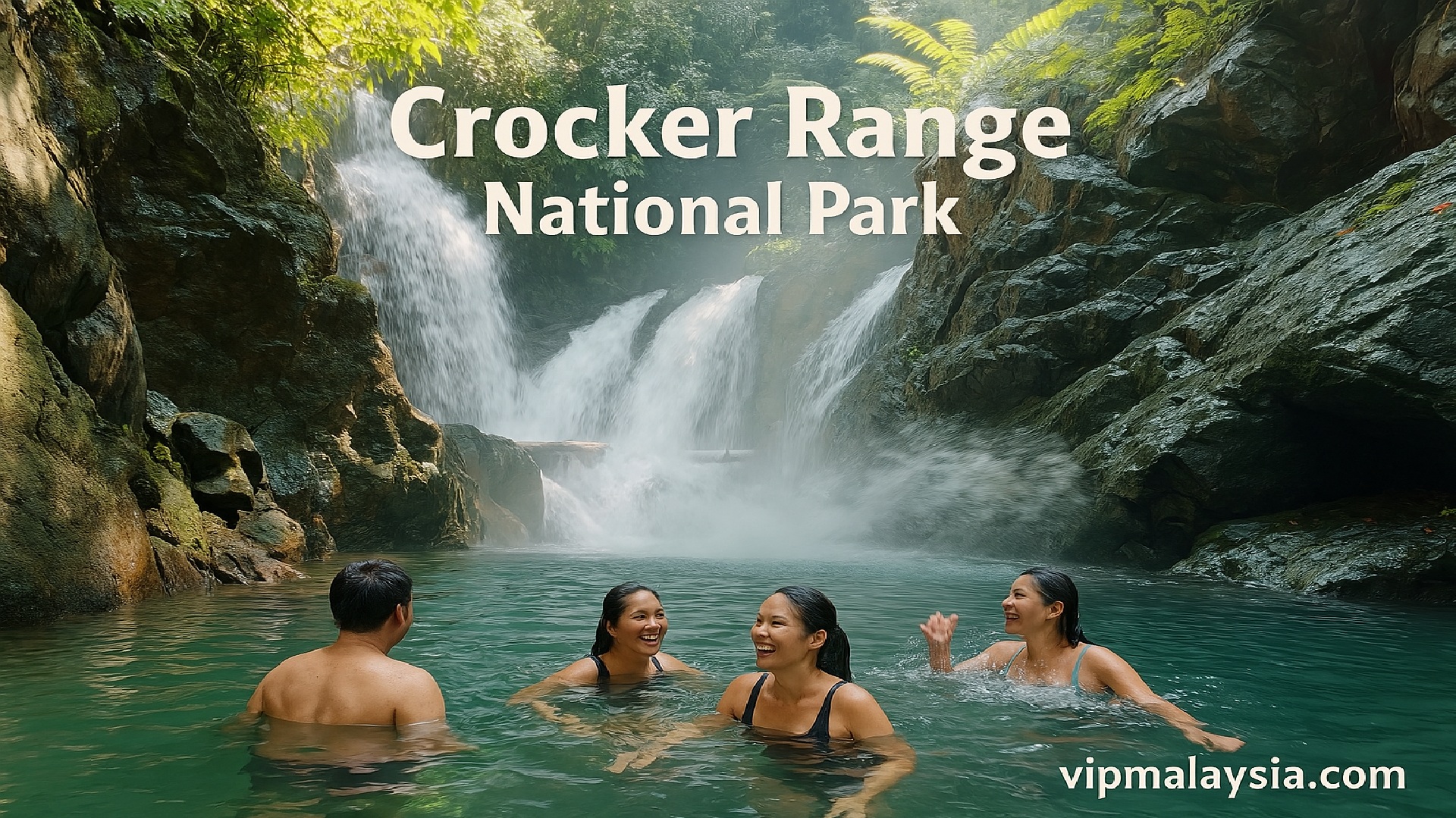
Taman Negara Banjaran Crocker
Nestled on the West Coast of Sabah, Taman Negara Banjaran Crocker is more than Malaysia’s largest park—it’s a UNESCO Biosphere Reserve, an eco-adventure hub, a conservation success story, and a healing escape for outdoor lovers. From rafting wild rivers to spotting the rare Rafflesia and camping beneath montane skies, this protected treasure invites you into nature’s living classroom.
Taman Negara Banjaran Crocker, Sabah’s largest protected area, is a UNESCO Biosphere Reserve and a sanctuary of biodiversity. From trekking the historic Salt Trail to spotting the rare Rafflesia, this eco-adventure hub offers a living classroom of nature, culture, and conservation.
Introduction
Nestled along the western spine of Sabah, Taman Negara Banjaran Crocker spans 139,919 hectares of rugged terrain, montane forests, and river valleys. Established in 1984, it is Malaysia’s largest terrestrial park and a cornerstone of conservation. In 2014, UNESCO recognized it as part of the Crocker Range Biosphere Reserve, elevating its global importance. Today, the park is not only a refuge for wildlife but also a destination for eco-tourism, cultural encounters, and outdoor adventure.
History
The origins of Taman Negara Banjaran Crocker trace back to Sabah’s post-independence conservation movement. In the early 1980s, rapid logging and agricultural expansion threatened the ecological balance of the Crocker Range. Recognizing its role as a water catchment for rivers like the Papar and Padas, the Sabah government gazetted the area in 1984.
Over the decades, the park became a focal point for biodiversity research. In 1996, the Fernarium was established to showcase Sabah’s native fern species, and by 2004, the Crocker Nature Centre opened to support environmental education. The UNESCO designation in 2014 marked a milestone, expanding the protected area into a biosphere reserve of 350,584 hectares. This recognition highlighted not only its ecological value but also its cultural significance, as indigenous Dusun and Murut communities continue to live in buffer zones, practicing sustainable agriculture and traditional crafts.
How to Get There
From Kota Kinabalu, visitors can reach Crocker Range National Park by taxi or bus. A taxi to Keningau Taxi Station costs around RM120, while a taxi directly to the Crocker Range Station is about RM40. Alternatively, buses depart from Merdeka Field to Keningau for RM16. The Tung Ma Bus service runs three times daily at 8:00 am, 12:00 pm, and 4:00 pm, with fares of RM20 each way.
From Keningau Town, the Crocker Range Park Headquarters is just 15 km away, roughly a 30‑minute drive by car. This proximity makes Keningau a convenient base for visitors, especially those planning to explore substations such as Gunung Alab, Mahua, or the Rafflesia Plot. Local taxis and private cars are the most common transport options, and signage along the road helps guide travelers to the park entrance .
Highlights
Immense Biodiversity
The park shelters ecosystems ranging from lowland dipterocarp forests to cloud forests. Endemic orchids, pitcher plants, and the giant Rafflesia bloom thrive here. Mammals include orangutans, gibbons, tarsiers, and clouded leopards. Birdwatchers can spot hornbills, bulbuls, and the Asian paradise flycatcher. Insects are equally diverse, with rhinoceros beetles and stick insects drawing attention at the insectarium.
UNESCO Biosphere Recognition
The biosphere reserve designation in 2014 created three zones: the core protected park, buffer zones with community settlements, and transition areas for sustainable development. This model integrates conservation with human livelihood, making Crocker Range a living example of coexistence between nature and culture.
Attractions
Birdwatching Wonderland
Crocker Range is a paradise for ornithologists. The montane forests host over 265 bird species, including the Bornean barbet, chestnut munia, and whitehead’s broadbill. Early mornings are best for sightings, with misty canopies alive with calls.
Salt Trail Trekking
The Salt Trail is a 34 km route once used by villagers to trade salt and rice. Today, trekkers experience deep jungle immersion, river crossings, and village homestays. The trail connects Inobong Substation to Tikolod, offering cultural encounters with Dusun communities.
Insectarium Encounters
The insectarium at park headquarters educates visitors about Sabah’s insect diversity. Displays include stag beetles, leaf insects, and luminous fireflies, making it a favorite for families and students.
Climb Iconic Peaks and Trails
- Minduk Sirung: A 12 km trek from Gunung Alab Substation to Mahua Waterfall, offering mossy forest landscapes. Climbers receive an official tag and certificate.
- Mount Tinutudan: Less publicized but officially recognized, requiring guides and offering panoramic views of the Crocker spine.
Things to Do
The Fernarium
Established in 1996 and opened in 2004, the fernarium spans 5 hectares and showcases over 55 native fern species. It is one of the most diverse fern gardens in Southeast Asia, serving as both a research site and visitor attraction.
The Crocker Nature Centre
Opened in 2004, the centre features a gallery, lecture hall, and eco-programmes. Activities include composting workshops, nature games, and conservation talks, making it a hub for environmental education.
Observation Tower
Located near Keningau, the tower offers sweeping views of the town and surrounding valleys. Sunrise and dusk are particularly stunning, with golden light illuminating the Crocker Range ridges.
Trekking and Adventure
Camping and Shelter Sites
Visitors can camp at headquarters, Inobong, and Mahua. Facilities include shelters, fire pits, and basic amenities, allowing immersion in rainforest nights under starry skies.
Inobong
The Inobong Substation is situated in the Penampang district and functions as both a visitor and research station. It is historically significant as the starting point of the Salt Trail, a 34 km jungle route once used by villagers to trade salt and rice. Today, trekkers begin their journey here, experiencing river crossings, dense rainforest immersion, and cultural encounters with Dusun communities along the way. Facilities include a visitor registration office, chalets, and trails leading to waterfalls and longer routes that form part of the Salt Trail.
Beyond trekking, Inobong offers panoramic views of Kota Kinabalu and the offshore islands from its vantage points. The surrounding montane forest is home to hornbills, bulbuls, and orchids, making it a hotspot for biodiversity enthusiasts. Visitors often highlight the cultural richness of nearby villages, where traditional Dusun practices such as bamboo weaving and subsistence farming are still preserved. This blend of natural and cultural heritage makes Inobong a vital entry point for eco‑tourism in Crocker Range .
Mahua
The Mahua Substation, located in Tambunan district, is best known for the Mahua Waterfall, a 17‑meter cascade that falls into a 1.3 m deep pool. It is one of the most accessible attractions within Crocker Range Park, situated about 16 km from Tambunan town and 8 km from Kg. Patau. Facilities include basic shelters, picnic areas, and camping grounds, making it popular with both local families and international tourists. The substation sits at about 1,000 meters above sea level, surrounded by tropical forest.
Mahua also serves as an educational hub, with ranger‑led tours explaining the ecological importance of the surrounding forest. The area is rich in biodiversity, including ferns, orchids, and insects that thrive in the moist environment. Visitors often describe Mahua as a serene escape, ideal for photography and relaxation, while still offering adventure through nearby trekking routes that connect deeper into the Crocker Range. Its accessibility and facilities make Mahua one of the most visited substations in the park, attracting around 1,600 visitors monthly .
Hostel Accommodation
The park offers dormitories for up to 36 guests and two king-bed rooms. Shared kitchens and lounges foster a communal atmosphere for trekkers and researchers.
River Adventures
While rafting is popular in the nearby Padas River, it complements the Crocker Range experience. The river’s Grade III–IV rapids attract thrill-seekers, often combined with park trekking itineraries.
Padas River
The Padas River flows through the interior of southwestern Sabah and is renowned for its white-water rafting adventures. Situated near Beaufort and Tenom, it is accessible only by train, adding to its distinctive charm. The rafting stretch covers about 9 km of Grade III–IV rapids, with seven named rapids such as Merry-Go-Round, Break Point, Scooby Doo, Cobra, Curve, Lambada, and Head Hunter. These rapids provide varying levels of challenge, making the river suitable for thrill-seekers looking for one of Southeast Asia’s most exhilarating rafting experiences.
Beyond the adrenaline rush, the Padas River offers scenic views of lush rainforest and glimpses of rural life along the railway. The journey itself is part of the adventure, as visitors ride the historic train from Beaufort or Tenom to reach the rafting stations at Pangi or Rayoh. This railway is the oldest in Borneo and passes through Murut tribal areas, adding cultural depth to the trip. Rafting operators typically provide safety briefings, guides, and riverside lunches, ensuring both excitement and comfort. The combination of natural beauty, cultural heritage, and thrilling rapids makes the Padas River a highlight of Crocker Range’s adventure tourism.
Major Trails
The three major trails in Taman Negara Banjaran Crocker are the Salt Trail, Minduk Sirung Trail, and Mount Tinutudan climb — each offering unique jungle trekking experiences with cultural immersion, biodiversity, and challenging terrain.
Salt Trail
The Salt Trail is a historic 34 km jungle route once used by the Dusun and Murut people to trade salt and rice between remote villages and the west coast. Today, it is a multi‑day trek (3–4 days) starting at the Inobong Substation and ending at Kg. Tikolod, passing through villages like Terian, Buayan, and Kionop. Trekkers encounter river crossings, suspension bridges, and homestays, making it both a cultural and ecological journey through dense rainforest and traditional communities.
Minduk Sirung Trail
The Minduk Sirung Trail connects Gunung Alab Substation to Mahua Waterfall, spanning about 12 km through mossy montane forest. Rising to ~2,050 m, it is a point‑to‑point trek that takes 7–8 hours, featuring root‑covered jungle paths, scrambles, and fixed ropes. The trail is known for its pristine biodiversity, panoramic viewpoints, and technical terrain, making it a moderately hard hike that rewards trekkers with the Mahua cascade at the finish.
Mount Tinutudan Trail
The Mount Tinutudan climb is another adventure route within Crocker Range, offering a challenging ascent with steep sections and rewarding views. The trail requires permits and guides, with fees set by Sabah Parks. It is less frequented than the Salt Trail or Minduk Sirung, making it ideal for trekkers seeking solitude and immersion in untouched rainforest. The climb highlights the rugged terrain of Crocker Range and contributes to its reputation as an eco‑adventure hub.
Nearby Attractions
Gunung Alab
The Gunung Alab Substation is a high-altitude trekking zone located within Crocker Range National Park. Situated at approximately 1,800 meters above sea level, it is known for its mossy forests, cool climate, and panoramic views of the Crocker spine. The substation serves as a gateway for trails such as Minduk Sirung, which connects Gunung Alab to Mahua Waterfall. Trekkers often highlight the unique flora here, including orchids, pitcher plants, and ferns that thrive in the misty montane environment.
Beyond trekking, Gunung Alab is a hub for eco-tourism and research. The area provides facilities for hikers, including registration offices and basic shelters. Birdwatchers frequent the substation to spot endemic species such as the Bornean barbet and Whitehead’s broadbill. Its accessibility from Kota Kinabalu makes it a popular starting point for both short hikes and multi-day treks deeper into Crocker Range.
Mahua Waterfall
The Mahua Waterfall, located near Tambunan, is one of the most popular attractions in Crocker Range. This 17-meter cascade drops into a clear pool surrounded by lush jungle, making it a favorite picnic and photography spot. The site is easily accessible, with facilities such as picnic shelters, camping grounds, and ranger stations. Its proximity to Tambunan town makes it a convenient destination for families and day-trippers.
Visitors often describe Mahua as a serene escape, ideal for relaxation and nature immersion. The waterfall is also part of educational tours organized by Sabah Parks, where guides explain the ecological importance of the surrounding forest. The biodiversity here includes ferns, orchids, and insects that thrive in the moist environment, making Mahua both a recreational and educational highlight of Crocker Range.
Rafflesia Plot
The Rafflesia Plot within Crocker Range is managed by Sabah Parks and offers visitors the chance to witness the world’s largest flower. The Rafflesia bloom is unpredictable, but when it occurs, it draws crowds eager to see its massive petals and unique structure. The plot is carefully monitored by park rangers to protect the delicate ecosystem and ensure sustainable tourism.
Beyond the spectacle of the bloom, the Rafflesia Plot serves as an educational site. Visitors learn about the plant’s parasitic nature, its role in the forest ecosystem, and the conservation challenges it faces. The site underscores Crocker Range’s biodiversity and highlights the importance of preserving rare species for future generations.
Inobong Substation
The Inobong Substation, located near Penampang, is the starting point of the historic Salt Trail. This 34 km jungle route was once used by villagers to trade salt and rice, and today it offers trekkers deep immersion into rainforest landscapes. Facilities at Inobong include registration offices, chalets, and access to guides who are essential for navigating the rugged terrain.
In addition to trekking, Inobong provides opportunities for birdwatching and cultural encounters. The surrounding montane forest is home to hornbills, bulbuls, and orchids, while nearby villages showcase traditional Dusun practices such as bamboo weaving and subsistence farming. This combination of natural and cultural heritage makes Inobong a vital eco-tourism hub in Crocker Range.
Mount Kinabalu
Located near Crocker Range, Mount Kinabalu is Southeast Asia’s tallest peak at 4,095 meters and a UNESCO World Heritage Site. It is often combined with Crocker Range itineraries, as both parks are managed by Sabah Parks and highlight the region’s ecological richness. Kinabalu is famous for its diverse flora, including orchids, pitcher plants, and the rare Nepenthes rajah.
Beyond its natural beauty, Mount Kinabalu is a cultural icon for the Kadazan-Dusun people, who regard it as sacred. Climbers from around the world attempt its summit, making it one of Malaysia’s most visited natural attractions. Its proximity to Crocker Range allows travelers to experience both high-altitude adventure and rainforest immersion in a single trip.
CRBR Buffer Zones
The buffer zones of the Crocker Range Biosphere Reserve (CRBR) surround the core protected areas and serve as transitional spaces where conservation and community life intersect. These zones are home to diverse ecosystems, including lowland forests, rivers, and agricultural landscapes that support species such as hornbills, orchids, and amphibians. They act as ecological corridors, allowing wildlife to move between habitats while reducing pressure on the strictly protected core zones.
Equally important, the buffer zones are inhabited by rural communities, primarily the Dusun and Murut peoples, who practice traditional farming, bamboo weaving, and small-scale agroforestry. These communities play a vital role in sustainable resource management, balancing livelihoods with conservation goals. Programs led by Sabah Parks and UNESCO encourage eco-tourism, organic farming, and cultural preservation, ensuring that biodiversity protection goes hand-in-hand with improving local quality of life. This integration of nature and community makes the CRBR buffer zones a living example of how conservation can support rural resilience.
Conclusion
Taman Negara Banjaran Crocker is Malaysia’s largest terrestrial park, a UNESCO Biosphere Reserve, and a biodiversity hotspot. It offers trekking, birdwatching, cultural encounters, and educational facilities, making it a destination for both adventure seekers and conservation enthusiasts. Its integration of indigenous communities into sustainable practices sets it apart as a model of coexistence.
Summary
- Attraction: Taman Negara Banjaran Crocker
- Location: #Sabah
- Attraction Type: #NationalPark
Quick Info
| Category | Description |
|---|---|
| Name | Taman Negara Banjaran Crocker |
| Location | West Coast of Sabah, Borneo |
| Established | 1984 |
| Biosphere Recognition | UNESCO Crocker Range Biosphere Reserve (June 2014) |
| Total Area | 139,919 ha (Park) / 350,584 ha (Biosphere) |
| Elevation | ~1,000 m above sea level (HQ near Keningau) |
| Forest Types | Lowland rainforest, montane forest, cloud forest |
| Flora | 229 fern species, Rafflesia sites, diverse plant zones |
| Fauna | 400+ insect species, hornbills, gibbons, endemic birds |
| Key Activities | Rafting, trekking, birding, jungle camping, nature education |
| Adventure Trails | 34 km Salt Trail, Minduk Sirung Trail, Mount Tinutudan climb |
| Accommodation | Dorms, hostels, campsites, chalets (planned) |
| Facilities | Insectarium, fern garden, gallery, tower, lecture room |
| Opening Hours | 8:00 AM – 5:00 PM (Daily) |
| Entry Fees | Malaysians: RM6 adults, RM5 teens, children free; International: RM20 adults, RM12 teens |
| Special Sites | Fern Garden, Rafflesia Plot, Insectarium |
| Nearby Town | Keningau (14 km from HQ) |
| Transport Access | Bus, taxi, or private car from Kota Kinabalu |
| Substations | Mahua, Gunung Alab, Inobong, Ulu Kimanis, Buayan, Melalap, Ulu Membakut |
| Contact HQ | Block H, Level 1–5, Lot 45 & 46, KK Times Square, Sabah |
| Phone | +6088-523500 |
| info@sabahparks.org.my |
Entrance Fees
| Category | Fee |
|---|---|
| International aged 18 years old and above | RM 20 / person / day |
| International aged 17 years old and below | RM 12 / person / day |
| Malaysian aged 18 years old and above | RM 6 / person / day |
| Malaysian aged 13 to 17 years old | RM 5 / person / day |
| Malaysian aged 12 & below, 60+ & PWD | Free of charge |
Rafflesia Blooming Observation Fee
| Category | Fee |
|---|---|
| International (all categories) | RM 30 / person / day |
| Malaysian (all categories) | RM 15 / person / day |
Minduk Sirung Trail – Gunung Alab Substation
| # | Particulars | 18 Years & Above | 17 Years & Below | Remarks |
|---|---|---|---|---|
| 01 | Minduk Sirung (Malaysian) | RM 40 | RM 20 | Includes tag & cert |
| 02 | Minduk Sirung (International) | RM 100 | RM 50 | Includes tag & cert |
| 03 | Insurance | RM 7 / day | — | |
| 04 | Mountain Guide | RM 150 / day / 5 pax | ||
Mount Tinutudan Climbing Fees
| # | Particulars | 18 Years & Above | 17 Years & Below | Remarks |
|---|---|---|---|---|
| 01 | Mount Tinutudan (Malaysian) | RM 40 | RM 20 | Includes tag & cert |
| 02 | Mount Tinutudan (International) | RM 100 | RM 50 | Includes tag & cert |
| 03 | Insurance | RM 7 / day | — | |
| 04 | Mountain Guide | RM 150 / day / 3 pax | ||
Visitor Reviews
Johan Kruseman, Netherlands – ★★★★☆ “I backpacked through Crocker Range in April 2026. The humidity was intense, and leeches were everywhere, but the solitude was worth it. Unlike Kinabalu Park, this place feels raw and untamed. Facilities are basic, sometimes closed, but camping under the cloud forest ridges was unforgettable. Birdlife was abundant, and I spotted hornbills near the trail.”
Jacob Anak Salim, Borneo – ★★★★★ “Crocker Range is Sabah’s underrated giant. The air is cool, the forest alive with calls and mist rolling over ridges. It’s not polished—no glamping or fancy resorts—but that’s the charm. I loved hearing insects hum and spotting orchids along the trail. The drive through Kimanis-Keningau trunk road was scenic but rough, with potholes after rain. Still, the raw jungle vibe makes it special.”
Al Mustafa Kiting, Sabah – ★★★★☆ “Visited Mahua Waterfall in Tambunan, and it was stunning. The cascade is refreshing, perfect after a hike. The road conditions were challenging, especially deeper into Inobong, but manageable with a careful drive. The observation tower near Keningau gave breathtaking views at dusk. Facilities are simple, so bring your own supplies.”
Mimi Sadok, Sabah – ★★★★★ “I often camp in Crocker Range, and it’s always rewarding. The insectarium is fascinating, especially for kids, with beetles and stick insects. Registration at the park office is mandatory, and I appreciate the safety measures. The Salt Trail trek connects you with local Dusun villages, and homestays add cultural depth. It’s a place for nature lovers, not luxury seekers.”