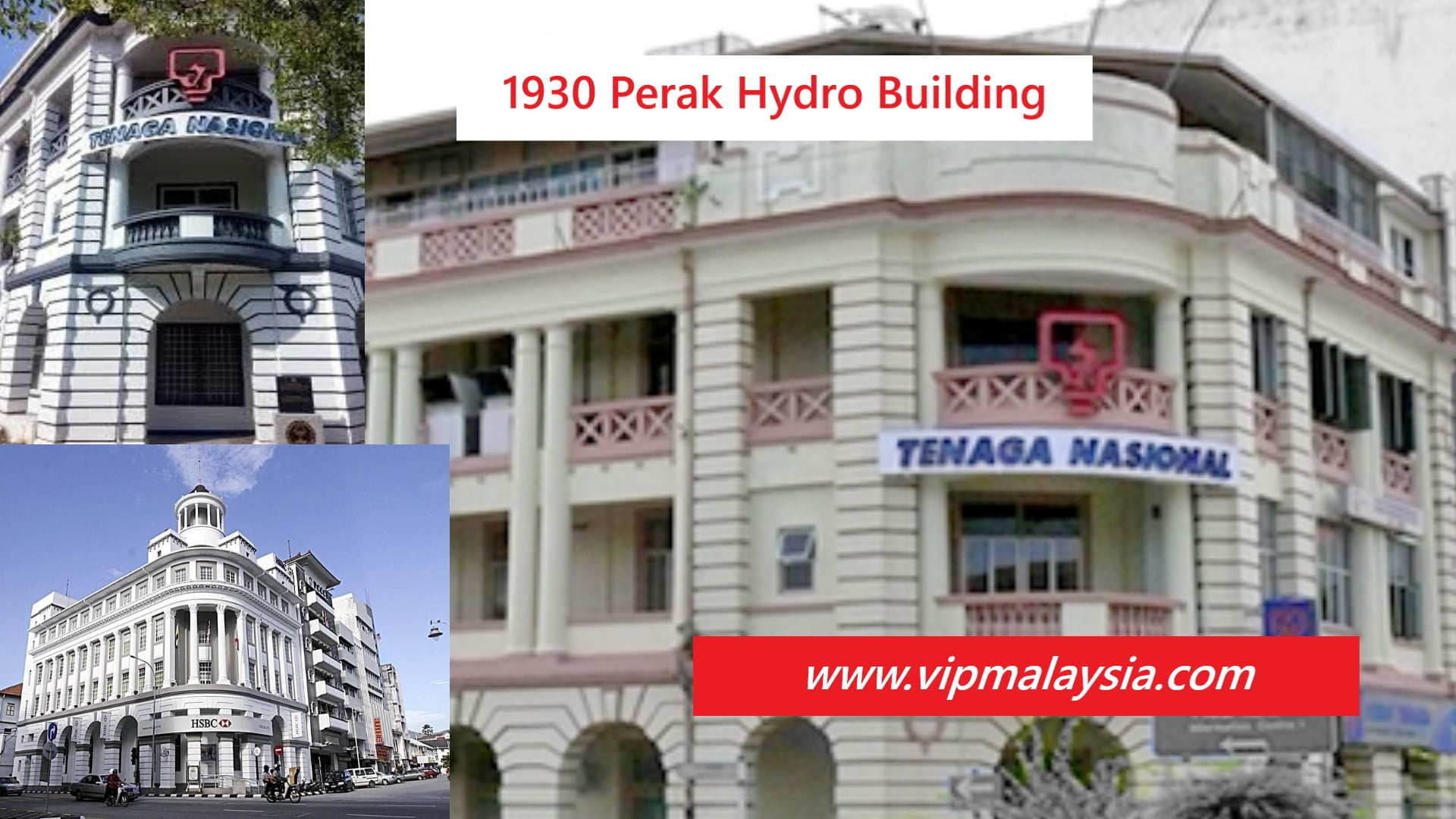
Perak Hydro Building
Perak Hydro Building, located in Ipoh, Perak, is one of Malaysia’s most impressive Neo-Renaissance structures, featuring grand Greek and Roman-inspired columns. Originally built in 1930, this building served as the headquarters for the Perak River Hydro-Electric Power Company, supplying electricity to Malaya’s thriving tin mining industry. Today, the building is occupied by Tenaga Nasional Berhad (TNB), yet its historical charm and architectural grandeur remain untouched.
Introduction
The Perak Hydro Building stands as one of Ipoh’s most iconic landmarks, blending European Neo-Renaissance architecture with Malaysia’s industrial past. Built in the 1930s, it was the headquarters of the Perak River Hydro-Electric Company, which supplied electricity to the booming tin-mining industry in the Kinta Valley. Today, the building continues to serve as a symbol of progress, housing Tenaga Nasional Berhad (TNB). For history buffs, architecture enthusiasts, and adventure seekers, this site offers a fascinating journey into Malaysia’s colonial and industrial heritage.
History
The Birth of Perak Hydro Power
The Perak River Hydro-Electric Company was established in London in 1926, with the mission of electrifying Malaya’s tin industry. At the time, tin mining was the backbone of the economy, and the company’s hydroelectric projects transformed industrial operations. By the 1930s, it had become the largest electricity supplier in Malaya, powering dredges and mines across the Kinta Valley. This electrification not only boosted productivity but also symbolized Malaya’s entry into modern industrialization.
Architectural Marvel
Constructed in 1930, the Perak Hydro Building embodies Neo-Renaissance design, with grand Greek and Roman columns and intricate European detailing. Its façade reflects the influence of colonial architecture, while its interior was designed to accommodate administrative offices and technical operations. Despite the passage of time, the building remains structurally sound and continues to serve as TNB’s office, preserving its legacy as a hub of energy and progress.
Neo-Renaissance Elements
The building’s design showcases symmetry, proportion, and classical motifs. The colossal columns at the entrance evoke the grandeur of European civic buildings, while decorative cornices and arched windows highlight its Renaissance inspiration. These elements make the Perak Hydro Building not only a functional space but also an architectural statement of prestige and authority.
Cultural Festivals
Visitors can time their trip to coincide with Ipoh’s cultural festivals, such as the Perak Festival of Arts or local Chinese New Year celebrations. These events showcase traditional dances, music, and culinary delights, enriching the travel experience.
Visitor Facilities
The Perak Hydro Building area is well-connected, with nearby cafés, hotels, and transport links. Facilities for tourists include guided heritage tours, photography spots, and easy access to Ipoh’s vibrant food scene, famous for dishes like Ipoh white coffee and bean sprout chicken.
Cafés, Hotels, and Transport Links
| Category | Nearby Options |
|---|---|
| Cafés | Aud’s Cafe – Cozy breakfast spot with local hospitality; Above Gastrobar – Rooftop dining with skyline views; Plan B Restaurant – Vibrant Asian fusion flavors; Durbar at FMS – Historic Western & Asian fusion restaurant; Old Town Kitchen Cafe – Authentic Malaysian cuisine |
| Hotels | Novotel Taiping Perak – Modern 4-star hotel near Taiping Lake Gardens; Louis Hotel – Budget-friendly with cheerful staff; Flemington Hotel – Comfortable rooms with lake views; Legend Inn Taiping – Conveniently located in town center; Hotel Furama – Simple but well-rated accommodation |
| Transport Links | Ipoh Railway Station – Colonial landmark offering train services to KL and Penang; Local Bus Terminals – Connect Ipoh with nearby towns; Grab & Taxi Services – Widely available for city travel; PLUS Expressway Access – Easy road connectivity to Kuala Lumpur and Penang (general verified info) |
Highlights
Industrial Progress and Tin Mining Legacy
The building symbolizes the electrification of Malaya’s tin industry. It powered dredges in the Kinta Valley, enabling large-scale mining operations that placed Malaya among the world’s top tin producers. This industrial progress shaped Ipoh’s identity as a mining town and contributed to Malaysia’s economic development.
Photography Hotspot
With its striking façade and historical charm, the Perak Hydro Building is a favorite among photographers. The interplay of light and shadow on its columns creates dramatic visuals, while its central location makes it easy to capture alongside other colonial landmarks.
Since the building functions as an office, entry inside is usually restricted, but photography and sightseeing outside are allowed.
Nearby Attractions
Ipoh Railway Station
Known as the “Taj Mahal of Ipoh,” the railway station is a magnificent British colonial structure featuring Moorish and Victorian influences. Its white domes and arches make it one of the most photographed landmarks in the city.
Birch Memorial Clock Tower
Built in 1909 to commemorate James W.W. Birch, the first British Resident of Perak, the clock tower stands as a historical tribute. Its panels depict figures from world history, offering a glimpse into colonial perspectives of the time.
Concubine Lane
A bustling heritage street, Concubine Lane is lined with shops, cafés, and stalls selling local crafts. It offers visitors a chance to experience Ipoh’s cultural vibrancy while exploring its historic alleys.
Trekking and Adventure
Exploring Ipoh’s Heritage Trails
Ipoh offers heritage trails that connect landmarks like the Perak Hydro Building, Railway Station, and old shophouses. Walking these trails allows visitors to immerse themselves in the city’s colonial past while enjoying its modern charm.
Nearby Towns and Natural Escapes
Beyond Ipoh, towns like Kampar and Taiping provide additional historical and natural attractions. Kampar is home to the Kinta Tin Mining Museum, while Taiping boasts the country’s oldest lake gardens and a rich colonial legacy.
The Kinta Tin Mining Museum, officially known as the Kinta Tin Mining (Gravel Pump) Museum, is located in Kampar, Perak. Established in 2012, it was founded by former tin miner Tan Sri Hew See Tong to commemorate the tin mining industry that once made the Kinta Valley one of the richest tin-producing regions in the world. The museum focuses on the gravel pump method of extraction, showcasing outdoor exhibits such as heavy machinery, gravel pumps, and tractors, alongside indoor displays of mining tools, dioramas, and historical photographs. It serves as both an educational site and a tribute to the miners who worked under challenging conditions, preserving Malaysia’s tin mining legacy for future generations.
Wildlife and Outdoor Activities
The surrounding limestone hills and caves near Ipoh are habitats for diverse wildlife, including hornbills, macaques, and rare orchids. Trekking enthusiasts can explore Gua Tempurung, one of Malaysia’s largest limestone caves, offering adventure and geological wonders.
Conclusion
Perak Hydro Building isn’t just an architectural gem—it’s a historical icon, representing Malaysia’s industrial progress and colonial craftsmanship. Whether you’re admiring its Neo-Renaissance beauty, learning about Malaya’s energy history, or exploring Ipoh’s heritage, this building offers an immersive experience of history and culture.
Step into Malaysia’s industrial past—visit Perak Hydro Building in Ipoh today!
Summary
- Attraction: #PerakHydroBuilding
- Location: #Perak
- Attraction Type: #Building
- Source: tourismperakmalaysia.com, http://ipohheritage.mbi.gov.my/index.php/perak-hydro-building/
- Why Visit:
- Neo-Renaissance architecture – Showcasing colossal columns and intricate European designs
- Symbol of industrial progress – Played a key role in powering tin mines in the Kinta Valley
- Prime location in Ipoh – A great stop for history buffs and architecture enthusiasts
Quick Info
| Attribute | Details |
|---|---|
| Name | Perak Hydro Building, Ipoh |
| Address | 2, Jalan Dato Maharajalela, 30000 Ipoh, Perak |
| GPS Position | 4.5972° N, 101.0793° E |
| State | Perak |
| Date Established | 1930 |
| Facility Type | Historical Building & Current Tenaga Nasional Berhad (TNB) Office |
| Special Attractions | Neo-Renaissance architecture, Greek-inspired columns, industrial heritage linked to tin mining |
| Nearby Attractions | Ipoh Railway Station, Birch Memorial Clock Tower, Concubine Lane |
| Accessibility | Easily reached via Ipoh Railway Station, local buses, taxis, and PLUS Expressway |
| Best Time to Visit | Morning or late afternoon (best for photography and cooler weather) |
| Contact | Currently occupied and managed by Tenaga Nasional Berhad (TNB) TNB Careline (Malaysia): 1300 88 5454 |
Visitor Reviews
Angeline Vogue, Kuala Lumpur – ★★★★★ “I was amazed by the grandeur of the Perak Hydro Building. The columns and detailing are stunning, and learning about its role in powering the tin industry gave me a deeper appreciation of Ipoh’s history. A must-see for architecture lovers.”
Periasamy Merrisamy, Penang – ★★★★☆ “The building is impressive and well-preserved. I enjoyed walking around the heritage trail nearby. It would be great if there were more guided tours inside, but overall, a fantastic experience.”
Abdul Wahab Bin Walid, Singapore – ★★★★★ “Visiting the Perak Hydro Building was the highlight of my trip to Ipoh. The mix of colonial architecture and industrial history is fascinating. Plus, it’s close to other attractions like the railway station and Concubine Lane.”
Chai Singh Deo, Johor Bahru – ★★★★★ “As a history buff, I found the Perak Hydro Building captivating. The story of how it powered the tin mines is incredible. The photography opportunities are endless, especially during sunset.”