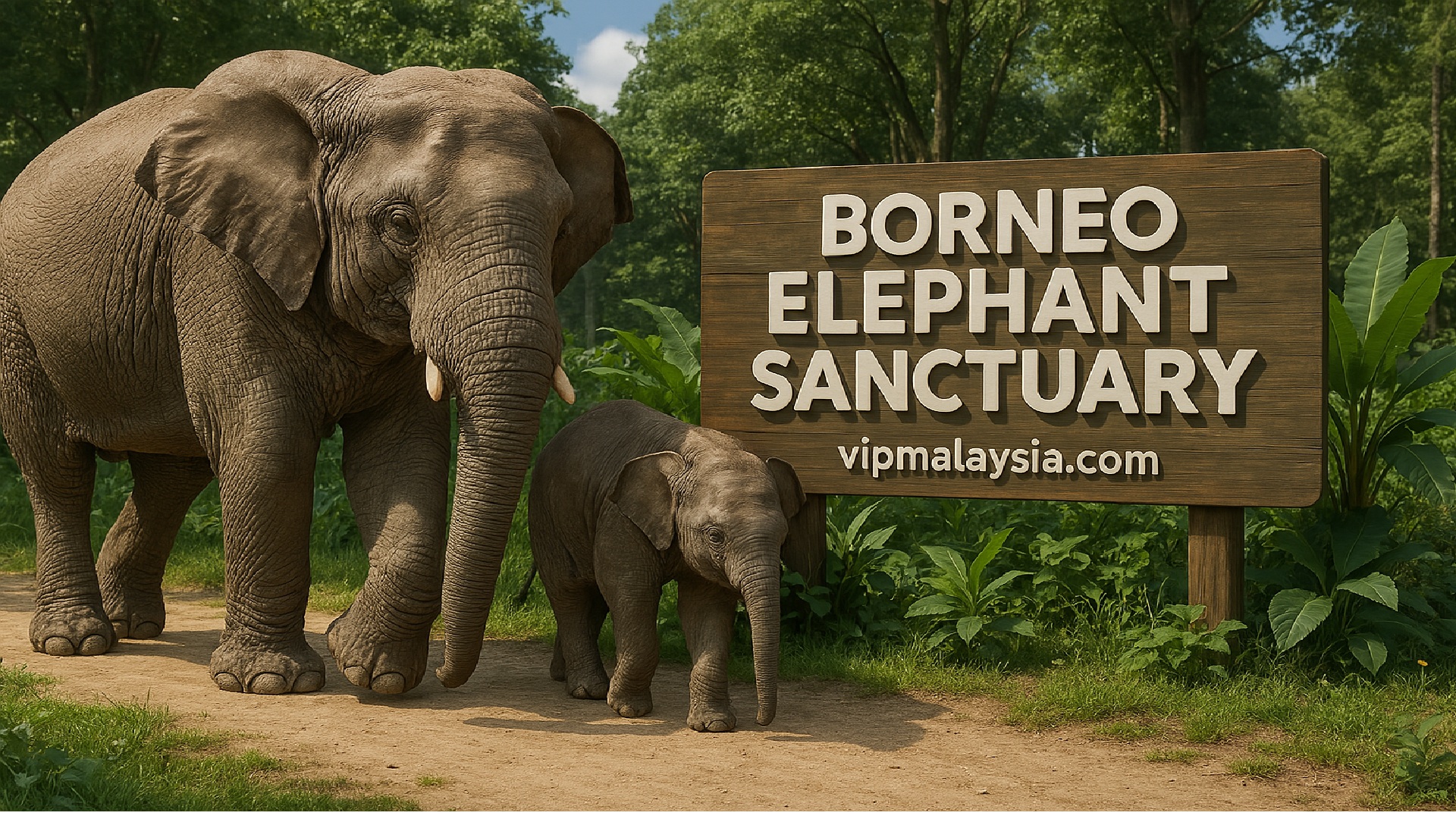
Borneo Elephant Sanctuary
Nestled deep within the heart of Sabah’s Kinabatangan Wildlife Sanctuary lies a haven of hope—Borneo Elephant Sanctuary (BES). Home to the endangered and gentle Bornean elephants, this sanctuary is not just a place—it’s a mission to rescue, rehabilitate, and reconnect nature’s giants to the wild. Explore how BES is changing lives, one elephant at a time.
Introduction
Nestled in the lush Kinabatangan floodplains of Sabah, Malaysia, the Borneo Elephant Sanctuary stands as a beacon of hope for the endangered Bornean elephant. This sanctuary is not merely a facility—it is a mission-driven initiative that combines wildlife rescue, habitat restoration, and education. Visitors are welcomed into a transformative experience where conservation is not just observed but actively lived.
History
The origins of BES trace back to the early 2000s, when the late Datuk Patrick @ Mahadi Andau envisioned a dedicated refuge for elephants suffering from habitat loss and human–elephant conflict. His vision materialized through the collaboration of the Sabah Wildlife Department and the Borneo Conservation Trust, with international support from Japanese partners.
Phase 1 of the sanctuary began on October 1, 2012, and was completed by June 28, 2013. This milestone marked the establishment of a 25-hectare developed zone within the larger 1,214-hectare sanctuary. The facility was designed to provide medical care, rehabilitation, and eventual release of elephants into connected forest corridors. Over the years, BES has grown into a cornerstone of Malaysia’s conservation strategy, contributing to the Bornean Elephant Action Plan 2020–2029.
Highlights
Rescue and Rehabilitation
The sanctuary specializes in rescuing elephants injured by snares, accidents, or human conflict. Specialized veterinary care ensures that elephants regain strength before being reintroduced into the wild.
Habitat Corridors
BES plays a crucial role in restoring ecological corridors that connect fragmented forests. These corridors allow elephants to roam freely, reducing stress and ensuring sustainable home ranges.
Scientific Research
Researchers at BES study the effects of fragmented forests on elephant health and behavior. Findings show that isolation increases risks and stress, and this research helped shape the Bornean Elephant Action Plan 2020–2029, a national strategy for elephant conservation.
Awareness, Education & Community Outreach
BES works closely with local communities, schools, and stakeholders to build support for peaceful coexistence. Educational programs raise awareness about conservation challenges, while outreach activities encourage sustainable practices that benefit both people and wildlife.
Sustainable Infrastructure Development
Supported by Malaysia’s Rolling Plan 4 under the 10th Malaysia Plan, BES integrates eco-friendly infrastructure and global partnerships. This ensures that facilities remain sustainable while expanding capacity for elephant care and research.
Things to Do
Guided Tours
Visitors can join guided tours led by conservation experts. These tours provide insights into elephant rescue operations, habitat restoration, and ongoing research.
Community Engagement
Guests are encouraged to participate in outreach programs, including tree planting and wildlife awareness workshops.
Cultural Experiences
Nearby villages host cultural festivals showcasing traditional dances, crafts, and local cuisine, offering a deeper connection to Sabah’s heritage.
Trekking and Adventure
Jungle Treks
The Kinabatangan Wildlife Sanctuary was gazetted in 1997 under Sabah’s Wildlife Conservation Enactment and is recognized as Malaysia’s largest RAMSAR site. Covering 26,000 hectares, it is home to diverse habitats including riverine forests, oxbow lakes, and mangroves. Visitors can expect to encounter Bornean pygmy elephants, orangutans, proboscis monkeys, saltwater crocodiles, and over 200 bird species, making it one of Southeast Asia’s most biodiverse regions.
Address and Contact Information
The sanctuary’s visitor hub is the Danau Girang Field Centre, located at Lot 6, Lower Kinabatangan Wildlife Sanctuary, Sabah, Malaysia. For inquiries, visitors can call +60 88-341 527 or email goossensbr@cardiff.ac.uk. The center provides guided tours, research opportunities, and visitor facilities.
Visitor Experience and Activities
The sanctuary offers river cruises, jungle trekking, birdwatching, and wildlife photography, with tours typically running from 6:00 AM to 6:00 PM year-round. River cruises at dawn or dusk are especially popular, offering sightings of elephants feeding along the banks, hornbills in flight, and crocodiles lurking in the water. Cultural experiences in nearby villages, such as Sukau and Bilit, allow visitors to engage with indigenous communities and learn about conservation efforts.
River Cruises
The Sungai Kinabatangan stretches approximately 560–563 km, making it the longest river in Sabah and the second longest in Malaysia after the Rajang River. Its basin covers 16,795 km², and it flows from the mountains of Tongod District to the Sulu Sea near Sandakan. The river is renowned for its extraordinary biodiversity, with habitats ranging from limestone caves and dipterocarp forests to mangroves and oxbow lakes. Wildlife includes Bornean pygmy elephants, proboscis monkeys, orangutans, saltwater crocodiles, and over 200 bird species, making it one of Southeast Asia’s richest ecosystems.
Address and Accessibility
Visitors typically access Sungai Kinabatangan through the town of Sukau, located along the riverbanks. The sanctuary’s visitor hub is at Lot 6, Lower Kinabatangan Wildlife Sanctuary, Sabah, Malaysia, with inquiries directed to +60 88-341 527. The river is reachable by road from Sandakan, taking about 2–3 hours by car, or by boat along the river itself. This accessibility, combined with eco-lodges such as Sukau Rainforest Lodge and Kinabatangan Riverside Lodge, makes it a popular destination for both short excursions and extended eco-tourism stays.
Visitor Experience and Activities
Travelers to Sungai Kinabatangan often embark on river cruises at dawn or dusk, which provide the best opportunities to spot wildlife in their natural habitats. Jungle trekking along the floodplains offers encounters with rare bird species, while nearby villages such as Sukau and Bilit host cultural experiences, including traditional dances and local cuisine. The river’s unique blend of wildlife and community life makes it a holistic eco-tourism destination, combining conservation with cultural immersion. Eco-lodges along the river also provide guided tours, photography opportunities, and cultural exchanges with the Orang Sungai communities who have lived along the river for centuries.
Nearby Attractions
Sepilok Orangutan Rehabilitation Centre
The Sepilok Orangutan Rehabilitation Centre near Sandakan is one of Sabah’s most recognized conservation projects. Established in the 1960s, it focuses on rescuing and rehabilitating orphaned and injured orangutans before releasing them back into the surrounding forest reserve. Visitors can observe feeding sessions and learn about the challenges orangutans face due to deforestation and human activity, making Sepilok both an educational and inspiring stop for eco-tourists.
Gomantong Caves
The Gomantong Caves, located in the Kinabatangan region, are famous for their limestone formations and for being the largest cave system in the area. They are best known for edible swiftlet nests, which have been harvested for centuries and remain a delicacy in Chinese cuisine. The caves also host large bat colonies, creating a dramatic evening bat exodus that draws visitors, while wildlife such as orangutans and hornbills can often be seen nearby.
Danum Valley Conservation Area
The Danum Valley Conservation Area is a pristine rainforest reserve in Sabah, recognized as one of the most undisturbed lowland dipterocarp forests in Southeast Asia. It is home to rare species such as orangutans, pygmy elephants, and clouded leopards, alongside hundreds of bird species. Visitors can stay at eco-lodges, enjoy guided treks, canopy walks, and night drives, while researchers at the Danum Valley Field Centre continue to study its unique biodiversity.
Conclusion
The Borneo Elephant Sanctuary isn’t just a facility—it’s a force for good, restoring dignity and life to elephants pushed to the brink. As their habitat shrinks and conflicts rise, your visit, donation, or advocacy becomes a vital part of their survival story.
Support BES through donations, volunteering, or partnerships.
Summary
- Attraction: Borneo Elephant Sanctuary
- Location: #Sabah
- Attraction Type: #Wildlife
Quick Info
| Category | Details |
|---|---|
| Name | Borneo Elephant Sanctuary (BES) |
| Location | Lot 8, Kinabatangan Wildlife Sanctuary, Sabah |
| GPS Position | Approx. 5.437°N, 118.250°E |
| Established | Phase 1 began in 2012, completed in 2013 |
| Size | 1,214 hectares (25 hectares developed for facilities) |
| Managing Body | Borneo Conservation Trust & Sabah Wildlife Department |
| Population Supported | Endangered Bornean elephants (Elephas maximus borneensis) |
| Status | Endangered – fewer than 1,500 remain in Sabah |
| Habitat | Lowland dipterocarp forest and Kinabatangan floodplains |
| Goal | Rescue, rehabilitate, and release elephants into connected corridors |
| Master Plan | RM25–30M for BES core facilities; RM50–60M including corridor restoration |
| Programme | Strategic Elephant Rescue & Biodiversity Corridor |
| Partners | Asahiyama Zoo, Saraya Corp, Kirin, NTT Data, and other global supporters |
| Contact Email | bctrust2006@gmail.com |
| Phone Number | +60 88-902 843 |
| Address | Unit 3-2, Lorong Lintas Plaza, 88300 Kota Kinabalu, Sabah |