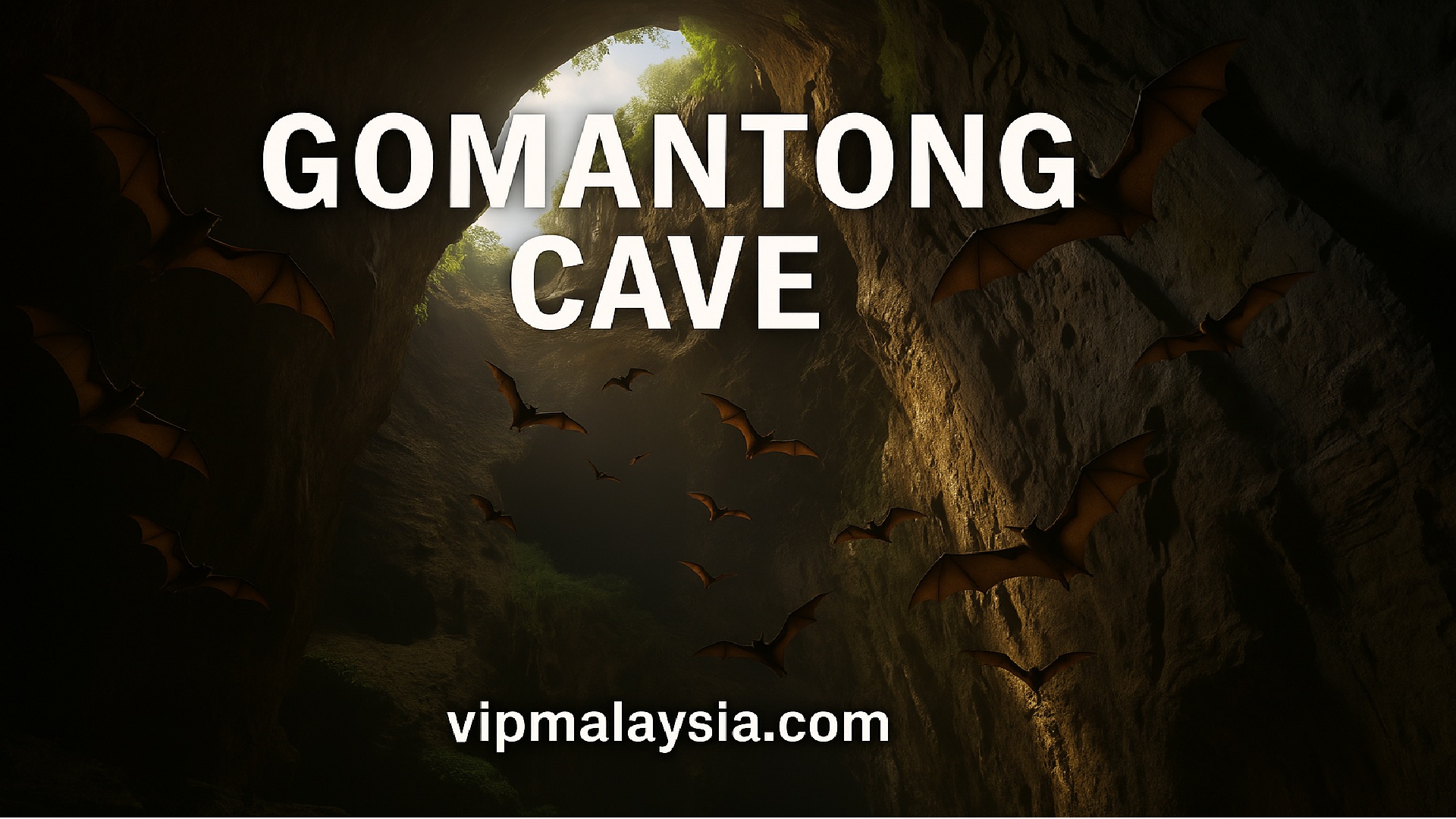
Gua Gomantong, Sabah
Journey into the heart of Borneo’s limestone marvel, Gua Gomantong. Witness ancient cave systems, edible bird nests, and one of nature’s greatest spectacles—the daily bat exodus—in an unforgettable eco-adventure.
Introduction
Deep in Sabah’s Kinabatangan district lies Gua Gomantong, a colossal limestone cave system revered for both its ecological treasures and rich cultural significance. More than just a cave, it’s a living ecosystem, a source of culinary rarity, and a haven for nature lovers seeking unique wildlife encounters.
Journey into the limestone marvel of Gua Gomantong, Sabah, where ancient caves, edible bird nests, and the breathtaking bat exodus create one of Borneo’s most unforgettable eco-adventures.
History
The history of Gua Gomantong stretches back hundreds of years, intertwined with the traditions of the local communities and the economic lifeblood of Sabah. The caves have long been associated with the harvesting of edible bird nests, a practice believed to date back to the 13th century. These nests, crafted by swiftlets using their saliva, became a prized delicacy in Chinese cuisine, symbolizing prosperity and health.
During the colonial era, the caves were recognized as a vital resource, and strict regulations were introduced to manage harvesting seasons. This ensured sustainability and preserved the delicate balance between human use and ecological conservation. Over time, the caves also became a focal point for scientific research, with biologists documenting the diverse species of bats, swiftlets, and insects that thrive within. Today, Gua Gomantong stands as both a cultural heritage site and a protected wildlife reserve, embodying the harmony between tradition and conservation.
Getting Here
- From Kota Kinabalu: ~5–6 hours by car to Sandakan, then ~2.5 hours to the caves.
- From Sandakan: Full-day tours available; self-drive or ride-hailing services are also an option.
Highlights
The Cave Complex
Simud Hitam and Simud Putih
Simud Hitam, or the Black Cave, is the most accessible chamber, boasting a towering entrance nearly 90 meters high. Visitors can explore its depths via wooden boardwalks, encountering guano-covered floors alive with cockroaches and beetles. Simud Putih, or the White Cave, is far more restricted, requiring special permits and a steep climb to reach. It is here that the most valuable bird nests are harvested, making it a site of both ecological and economic importance.
Visitor Facilities
The caves are equipped with boardwalks, viewing platforms, and basic facilities to ensure safe exploration. Rangers from the Sabah Wildlife Department monitor activities, and interpretive signs provide insights into the cave’s biodiversity and cultural history.
Edible Bird Nests – Nature’s Delicacy
The swiftlets of Gomantong craft their nests entirely from saliva, a remarkable feat of natural engineering. These nests are harvested twice yearly under strict supervision, ensuring sustainability. For centuries, they have been exported across Asia, fetching high prices in markets from Hong Kong to Beijing.
Cultural Significance
The bird nest trade has shaped local communities, providing livelihoods and fostering traditions. Harvesting is often accompanied by rituals and ceremonies, reflecting the deep respect for nature embedded in local culture.
The Bat Exodus
At dusk, millions of bats stream out of the cave in a swirling aerial ballet, while swiftlets return to roost. This natural phenomenon attracts wildlife enthusiasts and photographers from around the world.
Ecological Importance
The bat exodus plays a crucial role in maintaining ecological balance, as bats disperse seeds and control insect populations. The synchronization of bats leaving and swiftlets returning is a rare spectacle that underscores the interconnectedness of species.
Wildlife Encounters
The surrounding forest is alive with biodiversity. Visitors may spot serpent eagles, bat hawks, and kingfishers, while lucky travelers might glimpse orangutans swinging through the canopy.
Species Lists
Beyond birds and primates, the area is home to macaques, hornbills, and a variety of reptiles. The forest reserve protects these species, making Gomantong a hotspot for eco-tourism and conservation.
Attractions
Trekking and Adventure
Trekking around Gomantong offers immersive experiences in Borneo’s rainforest. Trails lead through dense vegetation, alive with the calls of hornbills and the rustle of monitor lizards.
Adventure Experiences
Guided tours often combine cave exploration with river cruises along the Kinabatangan, where proboscis monkeys and pygmy elephants can be observed. This blend of adventure and wildlife makes Gomantong a highlight of any Sabah itinerary.
Nearby Attractions
The Kinabatangan River is the most famous nearby destination, offering cruises that reveal Borneo’s rich biodiversity. Sandakan, the nearest town, provides cultural experiences, including visits to the Agnes Keith House and the Sandakan Memorial Park.
Cultural and Eco-Tours
Many tours from Sandakan or Sukau combine Gomantong Cave visits with river cruises or cultural stops. These packages allow travelers to experience both the underground ecosystem and the broader rainforest environment. Guided tours provide valuable context on conservation efforts and the ecological importance of the caves.
Kinabatangan River Cruise
Pairing a cave visit with a Kinabatangan River cruise enhances the adventure. The river is famous for proboscis monkeys, pygmy elephants, and crocodiles. Many tour operators combine Gomantong Cave exploration with river cruises, offering a full-day immersion into Sabah’s wildlife.
Photography Opportunities
The caves and surrounding forest provide unique photography opportunities, from the dramatic bat exodus to close-ups of swiftlets and orangutans. The interplay of light and shadow inside the cave creates striking compositions, while dusk offers unforgettable wildlife shots.
Conclusion
Gua Gomantong may not be polished or perfumed—but it offers something far richer: an authentic connection to Borneo’s natural and cultural legacy. From witnessing ancient harvesting practices to standing beneath cave ceilings that reach 300 feet, every step inside Gomantong humbles and inspires. Whether you’re a curious traveler, wildlife photographer, or cultural explorer, this journey will echo long after you leave the cave.
Ready to discover Borneo’s most dramatic underground marvel? Your eco-adventure starts here.
Summary
- Attraction: Gua Gomantong
- Location: #Sabah
- Attraction Type: #Cave
Quick Info
| Category | Details |
|---|---|
| Name | Gua Gomantong |
| Address | Kinabatangan District, Sabah, Malaysia |
| GPS | 5.4890° N, 118.1996° E (approx) |
| State | Sabah |
| Size | 3,297 hectares |
| Managed By | Sabah Wildlife Department |
| Main Attractions | Edible bird nests, bat exodus, cave ecosystems |
| Cave Sections | Simud Hitam (public access); Simud Putih (permit required, steep 30-min climb) |
| Visiting Hours | Mon–Thu, Sat–Sun: 8am–1pm, 2pm–5pm; Fri: 8–11:30am, 2–5pm |
| Best Time to Visit | Nest harvest seasons: Feb–Apr, Jul–Sep |
| Entrance Fee Malaysian | RM 5 Adult / RM 2 Child |
| Entrance Fee International | RM 30 Adult / RM 15 Child |
| Photography Fees | RM 30 (camera), RM 50 (video camera) |
| Facilities | Boardwalk, rest hut, parking area |
| Nearby City | Sandakan (~2.5 hours drive) |
| Contact | +60 89 561 527 / wildlife.sabah.gov.my |
Tour Option
Sandakan – Gomantong Cave & Kinabatangan River Cruise
- Price: RM550.00 / per person
- Tour Code: ABSK-WA1503
- Duration: Full Day
- Min. Pax: 2
- Pickup: 9:00 AM at your hotel or Sandakan Airport
- Drop-off: 9:00 PM at Sandakan hotel
- Contact: info@rainforestlodge.com / +60 12-855 2009
Recommended Packing Checklist
Essentials
- Covered shoes or boots (for guano-laden cave floor)
- Camera & binoculars
- Personal ID & cash for entry
Gear & Apparel
- Light raincoat or poncho
- Long pants & long sleeve shirt
- Hat & insect repellent
- Water bottle & torchlight
Visitor Reviews
Chris Cruise, North Yorkshire, United Kingdom – ★★★★☆ “First and foremost, it’s not for the squeamish! The cave is home to millions of bats and swiftlets, so guano is everywhere—on the walkway, handrails, and floor. The smell of ammonia is overwhelming, but safety helmets and facemasks help. Despite the discomfort, the sheer scale of the cave and the wildlife spectacle make it unforgettable.”
Caroline M, Melbourne, Australia – ★★★★☆ “The cave was very impressive, though creepy crawlies are everywhere—cockroaches, beetles, and even rats. Our guide Abdul explained the history of bird nest harvesting, which added depth to the visit. Watching the bats stream out at dusk was worth braving the smell and insects.”
Kartika Ahmad Fahmy, Kota Kinabalu – ★★★★★ “Arriving at Gomantong Cave around 6 p.m. was perfect. The bat exodus was mesmerizing, with millions of bats swirling into the sky while swiftlets returned. Outside, we spotted serpent eagles and even a wild orangutan near the forest edge. The boardwalk made access easy, though covered shoes were essential.”
Lando Anak Misah Kinabatangan – ★★★★★ “Our families have harvested bird nests here for generations. Twice a year, we climb using traditional rotan ladders and bamboo poles to collect nests. It’s dangerous work, but it sustains our community. Visitors who learn about this tradition often gain a deeper respect for the cultural heritage of Gomantong.”