Author: mohdazwan

  • Bera Lake Malaysia: The Lake of Changing Color

    Bera Lake Malaysia: The Lake of Changing Color

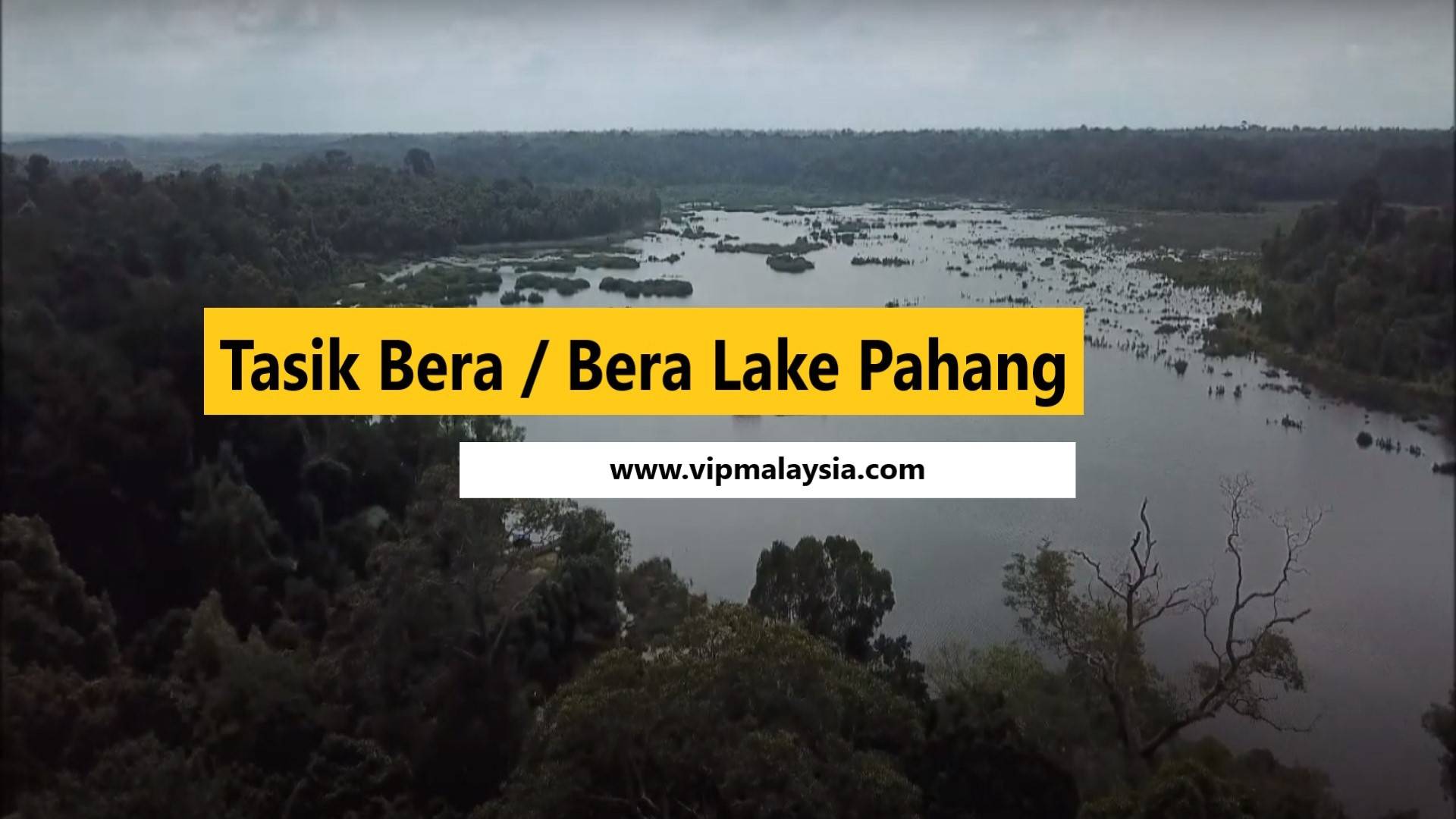
    Bera Lake, Pahang

    Explore Bera Lake, Malaysia’s Ramsar site renowned for its freshwater and peat swamp forests. Dive into the journey at Temangan, an Orang Asli settlement, and enjoy a stay at Persona Lake Resort. Discover the unique natural beauty and cultural heritage of this exceptional destination.

    Temangan refers to both a town and a state constituency in Kelantan, Malaysia. It is located in the Machang District and is represented in the Kelantan State Legislative Assembly. The area is also recognized administratively as Mukim Temangan, a subdistrict within Machang. Temangan is also a state constituency in Kelantan, created in 1974, and represented in the Kelantan State Legislative Assembly. It has about 26,012 registered electors (2023) and a population of 29,773 (2020).

    Introduction

    Bera Lake, located in the central lowlands of Peninsular Malaysia, is a sprawling wetland ecosystem covering approximately 61,380 hectares. Recognized under the Ramsar Convention, it is Malaysia’s biggest natural lake and a vital ecological treasure. The lake’s unique hydrology, diverse habitats, and cultural significance make it a destination that blends natural beauty with human heritage. Visitors can explore its winding rivers, trek through peat swamp forests, and engage with the Semelai people, whose traditions remain deeply tied to the land.

    The Ramsar Convention is an international treaty signed in 1971 in Ramsar, Iran, that provides a framework for the conservation and sustainable use of wetlands of international importance. It is also known as the Convention on Wetlands and currently has 172 contracting parties worldwide. Scope of Wetlands Covered: Human‑made sites such as fishponds, rice paddies, reservoirs, and salt pans, lakes and rivers, underground aquifers, swamps, marshes, peatlands, and wet grasslands and estuaries, deltas, tidal flats, mangroves, and coral reefs

    The lake is patches and joint to one another by a small fast flowing channel between them with full of ‘screw pines’ plants or Rasau in Malay and ‘Pitcher Plant’ floating on the water. The Ramsar Convention on Wetlands is an intergovernmental treaty adopted to preserve and conserve selected bodies of wetlands or swamps, which are of international importance.

    Bera Lake is often referred to as the Lake of Changing Color because its waters can appear in different shades depending on several factors:

    • Seasonal Variation: During the rainy season, inflowing streams bring in sediments and organic matter, giving the water a darker or murkier tone. In drier months, the lake can look clearer and reflect more of the sky’s blue.
    • Vegetation Influence: Aquatic plants like pitcher plants, water lilies, and submerged macrophytes release tannins and pigments into the water, subtly altering its color.
    • Sunlight and Reflection: The angle of sunlight and the dense forest canopy around the lake create shifting hues, from greenish tones to golden reflections at sunset.
    • Peat Swamp Ecosystem: The surrounding peat swamp forests leach organic compounds into the water, sometimes giving it a reddish-brown tint.

    Accessibility

    Bera Lake is accessible via road networks connecting to towns like Triang and Temerloh. Public transport options are limited, so private vehicles or guided tours are recommended.

    Visitor Centers

    The lake features visitor centers that provide maps, guides, and educational exhibits about the Ramsar site. These centers enhance awareness of conservation efforts and offer practical information for travelers.

    Highlights

    The Ramsar Wetland Significance

    Bera Lake’s designation as a Ramsar site underscores its international importance. The wetlands span 31,120 hectares, including 6,800 hectares of swamp habitats. These areas are home to rare aquatic plants such as the purple water trumpet and floating pitcher plants. The Ramsar status ensures conservation efforts that protect both biodiversity and indigenous livelihoods.

    Unique Flora and Fauna

    The lake supports over 374 plant species, including dipterocarps towering up to 50 meters. Endemic species like bladderwort and rare sedges thrive here. Wildlife includes otters, monitor lizards, and migratory birds such as herons and kingfishers. The biodiversity makes Bera Lake a living laboratory for ecologists and a paradise for nature enthusiasts.

    Dipterocarps are tall tropical hardwood trees belonging to the family Dipterocarpaceae, native mainly to Southeast Asia. They dominate lowland rainforests such as Taman Negara in Malaysia, producing valuable timber, aromatic oils, and resins, and are ecologically crucial for canopy structure and biodiversity. Many dipterocarp forests are safeguarded in reserves like Taman Negara and under international conventions such as the Ramsar Convention. Comprises about 22 genera and 680–695 species of flowering plants. Height: Some species reach 60–80 meters, forming the emergent layer of tropical rainforests.

    Bladderworts are carnivorous plants in the genus Utricularia (family Lentibulariaceae), characterized by tiny bladder‑like traps that capture and digest small aquatic or soil invertebrates. They are widely distributed in freshwater habitats and wet soils across most continents except Antarctica. About 220–233 species worldwide.

    In Lake Bera (Tasik Bera) the main bladderwort species recorded are Utricularia aurea (Floating Bladderwort) and Utricularia bifida. These carnivorous plants thrive in the lake’s shallow waters and swampy margins, making them important indicators of wetland health.

    Indigenous Semelai Culture

    The Semelai tribe, native to Bera Lake, maintains traditions that connect them to the forest. They practice resin extraction from keruing trees, used for waterproofing and torch-making. Visitors can witness demonstrations of jungle torches, a sustainable practice predating modern flashlights. The Semelai settlements—Bukit Rok, Temangan, and Pos Iskandar—offer cultural immersion experiences.

    The Semelai are an Orang Asli tribe of the Proto‑Malay group, indigenous to Peninsular Malaysia, primarily found in Negeri Sembilan and Pahang, especially around Tasik Bera (Lake Bera). They traditionally practice animism, though some communities also follow Islam and Christianity.

    Festivals and Traditions

    Semelai communities celebrate seasonal festivals tied to fishing and harvest cycles. Traditional dances, music, and storytelling sessions provide insights into their worldview. These cultural practices enrich the visitor experience, offering a glimpse into Malaysia’s indigenous heritage.

    Attractions

    Bukit Rok Settlement

    Bukit Rok is a key Semelai settlement accessible by boat or road. Visitors can observe traditional crafts, including weaving and resin processing. The community welcomes tourists warmly, often greeting them with “Apa Khabar.”

    Bukit Rok is a hill in Pahang, Malaysia, located near Tasik Bera (Lake Bera) at approximately 35 meters above sea level. It is geographically significant as part of the swamp and wetland ecosystem surrounding Malaysia’s Ramsar site.

    Pos Iskandar

    Located three hours by boat, Pos Iskandar is another settlement rich in cultural heritage. It serves as a gateway to deeper forest exploration. The journey itself is scenic, with lush vegetation lining the waterways.

    Pos Iskandar is an Orang Asli settlement in Bera District, Pahang, Malaysia, inhabited mainly by the Semelai tribe. It lies near Tasik Bera (Lake Bera) and serves as a cultural and ecological hub for the indigenous community.

    Temangan Village

    Temangan is a popular stopover for river expeditions. The village offers homestay experiences where visitors can share meals with families and learn about jungle survival techniques. It is a hub for cultural exchange and eco-tourism.

    Kuala Bera Starting Point

    Kuala Bera serves as the main entry for river journeys. It is a bustling hub where travelers prepare for expeditions. Facilities include boat rentals, local guides, and small eateries serving traditional Malay dishes.

    Trekking and Adventure

    River Expeditions

    Exploring Bera River is an adventure in itself. A two-day journey from Kuala Bera to the lake involves navigating winding waters, rapids like Jeram Panjang, and tributaries such as the Serting River. Hiring experienced boatmen ensures safety while enhancing the thrill of discovery.

    Jeram Panjang refers to two distinct places in Malaysia: (1) a locality in Mukim Rompin, Jempol District, Negeri Sembilan, and (2) a natural rapid (jeram) in Kelantan. Both share the same name but differ in context — one is a settlement, the other a hydrological feature.

    The Serting River (Sungai Serting) is a stream in Negeri Sembilan, Malaysia, flowing through Jempol District near Kampung Serting Hulu and Kampung Baru Mahsan. It lies at an elevation of about 62–106 meters above sea level and is part of the West Coast river system.

    Camping Along The River

    Travelers often camp overnight at Orang Asli settlements like Temangan. These stops allow interaction with locals and provide authentic jungle experiences. Camping facilities are basic, requiring visitors to bring their own gear, food, and water.

    Jungle Trekking

    The surrounding peat swamp forests offer trekking opportunities for adventurers. Trails wind through dense vegetation, revealing wildlife such as hornbills and macaques. Trekking guides often highlight medicinal plants used by locals, adding educational value to the journey.

    Wildlife Encounters

    Encounters with wildlife are common. Otters play along riverbanks, while colorful butterflies flutter through the forest canopy. Birdwatchers can spot rare species like the black-and-red broadbill. These experiences make trekking both thrilling and educational.

    Conclusion

    Bera Lake in Pahang is more than just Malaysia’s largest natural lake—it is a living ecosystem, a cultural heritage site, and an adventure destination. Its Ramsar designation highlights its global importance, while the Semelai people’s traditions add depth to its identity. Whether trekking through peat swamps, navigating rivers, or engaging with indigenous communities, visitors will find Bera Lake a unique blend of nature and culture. For eco-tourists, adventurers, and cultural explorers alike, this lake remains a must-visit destination in Malaysia.

    Summary

    • Attraction: Bera Lake Pahang Malaysia
    • Location: Pahang Malaysia
    • Attraction Type: Lake in Malaysi
    • Source: pahangtourism.org.my
    • Category: #Lake #Pahang 

    Contact Information

    Bera Lake Resort
    Kompleks Pelancongan Tasek Bera
    28200 Bandar Bera Pahang Darul Makmur
    Telephone: 013-6231199 / 014-8447070

    Frequently Asked Questions (FAQs)

    Why must tourist pay a visit to people of the lake ‘Semelai Tribe’ Bera Lake?

    If you happen to be at Bera Lake don’t forget to pay a visit to their little village around the lake. ‘Semelai people (Proto Malay) can only be found at the lake, their physical features and way of life is almost similar to the Malay people some seventy years back. Although, they have their own dialect, they understand and speak Malay too.

    Today, they are still cultivated crops for their own consumption, plant rubber, palm oil and some are participated in the Felda Scheme to seek for a better tomorrow. Once a year, during dry season they are also planting ‘Dry Padi’ (Padi Huma) and harvested them three months later.

    Why mud bathing is popular in Europe but not in Asia?

    What an expensive way to go for Mud Bathing. Mud bathing is popular in Europe, it is a kind of traditional facial treatment as well as your body. Here, you pay nothing to get this kind of treatment. Take a boat or dugout canoe to a place where the water is clear and shallow. The place is called ‘Pasir Raja’ only about 10 – 15 minutes by boat/dugout canoe from the resort. Contact: Mr. Aziz Tel: 6013-623 1199 at the Tourist Complex.

    Why choosing camping in Bera Lake as your preferred outdoor activity in Pahang?

    If you are outdoor passionate, Bera Lake is the right place to visit. Take some of your friends here to go for trekking, boating and fishing. There is Chalet, Rooms or even Dormitory to accommodate you while you are at the lake. If you find the accommodation is a little deer, then opt for camping.

    A large campsite near to the complex is ready to cater for at least 250 peoples. Bring your own camping gears or if you are in small group, you can rent them from the Bera Lake Resort. The camping fee is very nominal and tap water and toilet is available.

    Why most people choose Bera Lake for jungle trekking?

    Trekking is another exciting activity, there are 2 different trails near to the Tourist Complex Bera Lake Pahang Malaysia. One is just beside the complex and it’s taken only about half an hour return. The other one is near to the camp site; you could start trekking from there for about 3 hours return.

    If you look for more adventurous trekking, just across the Bera Lake is another exciting trail that take you almost half a day. Here, you could learn to know some herbal plants like Tongkat Ali, Kacip Fatimah and Rempah Gunung. As you trek along, you will find some giant tropical trees such as Keruing, Kempas, Meranti, Tualang and Jelutong. Nothing waste when you go for jungle trekking, take your time, look around then only you know how to appreciate nature and reveal the secret of the jungle.

    Why fishing in Bera Lake is the best activity here?

    Fishing is ‘paradise’ at Bera Lake, Pahang. Hire a motorize boat or dugout canoe to go fishing around the lake. From the jetty at Bera Lake Resort you may go down stream as far as to Lubuk Ranting or going up stream until Pulau Benal. If you are on your own, make sure you find your way back, if not hire a guide.

    Bera Lake is a vast natural lake where the water is fast flowing and deep. With a little of luck, right baits and right place you could catch the biggest species of the lake called ‘Tapah’ fish. Among the famous fish that can be found are Snake Head Fish (Toman), Catfish (Baung), Arowana and Tenggalan. During monsoon, you can enjoy searching for newly hatched Arowana as the demand for it is very rewarding. Bring along your fishing equipment or you may hire one at the Tourist Complex of Bera Lake. Among the best and most recommended baits are ‘Green Frog’, small ‘Catfish’ and Tapioca that being soak into water for a few nights.

  • Taman Negara Malaysia: Wildlife Wonders

    Taman Negara Malaysia: Wildlife Wonders

    Taman Negara Malaysia

    Discover Malaysia’s oldest and largest national park, Taman Negara Pahang. This 4,343-square-kilometer rainforest sanctuary offers breathtaking attractions, thrilling trekking trails, and unforgettable wildlife encounters. From canopy walkways to limestone caves, waterfalls, and cultural festivals, Taman Negara is a must-visit destination for nature lovers and adventure seekers.

    Introduction

    Gazette as a National Park since 1938, Taman Negara is Malaysia’s premier national park and the largest in the country. Spread over 4,343 square kilometers, this wild and virgin region is densely covered with ancient rainforest. Spanning the three states of Kelantan, Terengganu and Pahang, its protrusion into Pahang is the largest. Previously known as King George V National Park, this pristine sanctuary is meticulously conserved, offering visitors a chance to immerse themselves in untouched nature. With its canopy walkways, limestone caves, river rapids, and jungle trekking trails, Taman Negara is not just a park—it is an adventure into Malaysia’s natural heritage.

    Kelantan is a state in northeastern Peninsular Malaysia, known for its capital Kota Bharu, its honorific title Darul Naim (“The Blissful Abode”), and its distinct culture shaped by rural traditions and historical influences. Capital city: Kota Bharu; royal seat at Kubang Kerian. Area: Approximately 14,970 sq km (5,780 sq mi). Population: Predominantly Malay (96.6% Bumiputera as of 2020), with small Chinese and other minorities. Languages: Malay (official), Kelantanese Malay (regional), plus minority languages such as Temiar, Jahai, Bateq, and Thai.

    Wildlife Observation Hides

    Specially constructed hides near salt licks allow visitors to observe nocturnal animals. The Tahan Hide, located just five minutes from the park headquarters, is the most popular. Visitors may spot deer, wild boar, and even elephants during nighttime observation.

    Terengganu is one of the states of Malaysia, located on the northeastern coast of Peninsular Malaysia, with Kuala Terengganu as its capital. It is also known by its Arabic honorific Darul Iman (“Abode of Faith”) and is nicknamed the “Turtle State” due to its famous turtle nesting sites. Area: About 13,035 sq km. Population (2020): Approximately 1.2 million, with 97.6% Bumiputera (mostly Malay), plus Orang Asli, Chinese, and Indian minorities. Languages: Malay (official), Terengganu Malay dialect, Kelantan Malay, and minority languages such as Semaq Beri and Bateq.

    Conservation Efforts

    Strict conservation policies ensure the protection of these species. Educational programs and guided tours emphasize the importance of preserving biodiversity for future generations.

    Pahang is the largest state in Peninsular Malaysia, located on the eastern coast, with Kuantan as its capital and Pekan as the royal seat. It is officially known as Darul Makmur (“Abode of Tranquility”). Area: About 36,053 sq km, making it the largest state in Peninsular Malaysia. Population (2020): Approximately 1.6 million, with 81% Bumiputera, 14.7% Chinese, and 3.7% Indian. Languages: Malay (official), with regional dialects such as Pahang Malay and Terengganu Malay, plus minority languages like Semai, Semelai, Temiar, and Jah Hut.

    Highlights

    Canopy Walkway Experience

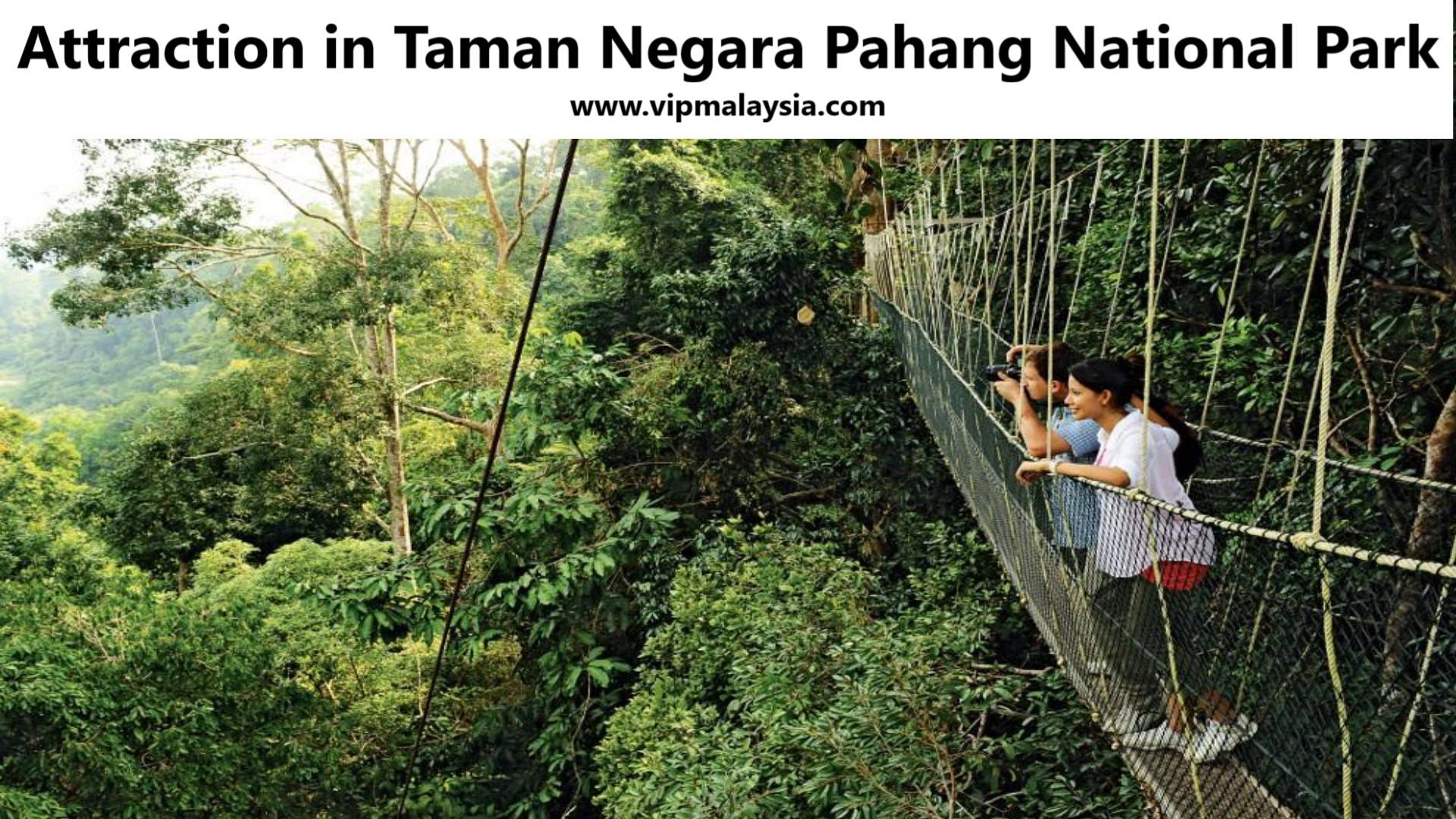
    The Canopy Walkway is one of Taman Negara’s most iconic attractions. Suspended 40 meters above the forest floor and stretching 530 meters in length, it offers panoramic views of the rainforest canopy. Visitors can spot hornbills, monkeys, and even the elusive Malayan tapir from above. The walkway is accessible via a short 1.5 km trek from the park headquarters, accessible by a 20–45 minute trek or a short boat ride.

    The Malayan tapir (Tapirus indicus) is the largest of all tapir species and the only one found in Asia. It is easily recognized by its distinctive black-and-white coloration and is currently listed as Endangered on the IUCN Red List due to habitat loss and declining populations. Size: Largest tapir species, weighing between 250–320 kg and measuring up to 2.5 meters in length. Coloration: Unique two-tone pattern — black head, shoulders, and legs, with a white midsection and rump. Young tapirs: Born with brown coats patterned with white stripes and spots.

    Visitor Facilities

    The walkway is well-maintained with safety ropes and nets, and guides are available to provide insights into the flora and fauna. Rest areas and observation points allow visitors to pause and enjoy the scenery. Photography enthusiasts will find this spot ideal for capturing the grandeur of the rainforest.

    Key Features

    • Supervision: Managed by the Department of Wildlife and National Parks (PERHILITAN) to ensure visitor safety.
    • Capacity: Limited to around 4 people per section at a time, with rangers controlling flow.

    PERHILITAN refers to the Department of Wildlife and National Parks Peninsular Malaysia (Jabatan Perlindungan Hidupan Liar dan Taman Negara), a government agency under the Ministry of Natural Resources and Environmental Sustainability. It is responsible for managing, conserving, and protecting wildlife and national parks in Peninsular Malaysia. Enforces laws against illegal hunting, trade, and poaching of endangered species such as the Malayan tiger and tapir. Issues permits for hunting, wildlife research, and eco-tourism activities. Runs awareness campaigns and initiatives like Save the Malayan Tiger.

    The Malayan tiger (Panthera tigris jacksoni) is a subspecies of tiger native to Peninsular Malaysia, officially recognized as Malaysia’s national animal. It is classified as Critically Endangered (IUCN Red List) with fewer than 150 individuals estimated to remain in the wild. Known locally as harimau or pak belang, it appears on Malaysia’s coat of arms, currency, and sports emblems. Smaller than Bengal or Siberian tigers; males average 120 kg, females about 100 kg.

    Limestone Caves Exploration

    Taman Negara is home to several limestone caves that date back hundreds of millions of years. Popular caves include Gua Telinga, Gua Kepayang, Gua Daun Menari, and Gua Luas. These caves are rich in geological formations and provide habitats for bats and swiftlets.

    Gua Telinga

    Gua Telinga is a limestone cave located within Taman Negara National Park in Pahang, Malaysia, known for its narrow passages, unique rock formations, and rich biodiversity. The name Gua Telinga translates to “Ear Cave” in Malay, referring to its ear-shaped entrance.

    Key Features

    • Location: Situated near Kuala Tahan, inside Taman Negara, one of the world’s oldest rainforests.
    • Structure: A limestone cave with narrow tunnels, chambers, and stalactite formations.
    • Wildlife: Home to bats, insects, and small cave-dwelling creatures, making it a hotspot for ecological study.
    • Adventure activity: Popular for “cave exploration” or spelunking, requiring visitors to crawl, climb, and squeeze through tight spaces.

    Visitor Experience

    • Guided tours: Entry is usually permitted only with park guides for safety.
    • Difficulty: Moderate to challenging, as the cave involves crawling through confined spaces.
    • Educational value: Offers insights into limestone geology, cave ecosystems, and rainforest biodiversity.

    Gua Kepayang

    Gua Kepayang is a limestone cave located within Taman Negara National Park in Pahang, Malaysia. It is known for its large chambers, unique rock formations, and as a popular stopover for jungle trekkers exploring the rainforest.

    Key Features

    • Location: Inside Taman Negara, one of the world’s oldest rainforests, accessible via jungle trekking routes.
    • Structure: A spacious limestone cave with wide chambers, stalactites, and stalagmites.
    • Wildlife: Often inhabited by bats, insects, and small cave fauna.
    • Adventure activity: Serves as a resting point for trekkers, with some areas used for overnight camping.

    Visitor Experience

    • Guided tours: Typically visited as part of multi-day jungle trekking expeditions.
    • Difficulty: Moderate, requiring trekking through dense rainforest before reaching the cave.
    • Educational value: Offers insights into limestone geology and rainforest ecosystems.

    Gua Daun Menari

    Gua Daun Menari is a limestone cave trail within Taman Negara National Park in Jerantut, Pahang, Malaysia. It is part of a moderately challenging trekking route of about 10.3 km, taking roughly 3 hours to complete, and is popular for hiking, cave exploration, and observing rainforest biodiversity.

    Key Features

    • Location: Situated in Taman Negara, near Jerantut, Pahang.
    • Trail length: Approximately 10.3 km out-and-back.
    • Elevation gain: Around 330 meters.
    • Duration: Average trekking time is 2 hours 57 minutes to 3.5 hours.
    • Difficulty: Rated as moderate, suitable for hikers with some experience.
    • Environment: Dense rainforest with rivers, caves, wildflowers, and wildlife along the route.

    Visitor Experience

    • Activities: Hiking, cave exploration, wildlife spotting, and enjoying panoramic rainforest views.
    • Atmosphere: Less crowded compared to other trails, offering a more secluded experience.
    • Wildlife: Potential sightings of bats, insects, and rainforest species.
    • Safety: Recommended to trek with guides, especially for cave exploration.

    Gua Luas

    Gua Luas is a limestone cave within Taman Negara National Park in Pahang, Malaysia, recognized for its spacious chambers and striking rock formations. It is often used as a resting point during jungle trekking expeditions.

    Lata Berkoh Waterfall

    A 40-minute boat ride up the Tahan River leads to Lata Berkoh, a stunning waterfall surrounded by lush greenery. The deep pool beneath the falls is perfect for swimming in cool, refreshing waters.

    Lata Berkoh Waterfall is a natural cascade located within Taman Negara National Park in Pahang, Malaysia. It is renowned for its clear waters, lush rainforest surroundings, and accessibility via boat rides along the Tembeling River.

    Wildlife Encounters

    The river journey itself is an adventure, with opportunities to spot kingfishers, monitor lizards, and macaques along the banks. The pristine environment makes Lata Berkoh a favorite among eco-tourists seeking tranquility.

    Tembeling River Rapids

    For thrill-seekers, the Tembeling River offers a nine-kilometer ride through seven rapids. The open boat journey is fast-paced and exhilarating, with splashes guaranteed. This activity is popular among adventure travelers looking for a mix of adrenaline and natural beauty.

    The Tembeling River Rapids activity, also known as “rapid shooting,” is a popular adventure in Taman Negara, Pahang. Visitors ride longboats through fast-flowing sections of the river, experiencing splashes, thrills, and panoramic rainforest views. It is one of the most sought-after ecotourism activities in the park.

    Key Features

    • Location: Conducted along the Tembeling River, near Kuala Tahan in Taman Negara.
    • Experience: Participants board traditional longboats, guided by skilled boatmen, and navigate through seven sets of rapids.
    • Duration: The activity typically lasts 45 minutes to 1 hour, depending on river conditions.
    • Thrill factor: Boats bounce and splash through waves, making it an exhilarating ride.
    • Scenery: Dense rainforest, wildlife sightings, and riverside villages add cultural and ecological value.
    • Life jackets are mandatory, and guides ensure safety throughout the ride. Visitors are advised to bring waterproof bags for belongings, as getting wet is part of the fun.

    Attractions

    Rare Bird Species

    Taman Negara is home to over 300 bird species, including hornbills and pheasants, as well as mammals like the Malayan gaur and sun bear. The park’s biodiversity makes it a paradise for wildlife enthusiasts.

    Great Argus (Argusianus argus)

    The Great Argus is a magnificent pheasant renowned for its spectacular tail feathers, which can stretch over a meter long. This bird is often sought after by birdwatchers due to its elaborate courtship displays, where males spread their wings and tail to create a mesmerizing fan-like spectacle. Although it is large and striking, the Great Argus is shy and prefers dense forest habitats, making sightings rare and rewarding.

    Its presence in Taman Negara highlights the park’s role as a sanctuary for unique avian species. The bird’s reliance on undisturbed rainforest underscores the importance of conservation efforts in Malaysia’s oldest national park. Observing the Great Argus in its natural environment is considered a highlight for serious birders visiting the region.

    Malayan Peacock-Pheasant (Polyplectron malacense)

    Endemic to Peninsular Malaysia, the Malayan Peacock-Pheasant is one of the most elusive birds in Taman Negara. Its iridescent plumage, adorned with eye-like spots, makes it a jewel of the rainforest. However, its secretive nature and preference for thick undergrowth mean that even experienced birdwatchers may struggle to catch a glimpse.

    This species is critically important to Malaysia’s biodiversity, as it is found nowhere else in the world. Conservationists emphasize its vulnerability due to habitat loss, making Taman Negara a crucial refuge. Spotting this pheasant is considered a once-in-a-lifetime experience for ornithologists and eco-tourists alike.

    Malayan Crested Fireback (Lophura rufa)

    The Malayan Crested Fireback is a rare forest pheasant distinguished by its striking crest and shimmering plumage. It is most often observed in the Merapoh sector of Taman Negara, where dense forest provides the cover it prefers. Its vibrant colors and unique appearance make it a prized sighting among bird enthusiasts.

    Despite its beauty, the species is seldom encountered due to its shy behavior and limited distribution. Conservationists monitor its population closely, as it is sensitive to habitat disturbance. Visitors fortunate enough to spot the Malayan Crested Fireback often describe it as one of the most memorable highlights of their trip.

    Asian Emerald Dove (Chalcophaps indica)

    The Asian Emerald Dove is a small but dazzling bird, known for its jewel-like green plumage that glistens in sunlight. Though widespread across Asia, sightings in Taman Negara are uncommon due to its preference for secluded forest paths and quiet feeding grounds. Its gentle cooing call adds to the serene atmosphere of the rainforest.

    This dove plays an important ecological role as a seed disperser, helping maintain the forest’s biodiversity. Birdwatchers often describe the thrill of spotting its shimmering feathers amidst dense foliage as akin to discovering a hidden gem. Its rarity in the park makes every encounter special.

    Violet Cuckoo (Chrysococcyx xanthorhynchus)

    The Violet Cuckoo is a striking bird with vivid purple plumage that stands out against the green rainforest canopy. It is rarely seen in Taman Negara due to its preference for dense forest interiors, where it feeds on caterpillars and insects. Its melodious calls often reveal its presence before it is spotted.

    This species is admired for its beauty and elusive nature, making it a prized addition to any birdwatching checklist. Conservationists note that its rarity highlights the delicate balance of rainforest ecosystems. Observing the Violet Cuckoo is considered a rewarding challenge for patient birders.

    Square-tailed Drongo-Cuckoo (Surniculus lugubris)

    The Square-tailed Drongo-Cuckoo is a rare parasitic cuckoo species that mimics drongos in appearance. It lays its eggs in the nests of other birds, relying on them to raise its young. This fascinating behavior makes it a subject of interest among ornithologists studying avian ecology.

    In Taman Negara, sightings are scarce due to its secretive habits and preference for dense canopy layers. Its presence, however, adds to the park’s rich avian diversity. Birdwatchers who manage to identify this species often appreciate its unique ecological role within the rainforest.

    Garnet Pitta (Erythropitta granatina)

    The Garnet Pitta is a brilliantly colored bird, with deep red and black plumage that makes it one of the most visually stunning species in Taman Negara. Despite its vibrant appearance, it is extremely secretive and prefers the dim understory of the forest, making it difficult to spot.

    Its rarity and beauty have earned it legendary status among birdwatchers. The Garnet Pitta’s presence in the park underscores the importance of preserving undisturbed rainforest habitats. For many visitors, catching even a fleeting glimpse of this elusive bird is the highlight of their birding adventure.

    Rhinoceros Hornbill (Buceros rhinoceros)

    The Rhinoceros Hornbill is one of Malaysia’s most iconic birds, recognized by its large casque resembling a rhinoceros horn. Though it is a symbol of strength and cultural heritage, sightings in Taman Negara are rare due to its preference for lowland rainforest.

    This hornbill plays a vital role in seed dispersal, helping regenerate forest ecosystems. Its rarity in the park makes encounters particularly special, often leaving visitors in awe of its size and majesty. Conservation efforts are crucial to ensure this iconic species continues to thrive in Malaysia’s rainforests.

    Helmeted Hornbill (Rhinoplax vigil)

    The Helmeted Hornbill is critically endangered and known for its loud, resonant calls that echo through the forest. Its distinctive casque, made of solid keratin, has unfortunately made it a target for poaching. In Taman Negara, sightings are extremely rare but deeply significant.

    This species is a flagship for conservation, symbolizing the urgent need to protect Malaysia’s rainforest biodiversity. Birdwatchers who hear its haunting calls often describe the experience as unforgettable. The Helmeted Hornbill’s survival depends on continued protection of pristine habitats like Taman Negara.

    Black-and-Red Broadbill (Cymbirhynchus macrorhynchos)

    The Black-and-Red Broadbill is a colorful bird found in riverine habitats within Taman Negara. Its striking plumage of crimson and black, combined with its large bill, makes it easily recognizable yet rarely seen. It prefers quiet riverbanks where it builds intricate nests suspended over water.

    This species adds vibrancy to the park’s avian diversity, though its rarity makes sightings precious. Birdwatchers often describe the thrill of spotting the Black-and-Red Broadbill as a highlight of their journey. Its dependence on healthy river ecosystems underscores the importance of protecting Taman Negara’s waterways.

    Orang Asli Villages

    The indigenous Orang Asli communities live within Taman Negara, preserving traditional lifestyles. Visitors can learn about their hunting techniques, blowpipe demonstrations, and cultural practices.

    The indigenous people of Taman Negara are the Orang Asli, specifically the Batek (sometimes spelled Bateq) tribe, who belong to the Negrito subgroup. They are traditionally nomadic hunter‑gatherers, living in small forest communities, and are recognized as one of the rarest and most distinct indigenous groups in Peninsular Malaysia.

    Cultural Festivals

    Occasional cultural events showcase traditional dances, music, and crafts. These experiences provide deeper insight into Malaysia’s indigenous heritage.

    Kuala Tahan Gateway

    Kuala Tahan is the main entry point to Taman Negara. This small town offers accommodations, restaurants, and visitor facilities. It serves as a hub for organizing guided tours and adventure activities.

    Kuala Tahan Gateway is the main entry point into Taman Negara National Park, located in Jerantut District, Pahang, Malaysia. It serves as the hub for visitors, with facilities such as the Kuala Tahan jetty, car park (Medan Kereta), and nearby accommodations, making it the starting point for jungle treks, river activities, and cultural visits. : The jetty offers panoramic views of the Tembeling River and the lush rainforest across the water.

    Flora and Fauna Diversity

    Taman Negara’s rainforest is home to countless plant species, including giant hardwood trees, medicinal plants, and rare orchids. The park also shelters endangered animals such as the Malayan tiger, Asian elephant, and tapir.

    Giant Hardwood Trees: Tualang Tree (Koompassia excelsa)

    The Tualang Tree is one of the tallest tropical trees in the world, reaching heights of up to 85 meters (280 feet). Towering above the rainforest canopy, it provides nesting sites for giant honeybees that build massive honeycombs on its branches. Local communities often revere the tree, believing it houses spirits, which is why it is traditionally left untouched. Its sheer size and grandeur make it a symbol of the majesty of Malaysia’s ancient rainforest.

    Ecologically, the Tualang Tree plays a vital role in stabilizing soil and supporting wildlife. Its expansive canopy contributes to the rainforest’s layered structure, offering shelter for birds, insects, and mammals. For visitors, standing beneath this towering giant is a humbling experience, and it remains one of the most photographed natural landmarks in Taman Negara.

    Medicinal Plants

    The Orang Asli, particularly the Batek tribe, rely heavily on rainforest plants for traditional medicine. Roots and leaves are brewed into herbal teas to treat fever and digestive issues, while bark extracts are applied to soothe skin conditions. Forest herbs are also used in poultices to relieve pain and inflammation, showcasing the deep connection between indigenous communities and their environment.

    This knowledge is passed down orally through generations, forming an essential part of cultural heritage and survival skills. The use of medicinal plants highlights the rainforest’s role as a living pharmacy, where biodiversity directly supports human health. For visitors, learning about these practices offers insight into the sustainable relationship between people and nature in Taman Negara.

    Rare Orchids

    Taman Negara is home to a dazzling array of orchid species, many of which are rare and endemic. Among them are Paphiopedilum, or Lady’s Slipper orchids, prized for their unique pouch-like flowers. Other species such as Bulbophyllum display unusual forms adapted to rainforest conditions, while epiphytic orchids thrive on tree trunks and branches in the humid canopy layers.

    Conservation is critical, as many orchids face threats from over-collection and habitat loss. Strict protection measures ensure these delicate plants continue to flourish in the park. For nature enthusiasts, spotting a rare orchid in bloom is a highlight of any visit, symbolizing the fragile beauty of Malaysia’s rainforest biodiversity.

    Trekking and Adventure

    Jungle Trekking Trails

    Taman Negara boasts well-marked trails such as the Tahan Trail, Teranggan Trail, Neram Trail, and Bukit Teresek loop. Each trail offers unique experiences, from dense rainforest exploration to panoramic hilltop views.

    Tahan Trail

    The Tahan Trail refers to the trekking route leading to Gunung Tahan, the highest peak in Peninsular Malaysia (2,187 m), located within Taman Negara National Park. It is considered one of the most challenging treks in Southeast Asia, requiring endurance and several days to complete.

    Key Facts

    • Location: Runs through Taman Negara, spanning Pahang, Kelantan, and Terengganu.
    • Destination: Leads to Gunung Tahan (Mount Tahan), the highest point in Peninsular Malaysia.
    • Elevation: 2,187 m (7,175 ft) above sea level.
    • Trail length: Approximately 55 km, depending on the chosen route.
    • Duration: Typically 7 days for the full trek, though shorter routes exist.
    • Difficulty: Rated as challenging, requiring stamina, jungle survival skills, and preparation.

    Trail Routes

    • Kuala Tahan Route: The longest and most demanding, usually taking 7–9 days.
    • Merapoh Route: Shorter, often completed in 5–7 days.
    • Combination Route: Some trekkers ascend via one route and descend via the other for a full experience.

    Trekking Experience

    • Terrain: Dense rainforest, rivers, steep ascents, and rugged mountain paths.
    • Wildlife: Potential sightings of Malayan tapirs, birds, and other rainforest species.
    • Guides and permits: Required for safety and conservation; managed by PERHILITAN.
    • Preparation: Trekkers must be physically fit, carry camping gear, and be ready for unpredictable weather.

    Challenges

    • Physical endurance: The name “Tahan” means endure, reflecting the trek’s difficulty.
    • Weather: Heavy rains can make trails slippery and rivers dangerous to cross.
    • Logistics: Food, water purification, and camping equipment must be carried throughout.

    Teranggan Trail

    The Teranggan Trail (sometimes referred to as Sungai Terenggan Trail) is a jungle trekking route in Taman Negara National Park, Malaysia. It is a medium‑difficulty trail of about 8.5 km one way, taking roughly 4.5 hours to complete, and is popular because it passes the Canopy Walkway, Orang Asli village, and ends at the Teras Mini Waterfall.

    Key Features

    • Location: Inside Taman Negara, accessible from Kuala Tahan.
    • Trail length: About 8.5 km one way.
    • Duration: Approximately 4.5 hours to complete.
    • Difficulty: Medium, suitable for beginners with moderate fitness.
    • Highlights: Canopy Walkway, Orang Asli village, Teras Mini Waterfall, and river rapid shooting return trip.

    Visitor Experience

    • First 2 km: Easy walk on wooden boardwalks.
    • Remaining 6.5 km: Real jungle trekking with uneven terrain, streams, and rainforest paths.
    • Activities: Trekking, canopy walk, cultural visit to Orang Asli village, refreshing stop at Teras Mini Waterfall, and boat ride back with rapid shooting.
    • Atmosphere: Dense rainforest, wildlife sightings, and cultural immersion.

    Neram Trail

    The Neram Trail is a jungle trekking route in Taman Negara National Park, Malaysia, leading to the Neram River and its waterfalls. It is considered a moderate trail, offering rainforest immersion, river crossings, and opportunities to observe diverse flora and fauna.

    Key Features

    • Location: Inside Taman Negara, accessible from Kuala Tahan.
    • Trail length: Varies depending on route, typically 6–8 km one way.
    • Duration: Around 3–4 hours to complete.
    • Difficulty: Moderate, suitable for trekkers with some experience.
    • Highlights: Neram River, waterfalls, lush rainforest, and wildlife sightings.

    Visitor Experience

    • Terrain: Mixture of boardwalks, jungle paths, and river crossings.
    • Activities: Trekking, swimming at waterfalls, birdwatching, and photography.
    • Atmosphere: Dense rainforest with sounds of wildlife and flowing rivers.
    • Guided tours: Recommended for safety and navigation, as the trail can be slippery during rainy season.

    Bukit Teresek Trail

    Bukit Teresek Trail (also called Teresek Hill Trail) is a popular jungle trekking route in Taman Negara National Park, Pahang, Malaysia. It is a moderate hike of about 5.6 km with 290 m elevation gain, taking 2–2.5 hours, and rewards visitors with panoramic views of Gunung Tahan and the 130‑million‑year‑old rainforest.

    This moderate trek leads to a viewpoint overlooking Mount Tahan and the Tahan River. The trail is popular for sunrise hikes, offering breathtaking vistas of mist-covered forests.

    Key Features

    • Location: Near Kuala Tahan, inside Taman Negara.
    • Trail length: Approximately 5.6 km loop.
    • Elevation gain: Around 290 m.
    • Duration: 2–2.5 hours depending on pace.
    • Difficulty: Moderate, suitable for families and beginners with reasonable fitness.
    • Highlights: Canopy Walkway, suspension bridge crossing, summit views of Gunung Tahan and Gunung Perlis.

    Visitor Experience

    • Trail surface: Combination of jungle paths and wooden boardwalks.
    • Wildlife sightings: Monkeys, birds, insects, and diverse rainforest flora.
    • Atmosphere: Dense tropical rainforest with panoramic vistas at the summit.
    • Accessibility: Close to Taman Negara headquarters, making it one of the most accessible treks.
    • Popularity: Often included in day‑trip itineraries; considered a “must‑do” hike in Taman Negara.

    Mount Tahan Expedition

    Mount Tahan, standing at 2,187 meters, is the highest peak in Peninsular Malaysia. The expedition is challenging, requiring 7–9 days of trekking, but rewards climbers with spectacular views and a sense of achievement. Trekkers encounter diverse ecosystems, from lowland rainforest to montane forest. Wildlife sightings include rare species such as the Malayan tiger, clouded leopard, and exotic orchids.

    The Tahan River (Malay: Sungai Tahan) is one of the main rivers flowing through Taman Negara National Park in Pahang, Malaysia. It is a tributary of the Tembeling River, originating from the Four Steps Waterfall deep in the rainforest, and is a popular destination for trekking and rapid shooting activities.

    Key Features

    • Location: Flows through Taman Negara, Jerantut District, Pahang.
    • Tributary: One of the main tributaries of the Tembeling River, forming its headwaters together with the Teku River.
    • Source: Originates from the Four Steps Waterfall, a remote four‑tiered waterfall about 150 m high, reachable only after 8–9 days of trekking with licensed guides.
    • Length: Approximately 135 km, flowing into the Tembeling River.
    • Elevation: Source located at 1,840–1,850 m above sea level.

    Visitor Experience

    • Trekking: Accessed via trails beginning at Kuala Tahan village, often part of expeditions to Gunung Tahan.
    • Rapid shooting: The river is known for its strong currents, making it a site for adventurous boat rides.
    • Camping: Teku Camp, located at the confluence of the Tahan and Teku Rivers, is a designated campsite for trekkers.
    • Cultural significance: The river and its source waterfall are considered sacred among the Orang Asli communities living in Taman Negara.

    Teku Camp (Camp Teku) is a designated riverside campsite inside Taman Negara National Park, Pahang, Malaysia. It lies beside the crystal‑clear Teku River and serves as a resting point for trekkers heading towards Gunung Tahan, offering a wilderness camping experience in the rainforest.

    The Teku River (Malay: Sungai Teku) is a clear tributary stream flowing through Taman Negara National Park in Pahang, Malaysia. It is known for its pristine waters, nearby waterfalls, and riverside campsite (Teku Camp), making it a popular stop for trekkers heading toward Gunung Tahan. Elevation: Around 211 m above sea level at mapped points. Waterfalls: Teku Waterfalls are a scenic attraction along the river, offering picnic spots and wildlife viewing.

    Conclusion

    Taman Negara Pahang is more than just a national park—it is a living museum of Malaysia’s natural and cultural heritage. From canopy walkways and limestone caves to river rapids and mountain expeditions, the park offers diverse experiences for every traveler. Its rich biodiversity, indigenous culture, and adventure opportunities make it a must-visit destination. Whether you seek relaxation by waterfalls or adrenaline-pumping treks, Taman Negara promises an unforgettable journey into the heart of Malaysia’s rainforest.

    Summary

    • Attraction: Attractions in Taman Negara Pahang National Park
    • Location: Pahang Malaysia
    • Attraction Type: Forest in Malaysia
    • Source: pahangtourism.org.my
    • Category: #TamanNegara #Pahang #Attraction 

    Contact Information

    Mutiara Taman Negara Kuala Tahan Pahang
    Kuala Tahan, 27000, Jerantut, Pahang, Malaysia
    Telephone: +609 266 3500

    Visitor Reviews

    James Tan, Singapore – ★★★★★ “Taman Negara is a paradise for nature lovers. The canopy walkway was breathtaking, and the wildlife sightings were unforgettable. The facilities were well-maintained, and the guides were knowledgeable.”

    Nina Ahmad, Malaysia – ★★★★☆ “The jungle trekking trails were challenging but rewarding. I especially enjoyed Bukit Teresek for its panoramic views. The only downside was the humidity, but that’s part of the rainforest experience.”

    Kandasamy, India – ★★★★★ “Mount Tahan expedition was the highlight of my trip. It was tough, but the sense of achievement was incredible. The guides ensured safety, and the views from the summit were spectacular.”

    Sebastian Gullery, Germany – ★★★★☆ “Lata Berkoh waterfall was stunning. The boat ride was scenic, and swimming in the cool waters was refreshing. I wish there were more food options nearby, but overall, it was a fantastic experience.”

    David Johnson, Australia – ★★★★★ “The Orang Asli village visit was eye-opening. Learning about their traditions and blowpipe hunting was fascinating. Taman Negara is truly a blend of adventure and culture.”

    Getting to Taman Negara – World’s Oldest Jungle – Feeling MAGIC in National Park! This is our Visual Journey and story about our trip to one of the world’s oldest jungles. It is located in Malaysia, only about 240 km from Kuala Lumpur. This is truly a place full of magic! Visuals by Miz youtube.com

    What to do in Malaysia National Park rainforest – Excursion from Mutiara Taman Negara: After a first amazing night in our tiny home in the rainforest of Malaysia National Park, the Mutiara Taman Negara Resort, it was time to explore this beautiful national park. We booked an excursion at the reception of our hotel and did a half day tour. It took us to the largest tree in the rainforest, to a fish sanctuary and we also hiked and swim in a beautiful waterfall. Nature in Malaysia is wonderful. If you want to know what an excursion in National Park Rainforest looks like, this is the video to watch! Eileens Wanderlust youtube.com

    Frequently Asked Questions (FAQs)

    What are the boat fares in Taman Negara Malaysia?

    You need to pay for boat fares:

    • Lata Berkoh – RM160.00 (4-seater)
    • Kuala Trenggan – RM120.00 (4-seater), RM200.00 (12-seater)
    • Kuala Keniyam – RM300.00 (4-seater), RM400.00 (12-seater)
    • Telinga Cave – RM60.00 (4-seater), RM80.00 (12-seater)
    • Fishing 3D/2N – RM1,500.00 (12-seater)

    Boat service between Kuala Tembeling – Kuala Tahan – Kuala Tembeling depart at 9.00 am. & 2.00 pm. daily. The boat fare is RM60.00 per person one way. Advance booking should be made to Mutiara Taman Negara Tel: 609-266 3500.

    • Guide Fee: (max.12 pax)
    • One (1) Day – RM250.00
    • Half a Day – RM150.00
    • Gunong Tahan – RM1,200.00 (7 days) , RM150.00 (each additional day)

    What are entry fees to Taman Negara Malaysia?

    Permits and licenses are mandatory requirements prior to going into Taman Negara. You may apply for one at any Department of Wildlife’s counters located at the Kuala Tembeling jetty or Kuala Tahan:

    • Entry permit – RM 1 per person
    • Fishing licenses – RM 10 per rod
    • Camera license – RM 5 per unit
    • Camping fee – RM 2 per person
    • Canopy Walk – RM 5 per person
    • Hide – RM 5 per person/night

    What are the must visit places and activities in Taman Negara?

    You must visit Kuala Tahan because it is where the Taman Negara Headquarters is located. Activities such as canopy walkway, Bukit Teresek, Kuala Terenggan, Kuala Keniyam, Telinga Cave.

    What else you can do at Taman Negara Malaysia?

    These are activities you can do at Taman Negara:

    • Camping
    • Jungle Trekking
    • NIght walk & night safari
    • bird watching
    • white water rafting
    • The batek: native of the jungle)
    • Lata Berkoh & Kelah Sanctuary
    • Climbing at Gunung Tahan 2,187 meters
  • Warong Poksu Moksu: Kuantan’s ICT Gem

    Warong Poksu Moksu: Kuantan’s ICT Gem

    Warong Poksu Moksu, Pahang

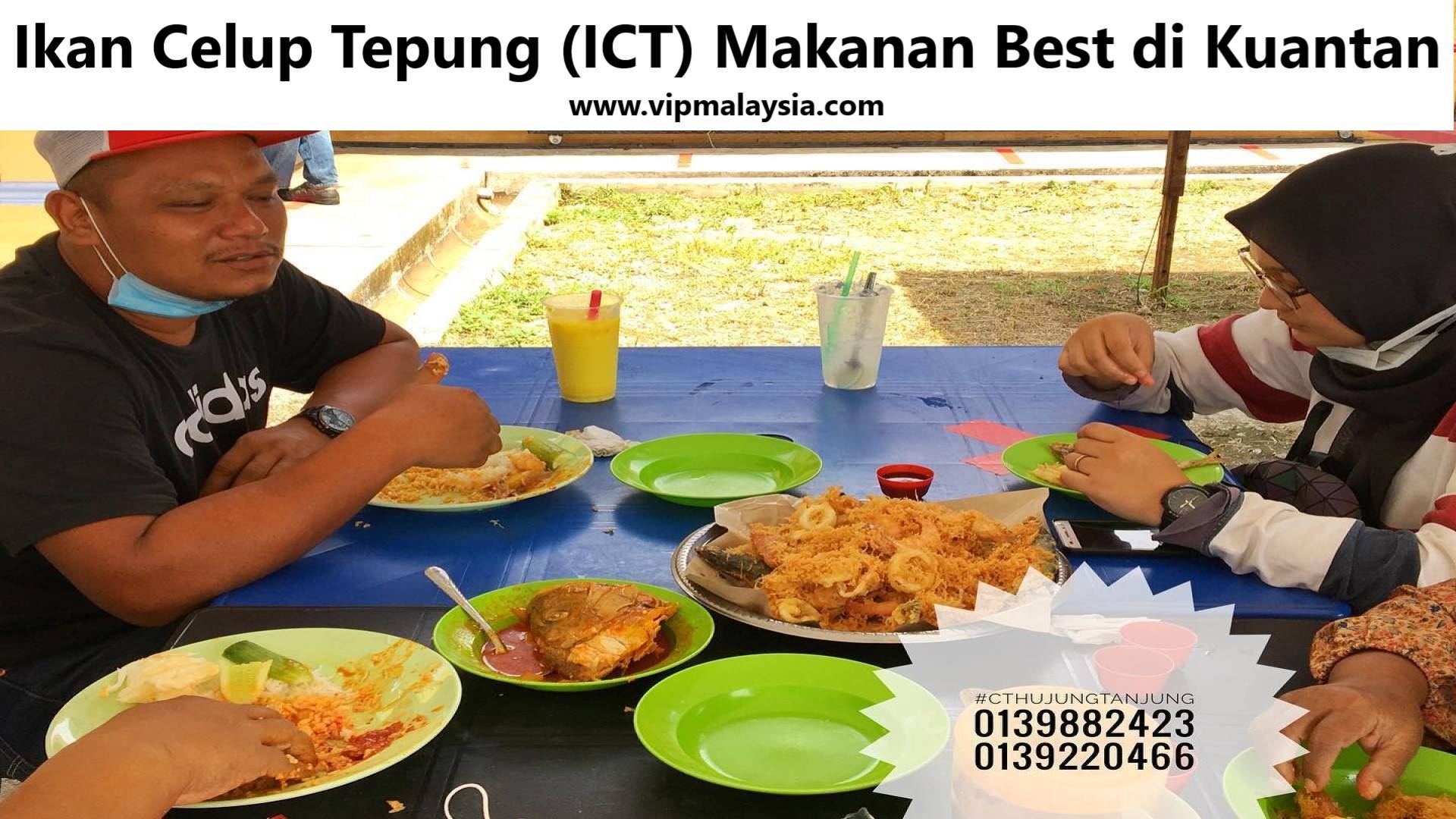
    Warong Poksu Moksu is one of Kuantan’s most beloved coastal eateries, famous for its crispy seafood dishes known as Ikan Celup Tepung (ICT). With fresh ingredients, affordable prices, and a lively atmosphere, this spot has become a must-visit destination for locals and tourists alike.

    Introduction

    Nestled in the bustling seaside town of Kuantan, Warong Poksu Moksu has earned its reputation as a culinary landmark. Known for its golden-brown seafood delights, this eatery offers more than just food—it delivers a complete cultural and dining experience. From the freshness of its daily catch to the warmth of its loyal customer base, Warong Poksu Moksu embodies the essence of Kuantan’s coastal charm.

    Ikan Celup Tepung (ICT) is a famous Terengganu street food consisting of fish dipped in seasoned rice flour batter and deep-fried until golden. It is considered part of the state’s food identity, with its recipe passed down through generations and even proposed for intellectual property protection as a geographical indication. The batter recipe—made from rice flour, eggs, sugar, pepper, baking soda, turmeric, and sometimes secret family ingredients—has been handed down through Terengganu families.

    Highlights

    One of Kuantan’s Most Popular ICT Spots

    Warong Poksu Moksu consistently draws crowds, making it one of the busiest ICT stalls in Kuantan. The popularity is a testament to the quality of food and the authenticity of the dining experience. Customers often wait patiently for their turn, knowing that the reward is worth it.

    Crispy and Flavorful Seafood

    The hallmark of Warong Poksu Moksu lies in its perfectly fried seafood. Each piece is coated in a light batter that crisps up beautifully, locking in the natural flavors of the fish, squid, or prawns. The crunch is irresistible, and the taste lingers long after the meal.

    Affordable Prices With Generous Portions

    Despite its fame, Warong Poksu Moksu remains committed to affordability. Generous portions ensure that customers leave satisfied, making it a favorite among families, students, and travelers.

    A Local Favorite

    The eatery is always packed with loyal customers, many of whom have been visiting for years. This loyalty speaks volumes about the consistency and quality of the food.

    Signature Dishes

    Ikan Celup Tepung

    Fresh fish is coated in a golden batter and fried to perfection. The crisp exterior contrasts beautifully with the tender, juicy fish inside. Served with dipping sauces, this dish is the star of the menu.

    Sotong Celup Tepung

    Squid rings are lightly battered and fried until golden. The texture is tender yet firm, offering a delightful chewiness.

    Udang Celup Tepung

    Juicy prawns are fried to a golden crisp, bursting with flavor in every bite. The batter locks in the natural juices, making this dish a crowd-pleaser.

    Sata

    Sata is one of the most iconic East Coast delicacies served at Warong Poksu Moksu. Made from a mixture of spiced fish paste wrapped in banana leaves and grilled over hot coals, it delivers a smoky aroma and a tender bite. The flavors are rich yet balanced, offering a taste of tradition that connects diners to Kuantan’s culinary heritage.

    At Warong Poksu Moksu, sata is prepared fresh daily, ensuring that each bite captures the authentic taste of Pahang’s coastal cuisine. The grilling process infuses the fish with a subtle char, while the banana leaves keep the paste moist and fragrant. It’s a dish that pairs beautifully with rice or can be enjoyed on its own as a savory snack.

    Nasi Dagang

    Nasi dagang is another highlight, featuring fragrant rice steamed with coconut milk and served alongside a flavorful fish curry. This dish is deeply rooted in East Coast culture, often enjoyed during festive occasions but equally beloved as a daily staple. The combination of creamy rice and spiced curry creates a comforting yet indulgent meal.

    Nasi dagang is a traditional Malaysian dish originating from the East Coast states of Terengganu and Kelantan, historically linked to traders and fishermen who relied on its hearty coconut rice and fish curry for sustenance. Its name literally means “trader’s rice,” reflecting its deep cultural ties to maritime trade and coastal communities.

    At Warong Poksu Moksu, nasi dagang is presented with care, offering generous portions that satisfy both locals and visitors. The curry is rich and aromatic, with tender fish that melts in the mouth. It’s a dish that showcases the balance of flavors—savory, spicy, and slightly sweet—that defines Kuantan’s culinary identity.

    Rice Blend

    The rice blend in nasi dagang is a unique combination of glutinous and long-grain rice, steamed in coconut milk with fenugreek seeds and pandan leaves. This preparation gives the rice a fragrant aroma and a slightly nutty flavor, setting it apart from ordinary steamed rice. The texture is firm yet tender, making it the perfect base for rich curries.

    At Warong Poksu Moksu, the rice is carefully prepared to maintain its authentic East Coast character. The subtle sweetness from the coconut milk and the herbal notes from pandan create a layered taste experience. This blend is not only filling but also deeply satisfying, reflecting the traditional culinary practices of Kuantan.

    Fish Curry

    Traditionally, nasi dagang is served with gulai ikan tongkol, a tuna curry that is both hearty and flavorful. The curry is simmered with spices, coconut milk, and tamarind, resulting in a dish that is rich yet balanced. The tuna absorbs the spices beautifully, offering a robust taste that pairs perfectly with the rice.

    Ikan tongkol (Euthynnus affinis), or mackerel tuna, is a nutrient-dense fish commonly eaten in Malaysia. Per 100 g serving, it provides about 100–110 kcal, 13–24 g of protein and is low in fat (1.5–2 g), while also supplying minerals like phosphorus, potassium, calcium, and iron. In Malaysia, ikan tongkol is most famously paired with nasi dagang, where it is cooked in a rich coconut-based curry (gulai ikan tongkol). Its firm texture makes it ideal for curries, grilling, or preservation as pindang.

    Warong Poksu Moksu stays true to this tradition, though variations with chicken or prawn curry are also available. Each version maintains the same depth of flavor, ensuring that diners enjoy a comforting and authentic meal. The curry is the centerpiece of the dish, elevating the rice blend into a complete culinary experience.

    Accompaniments

    To complete the dish, nasi dagang is often served with pickled cucumber and carrots, adding a refreshing crunch and tangy contrast to the rich curry. These accompaniments balance the heaviness of the rice and curry, making the meal more vibrant and enjoyable.

    At Warong Poksu Moksu, hard-boiled eggs are sometimes included, providing extra protein and texture. The combination of rice, curry, and fresh sides creates a well-rounded dish that satisfies both taste and nutrition. It’s a thoughtful balance of flavors that showcases the harmony of East Coast cuisine.

    In Malay, hard-boiled eggs are commonly called “telur rebus”.

    Otak-Otak

    Otak-otak is a spiced fish cake wrapped in banana leaves and grilled until firm yet tender. The dish is known for its bold flavors, blending chili, turmeric, and coconut milk into a fragrant paste. Its smoky aroma and vibrant taste make it a favorite among seafood lovers.

    Warong Poksu Moksu’s version of otak-otak emphasizes freshness, using locally sourced fish to ensure quality. The grilling process enhances the flavor, creating a slightly charred exterior while keeping the inside moist and flavorful. It’s a dish that perfectly complements the eatery’s lineup of fried seafood specialties.

    Otak-otak is a traditional Southeast Asian fish cake that originated in Palembang, South Sumatra, and it spread across the Malay Archipelago, especially into coastal Malaysia and Singapore, where it developed distinct local variations. Its name, which literally means “brain.” in Malay, comes from the soft, pale texture of the dish, which resembles brain matter but contains no actual brain.

    Laksam

    Laksam is a traditional East Coast noodle dish made from rice flour rolled into thick, flat noodles and served with a rich, creamy gravy. The sauce, often made from fish and coconut milk, is smooth and savory, coating the noodles in layers of flavor. It’s a comforting dish that reflects the heartiness of Kuantan’s food culture.

    Laksam is a traditional Malay dish from Kelantan and Terengganu, created with rolled rice flour noodles and a rich white fish-and-coconut gravy. Its history reflects the culinary heritage of Malaysia’s East Coast, where fresh seafood and simple rice-based staples shaped local food culture. In Kelantan, it is called Lakse, while in Terengganu it is known as Laksang.

    At Warong Poksu Moksu, laksam is served with fresh herbs and vegetables, adding brightness to the creamy base. The balance of textures—from the soft noodles to the crisp garnishes—creates a satisfying meal that appeals to both locals and tourists. It’s a dish that highlights the diversity of East Coast cuisine beyond fried seafood.

    Dining Experience

    Atmosphere and Setting

    Warong Poksu Moksu enjoys a prime coastal location. The eatery is always bustling, filled with laughter, chatter, and the aroma of freshly fried seafood. It offers authentic kampung-style dishes, with cleanliness that is second to none.

    Service Quality

    The staff are known for their friendliness and efficiency. Despite the crowds, orders are handled quickly, ensuring customers enjoy their meals without long waits.

    Conclusion

    Warong Poksu Moksu offers a perfect blend of freshness, crispiness, and affordability, making it the top choice for Ikan Celup Tepung lovers in Kuantan. Whether you’re exploring local delicacies, craving a satisfying meal, or looking for an authentic seafood experience, this warong promises an unbeatable dining adventure.

    Plan your visit today—taste the legendary Ikan Celup Tepung at Warong Poksu Moksu!

    Summary

    • Attraction: Warong Poksu Moksu
    • Location: #Pahang 
    • Attraction Type: #Food 
    • Source: facebook.com, makanmakankuantan.blogspot.com

    Quick Info

    AttributeDetails
    NameWarong Poksu Moksu
    LocationJalan Tanjung Lumpur, Kuantan, Pahang, Malaysia
    GPS Position3.8140° N, 103.3310° E
    StatePahang
    Facility TypeLocal Warong, Seafood Specialties
    Main AttractionsIkan Celup Tepung, Sotong Celup Tepung, ABC
    Nearby LandmarksBalai Polis Tg. Lumpur, Masjid Tg. Lumpur
    AccessibilityEasily reachable via Kuantan highways
    Best Time to VisitLunchtime (high customer traffic)
    Entry FeesRestaurant pricing applies
    Recommended Side DishesChili Sauce, Dipping Gravy, Sambal
    Opening Hours11:00 AM – 3:00 PM
    ContactWarong Poksu Moksu (+6013-9882423)

    Contact Information

    Ikan Celup Tepung Hujung Tanjung
    Perkampungan Tanjung Lumpur,
    26060 Kuantan, Pahang
    Telephone: 0139882423 / 0139220366

    Ikan Celup Tepung Mok Naa
    No 3, gerai pelbagai, Jalan Tanjung Lumpur,
    26060 Kuantan, Pahang
    Telephone: 012-948 6038

     Ikan Celup Tepung Poksu Moksu
    Jalan Tanjung Lumpur, Kampung Peramu Maju,
    26060 Kuantan, Pahang
    Telephone: 019-989 0261

    Customer Reviews

    Ahmad From Malaysia – ★★★★★

    “Ikan Celup Tepung here is unbeatable. The batter is light, crispy, and the fish tastes incredibly fresh. I’ve been coming here for years, and it never disappoints.”

    Sarah From Australia – ★★★★☆

    “The seafood was delicious, and the atmosphere was lively. It was a bit crowded, but that only shows how popular this place is. Definitely worth the visit.”

    Huda Hakim From Malaysia – ★★★★★

    “The prawns were juicy and perfectly fried. I loved the dipping sauces that added extra flavor. This is a must-visit spot in Kuantan.”

    Selvam From Malaysia – ★★★★☆

    “The squid was tender and flavorful, and the desserts were refreshing. The service was fast despite the crowd. Highly recommended for anyone visiting Kuantan.”

    Frequently Asked Questions (FAQs)

    Apa menu makanan wajib di Ikan Celup Tepung Warong Poksu Moksu?

    Ini adalah kedai makan kegemaran kami dan menyediakan menu yang ‘macam-macam ada’. Menu yang disediakan adalah dari nasi putih dan lauk pauk serta banyak pilihan kuih-muih. Menu istimewanya adalah makanan laut seperti ikan, udang, sotong digoreng dicelup tepung dan lain-lain. Semuanya fresh! Rasanya sama dengan apa yang ada di negeriku Terengganu!

    Apakah menu Ikan Celup Tepung Warong Poksu Moksu yang terbaik yang mesti anda makan?

    Antara recommended dishes menu yang selalu kami makan disini adalah:

    1. Ikan goreng celup tepung.
    2. Laksa kuah putih Terengganu.
    3. Sotong celup tepung.
    4. Nasi dagang – boleh tahan juga rasanya.
    5. Dan banyak lagi local kuih yang ada. Semuanya best belaka.

    What are the best foods in Pahang you must try?

    Welcome to Pahang! You can find the best foods here. Its super delicious different from others.

    • Gulai tempoyak ikan patin
    • Gulai asam rong
    • Ikan bakar petai
    • Paceri nanas
    • Nasi kebuli
    • Curry mee
    • Murtabak mengkasar
    • Puding DiRaja
    • Cendol air putih
    • Ikan Celup Tepung (ICT)
    • Satar

    Kenapa makan tradisional Negeri Pahang ini dipanggil sebagai ‘Nasi Kebuli’?

    Nasi kebuli adalah makanan kegemaran golongan istana Pahang. Nasi kebuli adalah singkatan bagi nama “Nasi Kebawah Duli”.

  • Ibrahim Cendol Air Putih: Kuantan’s Iconic Treat

    Ibrahim Cendol Air Putih: Kuantan’s Iconic Treat

    Ibrahim Cendol Air Putih

    Cool off with Kuantan’s most famous dessert—Ibrahim Cendol Air Putih. Featuring silky smooth cendol strands, creamy coconut milk, and perfectly balanced palm sugar syrup, this legendary stall has gained popularity as Kuantan’s must-visit dessert spot.

    Introduction

    In the heart of Kuantan, Ibrahim Cendol Air Putih has become synonymous with authentic Malaysian desserts. This humble yet bustling eatery is celebrated for its perfectly balanced cendol, made with freshly prepared strands, creamy coconut milk, and thick palm sugar syrup. Beyond its taste, the shop embodies the spirit of community, drawing loyal customers and curious travelers alike. Whether you’re seeking a quick refreshment on a hot day or indulging in Malaysia’s culinary heritage, Ibrahim Cendol Air Putih offers an experience that blends tradition, flavor, and hospitality.

    Cendol is a traditional Malaysian dessert made with shaved ice topped with coconut milk, palm sugar syrup (gula melaka), and green rice flour jelly strands. It is widely enjoyed across Malaysia, particularly in Kuala Lumpur, Selangor, Kedah, Pahang, Penang, Negeri Sembilan, Melaka, and Johor, especially as a refreshing treat in hot weather.

    Gula Melaka is a traditional palm sugar made from the sap of coconut or palm trees, commonly used in Malaysian cuisine. It is typically sold in cylindrical blocks and has a deep brown color with a rich, caramel-like flavor. Essential in desserts like cendol, onde-onde, and kuih, as well as in syrups and sauces. A staple sweetener in traditional Southeast Asian cooking, valued for its natural taste and authenticity.

    Highlights

    The Perfect Ingredients

    Every bowl of cendol at Ibrahim Cendol Air Putih is crafted with precision. The soft, smooth strands are made fresh daily, ensuring a delightful texture. Combined with rich coconut milk and palm sugar syrup, the dessert achieves a balance of sweetness and creaminess that defines its reputation.

    Coconut milk is a rich, milky-white liquid extracted from the grated pulp of mature coconuts, widely used in cooking and beverages across Southeast Asia, South Asia, Oceania, and beyond. It is distinct from coconut water, as it is thicker, creamier, and high in oil content, most of which is saturated fat.

    Freshness That Sets It Apart

    The emphasis on freshness is what makes Ibrahim Cendol Air Putih stand out. Each serving is prepared on the spot, guaranteeing that customers enjoy the dessert at its peak flavor. This dedication to quality has earned the shop a loyal following among locals and tourists.

    Gula Melaka and palm sugar are related but not identical. Gula Melaka is a specific type of palm sugar traditionally made from coconut palm sap in Malaysia, while “palm sugar” is a broader term that can come from various palm species such as date, nipah, or palmyra palms.

    A Local Favorite

    The shop’s popularity is evident in the constant flow of customers. Families, students, and office workers all gather here to enjoy a bowl of cendol, making it a communal hub. Its reputation as Kuantan’s go-to dessert spot reflects both its culinary excellence and cultural significance.

    Tradition Meets Modern Demand

    While rooted in tradition, Ibrahim Cendol Air Putih adapts to modern tastes by offering a variety of options. From classic cendol to ABC specials, the menu caters to diverse preferences, ensuring that everyone finds something they love.

    Signature Dishes

    The menu at Ibrahim Cendol Air Putih is extensive, but several items stand out as customer favorites.

    Cendol Campur

    This variety combines red beans, jelly, and sweet corn, creating a colorful and flavorful mix. The combination of textures makes it a popular choice among younger customers.

    Cendol Kacang

    A classic option, Cendol Kacang highlights the traditional pairing of red beans with silky coconut milk. Its simplicity and authenticity appeal to purists who appreciate the original taste.

    Cendol Jagung

    For those who enjoy a sweeter twist, Cendol Jagung incorporates creamy sweet corn. The corn adds richness and a subtle crunch, enhancing the overall experience.

    Cendol Pulut

    This version includes glutinous rice, offering a heartier texture. It’s particularly popular among customers seeking a more filling dessert that doubles as a light meal.

    ABC Special

    The ABC Special is a vibrant icy dessert topped with evaporated milk, jelly, and colorful ingredients. It’s a festive treat that appeals to both children and adults, especially during hot afternoons.

    ABC (Air Batu Campur) is a popular Malaysian dessert made of shaved ice topped with a colorful mix of sweet ingredients such as red beans, sweet corn, grass jelly, palm seeds, and drizzled with evaporated milk, condensed milk, or syrup. It is also commonly known as Ais Kacang. A refreshing treat in Malaysia’s hot climate, especially during festive seasons and family outings.

    Dining Experience

    Atmosphere and Ambience

    Located near the Tunas Manja Air Putih supermarket, the shop is easily accessible and always bustling. The lively atmosphere reflects its popularity, with customers chatting and enjoying their desserts in a casual setting.

    A Blend of Tradition and Community

    The dining experience at Ibrahim Cendol Air Putih is more than just about food. It’s about community, where locals gather to share stories over bowls of cendol. The shop’s welcoming environment makes visitors feel part of Kuantan’s cultural fabric.

    Beyond Cendol: Traditional Kuih

    In addition to cendol, the shop offers traditional Malaysian kuih. These small, colorful cakes complement the dessert, providing variety and showcasing Malaysia’s rich culinary heritage. At Cendol Ibrahim Air Putih in Kuantan, customers can enjoy not only its famous cendol and ABC but also a selection of traditional Malaysian kuih such as kuih lapis, seri muka, onde-onde, and other bite-sized Malay cakes, alongside nasi lemak and other local snacks. These kuih are served fresh and complement the shaved ice desserts perfectly.

    Kuih Lapis

    Kuih Lapis is a traditional Malaysian layered cake made from rice flour, coconut milk, sugar, and natural coloring, steamed layer by layer to create a colorful, chewy dessert. It is one of the most iconic kuih varieties in Malay cuisine.

    Seri Muka

    Seri Muka is a traditional Malaysian kuih consisting of two distinct layers: a glutinous rice base and a rich pandan-flavored custard topping. It is one of the most iconic Malay desserts, often served during festive occasions and family gatherings. Often sold at markets, roadside stalls, and dessert shops as part of assorted kuih platters.

    Onde-onde

    Onde-onde is a traditional Malaysian and Indonesian kuih made of glutinous rice flour dough filled with palm sugar (gula melaka), boiled, and then rolled in grated coconut. When eaten, the palm sugar melts inside, creating a burst of sweetness. A popular kuih served during teatime, festive occasions, and family gatherings.

    Nasi Lemak

    Nasi lemak is a traditional Malaysian dish (Malay culinary heritage) consisting of fragrant rice cooked in coconut milk and pandan leaves, served with sambal (spicy chili paste), fried crispy anchovies (ikan bilis), toasted peanuts, hard-boiled or fried egg, and cucumber slices. It is often accompanied by rendang, fried chicken, or curry, making it one of Malaysia’s most iconic national foods.

    Conclusion

    Ibrahim Cendol Air Putih offers a perfect blend of creamy coconut milk, smooth cendol, and aromatic palm sugar syrup, making it the most refreshing dessert in Kuantan. Whether you’re looking to cool off, craving an authentic Malaysian treat, or simply exploring Pahang’s local food scene, this cendol stall promises an unbeatable experience.

    Plan your trip today—taste the legendary Ibrahim Cendol Air Putih in Kuantan!

    Summary

    • Attraction: Ibrahim Cendol Air Putih
    • Location: #Pahang 
    • Attraction Type: #Food 
    • Source: naza-atai.blogspot.com, says.com
    • Highlights:
      • Serves authentic, well-balanced traditional cendol
      • Offers a variety of options—classic cendol, ABC, cendol pulut & more
      • Always freshly prepared with high-quality ingredients
      • A local favorite, consistently drawing loyal customers 

    Quick Info

    AttributeDetails
    NameIbrahim Cendol Air Putih
    LocationJalan Air Putih, Taman Berserah, Kuantan, Pahang, Malaysia
    GPS Position3.8140° N, 103.3310° E
    StatePahang
    Facility TypeTraditional Cendol Stall
    Main AttractionsCendol Campur, Cendol Pulut, ABC Special
    Nearby LandmarksTunas Manja Air Putih, Jalan Beserah
    AccessibilityEasily reachable via Kuantan highways
    Best Time to VisitAfternoon for peak freshness
    Entry FeesStandard stall pricing applies
    Recommended Side DishesTraditional Kuih, Nasi Lemak Bungkus
    Opening Hours11:00 AM – 7:00 PM
    ContactIbrahim Cendol Air Putih (+6016-9333111)

    Customer Reviews

    Review by Farah, Singapore

    ⭐⭐⭐⭐⭐ “Ibrahim Cendol Air Putih is the best cendol I’ve ever had. The coconut milk was creamy, and the palm sugar syrup had such a rich flavor. It’s worth the trip to Kuantan just for this dessert.”

    Review by Louis, Gold Coast, Australia

    ⭐⭐⭐⭐ “The cendol was refreshing and authentic. I especially enjoyed the Cendol Pulut, which was filling and delicious. The shop was crowded, but that only added to the lively atmosphere.”

    Review by Norhisyam Abu Besar, Brunei Darussalam

    ⭐⭐⭐⭐⭐ “I loved the ABC Special—it was colorful, sweet, and perfect for the hot weather. The staff were friendly, and the kuih selection was a nice surprise. Definitely a must-visit spot.”

    Review by Rajesh Kanda, Chennai, India

    ⭐⭐⭐⭐⭐ “The Cendol Kacang reminded me of traditional desserts back home, but with a unique Malaysian twist. The flavors were balanced, and the freshness was undeniable. I’ll be back whenever I visit Kuantan.”

  • Puding Diraja Pahang: A Royal Dessert of Malaysia

    Puding Diraja Pahang: A Royal Dessert of Malaysia

    Puding Diraja Pahang

    Puding Diraja, also known as Royal Pudding, is one of Pahang’s most treasured desserts, featuring a rich combination of bananas, prunes, cashew nuts, and caramelized toppings. Traditionally served to the royal family, this exquisite dessert is a symbol of luxury and culinary heritage in Malaysia. Today, it remains a symbol of elegance, tradition, and festive indulgence.

    Introduction

    Puding Diraja, often referred to as the “Royal Pudding,” is one of Malaysia’s most treasured desserts. Originating from the state of Pahang, this dish was historically prepared for the royal family, making it a culinary symbol of prestige and refinement. Its unique combination of bananas, prunes, cherries, and the delicate golden garnish known as Jala Emas sets it apart from other traditional Malay desserts. Beyond its taste, Puding Diraja embodies centuries of cultural heritage, festive celebration, and culinary artistry.

    Highlights

    Puding Diraja was originally created for the Sultanate of Pahang, symbolizing luxury and exclusivity. Its preparation required meticulous attention to detail, ensuring that every bite reflected the grandeur of royal dining.

    Jala Emas

    One of the most striking features of Puding Diraja is Jala Emas, a delicate garnish made from egg yolks spun into golden threads. This intricate decoration not only enhances the pudding’s visual appeal but also represents prosperity and celebration. The artistry behind Jala Emas reflects the skill and patience of Malay culinary traditions.

    Traditional Pairings

    Puding Diraja is often enjoyed alongside other festive Malay dishes such as rendang, ketupat, and lemang. These savory items balance the sweetness of the pudding, creating a harmonious dining experience. The contrast between rich meats and delicate dessert highlights the diversity of Malay cuisine.

    Ketupat is a traditional Malay diamond-shaped rice cake made by cooking rice inside a woven palm leaf pouch, resulting in a compact, diamond-shaped dumpling. It is closely associated with festive celebrations such as Hari Raya Aidilfitri in Malaysia.

    Lemang is a traditional Malay dish made from glutinous rice, coconut milk, and salt, cooked in hollowed bamboo lined with banana leaves over an open fire. It is especially popular during Hari Raya Aidilfitri and Hari Raya Haji celebrations in Malaysia. Commonly eaten with rendang, chicken curry, or beef floss (serunding). Considered a culinary icon of Malay culture, often sold at roadside stalls during festive seasons.

    Modern Interpretations

    Contemporary chefs have reimagined Puding Diraja by incorporating fusion elements such as chocolate drizzle, caramel sauce, or exotic fruits. These innovations allow the dessert to appeal to younger generations while preserving its royal essence. Restaurants in Pahang and Kuala Lumpur often showcase these modern twists during cultural festivals.

    Dining Experience

    Enjoying Puding Diraja in Pahang offers a unique cultural immersion. Traditional eateries often serve the dessert in ornate dishes, accompanied by Malay music and festive décor. The ambiance enhances the sense of heritage, making the experience more than just culinary—it becomes cultural storytelling.

    Seasonal Celebrations

    Puding Diraja is especially popular during Ramadan, where it is served as part of the breaking fast meal. Its rich flavors provide comfort and indulgence after a day of fasting. Families and communities gather to share the dessert, reinforcing its role as a symbol of unity and festivity.

    Conclusion

    Puding Diraja is not just a sweet treat—it is a symbol of elegance, history, and culinary craftsmanship, making it one of Malaysia’s finest royal desserts. Whether you’re enjoying its rich flavors, learning about its origins, or savoring it at a traditional eatery, this pudding promises an unforgettable dining experience.

    Plan your culinary adventure today—taste the exquisite Puding Diraja in Pahang!

    How to Make

    Essential Ingredients

    The Key Components for a Perfect Royal Pudding

    • Pisang Lemak Manis – A sweet banana variety
    • Prunes – Adds a rich, fruity contrast
    • Cashew Nuts – Provides crunch & nuttiness
    • Sweetened Condensed Milk – For extra creaminess
    • Jala Emas – Delicate golden egg strands
    • Cherry Garnish – For vibrant presentation

    Cooking Instructions

    Step-by-Step Guide

    1. Prepare the bananas – Slice Pisang Lemak Manis evenly.
    2. Caramelize prunes & cashews – Slightly toast for enhanced flavor.
    3. Make the sweet sauce – Mix condensed milk with light syrup.
    4. Cook Jala Emas – Create golden threads using egg yolk & sugar.
    5. Layer the pudding – Arrange bananas, prunes, cashews & sauce beautifully.
    6. Garnish & serve chilled – Enjoy the luxurious taste of Puding Diraja!

    Summary

    • Attraction: Puding Diraja Pahang
    • Location: #Pahang 
    • Attraction Type: #Food 
    • Source: wikipedia.org, lensapekan.blogspot.com
    • Highlights:
      • A historical dish exclusively served to Pahang’s royal family
      • Delicately crafted with premium ingredients & unique flavors
      • Includes Jala Emas, a golden thread-like garnish made from egg yolk
      • Typically enjoyed during Ramadan & festive celebrations

    Quick Info

    AttributeDetails
    NamePuding Diraja
    OriginPahang, Malaysia
    GPS Position3.8140° N, 103.3310° E
    Main IngredientsPisang Lemak Manis, Prunes, Cashew Nuts, Condensed Milk
    Popular Cooking StylesClassic Royal Recipe, Served Chilled, Garnished with Jala Emas
    Best PairingsTraditional Malay Tea, Ramadan Feasts, Festive Celebrations
    Recommended RestaurantsMM Dessert by MM Catering
    AccessibilityAvailable in select dessert shops in Pahang
    Best Time to EatEvening, Ramadan, Special Celebrations
    Price RangeVaries by location & quality of ingredients
    ContactMM Dessert by MM Catering (+609-5675795)

    Customer Reviews

    Review by Saadah Binti Besar, Kuala Lumpur, Malaysia

    ⭐⭐⭐⭐⭐ “I tasted Puding Diraja during Ramadan in Pahang, and it was unforgettable. The Jala Emas garnish was stunning, and the pudding itself was rich yet perfectly balanced. It truly felt like a royal treat.”

    Review by Michael Zion, London, United Kingdom

    ⭐⭐⭐⭐ “Visiting Malaysia, I was eager to try traditional desserts. Puding Diraja exceeded my expectations with its unique flavors and presentation. It’s unlike anything I’ve had before, though a bit too sweet for my taste.”

    Review by Nurul Aida Suparman, Jakarta, Indonesia

    ⭐⭐⭐⭐⭐ “Puding Diraja is a masterpiece. The combination of fruits and golden garnish made it both delicious and beautiful. I would recommend it to anyone visiting Pahang.”

    Review by Nora Fazarul Aini, Tokyo, Japan

    ⭐⭐⭐⭐⭐ “I enjoyed Puding Diraja at a cultural festival in Kuala Lumpur. The dessert was elegant, and the atmosphere made it even more special. It’s a dish that truly represents Malaysia’s heritage.”

    Frequently Asked Questions (FAQs)

    Apakah bahan-bahan untuk jala emas Resepi Puding DiRaja?

    Bahan-bahan: (untuk jala emas)

    • 5 biji kuning telur dibuang tali pusatnya
    • 1 cawan gula*
    • 2 cawan air*
    • 1 helai daun pandan disimpul*
    • Acuan roti jala muncung kecil atau kelongsong daun pisang)
    • Penapis

    Cara-cara membuat Puding Diraja / Royal Pudding: (untuk jala emas)

    1. Masukkan bahan bertanda ke dalam kuali (pan).
    2. Sambil menunggu air gula mendidih kita kacau kuning telur biasa sebati dan tapis kuning telor.
    3. Setelah air mendidih, keluarkan daun pandan tadi. Serta masukkan telur dalam acuan roti jala atau dalam kelongsong daun pisang.
    4. Tinggikan sedikit acuan roti jala atau kelongsong tadi (seperti cara membuat butter prawn) untuk mendapatkan urat yang halus.
    5. Tuang kan kuning telur tadi dari tepi pan (kuali) secara bulatan (cara tuang pun seperti mana kita buat roti jala).
    6. Jika 5 biji telur ini boleh menghasilkan untuk 3 kali. Jangan buat sekali gus.
    7. Jala mas ini tidak lama sangat dalam air gula tu. Lepas tuang, tunggu sekejap.
    8. Selepas itu, angkat samaada guna chop stik atau guna senduk dan toskan air gula.
    9. Ulang lagi sampai 3 kali atau 4 kali dan ketepikan.

    Apakah bahan-bahan hiasan Puding Diraja Pahang?

    Berikut adalah bahan hiasan yang diperlukan:

    • Buah prune *dibuang biji
    • Buah ceri merah dan hijau dipotong 4
    • Gajus di goreng sebentar

    Cara menghias Puding Diraja Pahang | Royal Pudding

    1. Mula-mula masukkan pisang goreng ke dalam bekas.
    2. Letakkan atas pisang jala mas sehingga menutup pisang.
    3. Letak buah prune, ceri merah dan hijau serta gajus.
    4. Curah sos kastard yang sejuk tadi sedia dihidang.

    Apakah bahan-bahan yang diperlukan untuk sos Kastard bagi Resepi Puding DiRaja?

    Bahan-bahan untuk sos Kastard Puding Diraja

    • 1 biji telur
    • 400ml susu cair
    • 1 cawan air
    • 1 helai daun pandan *disimpul
    • Sedikit esen vanila
    • 2 @ 3 sudu besar gula *(saya buat tidak menggunakan banyak sangat gula sebab jala mas sudah rasa manis dan pisang pun dah ada rasa manisnya. Kira sos saya ini manis-manis buah sahaja).

    Cara-cara untuk sos kastard Puding DiRaja Pahang | Royal Pudding

    1. Masukkan telur, susu cair, esen vanila, Kacau sebati.
    2. Kemudian masukkan air dan daun pandan serta gula.
    3. Masak dengan api sederhana besar. Bila mendidih tutup api dan sejukkan dalam peti ais.

    Apakah bahan-bahan  yang diperlukan untuk Pisang Goreng bagi Resepi Puding DiRaja?

    Bahan-bahan untuk Pisang Goreng

    • Pisang * kalau boleh carilah pisang lemak manis (sangat sesuai) kalau tidak ada pisang lemak manis boleh guna apa-apa jenis pisang yang manis.

    Cara-caranya (untuk pisang goreng)

    • Panaskan kuali dan masukkan minyak serta goreng pisang tersebut satu persatu * (pisang tidak perlu dibelah/potong. Tetapi jika pisang yang digunakan bukan pisang lemak manis dan saiz agak besar terpulanglah hendak potong atau tidak. Goreng sampai agak gelap sikit warna.
  • Murtabak Mengkasar: Pahang’s Royal Culinary Jewel

    Murtabak Mengkasar: Pahang’s Royal Culinary Jewel

    Murtabak Mengkasar

    Indulge in the rich flavors of Murtabak Mengkasar, a royal specialty from Pekan, Pahang. With spiced minced meat, eggs, and flaky roti canai layers, this dish offers a luxurious taste of tradition. Traditionally prepared as a royal dish in Pahang, this murtabak offers an irresistible blend of texture and bold flavors that captivate both locals and tourists.

    Pekan is both a town and district in Pahang, Malaysia, serving as the royal capital of the state. It is historically significant as the former administrative center of Pahang and remains closely tied to the Sultanate today. Situated in the southeast of Pahang, about 50 km south of Kuantan, along the banks of the Pahang River. Known as the Royal Town of Pahang (Bandar Diraja), housing the Sultan’s palace and royal institutions.

    Introduction

    Malaysia’s culinary heritage is filled with dishes that tell stories of culture, community, and history. Among them, Murtabak Mengkasar stands out as a royal delicacy originating from Kampung Mengkasar in Pekan, Pahang. Known as Murtabak Diraja or “Royal Murtabak,” it was once prepared exclusively for the royal family of Pahang. Today, it is enjoyed nationwide, celebrated for its rich filling of spiced minced meat and eggs, encased in crispy roti canai layers. Beyond its taste, Murtabak Mengkasar represents tradition, luxury, and the pride of Pahang’s culinary identity.

    Mengkasar refers to both a historic Malay village in Pekan District, Pahang, and a famous culinary heritage dish known as Murtabak Mengkasar. The village, Kampung Mengkasar, is one of the oldest settlements in Pekan, while the dish originated in the royal kitchens of Pahang and later became a popular delicacy across the state. Historically settled by Bugis and Acheh communities.

    Highlights

    The History

    Murtabak Mengkasar carries a legacy that connects food with royalty. Developed in Kampung Mengkasar, Pekan, this dish was originally crafted for the royal family of Pahang. Its luxurious ingredients and meticulous preparation symbolized status and hospitality. Over time, it spread beyond the palace, becoming a beloved dish across Malaysia.

    How It Became Known as Murtabak Diraja

    The title “Murtabak Diraja” reflects its royal origins. Its association with Pahang’s monarchy elevated its prestige, making it a dish of celebration and pride. Today, it remains a culinary icon, linking modern diners to centuries of tradition.

    Uniqueness

    Murtabak Mengkasar distinguishes itself through its preparation and ingredients.

    A Distinctive Blend of Ingredients and Preparation

    Unlike regular murtabak, the minced meat filling is pre-cooked with herbs and spices, ensuring depth of flavor. A golden egg mixture enhances richness, while premium spices such as star anise and cloves add fragrance. The layering technique creates a crispy, flaky texture that sets it apart from other versions.

    Signature Dishes

    Murtabak Mengkasar in Pekan

    Pekan remains the best place to savor authentic Murtabak Mengkasar.

    A Royal Culinary Experience

    Restaurants in Pekan serve the dish with traditional accompaniments like dhal curry and pickled onions. The atmosphere reflects Pahang’s heritage, offering diners a sense of connection to its royal past.

    Modern Interpretations

    Contemporary chefs have introduced creative twists to the dish.

    Fusion Styles and Innovations

    Some versions incorporate chicken or seafood, while others experiment with cheese or modern sauces. These adaptations keep the dish relevant for younger generations while preserving its essence. Presentation has also evolved, with some restaurants serving it in elegant platters to highlight its royal origins.

    Nearby Attractions

    Exploring Pekan’s Heritage

    Pekan offers more than culinary delights—it is a town rich in history and culture.

    Royal Museums and Landmarks

    Visitors can explore the Sultan Abu Bakar Museum, which showcases Pahang’s royal heritage. The town also features traditional crafts and historical sites, making it a cultural hub.

    The Sultan Abu Bakar Museum (Muzium Sultan Abu Bakar) is a heritage museum located in Pekan, Pahang, Malaysia. Officially opened on 21 October 1976 by Sultan Ahmad Shah, it occupies a historic building originally constructed in the 1920s during British Malaya, later serving as British Resident’s residence, Japanese officers’ quarters during WWII, and later Sultan Abu Bakar’s palace (Istana Kota Beram) before being converted into a museum. Exhibits include ancient Chinese pottery, glassware, archaeological finds, ethnological artifacts, and royal memorabilia.

    Local Food Scene

    Beyond Murtabak Mengkasar, Pekan offers dishes like gulai tempoyak and ikan patin. Local markets provide fresh produce and traditional snacks, immersing visitors in Pahang’s culinary diversity.

    How to Make

    Essential Ingredients

    • Eggs (10 pieces) – Gives richness & holds the filling together
    • Minced meat (6 servings) – Cooked with special spice blends
    • Onions (6 servings, diced) – Lightly sautéed with margarine
    • Turmeric, star anise, cloves – Adds fragrance & depth
    • Spring onions, celery leaves, chili – Balances flavors
    • Sugar & soy sauce – Provides mild sweetness & umami
    • Secret spice blend – A mix of 14 aromatic herbs for authenticity

    Cooking Instructions

    1. Mix all filling ingredients – Combine minced meat, onions, spices & eggs.
    2. Prepare roti canai base – Lightly oil a pan and heat the dough.
    3. Layer filling onto the roti canai – Slowly pour the mixture evenly.
    4. Flip & cook on both sides – Ensure a crispy, golden texture.
    5. For ‘special’ Murtabak, add another layer – Repeat the process for double-layer indulgence.
    6. Serve hot with pickled onions & dhal curry – Enjoy the ultimate Murtabak experience!

    Conclusion

    Murtabak Mengkasar is a royal culinary treasure that embodies Pahang’s heritage. From its origins in Kampung Mengkasar to its nationwide popularity, it reflects the creativity and pride of Malay cooking. Visitors who savor this dish also gain access to Pekan’s cultural landmarks, nearby towns, and natural attractions. Whether enjoyed in a traditional setting or a modern restaurant, Murtabak Mengkasar remains a dish that celebrates tradition, flavor, and community.

    Summary

    • Attraction: Resepi Murtabak Mengkasar
    • Location: #Pahang 
    • Attraction Type: #Food 
    • Source: resipimcik.blogspot.com
    • HIghlights:
      • A unique Pahang specialty with royal origins
      • Rich filling made from spiced minced meat & eggs
      • Crispy, flaky roti canai layers infused with flavor
      • Best paired with pickled onions & dhal curry

    Quick Info

    AttributeDetails
    NameMurtabak Mengkasar
    OriginKampung Mengkasar, Pekan, Pahang
    GPS Position3.4996° N, 103.3895° E
    Main IngredientsEggs, Minced Meat, Spices, Roti Canai Dough
    Popular Cooking StylesClassic Murtabak, Double-Layer Royal Version
    Best PairingsPickled Onions, Dhal Curry, Sambal
    Recommended RestaurantsMurtabak Mengkasar Hj Din
    AccessibilityAvailable in select eateries in Pahang
    Best Time to EatLunch & Dinner
    Price RangeVaries by location & preparation
    ContactMurtabak Mengkasar Hj Din (+6012-9514668)

    Customer Reviews

    Hafiz Abdullah, Kuala Terengganu, Malaysia – ★★★★★ “Murtabak Mengkasar was unlike any murtabak I’ve tasted. The filling was rich and flavorful, and the crispy layers made it perfect. Dining in Pekan felt like stepping into history.”

    Douglas Barbosa, Sydney, Australia – ★★★★☆ “The royal murtabak was delicious, though quite heavy. The spices were aromatic, and the dhal curry complemented it well. Exploring Pekan’s museums after the meal made the trip memorable.”

    Mohammed Rasheed Abdul Majeed, Cairo, Egypt – ★★★★★ “I was amazed by the depth of flavor. The minced meat and egg mixture was perfectly balanced. It truly felt like a royal dish, and the hospitality in Pekan was outstanding.”

    Elena Rossi, Milan, Italy – ★★★★☆ “The crispy texture and rich filling were impressive. It was different from any stuffed bread I’ve tried before. The cultural atmosphere in Pekan added to the experience.”

    Kenny, South Korea – ★★★★★ “Murtabak Mengkasar was a highlight of my trip. The spices were fragrant, and the double-layer version was indulgent. Pairing it with pickled onions made it unforgettable.”

  • Pajeri Nenas: Malaysia’s Pineapple Curry Treasure

    Pajeri Nenas

    Pajeri Nenas is one of Malaysia’s most beloved pineapple-based dishes, known for its thick, creamy curry infused with a perfect blend of sweet, tangy, and savory flavors. Whether you’re a food lover, a home cook, or a traveler exploring Malaysian cuisine, this dish promises an unforgettable taste experience.

    Introduction

    Among Malaysia’s culinary gems, Pajeri Nenas stands out as a dish that perfectly balances sweetness and spice. Originating from Pahang, it combines tropical pineapple with rich coconut milk and fragrant spices, creating a curry that is both comforting and celebratory. Passed down through generations, Pajeri Nenas has become a staple in Malay households and festive occasions. Beyond its flavors, the dish connects visitors to Malaysia’s cultural heritage, offering a taste of tradition alongside opportunities to explore vibrant towns, cultural festivals, and natural attractions.

    Highlights

    The Origins and Recipe Variations

    Pajeri Nenas reflects the ingenuity of Malay cooking, where tropical fruits are transformed into savory dishes.

    A Traditional Malay Dish

    Originally from Pahang, Pajeri Nenas quickly spread across Malaysia, becoming a household favorite. Its sweet and savory profile makes it versatile, pairing well with rice and meat-based dishes. Families often prepare it during festive seasons, reinforcing its role as a dish of celebration.

    The Sweet and Savory Heritage

    The dish combines pineapple’s natural sweetness with curry spices like turmeric, coriander, and cumin. Coconut milk adds creaminess, while tamarind paste introduces a tangy twist. This blend of flavors embodies Malaysia’s culinary diversity, where tropical produce meets spice traditions.

    Variations

    Pajeri Nenas is adaptable, with variations that cater to different tastes.

    How It’s Cooked in Various Ways

    Some versions include coconut milk for a richer texture, while others omit it for a lighter taste. Pajeri Terung, made with eggplant, offers a unique alternative, showcasing the versatility of the pajeri style. These variations highlight the creativity of Malay cooking, where ingredients are adapted to suit local preferences.

    Pajeri Nenas in Traditional Settings

    Pajeri Nenas is often served at weddings, festivals, and family gatherings.

    A Dish of Celebration

    Its presence at festive tables symbolizes hospitality and abundance. The combination of sweet pineapple and savory curry reflects the joy of communal dining, where food strengthens bonds.

    Dining in Pahang

    Restaurants in Pahang, especially in Kuantan and Temerloh, serve authentic Pajeri Nenas alongside other traditional dishes. Visitors can enjoy it with rice, grilled meats, or seafood, experiencing the full spectrum of Malay cuisine.

    Modern Interpretations of Pajeri Nenas

    Contemporary chefs have reimagined Pajeri Nenas, introducing new twists.

    Fusion Styles

    Some restaurants incorporate prawns or chicken into Pajeri Nenas, enhancing its richness. Others experiment with presentation, serving it in pineapple shells for visual appeal. These innovations keep the dish relevant while honoring its roots.

    Recipe

    Ingredients Needed

    Key Components for the Best Pajeri Nenas

    • Fresh or canned pineapple (sliced into chunks)
    • Coconut milk for creaminess
    • Spices: turmeric, coriander, cumin, fennel seeds
    • Tamarind paste for a tangy twist
    • Sugar & salt for balanced flavor
    • Shallots, garlic & ginger for fragrance

    Cooking Instructions

    Step-by-Step Guide

    1. Prepare the pineapple – Peel & slice if using fresh pineapple; drain if using canned.
    2. Blend shallots, garlic, ginger & chilies – This creates the base spice mixture.
    3. Sauté the spice paste in oil – Cook until aromatic & oil separates.
    4. Add turmeric, coriander, cumin & fennel seeds – Stir for enhanced flavors.
    5. Mix in tamarind & coconut milk – Allow it to simmer gently.
    6. Add pineapple chunks & let them absorb the curry – Cook until soft & well-coated.
    7. Season to taste with sugar & salt – Balance flavors perfectly.
    8. Serve warm with rice or side dishes – Enjoy the delicious combination of sweet & savory!

    Customer Reviews

    Sallehuddin Muhammad, Kuala Lumpur, Malaysia – ★★★★★ “Pajeri Nenas reminded me of my grandmother’s cooking. The balance of sweet pineapple and creamy curry was perfect. Dining in Kuantan made the experience even more authentic.”

    Roy O’Connor, Dublin, Ireland – ★★★★☆ “I was fascinated by the use of pineapple in curry. The flavors were unique and well-balanced. The only challenge was adjusting to the sweetness, but it grew on me quickly.”

    Mohamad Buyong, Kajang, Malaysia – ★★★★★ “The dish was rich and flavorful. I loved how the pineapple absorbed the curry. Exploring Pahang’s markets after tasting Pajeri Nenas made the trip unforgettable.”

    Soleimani Qudsiah, Dubai, UAE – ★★★★☆ “Pajeri Nenas was unlike anything I’ve tried before. The creamy texture and tangy notes were delightful. The cultural festivals in Pahang added depth to the culinary journey.”

    Carlos Christiano, Lisbon, Portugal – ★★★★★ “The combination of sweet and savory was extraordinary. Pajeri Nenas is a dish that tells a story, and tasting it in Pahang connected me to Malaysia’s heritage.”

    Conclusion

    Pajeri Nenas delivers a perfect balance of sweet, tangy & creamy flavors, making it one of Pahang’s most iconic traditional dishes. Whether you’re learning to cook it, savoring it in local eateries, or discovering its variations, this dish promises an unforgettable Malaysian culinary experience.

    Plan your food adventure today—try the rich flavors of Pajeri Nenas in Pahang!

    Summary

    • Attraction: Pajeri Nenas
    • Location: #Pahang 
    • Attraction Type: #Food 
    • Source: resepicikgu, mamawandiha.blogspot.com
    • HIghlights:
      • A classic traditional dish from Malaysia, especially Pahang
      • Made with fresh pineapple, coconut milk & aromatic spices
      • Rich, creamy texture with a hint of sweetness & mild spiciness
      • Perfectly pairs with rice & meat-based dishes

    Quick Info

    AttributeDetails
    NamePajeri Nenas
    OriginPahang, Malaysia
    GPS Position3.8140° N, 103.3310° E
    Main IngredientsPineapple, Coconut Milk, Spices, Tamarind
    Popular Cooking StylesTraditional Curry, Without Coconut Milk, Pajeri Terung
    Best PairingsRice, Meat-Based Dishes, Spicy Sambal
    Recommended RestaurantsLocal Malay Cuisine Outlets in Pahang
    AccessibilityAvailable in traditional food stalls across Malaysia
    Best Time to EatLunch & Dinner
    Price RangeVaries by restaurant

    Frequently Asked Questions (FAQs)

    Bagaimankah cara membuat resepi pajeri nenas utara?

    Resepi Pajeri Nenas Utara

    Bahan-bahannya:

    • 1 biji nenas
    • 1 biji kelapa – ambil santan pekat sikit dan santan cair 1 mangkuk
    • 1 kulit kayu manis
    • 1 bunga lawang
    • 2 buah pelaga
    • 2 sudu makan minyak masak
    • ½ sudu makan gula putih
    • ½ sudu makan gula merah
    • ½ paket rempah kari daging + santan pekat
    • Garam
    • Kerisik
    • Daun kari

    Bahan Tumbuk:

    • 1 inci halia
    • 2 ulas bawang merah
    • 2 ulas bawang putih

    Cara memasak Pajeri Nenas Utara

    1. Tumis kulit kayu manis, bunga lawang, buah pelaga dan daun kari hingga wangi.
    2. Masukkan bahan tumbuk, rempah kari dan garam. Tumis hingga pecah minyak.
    3. Masukkan santan cair, nenas, gula putih, gula merah dan kerisik. Biarkan mendidh dan kuah pekat sikit.
    4. Siap dan sedia untuk dihidangkan.

    Bagaimana cara membuat Resepi Pajeri Nenas Pahang?

    Inilah resepi pajeri nenas Pahang

    Bahan-bahan:

    • 1 biji nenas biasa (Nenas Morris atau Josephine) ~ dikupas & hiris sesuai selera
    • 3 cawan santan sederhana pekat (boleh tambah lagi kalau tidak cukup)
    • 1 inci kulit kayu manis
    • 2 kuntum bunga lawang
    • 1 biji buah pelaga
    • 3 kuntum bunga cengkih
    • 3 sudu besar rempah kari ikan*
    • 3 sudu besar rempah kari daging* ~ bahan bertanda* dibancuh dengan air jadikan pes
    • Minyak secukupnya
    • 2 sudu besar gula merah
    • 2 sudu besar kerisik (yang sudah siap ditumbuk homemade ya)
    • Garam secukup rasa
    • Serbuk perasa

    Cara Membuat Pajeri Nenas

    Bahan hiris halus

    • 1 inci halia
    • 5 ulas bawang merah
    • 2 ulas bawang putih

    (kalau suka boleh tambah 1 sudu besar udang kering direndam dan ditumbuk halus)

    Cara Penyediaan Pajeri Nenas

    1.  Panaskan minyak dalam periuk dan tumiskan bahan hiris serta kulit kayu manis dan bahan 4 sekawan sehingga layu dan wangi.
    2. Masukkan pes rempah kari dan tumis hingga pecah minyak.
    3. Sentiasa kacau supaya rempah tidak hangus.
    4. Masukkan kerisik dan kacau supaya rempah tidak melekat pada periuk.
    5. Masukkan santan, garam, perasa serta gula merah. Bila sudah mendidih, masukkan hirisan nenas. Sentiasa kacau supaya tidak membuak.
    6. Masak hingga kuah pekat dan naik minyak serta nenas masak.
    7. Sedia dihidangkan bersama nasi putih atau nasi berperisa.

    *Pajeri Nenas Recipe MaDiHaA aka Ratna

  • Ikan Bakar Petai: Tanjung Lumpur’s Seafood Delight

    Ikan Bakar Petai: Tanjung Lumpur’s Seafood Delight

    Ikan Bakar Petai Tanjung Lumpur

    Savor the smoky flavors of Ikan Bakar Petai, a coastal specialty from Tanjung Lumpur, Kuantan. Freshly grilled fish paired with fragrant petai beans and spicy sambal creates an unforgettable dining experience by the sea. This guide explores its culinary highlights, trekking and adventure opportunities nearby, must-visit attractions, and authentic visitor reviews.

    Introduction

    In the heart of Kuantan lies Tanjung Lumpur, a fishing village turned culinary hotspot famous for Ikan Bakar Petai. This dish combines freshly caught seafood with the earthy bitterness of petai beans, grilled to perfection over open flames. The result is a smoky, charred delicacy that embodies Malaysia’s coastal heritage. Beyond the food, Tanjung Lumpur offers cultural festivals, nearby towns rich in history, and natural adventures that make it a complete travel destination.

    Tanjung Lumpur is a traditional fishing village located about 2 km from Kuantan city in Pahang, Malaysia. It lies across the Kuantan River, connected to Kuantan by the Jalan Abu Bakar bridge, and is especially famous for its ikan bakar (grilled fish). Only about 5–10 minutes by car from Kuantan city center.

    Tanjung Lumpur is renowned for its seafood restaurants, where locals and tourists gather to enjoy freshly grilled fish. The combination of smoky aroma and petai’s distinctive flavor makes Ikan Bakar Petai a standout dish.

    Ikan Bakar is a traditional Malaysian dish consisting of grilled fish, usually marinated with spices and served with sambal or dipping sauces. The name literally means “burnt fish” or “grilled fish” in Malay.

    Petai, also known as “stink bean” or “bitter bean,” is a tropical legume native to Southeast Asia, especially Malaysia, Indonesia, and Thailand. It is valued for its strong aroma and distinctive taste, often used in Malay and Indonesian cooking. Often stir-fried with sambal, prawns, or anchovies in Malaysian and Indonesian cuisine. Scientific name: Parkia speciosa. Nutritional value: Rich in protein, fiber, and micronutrients.

    Highlights

    The freshness of the fish, sourced directly from coastal waters, ensures a tender texture. Grilling over charcoal enhances the natural taste, while petai beans add a slightly bitter, earthy balance. Sambal and signature sauces complete the dish, offering layers of spice and tang.

    Ana Ikan Bakar Petai

    Ana Ikan Bakar Petai has become a landmark restaurant in Kuantan, drawing crowds for its wide seafood selection and authentic flavors.

    A Seafood Lover’s Paradise

    The restaurant offers spacious seating and ample parking, making it convenient for families and groups. Its self-service ordering system allows diners to choose their preferred fish and cooking style. With a wide variety of seafood, from stingray to squid, Ana Ikan Bakar Petai ensures every visitor finds something to enjoy.

    Perfect Pairings for Ikan Bakar Petai

    Salted Egg Prawn delivers creamy richness, Sotong Celup Tepung offers crispy perfection, and Kerabu Mangga provides a refreshing tang. These side dishes balance the bold flavors of grilled fish and petai, creating a complete dining experience.

    Restoran Ana Ikan Bakar Petai (Branch)

    Restoran Ana Ikan Bakar Petai (Branch) in Perkampungan Tanjung Lumpur, Kuantan is a well-loved extension of the original Ana Ikan Bakar Petai brand, continuing its legacy as one of Pahang’s most iconic seafood destinations. The restaurant is especially famous for its signature dish, ikan bakar petai — freshly grilled fish infused with smoky flavors and paired with the bold, pungent sambal petai. Nestled in a traditional Malay village setting, this branch offers an authentic dining experience that attracts both locals and tourists seeking genuine kampung-style cuisine.

    The restaurant serves a wide variety of grilled seafood platters, including prawns, squid, and other kampung-inspired Malay dishes. Its popularity continues to grow thanks to the combination of flavorful seafood, rustic atmosphere, and the strong reputation of the Ana Ikan Bakar Petai brand. For anyone visiting Kuantan, this branch has become a must-visit culinary spot, reinforcing its position as a top destination for seafood lovers in Malaysia.

    Restoran Ikan Bakar Tanjung Lumpur

    Restoran Ikan Bakar Tanjung Lumpur in Kuantan, Pahang is one of the most popular seafood destinations along Malaysia’s East Coast, celebrated for its kampung-style grilled fish and affordable prices. Located in Perkampungan Tanjung Lumpur, the restaurant offers a rustic open-air setting that makes it ideal for family gatherings and casual meals. Its signature dish, ikan bakar — fresh fish marinated with traditional spices, grilled over charcoal, and often paired with sambal petai — has earned it a loyal following among locals and tourists alike. The combination of authentic flavors and a welcoming atmosphere has cemented its reputation as a must-visit spot for seafood lovers in Kuantan.

    Restoran Ikan Bakar Tanjung Lumpur offers a wide variety of kampung-style seafood dishes, including prawns, squid, jenahak, siakap, and kembung. Consistency in flavor and affordability are key reasons for its enduring popularity, with simple yet aromatic seasoning that highlights the freshness of the seafood. Sambal-based dishes, ulam-ulaman, and kampung-style side dishes further enhance the dining experience, making it a culinary landmark in Kuantan. For anyone seeking authentic Malay cuisine at budget-friendly prices, this restaurant remains a top choice along the East Coast.

    Restoran Ikan Bakar Seri Tanjung

    Restoran Ikan Bakar Seri Tanjung in Tanjung Lumpur, Kuantan has been a trusted name in kampung-style dining since 1976. Founded by Kak Yah and Abg Din, this restaurant quickly became a local favorite for its signature ikan bakar petai — smoky grilled fish paired with pungent sambal petai. Its homely, open-air atmosphere makes it ideal for family gatherings and relaxed meals, while its consistent taste has earned loyal customers for decades. With its authentic Malay flavors and welcoming environment, it remains one of Kuantan’s most recommended seafood destinations.

    Beyond its flagship dish, Restoran Ikan Bakar Seri Tanjung offers a wide variety of kampung-style seafood, including prawns, squid, turmeric-grilled cuttlefish, and salted egg prawns. Known for affordability, the restaurant ensures that everyone can enjoy traditional Malay cuisine without breaking the budget. Its reputation for consistency and value has made it a must-visit for both locals and tourists, solidifying its place as a culinary landmark in Kuantan’s vibrant seafood scene.

    Attractions

    Kuantan is more than a food destination—it is a gateway to adventure.

    Riverside and Coastal Trails

    Visitors can explore trails along Sungai Kuantan, offering views of mangroves and fishing villages. Coastal walks provide opportunities to spot seabirds and enjoy the sea breeze. These trails connect travelers to the natural rhythm of Kuantan’s landscape.

    Sungai Kuantan (Kuantan River) is the principal river in Kuantan District, Pahang, Malaysia. It originates from the highlands near Sungai Lembing and flows southeast for about 80–93 km before reaching the South China Sea at Tanjung Lumpur. The river supports a 500-year-old mangrove forest spanning 340 hectares, crucial for biodiversity. Water supply: Provides ~350,000 m³ of water daily for domestic, industrial, and agricultural use in Kuantan. Tourism: Known for the Kuantan River Cruise, offering scenic views of mangroves, wildlife, and Kuantan city.

    Beaches and Outdoor Activities

    Nearby beaches such as Teluk Chempedak and Pantai Balok are perfect for swimming, surfing, and kite flying. Adventure seekers can try water sports or simply relax by the shore, making Kuantan a versatile destination.

    Teluk Chempedak (also spelled Teluk Cempedak) is a famous recreational beach located about 5 km east of Kuantan town, Pahang, Malaysia. Known for its white sandy shores, casuarina and pine trees, and rocky headlands facing the South China Sea, it is one of Kuantan’s most popular tourist destinations. Literally means Cempedak Bay; also known as Palm Beach.

    Pantai Balok, situated in Balok is a well-known beach located about 15 km north of Kuantan, Pahang, Malaysia. It is famous for its long sandy shoreline, clear waters, and strong winds, making it one of the best windsurfing destinations in Asia.

    Kuantan River Cruise

    Kuantan River Cruise in Pahang, Malaysia is a popular eco-tourism activity that takes visitors along the scenic Sungai Kuantan. This river cruise highlights the beauty of Kuantan’s mangrove ecosystem, offering breathtaking views of 500-year-old mangrove forests, traditional riverbank villages, and the city skyline. The boat tours typically last between 45 minutes to an hour, making them an accessible and enjoyable experience for families and travelers. With its combination of nature, culture, and relaxation, the Kuantan River Cruise has become one of the most recommended attractions in Kuantan for eco-tourism enthusiasts.

    Night cruises are especially popular for firefly watching, where thousands of fireflies illuminate the mangrove trees, creating a magical spectacle. Visitors can also spot wildlife such as kingfishers and monitor lizards along the riverbanks, adding to the adventure. The Kuantan River Cruise not only provides a unique way to explore the natural beauty of Pahang but also promotes environmental awareness by showcasing the importance of mangrove conservation. For travelers seeking authentic eco-tourism experiences, the Kuantan River Cruise is a must-do activity that blends nature, culture, and sustainability.

    Kuantan Town

    Kuantan’s town center offers vibrant markets, shopping malls, and cultural attractions. Visitors can explore local crafts, fresh produce, and seafood stalls.

    Kuantan Town is the capital of Pahang state in Malaysia, located on the east coast of Peninsular Malaysia at the mouth of the Kuantan River. It is the largest urban center on Malaysia’s east coast and serves as the political, economic, and cultural hub of Pahang. Established in the 1850s as the fishing village Kampung Teruntum. Became the state capital in 1955, replacing Kuala Lipis. Landmarks: The Sultan Ahmad Shah State Mosque and Serambi Teruntum bazaar are cultural highlights.

    The Sultan Ahmad Shah State Mosque

    The Sultan Ahmad Shah State Mosque (Masjid Sultan Ahmad Shah) is the official state mosque of Pahang, located in the heart of Kuantan. Completed in 1993–1994, it is named after Sultan Ahmad al-Mu’adzam Shah, the first modern Sultan of Pahang, and stands as a major religious, cultural, and architectural landmark. The mosque replaced an earlier district mosque built in the 1960s, which was officiated by Sultan Abu Bakar in 1964. Designed by DZJ Architect and Associates, featuring turquoise domes and four minarets.

    Serambi Teruntum Bazaar

    Serambi Teruntum Bazaar in Kuantan, Pahang is a vibrant shopping and cultural complex located just 2 km from the city center, near Tanjung Lumpur. Developed under the Pahang state government and the East Coast Economic Region (ECER) initiative, it serves as a tourism icon showcasing the richness of local heritage. Visitors can explore a wide range of traditional products such as batik, songket, handicrafts, wood carvings, and souvenirs, alongside seafood products and delicacies like dodol, bahulu, and gula kabung.

    Songket is a traditional Malaysian handwoven fabric made with silk or cotton threads interwoven with gold or silver threads, creating shimmering patterns that appear to float on the cloth. It is recognized by UNESCO (2021) as an Intangible Cultural Heritage of Humanity.

    Beyond being a marketplace, Serambi Teruntum Bazaar plays a vital role in promoting eco-tourism and cultural tourism in Kuantan. Its homely kampung-style atmosphere and curated stalls highlight the artistry of local craftsmen while supporting small businesses. The bazaar not only attracts tourists but also serves as a gathering spot for locals, reinforcing its role as a cultural hub.

    Dodol is a traditional sweet toffee-like confection popular in Malaysia. It is made by slowly cooking coconut milk, jaggery or palm sugar, and rice flour until it thickens into a sticky, chewy consistency. Ingredients: Coconut milk, palm sugar (gula melaka), and rice flour. Texture: Sticky, chewy, and slightly oily, similar to toffee or caramel. Cultural role: Traditionally prepared during festive occasions such as Hari Raya Aidilfitri and weddings.

    By combining shopping, heritage, and gastronomy, Serambi Teruntum Bazaar strengthens Kuantan’s position as a leading destination on the East Coast, making it an essential stop for anyone exploring Pahang’s tourism landscape.

    Gula kabung is a traditional natural sweetener made from the sap of the kabung palm (also known as the sugar palm, Arenga pinnata). It is boiled and solidified into blocks or cylinders, producing a rich, caramel-like sugar similar to palm sugar or jaggery.

    Nearby Towns and Attractions

    Kuantan is surrounded by destinations worth exploring:

    • Cherating: Famous for its beaches and turtle sanctuary.
    • Sungai Lembing: Known for its tin mining history and Rainbow Waterfall.
    • Pekan: The royal town of Pahang, rich in heritage sites.

    Wildlife Encounters

    Kuantan’s natural surroundings provide opportunities to encounter diverse species.

    Species Lists

    Fish varieties include stingray, mackerel, and Patin. Birdwatchers can spot kingfishers, herons, and sea eagles along rivers and coasts. Mammals such as macaques and civets inhabit nearby forests, adding to the region’s biodiversity.

    Conclusion

    Tanjung Lumpur offers a delightful blend of fresh seafood, coastal charm, and authentic dining, making it the top destination for Ikan Bakar Petai lovers. Whether you’re savoring smoky grilled fish, indulging in crispy side dishes, or enjoying the seaside atmosphere, this spot promises an exceptional seafood experience.

    Plan your seafood adventure today—taste the finest Ikan Bakar Petai in Tanjung Lumpur, Pahang!

    Summary

    • Attraction: Ikan Bakar Petai
    • Location: #Pahang 
    • Attraction Type: #Food 
    • HIghlights:
      • Freshly sourced seafood from coastal waters
      • Smoky, charred fish paired with fragrant petai beans
      • Served with flavorful sambal & signature sauces
      • Authentic local dining experience by the sea

    Quick Info

    AttributeDetails
    NameIkan Bakar Petai
    LocationTanjung Lumpur, Kuantan, Pahang, Malaysia
    GPS Position3.7984° N, 103.3260° E
    StatePahang
    Facility TypeSeafood Restaurant, Coastal Dining
    Main AttractionsGrilled Fish, Petai Beans, Local Sambal Sauces
    Nearby LandmarksKuantan River, Pantai Teluk Cempedak
    AccessibilityEasily reachable via Kuantan highways
    Best Time to VisitEvening for fresh seafood & sunset views
    Entry FeesRestaurant pricing applies
    Recommended Side DishesSalted Egg Prawn, Sotong Celup Tepung, Kerabu Mangga
    Opening Hours10:00 AM – 10:00 PM
    ContactAna Ikan Bakar Petai (+6019-9878155)

    Visitor Reviews

    Bainon, Johor Bahru, Malaysia – ★★★★★ “The smoky flavor of the fish combined with petai was incredible. Ana Ikan Bakar Petai had a lively atmosphere, and the sambal was the best I’ve ever tasted.”

    Man Meor Azman, Kuantan, Malaysia – ★★★★☆ “Ikan Bakar Petai was unique and flavorful. The restaurant was crowded, but the food was worth the wait. The nearby beaches made the trip even better.”

    Fatimah Abdullah, Brunei – ★★★★★ “The freshness of the seafood was outstanding. I loved the salted egg prawns as a side dish. Kuantan’s coastal charm made the experience unforgettable.”

    John Triumph, Texas, USA– ★★★★☆ “The grilled fish was perfectly cooked, and the petai added a distinctive taste. The restaurant was spacious, and the self-service system was convenient.”

    Lisandro Martinez, Buenos Aires, Argentina – ★★★★★ “Ikan Bakar Petai was unlike anything I’ve tried before. The smoky aroma and spicy sambal were addictive. Exploring Kuantan’s markets and beaches made the trip complete.”

    Frequently Asked Questions (FAQs)

    Nyatakan waktu operasi Restoran Ana Ikan Bakar Petai Tanjung Lumpur, Kuantan?

    Restoran Ana Ikan Bakar Petai Tanjung Lumpur beroperasi setiap setiap hari mulai jam 1 petang hingga 12 malam.

    Apakah menu terbaik di Restoran Ana Ikan Bakar Petai Tanjung Lumpur?

    Di antara menu yang menjadi tarikan dan favorite pengunjung adalah semestinya ikan bakar petai, tomyam putih, kailan ikan masin, lonjak masak pedas, ketam telur masin dan kerabu mangga. Satar ikan juga sedap.

  • Gulai Asam Rong: A Rare Pahang Culinary Gem

    Gulai Asam Rong: A Rare Pahang Culinary Gem

    Gulai Asam Rong

    Experience the bold flavors of Gulai Asam Rong, a traditional dish from Jerantut, Pahang, made with rubber seeds or buah perah. This long-form guide explores its origins, cultural significance, cooking methods, trekking and adventure highlights in Pahang, must-visit destinations, and authentic visitor reviews.

    Introduction

    Among Malaysia’s diverse culinary treasures, Gulai Asam Rong stands out as a dish deeply rooted in heritage and nature. Originating from villages in Jerantut, Pahang, it is crafted from buah perah or rubber seeds, fermented to create a distinctive tang. This dish is not only a testament to the ingenuity of rural communities but also a living tradition passed down through generations. Today, Gulai Asam Rong is celebrated across Malaysia, offering visitors a chance to taste history while exploring the natural and cultural wonders of Pahang.

    Highlights

    The Origins and Cultural Significance

    Gulai Asam Rong reflects the resourcefulness of rural Malaysians who transformed forest produce into culinary art. Its unique ingredient, buah perah, was once foraged from deep forests before rubber seeds became a more accessible substitute.

    The Story Behind Asam Rong

    The name “asam rong” derives from “isirong,” meaning the inner part of fruit. Traditionally, villagers harvested buah perah, dried and fermented it, and used it as a base for gulai. Over time, rubber seeds replaced buah perah due to availability, but the dish retained its distinctive flavor and cultural importance.

    A Unique Ingredient Found in Nature

    Buah perah and rubber seeds are rich in oils and proteins, making them ideal for fermentation. Their transformation into asam rong highlights the Malay tradition of preserving food naturally. This ingredient embodies the connection between people and their environment, turning forest harvests into culinary heritage.

    The best places to enjoy authentic gulai asam rong are in Jerantut and Kuala Lipis. Notable restaurants include Kak Noor Gulai Asam Rom in Jerantut (famous for kampung-style gulai, cooked with authentic balance of sour and spicy flavors. Nostalgic taste passed down generations) and Restoran Gulai Kampung in Kuala Lipis (Known for serving gulai asam rong alongside other traditional Pahang dishes. Popular among locals and travelers.), both highly recommended for their kampung-style authenticity.

    Regions Where Gulai Asam Rong Is Popular

    While Jerantut remains the heartland of Gulai Asam Rong, its popularity has spread across Pahang.

    Traditional Villages in Pahang

    Villages such as Kampung Ulu Tembeling, Kampung Kuala Tembeling, and Kuala Tahan are renowned for their authentic preparation. These communities preserve traditional methods, offering visitors a chance to taste Gulai Asam Rong in its most genuine form.

    Kampung Ulu Tembeling is a mukim (commune) in Jerantut District, Pahang, Malaysia, covering over 416,997 hectares and including parts of Taman Negara. It consists of several traditional villages such as Kampung Bantal, Kampung Pagi, Kampung Kuala Sat, Kampung Mat Daling, Kampung Kucing, and Kampung Gusai. Villages here preserve traditional Malay kampung lifestyles and are closely linked to Orang Asli heritage.

    Kampung Kuala Tembeling is a traditional Malay village located in Jerantut District, Pahang, Malaysia, situated along the Tembeling River. It is historically significant as a river transit point and gateway to Taman Negara, Malaysia’s oldest national park. A Malay kampung preserving traditional lifestyles and river-based culture.

    Kuala Tahan is a village in Jerantut District, Pahang, Malaysia, located at the at the meeting point of Sungai Tahan and Sungai Tembeling. It is best known as the main gateway to Taman Negara, Malaysia’s oldest national park, and serves as a hub for eco-tourism with resorts, floating restaurants, and river transport facilities.

    Expansion to Other Areas

    Beyond Jerantut, towns like Kuala Lipis, Maran, Raub, and Kuantan have embraced the dish. Restaurants and homestays in these regions often serve Gulai Asam Rong, introducing it to travelers exploring Pahang’s diverse landscapes.

    Raub is a historic town and district capital in western Pahang, Malaysia, located about 100–108 km northeast of Kuala Lumpur by road. It is one of the oldest towns in Pahang, originally established in the late 18th century and later developed as a gold-mining settlement in the 1880s. Today, Raub is known for its colonial heritage, agriculture, and especially its famous Musang King durian. “Raub” means to scoop with one’s hands in Malay, referring to the abundance of gold ore historically found there.

    How Gulai Asam Rong Is Made

    The preparation of Gulai Asam Rong is a meticulous process that requires patience and skill.

    From Rubber Seeds to a Flavorful Base

    Rubber seeds are collected, peeled, and dried under the sun for three to seven days. Once dried, they are pounded into small pieces and fermented naturally. This fermentation process can preserve the seeds for months without refrigeration, ensuring a steady supply of asam rong.

    Cooking Methods

    Gulai Asam Rong is versatile. It can be cooked with fish, creating a rich and flavorful gulai, or paired with vegetables in a style similar to taucu cooking. Some households even transform asam rong into sambal, adding depth and complexity to everyday meals.

    Local Beliefs About Asam Rong

    Traditionally, villagers believed that excessive consumption of asam rong could cause digestive issues. While modern studies are limited, these beliefs reflect the cautious respect communities hold for fermented foods. Moderation remains a guiding principle in enjoying this dish.

    Trekking and Adventure

    Exploring Jerantut and Surrounding Areas

    Jerantut is not only the birthplace of Gulai Asam Rong but also a gateway to adventure.

    Riverside and Forest Trails

    The Tembeling River offers scenic trekking routes, where visitors can enjoy lush greenery and spot wildlife such as hornbills and macaques. Forest trails around Jerantut lead to hidden waterfalls and traditional villages, providing immersive cultural experiences.

    The Tembeling River is a major tributary of the Pahang River in Malaysia, flowing through Jerantut District in Pahang. It is historically significant as the main waterway into the interior of Pahang and serves as the traditional gateway to Taman Negara, Malaysia’s oldest national park. The Tembeling River is approximately 110 km (68 miles) long, making it one of the major tributaries of the Pahang River. It flows from Ulu Tembeling in the Pantai Timur Range and joins the Pahang River at Kuala Tembeling.

    Gateway to Taman Negara

    Jerantut serves as the main entry point to Taman Negara, Malaysia’s oldest national park. Visitors can embark on jungle treks, canopy walks, and river cruises, encountering tapirs, elephants, and exotic bird species. The combination of culinary and natural exploration makes Jerantut a unique destination.

    Taman Negara is Malaysia’s oldest and largest national park, established in 1938–1939 as King George V National Park and renamed after independence. It spans three states — Pahang, Kelantan, and Terengganu — covering about 4,343 km² of tropical rainforest, which is estimated to be over 130 million years old, making it one of the world’s oldest rainforests.

    Cultural Festivals and Traditions

    Pahang’s cultural calendar enriches the experience of tasting Gulai Asam Rong.

    Culinary Celebrations

    Local festivals often feature cooking demonstrations of Gulai Asam Rong, alongside other traditional dishes. These events highlight the importance of food in community bonding and cultural preservation.

    Music and Dance

    Performances of gamelan and zapin accompany festivals, offering visitors a glimpse into Pahang’s artistic heritage. The blend of food, music, and dance creates a holistic cultural immersion.

    Nearby Attractions

    Jerantut Town

    Jerantut’s town center offers vibrant markets where visitors can find fresh produce, rubber seeds, and local crafts. The weekly market is a hub of activity, showcasing the region’s agricultural and culinary diversity.

    Nearby Towns and Attractions

    • Kuala Tahan: Entry point to Taman Negara, offering eco-lodges and guided tours.
    • Kuala Lipis: A historical town with colonial architecture and local delicacies.
    • Maran and Raub: Known for their agricultural produce and traditional villages.
    • Kuantan: Pahang’s capital, blending modern attractions with cultural heritage.

    Wildlife Encounters

    Pahang’s forests and rivers are rich in biodiversity, enhancing the visitor experience.

    Species Lists

    • Fish: Patin, tilapia, and river catfish.
    • Birds: Hornbills, kingfishers, and eagles.
    • Mammals: Tapirs, elephants, and macaques.

    These encounters highlight the harmony between culinary traditions and natural ecosystems.

    Conclusion

    Gulai Asam Rong offers a deep connection to Malaysia’s rural traditions, making it one of Pahang’s most distinctive dishes. Whether you’re exploring the origins of rubber seed fermentation, tasting its bold flavors, or embracing the culture behind its preparation, this dish promises an authentic experience of Malaysia’s culinary heritage.

    Plan your food adventure today—taste the unique flavors of Gulai Asam Rong in Pahang!

    Summary

    • Attraction: Gulai Asam Rong
    • Location: #Pahang 
    • Attraction Type: #Food 
    • Source: wikipedia.org
    • Highlights:
      • A traditional dish originating from the villages of Jerantut, Pahang
      • Made from rubber seeds or buah perah, giving it a distinctive taste
      • Passed down through generations, celebrated across Malaysia
      • Versatile cooking styles—pairs well with fish or vegetables

    Quick Info

    AttributeDetails
    NameGulai Asam Rong
    LocationJerantut, Pahang, Malaysia
    GPS Position4.1830° N, 102.3678° E
    StatePahang
    Facility TypeTraditional Cuisine, Local Restaurant & Culinary Experience
    Main IngredientsRubber Seeds / Buah Perah, Fish, Spices
    Popular Cooking StylesGulai Asam Rong, Stir-Fried with Vegetables, Sambal
    Nearby LandmarksTemerloh, Kuala Lipis, Maran
    AccessibilityEasily available at traditional eateries
    Best Time to EatLunch & dinner for fresh servings
    Entry FeesRestaurant pricing applies
    Recommended PairingsRice, Grilled Fish, Traditional Malay Side Dishes
    Opening HoursVaries by restaurant
    ContactGerai Z&Z Mak Anjang (+6013-3057868)

    Visitor Reviews

    Farid Hassan, Penang, Malaysia – ★★★★★ “I tasted Gulai Asam Rong in Jerantut, and it was unlike anything I’ve tried before. The fermented flavor was bold yet balanced, and the hospitality of the villagers made the experience even more special.”

    Emily Tan, Melbourne, Australia – ★★★★☆ “The dish had a unique tang that took me by surprise. I loved learning about the fermentation process and exploring Jerantut’s markets. It’s a must-try for adventurous food lovers.”

    Ravi Kumar, Chennai, India – ★★★★★ “Gulai Asam Rong was a highlight of my trip to Pahang. The combination of fish and asam rong created a flavor that was rich and satisfying. The cultural stories behind the dish made it even more meaningful.”

    Maria Lopez, Barcelona, Spain – ★★★★☆ “The taste was strong and distinctive, but once I adjusted, I appreciated its depth. Pairing it with rice made it perfect. The trekking trails around Jerantut added to the overall experience.”

    Michelle Brown, London, UK – ★★★★★ “I was fascinated by the use of rubber seeds in cooking. The fermentation gave the dish a unique character. It was both a culinary and cultural discovery that I will never forget.”

    Frequently Asked Questions (FAQs)

    Dimanakah restoran gulai asam rong paling sedap di Pahang?

    Gulai Asam Rong Gerai Z & Z Mak Anjang adalah restoran popular yang terletak di medan selera berhampiran Majlis Daerah Jerantut. Menu yang paling popular adalah gulai asam rong yang paling sedap. Gulai asam rong kepala ikan kenerak adalah menu yang wajib anda cuba.

    Apakah bahan asal asam rong?

    Bahan yang menghasilkan asal rong adalah dari biji getah yang ditumbuk halus dan diperam sehingga bertukar warna dari putih kepada hitam. Ia juga menghasilkan minyak yang diperlukan dalam membuat menu tradisional Pahang ini.

    Apakah mudah memasak gulai asam rong?

    Penyediaan gulai asam rong sedikit rumit dan memakan masa yang lama. Ia harus betul-betul masak. Jika tidak cukup masak boleh mengakibatkan anda sakit perut.

    Bagaimana cara menikmati gulai asam rong?

    Gulai asam rong akan terasa kenikmatannya apabila anda makan nasi putih beserta ulam-ulaman seperti ulam keladat dicicah bersama tempoyak.

    Dimanakah restoran gulai asam rong terbaik di Pahang?

    Salah satu restoran terbaik yang menyajikan menu makanan terbaik di Pahang adalah Gerai Z & Z Mak Anjang No 4, Kompleks Niaga Fasa 1, Jalan Bidai, Bandar Baru Jerantut, Jerantut, Pahang

  • Gulai Tempoyak Ikan Patin: Malaysia’s Iconic Culinary Treasure

    Gulai Tempoyak Ikan Patin: Malaysia’s Iconic Culinary Treasure

    Gulai Tempoyak Ikan Patin

    Discover the rich flavors of Gulai Tempoyak Ikan Patin, a traditional Pahang delicacy made with tender Patin fish and fermented durian curry. This long-form guide explores its history, cultural significance, top eateries, trekking and adventure highlights around Temerloh, and authentic visitor reviews.

    Introduction

    Temerloh, Pahang, is home to the legendary Gulai Tempoyak Ikan Patin, a rich, tangy, and deeply satisfying dish that showcases Malaysia’s culinary heritage. Rooted in the lush riverside town of Temerloh, Pahang, this dish combines the delicate texture of Patin fish with the bold tang of tempoyak, a fermented durian paste. More than just food, it represents tradition, community, and the pride of Pahang’s people. Visitors flock to Temerloh not only to savor this dish but also to immerse themselves in the surrounding natural beauty, cultural festivals, and adventurous trekking opportunities.

    Fermented durian paste, known locally as tempoyak, is a traditional Malay condiment made by salting and fermenting the pulp of ripe or overripe durian fruit. The fermentation process, driven by lactic acid bacteria, produces a tangy, pungent paste widely used in Malaysian and Indonesian cuisine. Durian flesh is mixed with salt (2–5% by weight) and left to ferment for 3–7 days at room temperature. Fermentation is driven by lactic acid bacteria such as Lactobacillus plantarum, Lactobacillus fermentum, and Pediococcus species. Taste profile: Sour, pungent, savory-sweet, with intensified durian flavor.

    Highlights

    The History and Culinary Significance

    Gulai Tempoyak Ikan Patin traces its origins to the Malay heartlands, where river fish and durian were abundant. The fermentation of durian into tempoyak created a unique ingredient that transformed local cuisine. Passed down through generations, this dish became a symbol of hospitality and celebration.

    Origin of Gulai Tempoyak

    The dish’s foundation lies in the rivers of Temerloh, where Patin fish thrive. Known for their tender flesh and mild flavor, Patin fish are ideal for absorbing the tangy richness of tempoyak. Families across Pahang have preserved this recipe, ensuring its authenticity remains intact.

    A Traditional Malay Dish Rooted in Heritage

    Tempoyak is more than an ingredient—it is a cultural marker. Its pungent aroma and tangy taste reflect the Malay tradition of fermentation, a method that preserves food while enhancing flavor. Gulai Tempoyak Ikan Patin thus stands as a culinary bridge between past and present.

    Selera Patin Bangau

    Selera Patin Bangau is synonymous with Gulai Tempoyak. Founded by Rohazlina Yusuf, who ironically disliked Patin fish, the restaurant perfected a cooking method that won over locals and tourists alike. Location: Jalan Kampung Baru, Kampung Bangau, 28000 Temerloh, Pahang.

    The Story Behind the Restaurant

    Rohazlina’s innovation was to prepare the tempoyak curry first, ensuring its flavors were balanced, before adding the fish. This technique prevents the fish from overcooking and preserves its delicate texture. Today, Selera Patin Bangau is a culinary landmark, drawing visitors from Kuala Lumpur and beyond.

    How Gulai Tempoyak Ikan Patin Is Made

    The preparation of Gulai Tempoyak is a meticulous process that highlights traditional Malay cooking techniques.

    Traditional Cooking Techniques

    Fresh Patin fish is cleaned and sliced carefully to maintain its texture. Tempoyak is blended with turmeric, chilies, and coconut milk, creating a base that is both creamy and tangy. The curry is simmered slowly, allowing the flavors to meld harmoniously. The result is a dish that is rich, aromatic, and unforgettable.

    Where to Enjoy

    Temerloh remains the epicenter of Gulai Tempoyak.

    Top Spots in Temerloh

    • Selera Patin Bangau in Kampung Bangau Tanjung is legendary.
    • Riverside restaurants along Sungai Pahang offer fresh Patin dishes with scenic views. include Kancil Raja Patin, Angah Maju Selera Patin Tebing Sungai, and Restoran Terapung D Mukmin. These eateries are located in Temerloh, the “Patin capital of Malaysia,” and are highly rated for their authentic kampung-style cuisine and riverfront ambiance.
    • Local warungs (small eateries) serve authentic versions, often accompanied by traditional side dishes like ulam and sambal.

    Trekking and Adventure

    Exploring Temerloh’s Natural Beauty

    Temerloh is not only about food—it is a gateway to adventure. The surrounding landscapes offer trekking trails, wildlife encounters, and cultural immersion.

    Riverside Trekking Trails

    The banks of Sungai Pahang provide serene trekking routes. Visitors can enjoy lush greenery, spot kingfishers and herons, and experience the tranquility of Malaysia’s longest river.

    Adventure in Pahang’s Forests

    Nearby forests host diverse wildlife, including tapirs, hornbills, and macaques. Guided treks allow visitors to explore safely while learning about local flora and fauna.

    Cultural Festivals and Local Traditions

    Temerloh celebrates its heritage through vibrant festivals.

    Pahang Culinary Festivals

    Annual events showcase Gulai Tempoyak alongside other traditional dishes. Cooking competitions, cultural performances, and handicraft exhibitions highlight the richness of Malay culture.

    Traditional Music and Dance

    Visitors can witness performances of gamelan and zapin, traditional art forms that complement the culinary experience.

    Gamelan is a traditional Indonesian orchestra made up mainly of percussive instruments such as gongs, metallophones, drums, and xylophones, often accompanied by bamboo flutes and string instruments. It originated in Java and Bali, and in 2021 was inscribed by UNESCO as Intangible Cultural Heritage of Humanity. Gamelan Melayu was introduced to the royal courts of Pahang in the 19th century, and later spread to Terengganu.

    Zapin is a traditional Malay dance form that blends Arab-Islamic and Malay cultural influences, performed with lively footwork and accompanied by music from instruments such as the gambus (lute), marwas (drum), and violin. It is widely practiced in Malaysia, especially in Johor, and is often performed at cultural festivals, weddings, and community gatherings.

    Nearby Attractions

    Temerloh Town

    Temerloh’s bustling town center offers markets where fresh Patin fish and tempoyak are sold. The Sunday market, known as “Pekan Sehari,” is a must-visit for local produce and crafts.

    Nearby Towns and Attractions

    • Mentakab: Known for its historical sites and local delicacies.
    • Jerantut: Gateway to Taman Negara, Malaysia’s oldest national park.
    • Kuala Gandah Elephant Sanctuary: A conservation center where visitors can learn about elephant protection.

    Mentakab is a town and mukim (commune) in the Temerloh District of Pahang, Malaysia, located along the Semantan River. It serves as an industrial and commercial hub, historically important as a railway town, and had a population of about 52,000 as of 2020. Grew as a riverine trading hub in the late 19th century, connecting Kuala Lumpur to Kuantan.

    Wildlife Encounters

    Temerloh’s rivers and forests are home to diverse species.

    Species Lists

    • Fish: Patin, tilapia, and river catfish.
    • Birds: Hornbills, kingfishers, and eagles.
    • Mammals: Tapirs, macaques, and civets.

    These encounters enrich the visitor experience, making Temerloh a destination that combines gastronomy with eco-tourism.

    Conclusion

    Gulai Tempoyak Ikan Patin offers a bold, flavorful taste of Malaysia’s rich culinary traditions, making it one of the most iconic dishes from Temerloh, Pahang. Whether you’re savoring its creamy tempoyak sauce, indulging in fresh Patin fish, or immersing yourself in local food culture, this dish promises an unforgettable dining experience.

    Plan your food adventure today—taste the authentic flavors of Gulai Tempoyak Ikan Patin in Temerloh!

    Summary

    • Attraction: Gulai Tempoyak Ikan Patin
    • Location: #Pahang  
    • Attraction Type: #Food
    • Highlights:
      • Made with fresh Patin fish, famously tender & flavorful
      • Simmered in rich tempoyak curry, a fermented durian delicacy
      • A beloved traditional dish that embodies Pahang’s culinary pride
      • Best enjoyed in Temerloh, the heart of Patin fish farming

    Quick Info

    AttributeDetails
    NameGulai Tempoyak Ikan Patin
    LocationTemerloh, Pahang, Malaysia
    GPS Position3.4465° N, 102.4218° E
    StatePahang
    Facility TypeTraditional Cuisine, Local Restaurant & Culinary Experience
    Main AttractionsAuthentic Patin Fish Dish, Tempoyak Curry, Local Dining Spots
    Nearby LandmarksSungai Pahang, Kampung Bangau Tanjung
    AccessibilityEasily accessible via major highways
    Best Time to VisitLunch & dinner time for fresh servings
    Entry FeesRestaurant pricing applies
    Recommended ActivitiesFood Tasting, Local Culinary Experience, Riverside Dining
    Opening Hours10:00 AM – 8:00 PM
    ContactSelera Patin Bangau (+6013-9964100)

    Visitor Reviews

    Megat Rahman, Kuala Lumpur, Malaysia – ★★★★★ “I never thought fermented durian could taste this good. The Gulai Tempoyak at Selera Patin Bangau was unforgettable. The fish was tender, and the curry had the perfect balance of tang and spice.”

    Siti Shazliza, Kelantan, Malaysia – ★★★★☆ “The flavors were unique and rich. I loved the cultural atmosphere in Temerloh. The only downside was the crowd during peak hours, but the food was worth the wait.”

    John Matthews, London, United Kingdom – ★★★★★ “As a foreign visitor, I was amazed by the depth of flavor. The Patin fish melted in my mouth, and the tempoyak curry was unlike anything I’ve tasted before. Truly a highlight of my trip to Malaysia.”

    Sim Tze Kuang, Hong Kong – ★★★★★ “The riverside setting made the meal even more special. Gulai Tempoyak is a dish that tells a story, and I felt connected to the local culture through every bite.”

    Carlos Fernandez, Madrid, Spain – ★★★★☆ “The dish was delicious, though the strong aroma of tempoyak took some getting used to. Once I adjusted, I appreciated the complexity of flavors. A must-try for adventurous eaters.”

    Frequently Asked Questions (FAQs)

    Apakah restoran yang menjual gulai tempoyak ikan patin terbaik di Pahang?

    Ada banyak restoran yang menjual gulai tempoyak ikan patin di Pahang. Tetapi Restoran Selera Patin Bangau menjadi bualan semua orang kerana kesedapan yang tidak terkata.

    Apakah yang boleh dibuat dengan buah durian untuk masakan?

    Durian selain dari boleh dimakan begitu sahaja, tetapi boleh dibuat masakan seperti sambal tempoyak, serawa dan gulai tempoyak ikan patin yang sangat terkenal di Negeri Pahang.

error: