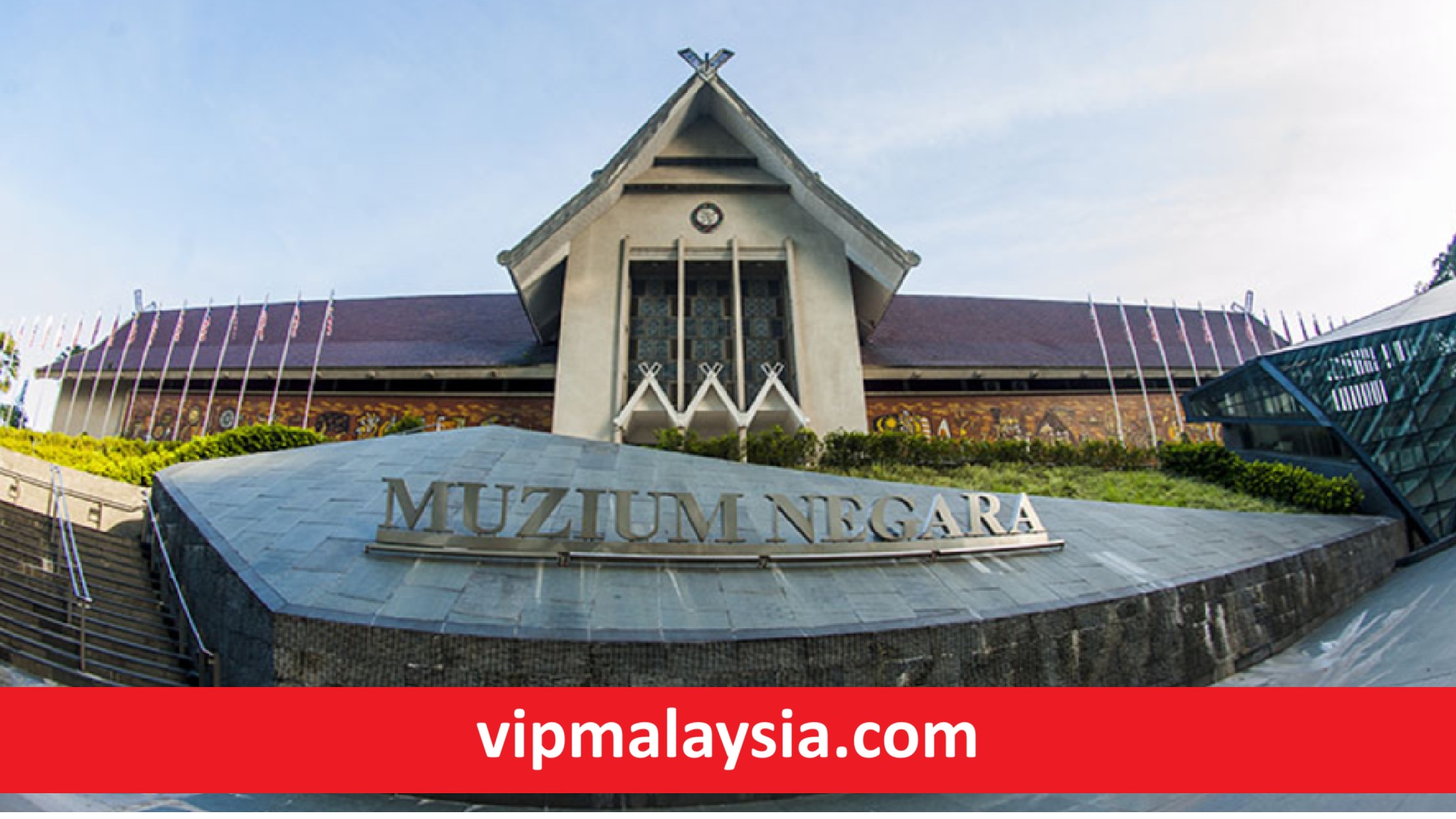
Muzium Negara Kuala Lumpur
Step inside the Muzium Negara Malaysia a hidden gem easily accessible by MRT Muzium Negara Station. From prehistoric relics to royal regalia and independence-era artifacts, this captures Malaysia’s past and present through personal reflections and vibrant storytelling. Plan your visit now.
Introduction
Muzium Negara, or the National Museum of Malaysia, stands as a cultural beacon in Kuala Lumpur. Since its opening in 1963, it has welcomed millions of visitors eager to explore Malaysia’s diverse past. The museum is more than a repository of artifacts—it is a living narrative of the country’s evolution, from ancient civilizations to modern independence. With its strategic location near KL Sentral and direct MRT access, Muzium Negara is both a tourist attraction and a heritage institution cherished by locals.
History
The origins of Muzium Negara trace back to the early 20th century when the Selangor Museum served as the primary repository of Malayan artifacts. After World War II and the destruction of much of the Selangor Museum, the idea of a new national museum gained momentum. Construction began in 1962, and the museum was officially opened by Malaysia’s first Prime Minister, Tunku Abdul Rahman, in 1963.
The building itself is a masterpiece of post-independence architecture, blending traditional Malay design with modern functionality. Its sweeping Minangkabau-style roof symbolizes cultural continuity, while murals on the façade depict Malaysia’s journey from prehistoric times to independence. Over the decades, Muzium Negara has expanded its collections, hosting both permanent galleries and rotating exhibitions that highlight Malaysia’s role in Southeast Asia’s cultural tapestry.
Getting There
By Bus
Visitors can board the GoKL RED Line bus and alight at the stop near Muzium Negara. Alternatively, the KL Hop-On Hop-Off Bus service stops at Stop No. 20, which is designated for the National Museum. These routes make the museum easily reachable for both tourists and locals without needing private transport.
By KTM Komuter / LRT / Monorail / ERL
Travelers using rail services such as KTM Komuter, LRT, Monorail, or ERL should alight at KL Sentral Station. From there, a covered pedestrian walkway connects directly to the MRT Muzium Negara Station, ensuring a safe and convenient walk to the museum entrance.
By MRT
The most straightforward option is to take the MRT Kajang Line and head directly to Muzium Negara Station. This underground station is located just a short walk from the museum and is connected to KL Sentral via a 240-meter pedestrian link, making it one of the most convenient access points.
Car Parking
For those driving, comfortable parking areas are available at Muzium Negara. The official rates are RM3.00 for the first hour and RM2.00 for each subsequent hour, inclusive of 6% SST. This makes it practical for families or groups traveling by car.
Highlights
Gallery A: Early History
This gallery showcases Malaysia’s prehistoric roots. Visitors encounter Perak Man, the oldest complete human skeleton in Southeast Asia, dating back over 10,000 years. Stone tools from the Paleolithic era and Neolithic burial jars illustrate the ingenuity of early communities. A striking Dong Son bell from 150 CE reflects ancient trade and cultural exchanges with Vietnam.
Perak Man’s Significance
Perak Man is not only a scientific marvel but also a cultural symbol. His discovery in 1991 reshaped understanding of early human settlement in Southeast Asia. The skeleton’s burial posture and accompanying artifacts suggest ritual practices, offering a glimpse into the spiritual life of Malaysia’s earliest inhabitants.
Gallery B: Malay Kingdoms
This gallery celebrates the grandeur of ancient Malay polities such as Langkasuka, Srivijaya, and Melaka. Exhibits include Islamic regalia, royal weaponry, and the Avalokiteshvara statue, designated a National Heritage Artifact. These artifacts highlight Malaysia’s role as a hub of trade, religion, and diplomacy in the region.
Srivijaya’s Maritime Power
The Srivijaya empire, centered in Palembang, controlled trade routes across the Straits of Malacca. Artifacts in this gallery illustrate how Malaysia’s coastal kingdoms thrived through maritime commerce, connecting India, China, and the Middle East.
Gallery C: Colonial Era
Here, visitors journey through centuries of colonization by the Portuguese, Dutch, British, and Japanese. Exhibits include maps, weaponry, and cultural artifacts that reveal the profound impact of colonial rule. The Golden Flower replica, a tribute to the King of Siam, symbolizes diplomatic exchanges during this era.
Japanese Occupation
The Japanese occupation (1941–1945) is vividly portrayed through uniforms, propaganda materials, and personal accounts. This section emphasizes the resilience of Malaysians during wartime hardship.
Gallery D: Modern Malaysia
This gallery narrates Malaysia’s path to independence and nationhood. Exhibits highlight the rise of UMNO in 1946, the declaration of independence in 1957, and the formation of Malaysia in 1963 with Sabah, Sarawak, and Singapore. Multimedia displays showcase Malaysia’s post-independence progress in education, technology, and culture.
Independence Memorabilia
Visitors can view photographs of Tunku Abdul Rahman proclaiming “Merdeka!” at Stadium Merdeka, alongside documents and artifacts from the independence movement. These items embody the spirit of unity and determination that shaped modern Malaysia.
Things to Do
Family-Friendly Activities
Muzium Negara offers free guided tours led by museum volunteers, lasting 1–2 hours. These tours cover all four galleries and provide engaging stories behind the artifacts.
Program Ceria @ Muzium Negara
Held every Saturday at Dewan Tengah, this program invites children aged 7–12 to participate in heritage craft-making. Activities include creating wau bulan (traditional kites), playing traditional drums, and learning about cultural practices.
Special Exhibitions
Beyond permanent galleries, Muzium Negara hosts rotating exhibitions on topics such as Islamic art, Southeast Asian textiles, and contemporary Malaysian animation. These exhibitions ensure that each visit offers something new.
Nearby Attractions
Malay World Ethnology Museum
Located within the museum complex, this institution focuses on Malay cultural traditions, including attire, weaponry, and performing arts.
Orang Asli Craft Museum
Dedicated to Malaysia’s indigenous peoples, this museum showcases handicrafts, musical instruments, and traditional dwellings.
KL Bird Park
Known as the “World’s Largest Free-Flight Walk-In Aviary,” KL Bird Park houses over 3,000 birds across 200 species.
National Monument (Tugu Negara)
This iconic sculpture commemorates Malaysia’s fallen heroes and is a short walk from Muzium Negara.
NU Sentral Mall
For those seeking modern amenities, NU Sentral Mall offers shopping, dining, and entertainment just next to KL Sentral.
Conclusion
Just minutes from the city center and directly connected to the MRT Muzium Negara station, Muzium Negara invites you to dive into Malaysia’s past—from ancient civilizations to modern independence. It’s where education meets experience, wrapped in culture, nostalgia, and heritage.
Summary
- Attraction: Muzium Negara
- Location: #KualaLumpur
- Attraction Type: #Museum
- Source: muziumnegara.gov.my and other sources
Quick Info
| Attribute | Details |
|---|---|
| Name | National Museum of Malaysia (Muzium Negara) |
| Address & Contact | Muzium Negara Jabatan Muzium Malaysia Jalan Damansara 50566 Kuala Lumpur (+60) 03-2267 1111 pr.mn[at]jmm.gov.my |
| Location | Kuala Lumpur, Malaysia |
| Nearest MRT Station | Muzium Negara MRT Station |
| Entrance Fee | RM5 per person |
| Main Galleries | Pre-History, Malay Kingdoms, Colonial Era, Malaysia Today |
| Highlight Exhibits | Perak Man, Royal Regalia, Independence Archives |
| Accessibility | Wheelchair Friendly, Bilingual Signs |
| Operating Hours | 9:00 AM – 5:00 PM (Last Admission: 4:30 PM) Open daily except 1st & 2nd day of Eid al-Fitr and 1st day of Eid al-Adha |
| Language Support | Malay, English, Chinese Descriptions |
| Photography | Allowed (No Flash) |
Ticket
| Category | Price |
|---|---|
| Malaysian Citizens | |
| Adults | RM 2.00 |
| Senior Citizens & Persons with Disabilities (OKU) | RM 1.00 |
| Children (12 years and below) | Free |
| Secondary School Students (in uniform) | Free |
| Secondary School Students (not in uniform) | RM 2.00 |
| ICOM Members | Free |
| Non-Malaysian Visitors | |
| Adults | RM 5.00 |
| Children (6–12 years) | RM 2.00 |
| Children (below 6 years) | Free |
| ICOM Members | Free |
Visitor Reviews
Anne Ahmad, United Kingdom ⭐⭐⭐⭐⭐ “I joined the free guided tour and it was excellent. The volunteer guides were knowledgeable and refused tips, which made the experience feel genuine. The galleries gave a clear overview of Malaysia’s history, and I especially enjoyed the colonial section. Easy access from KL Sentral made the visit convenient.”
Raja Rimba, Ampangan, Negeri Sembilan ⭐⭐⭐⭐ “As part of our KCA University academic trip, we visited Muzium Negara and had Ee Lin as our volunteer guide. She explained Malaysia’s journey from prehistoric times to independence with passion. The students were impressed by the Perak Man exhibit and the independence memorabilia. It was both educational and inspiring.”
Loan Phạm, Ho Chi Minh City ⭐⭐⭐⭐ “This museum is ideal if you want to learn about Malaysian history and culture. I admired the traditional weaponry and ceremonial attire, and the modern gallery gave me insight into Malaysia’s independence movement. The museum is well-maintained, though the café could offer more local food options.”
Mohd Mustaqem ‘the biceps’, Kuala Lumpur ⭐⭐⭐⭐⭐ “I often bring visiting friends here because it’s affordable and accessible via MRT. The galleries are well laid out, and the murals on the building façade are stunning. The Program Ceria for kids is a great initiative, making the museum family-friendly. Parking is spacious, which is convenient for locals driving in.”