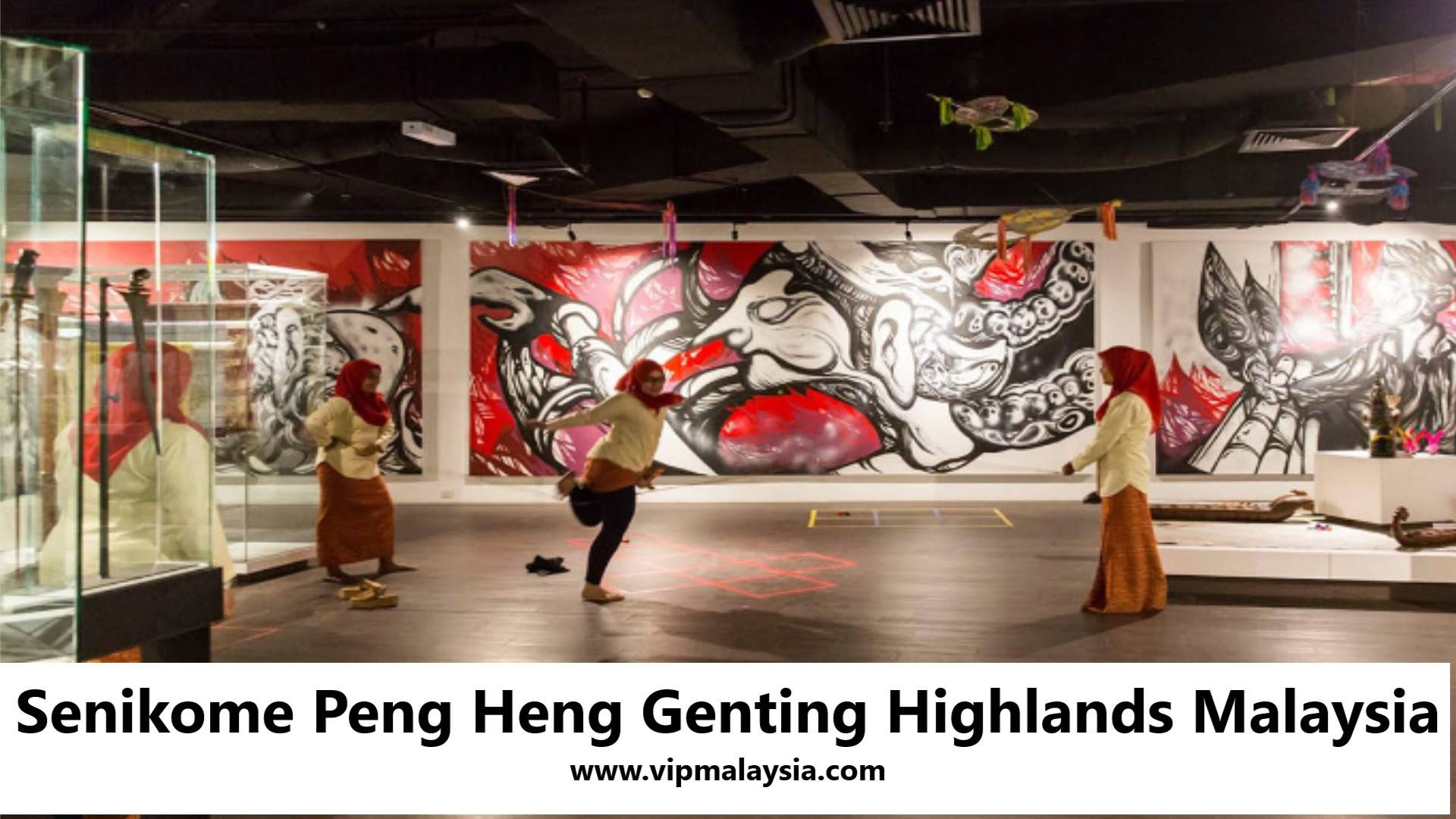
Senikome Peng Heng, Genting Highlands
Located in Genting Highlands, Senikome Peng Heng is a vibrant cultural hub celebrating the rich traditions, arts, and flavors of Malaysia’s East Coast. Visitors can immerse themselves in interactive exhibitions, traditional performances, local crafts, and authentic delicacies, making this a must-visit attraction for culture lovers.
Introduction
Nestled inside First World Plaza, the center is designed as a living museum that preserves and showcases the cultural richness of Pahang, Terengganu, and Kelantan. The name “Senikome” means “Our Art” in the Pahang dialect, while “Peng Heng” is a historical reference to the East Coast region dating back to the Ming Dynasty. Together, they symbolize pride in art, tradition, and community.
The East Coast region of Malaysia refers to the eastern seaboard of Peninsular Malaysia that faces the South China Sea. It is made up of three states: Kelantan, Terengganu, and Pahang. This region is known for its serene beaches, fishing villages, lush rainforests, and strong preservation of traditional Malay culture. Compared to the bustling West Coast, the East Coast offers a quieter pace of life, with deep cultural roots, distinctive dialects, and practices such as batik and songket weaving. It is also home to famous islands like Redang, Perhentian, and Tioman, as well as highland retreats like Genting Highlands and Cameron Highlands.
History
Established by Resorts World Genting, the center was envisioned as a hub to preserve East Coast traditions and make them accessible to visitors. Historically, the East Coast has been a cradle of Malay culture, influenced by centuries of trade with China, India, and Indonesia.
Artifacts on display include songket textiles woven with gold threads, tenun fabrics with intricate motifs, and Orang Asli crafts that highlight indigenous artistry. Exhibitions also trace the evolution of Wayang Kulit shadow puppetry and Gamelan music, both of which have been adapted uniquely in Malaysia.
Wayang Kulit is a traditional form of shadow puppetry originating from Java and Bali in Indonesia. In a performance, intricately carved leather puppets are manipulated by a puppeteer (dalang) behind a linen screen, with light projecting their shadows to the audience. The stories often dramatize episodes from Hindu epics such as the Ramayana and Mahabharata, while also incorporating uniquely Javanese characters and themes. Wayang Kulit combines ritual, moral lessons, and entertainment, and has been recognized by UNESCO as part of the Intangible Cultural Heritage of Humanity.
Guided Tours
Friendly staff conduct guided tours that explain the symbolism behind artifacts and performances, enriching the visitor experience.
Visitor Facilities
Senikome Peng Heng offers a reading corner, rest areas, and family‑friendly spaces. Accessibility is ensured through elevators and ramps, making it convenient for elderly visitors and those with mobility needs.
Highlights
Traditional Art Exhibitions
Visitors can admire songket weaving, historically reserved for royalty, and tenun fabrics, which symbolize ethnic identity and rituals. Authentic paintings and Orang Asli artifacts provide insight into indigenous lifestyles.
Songket weaving is a traditional Malaysian handwoven textile art that involves inserting gold or silver threads into the base fabric to create shimmering decorative patterns. The technique is performed on a traditional two‑pedal floor loom called a kek. The metallic threads appear to float over the colorful woven background, producing intricate motifs inspired by nature such as flowers, birds, and bamboo shoots. Historically, songket was worn by royalty and dignitaries, symbolizing wealth and prestige. Today, it is widely used in ceremonial clothing, weddings, festive occasions, and state functions, and has been recognized by UNESCO as part of the Intangible Cultural Heritage of Humanity.
Batik Canting Demonstrations
Artisans demonstrate the canting technique, where wax is applied to fabric before dyeing. This creates intricate floral and geometric designs, reflecting centuries of craftsmanship.
Wayang Kulit Displays
Shadow puppetry is showcased in a dedicated room, where carved leather puppets come alive under the guidance of a dalang (puppet master). The stories often draw from the Ramayana but have evolved into uniquely Malaysian narratives.
Attractions
Performing Arts and Cultural Showcases
Regular performances highlight East Coast traditions. Joget Gamelan, a classical dance accompanied by metallophones and drums, illustrates its royal Pahang origins. Folk music sessions feature instruments like the rebab and bamboo flute, creating a lively atmosphere.
Interactive Games and Activities
Guests can participate in traditional childhood games such as congkak, a board game using marbles, and batu seremban, a hand‑eye coordination game with small stones.
| Game | Description |
|---|---|
| Congkak | A two‑player board game using marbles or seeds, played on a carved wooden board with 14 small holes and 2 larger storehouses. It develops mental arithmetic and strategy. |
| Batu Seremban | A tossing‑and‑catching game with five small stones or beanbags. Players throw one piece in the air while picking up others, testing hand–eye coordination and rhythm. |
| Lompat Getah | A jumping game where players leap over a chain made of linked rubber bands, raised higher each round. It emphasizes agility and balance. |
| Galah Panjang | A team game played on a court with lines. One team defends while the other tries to cross without being tagged, requiring speed and teamwork. |
Souvenir Shopping
Heritage‑inspired souvenirs include textiles, pewterware, and handcrafted goods, making meaningful keepsakes that reflect Malaysia’s artistry.
Pewterware refers to articles made from pewter, a malleable metal alloy traditionally composed of tin with small amounts of copper and antimony. In Malaysia, pewter has a particularly rich heritage due to the country’s tin mining history. The industry flourished in the 19th century, especially in Perak and Selangor, and led to the founding of Royal Selangor, today the world’s largest pewter manufacturer. Pewterware items include household goods, ornaments, jewelry, and ceremonial objects, crafted through casting, filing, polishing, and engraving techniques. The silvery sheen and durability of pewter have made it popular for both decorative and functional use since the 18th century.
Culinary Experiences
The in‑house café serves authentic East Coast dishes. Nasi Kerabu, with its distinctive blue rice and herbal accompaniments, is a signature highlight. Keropok Lekor, a fish cracker snack from Terengganu, is another must‑try. Desserts like Bubur Cha Cha provide a sweet ending.
Local Beverages
Refreshing drinks at Senikome Peng Heng reflect Malaysia’s tradition of using natural herbs and fruits. Visitors can enjoy lemongrass tea and pandan infusions for aromatic refreshment.
Another highlight is Asam Boi, a preserved plum often blended into drinks with lime or honey. It delivers a tangy, slightly salty flavor that balances sweetness and is especially popular in Malaysia’s East Coast. This beverage is both cooling and invigorating, making it a perfect complement to the rich East Coast cuisine.
Conclusion
Senikome Peng Heng is a cultural gem that bridges tradition and modernity. By showcasing the arts, crafts, and cuisine of Malaysia’s East Coast, it provides visitors with a holistic understanding of the nation’s heritage. Whether you are drawn to interactive workshops, traditional performances, or authentic food, this destination promises a memorable journey.
For travelers seeking a blend of culture and adventure, Senikome Peng Heng in Genting Highlands is truly a must‑visit attraction.
Summary
- Attraction: Senikome Peng Heng
- Location: #Pahang #GentingHighlands
- Attraction Type: #Heritage
- Why Visit:
- Authentic cultural experience
- Immersive workshops & exhibitions
- Gastronomic delights
- Guided tours & reading corner
Quick Info
| Attribute | Details |
|---|---|
| Name | Senikome Péng Hēng |
| Location | Level 2, Malay Village, First World Plaza, Genting Highlands, Pahang, Malaysia |
| GPS Position | 3.4255° N, 101.7946° E |
| State | Pahang |
| Facility Type | Cultural Arts & Heritage Center |
| Main Attractions | Traditional Art, Performing Arts, East Coast Cuisine, Orang Asli crafts, Songket & Tenun weaving, Wayang Kulit, Gamelan |
| Nearby Landmarks | Resorts World Genting, SkyAvenue, First World Hotel |
| Accessibility | Connected via Awana SkyWay & major highways |
| Best Time to Visit | Morning for exhibitions, afternoon for workshops, evening for performances |
| Entry Fee | Adults: RM8 Children: RM6 Family Package: RM25 |
| Opening Hours | 12:00 PM – 7:00 PM daily |
| Contact | Phone: +603-6101 1118 |
Visitor Reviews
Farah Zain, Malacca – ★★★★★ “The batik workshop was amazing! The staff guided us patiently, and I felt connected to the tradition. The Nasi Kerabu was the highlight of my meal.”
Kelvin Ong, Ipoh – ★★★★☆ “The Wayang Kulit show was unforgettable. I wish there were more performances during weekdays, but overall the experience was enriching.”
Hafiz Abdullah, Kota Bharu – ★★★★★ “My children loved playing congkak and batu seremban. It was both fun and educational. A great place for families.”
Rachel Lim, Singapore – ★★★★☆ “The guided tour gave me a deeper appreciation of East Coast culture. The café was crowded, but the Keropok Lekor was worth the wait.”
Syafiqah Hassan, Terengganu – ★★★★★ “As someone from the East Coast, I felt proud seeing our traditions celebrated here. The songket and tenun displays were beautifully curated.”